Musste Weimar scheitern?
2019-06-25 · Runtime unavailable · Not rated
"Weimar" was the first democracy on German soil. It was a new beginning full of emotion and hope - in difficult times. Weimar is often viewed from the end, from its downfall under National Socialism. Yet it was a great new beginning. The Germans dared to embrace democracy. A documentary as a lively discussion about Weimar. What can Weimar teach us today?
Trailers are previews, not full movies.
No authorized playback source configured. Use the legal watch options below.
Production details
- Directors
- Andreas Christoph Schmidt
- Production companies
- Phoenix, RBB, NDR
- Countries
- Germany
- Status
- Released
Top Cast
Cast unavailable.
Title information and images are supplied by TMDb. Explore our discovery guide for advice on comparing metadata and legal viewing options.
Where to watch
Availability provided by JustWatch via TMDb. Offers can change. Provider links are listed on TMDb; full playback requires a separately authorized source.
Availability not listed for this country.
Seasons & episodes
Recommendations
A glittery nightclub in 1920s Berlin becomes a haven for the queer community in this documentary exploring the freedoms lost amid Hitler’s rise to power.

A detailing of the rise to prominence and global sporting superstardom of six supremely talented young Manchester United football players (David Beckham, Nicky Butt, Ryan Giggs, Paul Scholes, Phil and Gary Neville). The film covers the period 1992-1999, culminating in Manchester United's European Cup triumph.

Over 35 years after Bob Lazar's revelations, this documentary exposes secrets of a facility the government still denies. Featuring Lazar's testimony, recreations, and new evidence, it reopens a case that continues to spark global curiosity

A documentary on the expletive's origin, why it offends some people so deeply, and what can be gained from its use.

Through deeply personal interviews with her siblings and an examination of the photographs, letters, and belongings left behind, Mariska assembles a new portrait of her mother Jayne Mansfield, an extraordinary and complex woman.
A real-life undercover thriller about two ordinary men who embark on an outrageously dangerous ten-year mission to penetrate the world's most secretive and brutal dictatorship: North Korea.

An inside look at one of the most anticipated movie sequels ever with James Cameron and cast.
Join the likes of Jeremy Renner, Hailee Steinfeld, Florence Pugh, and Vincent D’Onofrio as they reveal how Marvel Studios’ “Hawkeye” was conceived and created. Witness firsthand what it took to pull off the show’s pulse-pounding action set pieces, and discover how iconic characters from the pages of Marvel Comics such as Kate Bishop were adapted and brought to life for the six-episode series.

A string of threatening emails escalates into a revenge plot involving a newly married US marshal and his ex-girlfriend.

In an intimate and joyful story of love in the face of loss, celebrated poets Andrea Gibson and Megan Falley find strength—and unexpected hilarity—in what might be their final year together.

A 1993 documentary film about Bruce Lee. The film includes interviews from some of his fellow students and opponents who worked alongside him in his movies.
This unique cinematic experience dives deep into an artist’s work and reveals his life path, inspiration, and creative process. It explores his fascination with myth and history. Past and present are interwoven to diffuse the line between film and painting, allowing the audience to be completely immersed in the remarkable world of one of the greatest contemporary artists, Anselm Kiefer. Wim Wenders shot this unique portrait over the course of two years in stunning 3D.
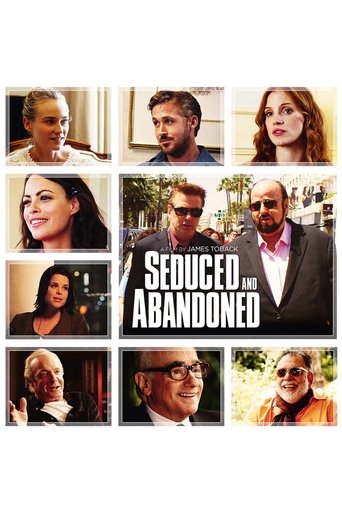
SEDUCED AND ABANDONED combines acting legend Alec Baldwin with director James Toback as they lead us on a troublesome and often hilarious journey of raising financing for their next feature film. Moving from director to financier to star actor, the two players provide us with a unique look behind the curtain at the world's biggest and most glamourous film festival, shining a light on the bitter-sweet relationship filmmakers have with Cannes and the film business. Featuring insights from directors Martin Scorsese, 'Bernando Bertolucci' and Roman Polanski; actors Ryan Gosling and Jessica Chastain and a host of film distribution luminaries.
Follow the evolution of the 'Halloween' movies over the past twenty-five years. It examines why the films are so popular and revisits many of the original locations used in the films - seeing the effects on the local community. For the first time, cast, crew, critics and fans join together in the ultimate 'Halloween' retrospective.

Retrospective documentary about the making of the horror cult classic "The Return of the Living Dead."

When Allied forces liberated the Nazi concentration camps in 1944-45, their terrible discoveries were recorded by army and newsreel cameramen, revealing for the first time the full horror of what had happened. Making use of British, Soviet and American footage, the Ministry of Information’s Sidney Bernstein (later founder of Granada Television) aimed to create a documentary that would provide lasting, undeniable evidence of the Nazis’ unspeakable crimes. He commissioned a wealth of British talent, including editor Stewart McAllister, writer and future cabinet minister Richard Crossman – and, as treatment advisor, his friend Alfred Hitchcock. Yet, despite initial support from the British and US Governments, the film was shelved, and only now, 70 years on, has it been restored and completed by Imperial War Museums under its original title "German Concentration Camps Factual Survey".
A documentary examining the decade of the 1970s as a turning point in American cinema. Some of today's best filmmakers interview the influential directors of that time.

A compilation of over 30 years of private home movie footage shot by Lithuanian-American avant-garde director Jonas Mekas, assembled by Mekas "purely by chance", without concern for chronological order.
Film adaptation of French economist Thomas Piketty's ground-breaking global bestseller of the same name: an eye-opening journey through wealth and power.
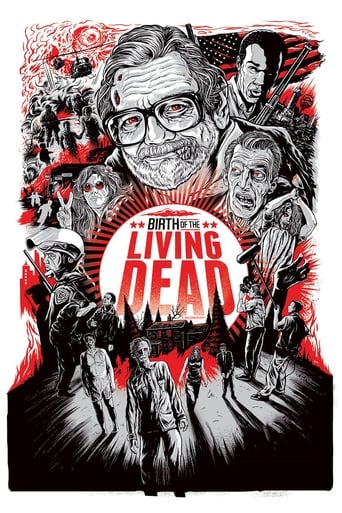
A behind the scenes look into George Romero's groundbreaking horror classic Night of the Living Dead.
Similar titles
The intricate history of UFA, a film production company founded in 1917 that has survived the Weimar Republic, the Nazi regime, the Adenauer era and the many and tumultuous events of contemporary Germany, and has always been the epicenter of the German film industry.
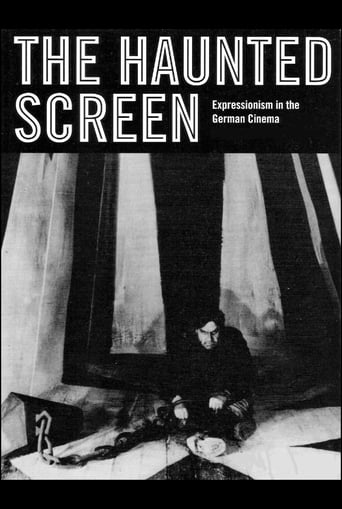
In this film essay, critic Peter Buchka explores the German cinema of the 1920s, ranging from the disquieting images of Fritz Lang's Metropolis to the castrating sexuality of Marlene Dietrich in Die Blaue Engel. The program provides an introduction to Weimar cinema, with Buchka's essay narrated over the images from film clips of 1920s era German films.
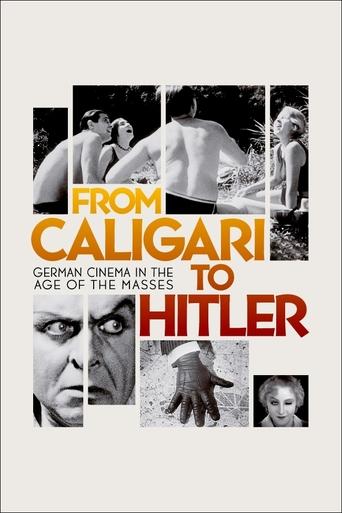
Film journalist and critic Rüdiger Suchsland examines German cinema from 1919, when the Republic of Weimar is born, to 1933, when the Nazis come into power. (Followed by Hitler's Hollywood, 2017.)
A keen chronicle of the unlikely rise to power of Adolf Hitler (1889-1945) and a dissection of the Third Reich (1933-1945), but also an analysis of mass psychology and how the desperate crowd can be deceived and shepherded to the slaughterhouse.
Presents a unique and disturbing look at the rise of the Nazi party. The documentary, directed by Lutz Becker, attempts to remain as objective as possible, serving as a neutral observer of the years 1918 through 1933 in Germany. Via newsreel footage and clips of features from the era, the film offers a kaleidoscopic view of the many elements that fueled the rise of the Socialist Nationalist Party, including post-WWI poverty. Hitler occupies a central place in the documentary.
How Germany was when its people entered the nightmare of World War II? Despair and fear lead a hungry population to follow the chilling call of just one man to world domination. A real-life horror story, an ominous tale of violence and deception, which takes place from 1919 to 1934. (Entirely made up of restored, colorized archival footage.)

On February 26, 1920, Robert Wiene's world-famous film The Cabinet of Dr. Caligari premiered at the Marmorhaus in Berlin. To this day, it is considered a manifesto of German expressionism; a legend of cinema and a key work to understand the nature of the Weimar Republic and the constant political turmoil in which a divided society lived after the end of the First World War.

Kuhle Wampe takes place in early-1930s Berlin. The film begins with a montage of newspaper headlines describing steadily-rising unemployment figures. This is followed by scenes of a young man looking for work in the city and the family discussing the unpaid back rent. The young man, brother of the protagonist Anni, removes his wristwatch and throws himself from a window out of despair. Shortly thereafter his family is evicted from their apartment. Now homeless, the family moves into a garden colony of sorts with the name “Kuhle Wampe.”

In Russia shortly before the outbreak of the First World War, Princess Vorontsov (Ellen Richter) is in love with a high-ranking officer of the tsarist army. When he is murdered, she craves revenge. The leading suspect is a lawyer with ties to nihilist revolutionaries. On behalf of the secret police, she travels to Switzerland in order to gain his trust and facilitate his arrest. Too late she realizes that she has been toyed with all along. Her fiancé was not the man she thought she was.
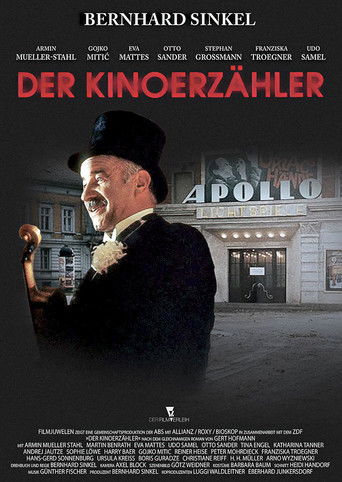
Germany in the Thirties. A movie teller realizes that his profession is not longer needed. Silent movies are not produced any longer. Telling stories is the only thing the man was ever good in, so he does not know what to do now. As political circumstances are changing dramatically these days in Germany, he gets new hope that things will again be going better for him...
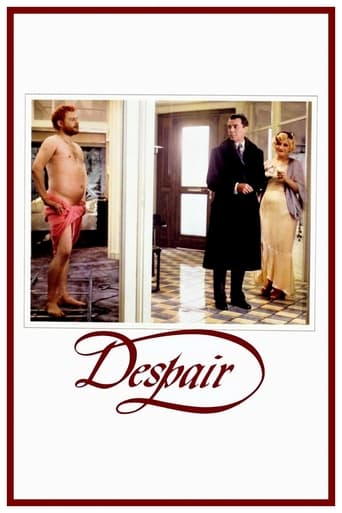
Berlin, 1930, during the rise of Nazism. Hermann Hermann, a Russian emigrant and chocolate manufacturer, married to the capricious Lydia, loses his temper more and more every day when dealing with his workers and other businessmen; until he meets Felix, a vagrant, who seems to be physically identical to him; a disconcerting fact that leads Hermann Hermann to plot a particular way out of a fake world he actually hates.
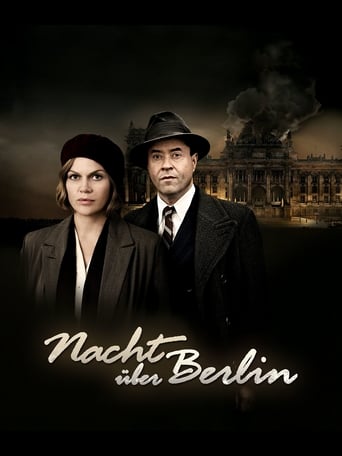
Berlin, 1932. The Weimar Republic is torn apart in the struggle between right- and left-wing extremists and Berlin is a powder keg. Nightclub singer Henny Dalgow get to know the Social Democratic congressman and Jewish doctor Albert Goldman, and the two become a slightly odd couple. Albert is a sworn pacifist after his experiences in the First World War. Contrary to his beliefs he agrees to act as courier for his brother Edwin, who belongs to a radical communist cell.

73 years after the birth of Israel and the “Nakba” (‘catastrophe’), Rothschild 16, where Israel’s declaration of independence took place, is still a popular location for different tour guides who highlight diverse narratives of the event.

Mishka is a boy of many faces – a petty criminal and a promising alpine skier who enjoys life to its fullest despite his physical disability and difficult living conditions. He is captured at a key moment when he enters adulthood and receives the last opportunity to take part in the Paralympics.

Mattis is different and was the target of bullies while growing up, while society looked the other way. His entire family was subjected to severe harassment by a gang of youths, and late one night in October 2007, his father took out his rifle and tragedy struck. One young boy was shot dead and another was seriously injured. Everyone was a loser, and Mattis and his best friend Stoffe were at the center of the drama. How could life go on?
Forty years after the bloodiest one-day encounter between Americans since the Civil War, the dead remain buried along with the truth. Until now. Based on interviews with eyewitnesses who just now are telling their stories, as well as access to newly discovered documents, the film sheds new light on exactly what happened at Attica between September 9-13, 1971. Criminal Injustice raises compelling new questions about the 39 deaths at Attica, White House involvement, and the corrupting influence of Nelson Rockefeller’s political aspirations before, during, and long after the deadly retaking of the prison. Former hostage Michael Smith said that “the cover up started as soon as the shooting stopped.” This film reveals that the truth actually may have been concealed long before that.

What does it mean to be a Jew in Poland now? Piotr Szczepański reveals another surprising piece of the cultural mosaic of Łódź in his documentary. The protagonists' lives prove that close ties with their religion and history do not exclude their relationship with counterculture and propensity for creative provocation. Thanks to people like them – open-minded and unconventional – the Jewish culture has a chance to last and thrive in our country. Besides, ‘@miriamfrompoland’ is a story, which presents a traditional, yet not quite typical, family with impressive observational virtuosity.

A beautifully illustrated story of a contemporary village and its unconventional dwellers who are of different age but have one thing in common – their strong attachment to folk culture. In this film, music is as important as images, since it accompanies the protagonists during key events in their lives.