
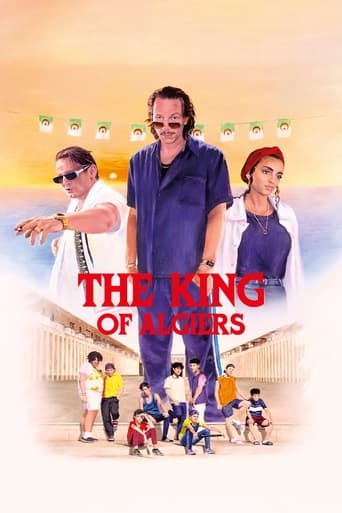
The King of Algiers
2023-05-24 · 92 min · ★ 6.0
Omar, better known as Omar the Strawberry, is an old-fashioned bandit. Forced to flee to Algeria, he makes a living out of petty crime, accompanied by his famous sidekick Roger. After decades of ruling the French criminal underworld, they must come to terms with their new life together, which until now has been one of debauchery and violence.
Trailers are previews, not full movies.
No authorized playback source configured. Use the legal watch options below.
Production details
- Directors
- Elias Belkeddar
- Production companies
- Iconoclast Films, Chi-Fou-Mi Productions, France 2 Cinéma, StudioCanal, 2HORLOGES
- Countries
- Algeria, France
- Status
- Released
- Budget
- USD 5,490,000
Top Cast
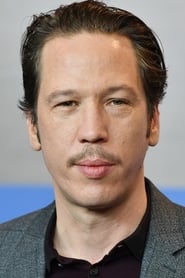 Reda KatebOmar
 Benoît MagimelRoger
 Meriem AmiarSamia
Title information and images are supplied by TMDb. Explore our discovery guide for advice on comparing metadata and legal viewing options.
Where to watch
Availability provided by JustWatch via TMDb. Offers can change. Provider links are listed on TMDb; full playback requires a separately authorized source.
Rental
Amazon Video, Apple TV Store, Google Play Movies, YouTube
Purchase
Amazon Video, Apple TV Store, Google Play Movies, YouTube
View authorized watch options on TMDbSeasons & episodes
Recommendations

A 16-year-old girl takes her parents hostage after they miss her big jump-roping competition.
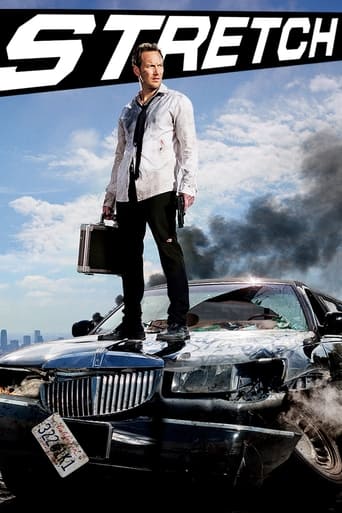
A hard-luck limo driver struggling to go straight and pay off a debt to his bookie takes on a job with a crazed passenger whose sought-after ledger implicates some seriously dangerous criminals.
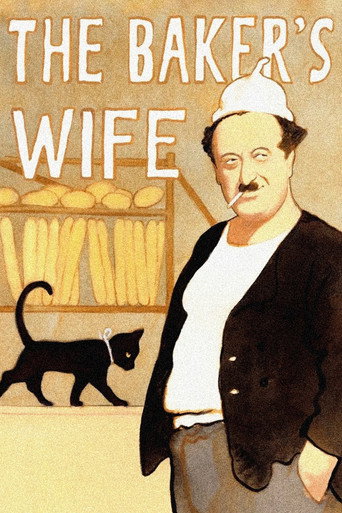
In this little Provencal village, a new baker, Aimable, settles down. His wife Aurelie is beautiful and much younger than he. She departs with a shepherd the night after Aimable produces his first breads. Aimable is so afflicted that he can not work anymore. Therefore, the villagers, who initially laughed at his cuckoldry, take the matter very seriously (they want the bread) and organize a plan to find Aurelie and to bring her back to the bakery.

A former special forces contractor is forced out of retirement as an avocado farmer in Mexico when local gangsters try to force him and his family off their farm.
Leo and Angela Russo live a simple life in Queens, surrounded by their overbearing Italian-American family. When their son finds success on his high school basketball team, Leo tears the family apart trying to make it happen.

With a hitman’s gun aimed at him, Finch tells the story of how he broke out of jail, fell in love, and took the identity of a man wanted by the Mafia.

A young girl tries to fit in with a clique of popular middle school girls after moving into the guest house of one of their homes.
In this unusually accurate biography, small-time hood Al Capone comes to Chicago at the dawn of Prohibition to be the bodyguard of racketeer Johnny Torrio. Capone's rise in Chicago gangdom is followed through murder, extortion, and political fraud. He becomes head of Chicago's biggest "business," but moves inexorably toward his downfall and ignominious end.
For more than 15 years, two Marseille friends and criminals battle the law, rival gangs, prison authorities and even mined beaches in order to survive.

Ricky Gervais tackles life, death and the state of the world in a brutally honest special that spares no topic, even his own mortality.

The film narrates a utopian abandonment, consensual and festive of the market economy and high productivity. The population decides on a number of resolutions beginning with "We stop everything" and the second "After a total downtime will be revived-reluctantly-that the services and products including lack will prove intolerable. Probably: water to drink, electricity for reading at night, the TSF to say "This is not the end of the world, this is an 01, and now a page of Celestial Mechanics". The implementation of these resolutions is the first day of a new era, Year 01. The Year 01 is emblematic of the challenge of the 1970s and covers such diverse topics as ecology, negation of authority, free love, communal living, rejection of private property and labor.

Simultaneously, a retired couple overwhelmed by debt tries to win a dance contest, as the minister of economy is suspected of tax evasion, and a teenage girl encounters a sexual maniac, while a young lawyer attempts to climb the social ladder. When the shoe drops, the winner won’t necessarily be the one we expected.

After nearly two decades of legendary criminal feats, making him France's most notorious criminal while simultaneously feeding his desire for media attention and public adoration, Mesrine becomes increasingly paranoid and isolated, leading to a dramatic confrontation with the law that ultimately seals his fate as the nation's most infamous public enemy.

Filmed at the Celebrity Theatre in Phoenix, AZ on February 15th and 16th, 2013, Oh My God is Louis C.K.'s fifth stand-up special, his first for HBO since 2007's Shameless, and his first since winning a Emmy Award for writing on his acclaimed show on FX, Louie. Performed in the round in front of a live audience, he discusses such topics as the food chain, animals, divorce, strange anecdotes, broken morality, murder and mortality.

In what might be his most personal and introspective hour yet, Bill offers hilarious takes on everything from male sadness to dating advice.
When a Las Vegas performer-turned-snitch named Buddy Israel decides to turn state's evidence and testify against the mob, it seems that a whole lot of people would like to make sure he's no longer breathing.

Harlem's African-American population is being ripped off by the Rev. Deke O'Malley, who dishonestly claims that small donations will secure parcels of land in Africa. When New York City police officers Gravedigger Jones and Coffin Ed Johnson look into O'Malley's scam, they learn that the cash is being smuggled inside a bale of cotton. However, the police, O'Malley, and lots of others find themselves scrambling when the money goes missing.

Mister Sim is of no concern whatsoever. At least, this is what he thinks about himself. His wife has left him, his job has left him, and when goes to see his father in a remote part of Italy, not even Dad has the time to have lunch with him. He then receives an unexpected offer: to travel through France selling toothbrushes that will "revolutionize oral-dental hygiene." He takes advantage of the job to catch up with people from his childhood, to meet the first big love of his life, along with his daughter, and to make amazing discoveries and, in so doing, rediscover himself.

Gulley Jimson is a boorish aging artist recently released from prison. A swindler in search of his next art project, he hunkers down in the penthouse of would-be patrons the Beeders while they go on an extended vacation; he paints a mural on their wall, pawns their valuables and, along with the sculptor Abel, inadvertently smashes a large hole in their floor. Jimson's next project is an even larger wall in an abandoned church.

Mike Fallon, the Accident Man, is a stone cold killer. When a loved one is murdered by his own crew, Fallon is forced to avenge the one person who actually meant something to him.
Similar titles
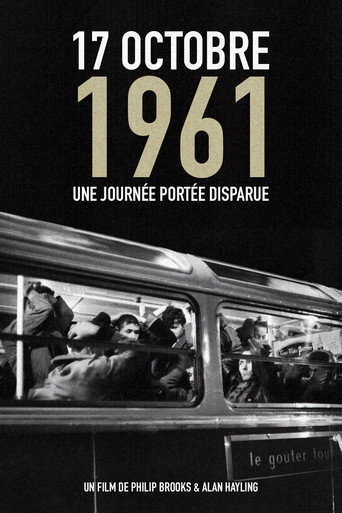
This documentary bears witness to the events that took place more than thirty years before the filming of this movie, on October 17, 1961, in Paris, during the Algerian War. It is a work not only about historical truth but also about memory. Constructed primarily from interviews conducted with those involved in the events, along with archival footage, photographs, and radio broadcasts from the time, our investigation proves that nearly 200 Algerians were killed (drowned, tortured) that night and in the days that followed by the French police. "A Missing Day" seeks to ask two key questions: how could such events have unfolded in the capital of a Western democracy barely thirty years ago? And why have they been silenced ever since?
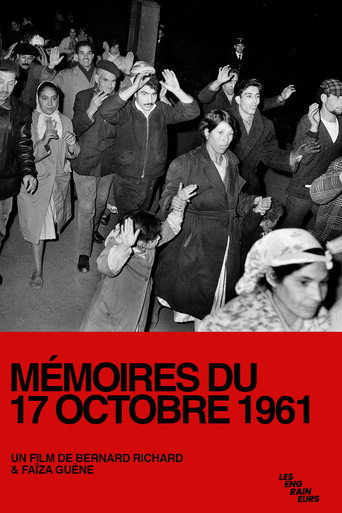
Three demonstrators from October 17, 1961, and a journalist recount the peaceful success of the demonstration and its brutal repression in the streets of Paris. Five months before the end of the Algerian War, the Gaullist government violently suppressed (40 to 300 deaths in a single evening, according to various sources) a peaceful demonstration by the entire Algerian civilian population of the Paris region, protesting the curfew imposed solely on this population (all participants held French citizenship). The government long denied this state crime; the official version: 3 deaths! In 1962, these events were granted amnesty by a simple decree (later enacted into law) issued by the same Gaullist government.
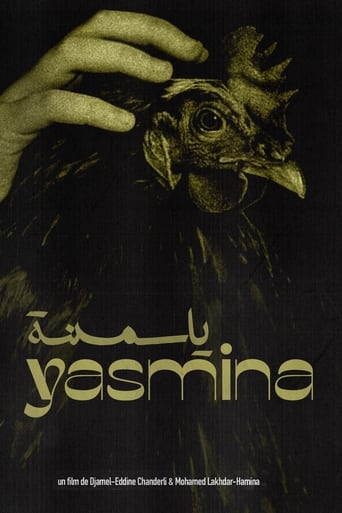
"Yasmina" filmed in 1961 in the middle of the Algerian war tells the story of a little Algerian girl with her hen and her family whose father was killed in a bombing by the French colonial army of occupation. The family, after a long journey, heads towards the refugee camps on the Tunisian border. Produced by the Cinema Service of the Provisional Government of the Algerian Republic (GPRA) in the midst of the war of independence, these films were intended to re-inform the population and international public opinion on the abuses committed by the French colonial army: torture, arrests and arbitrary executions, napalm bombings, fires in douars, entire villages wiped off the map, etc. which the French media described as a "pacification" campaign. The latter censoring or reorienting any images that could harm the colonial narrative.
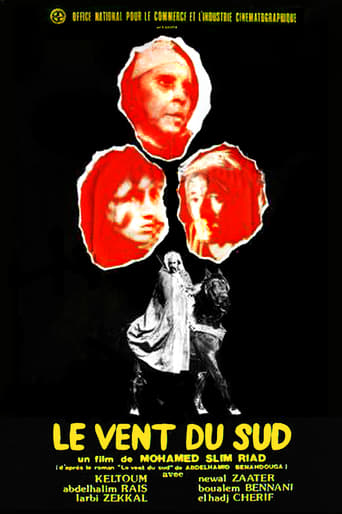
Néfissa, a student in Algiers, returns to her village in the south in the summer. Her father wants her to marry the mayor but she wants to continue her studies. Confronting her father and the opinion of the villagers who do not understand her, she decides to flee to Algiers. The shepherd Rabah discovering her wounded and lost in the mountains, has her treated by her mother. In contact with Nefissa, Rabat becomes aware of his exploited condition and discovers the possibilities offered to him by the cooperatives of the agrarian revolution. The two young people will go through the decisive stage together which will allow them to escape obscurantism and exploitation. Based on the novel "Le vent du sud" by Abdelhamid Benahouga
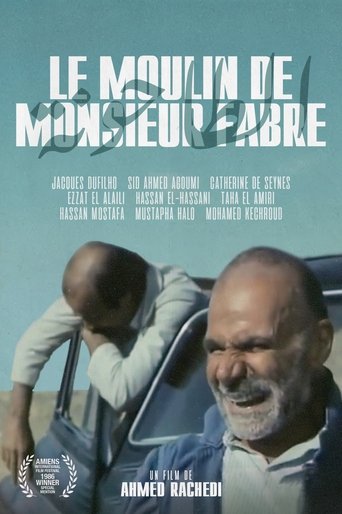
The story of the post-independence nationalization of the mill of Monsieur Fabre, an old man attached to the land of Algeria where he was born. In this small town in eastern Algeria, there was nothing else to nationalize and they were actively preparing for the arrival of high dignitaries who would elevate the mill to the rank of an industrial flour mill even though it was threatened with ruin. The comedy gets worse when the football player from the local team withdraws for love, the officials' visit is canceled and Mr. Fabre returns.
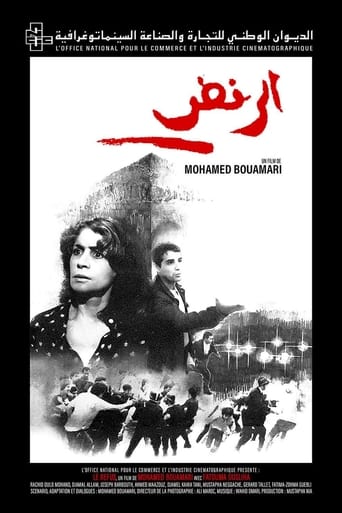
In 1971, the Algerian government nationalized hydrocarbons. The consequences of this decision on the community of Algerians in France are numerous. The Galti family is prey to these economic problems. The father, Khaled, former member of the F.L.N. in France, does not escape the sentence. Sharazade, his wife and comrade in combat, finds herself torn between her role as wife, mother and nostalgia for a country and a bygone past. As for his son Karim, a victim of socio-cultural division, all he has left is refusal.
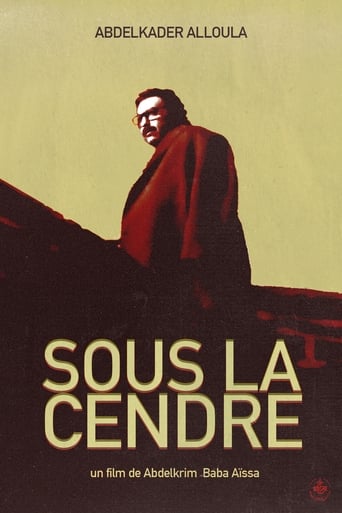
The Second World War. French authorities ban political parties and unions. In Algeria, the leaders of political and trade union organizations were arrested and interned in "surveillance" camps with more than 2,000 French and foreigners: communist activists, trade unionists, brigadists, Spanish republicans and other opponents of the Vichy regime. The Djenien Bourezg camp is one of these camps, located in southern Algeria and is one of the most formidable. An old activist for the Algerian national cause returns to the scene. He blows away the ashes that cover this part of history. And through it, we discover the hard fight of the camp inmates for respect and human dignity, under a fascist command.
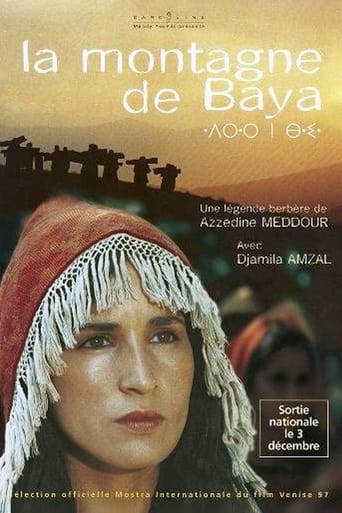
Set in the 1800s among the Berbers of North Africa, this 1997 Algerian feature concerns a noble widow who receives a customary purse of gold coins from the enemy tribe that murdered her husband; the gift puts her in conflict with her kinsmen, who want the money to buy back land taken by the enemy in cahoots with French colonials.
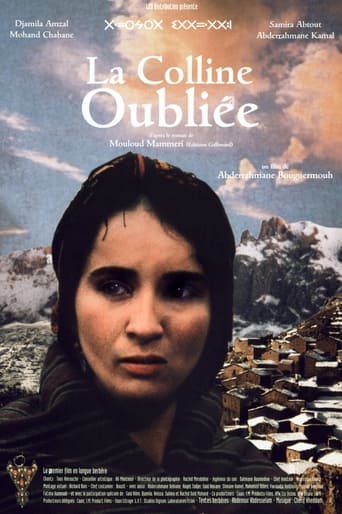
At the outbreak of the Second World War, two friends, Mokrane and Menach, abruptly interrupt their studies and return to their remote native Kabylian village of Tagsa. While waiting to be drafted into the French Army they have time to woo. Mokrane falls for beautiful Aazi and soon marries her only to find out that she can bear no child. Menach, on his part, is stongly attracted to Davda, but the latter is already married to a rich merchant...Happiness does not seem to be in store for the two former students...

In Kabylie, rude mountain region in the north of Algeria. Arezki finds the young Larbi exhausted, buried under the snow. He takes him in and nurses him until he's recovered. The host seduces Arezki's daughter. She is pregnant. This is an unsupportable shame to the father of the female sinner. Arezki claims vengeance. He leaves his house and takes the oath not to come back before having killed Larbi who betrayed him under his own roof.
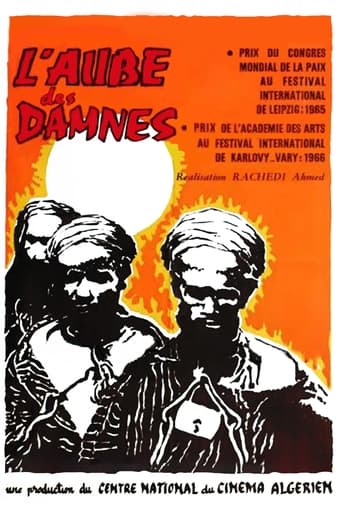
This excellent feature-length documentary - the story of the imperialist colonization of Africa - is a film about death. Its most shocking sequences derive from the captured French film archives in Algeria containing - unbelievably - masses of French-shot documentary footage of their tortures, massacres and executions of Algerians. The real death of children, passers-by, resistance fighters, one after the other, becomes unbearable. Rather than be blatant propaganda, the film convinces entirely by its visual evidence, constituting an object lesson for revolutionary cinema.
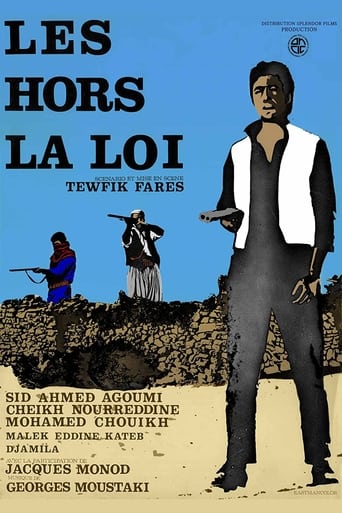
In prison in colonial Algeria, shortly after the end of the Second World War, three indigenous cellmates make out. Once free, they attack the authority represented by the triad of the boss, the gendarme and the administrator. “Living the colonial condition,” confided Tewfik Farès, “is something! It’s not sociologically or historically speaking. It’s life. And I think that’s all there in it. [...] For a hundred and thirty years, we wait. We hold back. We push back. We hope. At the same time, on different occasions, there are skirmishes, unrest.

A woman has a close bond with her beloved Algerian grandfather, who protected her from a toxic home life as a child; his death triggers a deep identity crisis as tensions between her extended family members escalate, revealing new depths of resentment and bitterness.
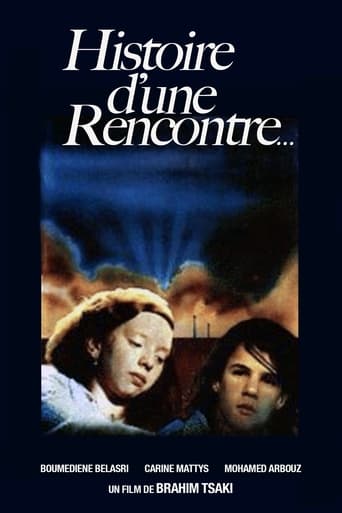
Two deaf and dumb children. She is the daughter of an American Oil engineer. He is the son of an Algerian farmer. They meet and manage to communicate, transcending all the cultural barriers that separate them.
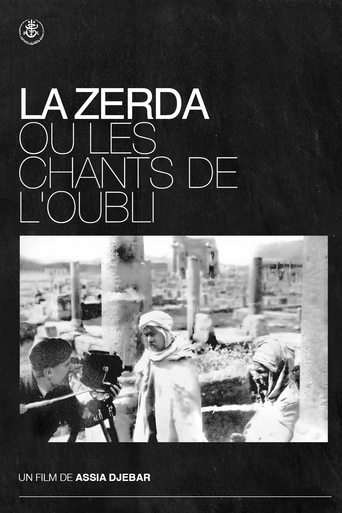
“La Zerda and the songs of oblivion” (1982) is one of only two films made by the Algerian novelist Assia Djebar, with “La Nouba des femmes du mont Chenoua” (1977). Powerful poetic essay based on archives, in which Assia Djebar – in collaboration with the poet Malek Alloula and the composer Ahmed Essyad – deconstructs the French colonial propaganda of the Pathé-Gaumont newsreels from 1912 to 1942, to reveal the signs of revolt among the subjugated North African population. Through the reassembly of these propaganda images, Djebar recovers the history of the Zerda ceremonies, suggesting that the power and mysticism of this tradition were obliterated and erased by the predatory voyeurism of the colonial gaze. This very gaze is thus subverted and a hidden tradition of resistance and struggle is revealed, against any exoticizing and orientalist temptation.
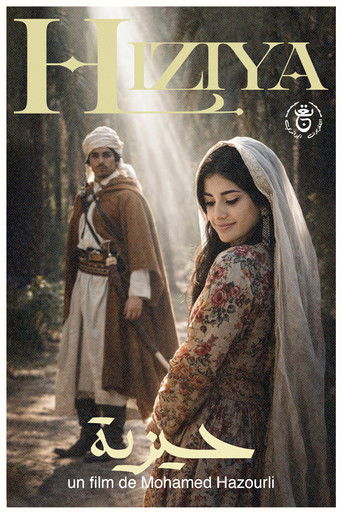
It was from the popular song-poem by Mohamed Ben Guittoun that director Mohamed Hazourli (of the Constantine regional station of RTA) wrote the screenplay. Hiziya Bent Ahmeb Bey, 23 years old, lived in southeastern Algeria, in a village called Sidi Khaled. The daughter of a powerful notable of the Dhouaouda tribe, who regularly migrated through the desert, Hiziya was exceptionally beautiful, to the point that other girls were jealous and envious of her, and men succumbed to her charm. But the young woman's heart belonged to Saïd, an orphan taken in as a child by his uncle. They met in secret and married despite family hostility. A month after their wedding, Hiziya died during the transhumance in the desert. The death of his beloved plunged Saïd into deep grief, to the point that he abandoned his possessions and family to wander the desert.
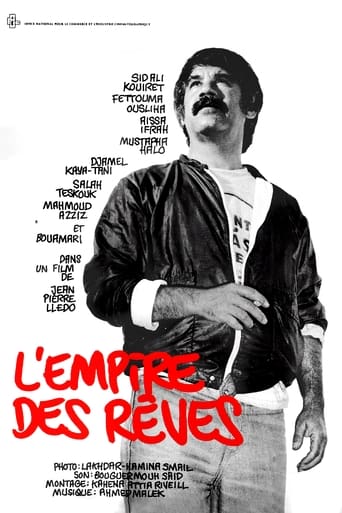
A stubborn director who wants to rediscover the Algiers of his childhood comes up against the “Hollywood” fantasies of his characters, non-professionals all hoping to be able to become “someone else”, at least for the duration of a film… Mise en abyme for a journey into megalomania…
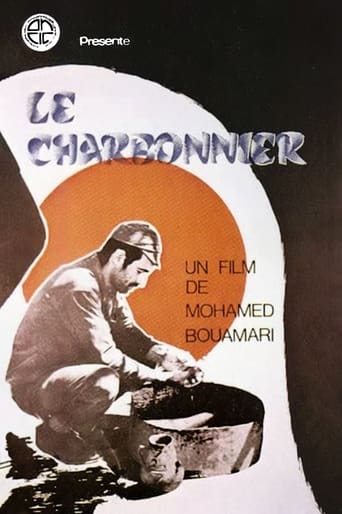
Film describes the miserable existence of a charcoal-burner who is barely able to feed his family. His search for work in town ends in failure and he is forced to return to his village.
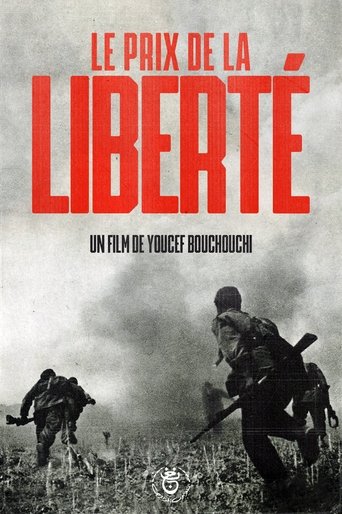
In the midst of the Algerian liberation war, two characters, a meddah (traditional storyteller) and a guerrab (water distributor), having become aware of their subhuman condition in their own country, join the National Liberation Army (ALN) to fight against inhumane colonialism. They will climb the ranks to become political commissioners before falling on the field of honor, the first in a skirmish and the other in Barberousse prison (Serkadji) where he will be guillotined.