
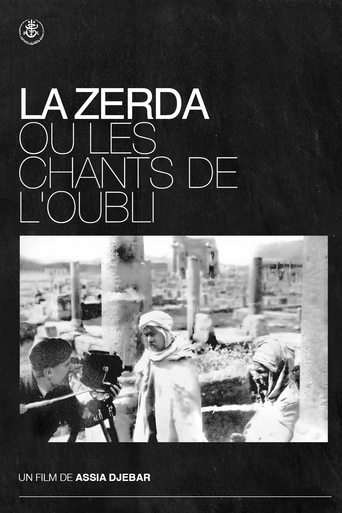
The Zerda or the Songs of Forgetting
1983-02-27 · 57 min · ★ 8.1
“La Zerda and the songs of oblivion” (1982) is one of only two films made by the Algerian novelist Assia Djebar, with “La Nouba des femmes du mont Chenoua” (1977). Powerful poetic essay based on archives, in which Assia Djebar – in collaboration with the poet Malek Alloula and the composer Ahmed Essyad – deconstructs the French colonial propaganda of the Pathé-Gaumont newsreels from 1912 to 1942, to reveal the signs of revolt among the subjugated North African population. Through the reassembly of these propaganda images, Djebar recovers the history of the Zerda ceremonies, suggesting that the power and mysticism of this tradition were obliterated and erased by the predatory voyeurism of the colonial gaze. This very gaze is thus subverted and a hidden tradition of resistance and struggle is revealed, against any exoticizing and orientalist temptation.
Trailers are previews, not full movies.
No authorized playback source configured. Use the legal watch options below.
Production details
- Directors
- Assia Djebar
- Production companies
- O.N.C.I.C.
- Countries
- Algeria
- Status
- Released
Top Cast
Cast unavailable.
Title information and images are supplied by TMDb. Explore our discovery guide for advice on comparing metadata and legal viewing options.
Where to watch
Availability provided by JustWatch via TMDb. Offers can change. Provider links are listed on TMDb; full playback requires a separately authorized source.
Availability not listed for this country.
Seasons & episodes
Recommendations
40 international directors were asked to make a short film using the original Cinematographe invented by the Lumière Brothers, working under conditions similar to those of 1895. There were three rules: (1) The film could be no longer than 52 seconds, (2) no synchronized sound was permitted, and (3) no more than three takes.
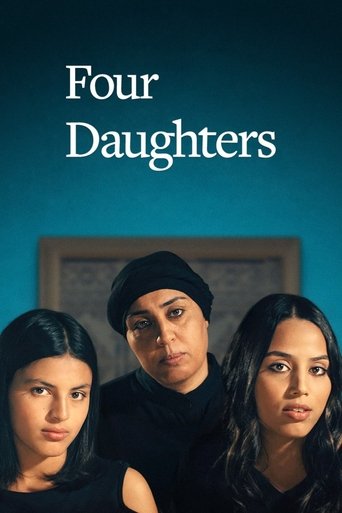
Between light and darkness stands Olfa, a Tunisian woman and the mother of four daughters. One day, her two older daughters disappear. To fill in their absence, the filmmaker Kaouther Ben Hania invites professional actresses and invents a unique cinema experience that will lift the veil on Olfa and her daughters' life stories. An intimate journey of hope, rebellion, violence, transmission and sisterhood that will question the very foundations of our societies.
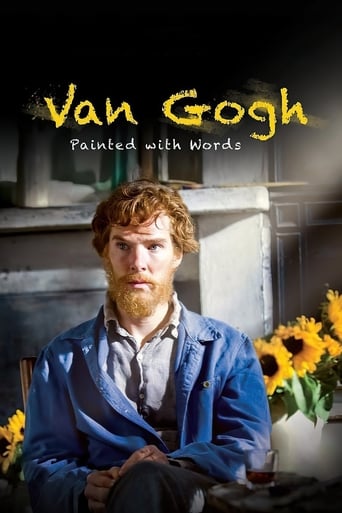
A drama-documentary presented by Alan Yentob, with Benedict Cumberbatch in the lead role. Every word spoken by the actors in this film is sourced from the letters that Van Gogh sent to his younger brother Theo, and of those around him. What emerges is a complex portrait of a sophisticated, civilised and yet tormented man.

Ten Minutes Older is a 2002 film project consisting of two compilation feature films entitled The Trumpet and The Cello. The project was conceived by the producer Nicolas McClintock as a reflection on the theme of time at the turn of the Millennium. Fifteen celebrated film-makers were invited to create their own vision of what time means in ten minutes of film.
DEEP WATER is the stunning true story of the fateful voyage of Donald Crowhurst, an amateur yachtsman who enters the most daring nautical challenge ever – the very first solo, non-stop, round-the-world boat race.
An unpredictable documentary from a fascinating storyteller, Agnès Varda’s last film sheds light on her experience as a director, bringing a personal insight to what she calls "cine-writing," traveling from Rue Daguerre in Paris to Los Angeles and Beijing.

The strange story of John McAfee, who went from millionaire software mogul to yogi, Kurtz-like jungle recluse to potential murderer, and most recently a prospective presidential candidate for the American Libertarian Party.

A love letter from a young mother to her daughter, the film tells the story of Waad al-Kateab’s life through five years of the uprising in Aleppo, Syria as she falls in love, gets married and gives birth to Sama, all while cataclysmic conflict rises around her. Her camera captures incredible stories of loss, laughter and survival as Waad wrestles with an impossible choice– whether or not to flee the city to protect her daughter’s life, when leaving means abandoning the struggle for freedom for which she has already sacrificed so much.
Tongue-in-cheek look at the French Riviera, especially in summer when it overflows with tourists. Reviews its history and famous visitors; displays its faux-exotic buildings, its crowded beaches, its trees and monuments; and, pokes fun at the colors women wear and the vagaries of fashion. The film celebrates the use of "Eden" as a place name, suggesting that paradise comes to the coast after all are gone, perhaps only on a remote island beach.

Musician and performance artist Laurie Anderson reflects on the deaths of her husband Lou Reed, her mother and her beloved dog.
In Le Livre d’Image, Jean-Luc Godard recycles existing images (films, documentaries, paintings, television archives, etc.), quotes excerpts from books, uses fragments of music. The driving force is poetic rhyme, the association or opposition of ideas, the aesthetic spark through editing, the keystone. The author performs the work of a sculptor. The hand, for this, is essential. He praises it at the start. “There are the five fingers. The five senses. The five parts of the world (…). The true condition of man is to think with his hands. Jean-Luc Godard composes a dazzling syncopation of sequences, the surge of which evokes the violence of the flows of our contemporary screens, taken to a level of incandescence rarely achieved. Crowned at Cannes, the last Godard is a shock film, with twilight beauty.

In 1977, a book of photographs captured an awakening - women shedding the cultural restrictions of their childhoods and embracing their full humanity. This documentary revisits those photos, those women and those times and takes aim at our culture today that alarmingly shows the need for continued change.

Documentary filmmaker Amy Berg investigates the life of 30-year pedophile Father Oliver O'Grady and exposes the corruption inside the Catholic Church that allowed him to abuse countless children. Victims' stories and a disturbing interview with O'Grady offer a view into the troubled mind of the spiritual leader who moved from parish to parish gaining trust ... all the while betraying so many.
Filmmaking icon Agnès Varda, the award-winning director regarded by many as the grandmother of the French new wave, turns the camera on herself with this unique autobiographical documentary. Composed of film excerpts and elaborate dramatic re-creations, Varda's self-portrait recounts the highs and lows of her professional career, the many friendships that affected her life and her longtime marriage to cinematic giant Jacques Demy.

In the Realms of the Unreal is a documentary about the reclusive Chicago-based artist Henry Darger. Henry Darger was so reclusive that when he died his neighbors were surprised to find a 15,145-page manuscript along with hundreds of paintings depicting The Story of the Vivian Girls, in What is Known as the Realms of the Unreal, of the Glodeco-Angelinnian War Storm, Cased by the Child Slave Rebellion.

Grammy® winner singer-songwriter Olivia Rodrigo takes a familiar road trip from Salt Lake City, where she began writing her debut album “SOUR,” to Los Angeles. Along the way, Rodrigo recounts the memories of writing and creating her record-breaking debut album and shares her feelings as a young woman navigating a specific time in her life. Through new live arrangements of her songs, intimate interviews and never-before-seen footage from the making of the album, audiences will follow Olivia along on a cinematic journey exploring the story of “SOUR.”
Thousands of royal artifacts of Dahomey, a West African kingdom, were taken by French colonists in the 19th century for collection and display in Paris. Centuries later, a fraction returned to their home in modern-day Benin. This dramatized documentary follows the journey of 26 of the treasures as told by cultural art historians, embattled university students, and one of the repatriated statues himself.
An intimate portrait of the small shops and shopkeepers of the Rue Daguerre in Paris, a picturesque street that has been the filmmaker’s home for more than 50 years.
In 1964, Henri-Georges Clouzot's production of L'Enfer came to a halt. Despite huge expectations, major studio backing and an unlimited budget, after three weeks the production collapsed. This documentary presents Inferno's incredible expressionistic original rushes, screen tests, and on-location footage, whilst also reconstructing Clouzot's original vision, and shedding light on the ill-fated endeavor through interviews, dramatizations of unfilmed scenes, and Clouzot's own notes.

A documentary on Jacques Vergès, the controversial lawyer and former Free French Forces guerrilla, exploring how Vergès assisted, from the 1960s onwards, anti-imperialist terrorist cells operating in Africa, Europe, and the Middle East. Participants interviewed include Algerian nationalists Yacef Saadi, Zohra Drif, Djamila Bouhired and Abderrahmane Benhamida, Khmer Rouge members Nuon Chea and Khieu Samphan, once far-left activists Hans-Joachim Klein and Magdalena Kopp, terrorist Carlos the Jackal, lawyer Isabelle Coutant-Peyre, neo-Nazi Ahmed Huber, Palestinian politician Bassam Abu Sharif, Lebanese politician Karim Pakradouni, political cartoonist Siné, former spy Claude Moniquet, novelist and ghostwriter Lionel Duroy, and investigative journalist Oliver Schröm.
Similar titles
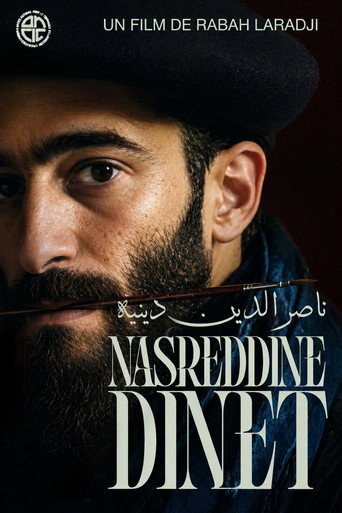
Étienne Dinet (إتيان دينيه), born March 28, 1861 in Paris, where he died on December 24, 1929, was a French painter and lithographer. He was one of the leading representatives of Orientalist painting at the turn of the 19th and 20th centuries. Obtaining a scholarship in 1884, Dinet undertook his first trip to southern Algeria in the region of Bou-Saâda, the Naili culture having a profound impact on him, as he would return there many times until he settled in his first Algerian studio in Biskra in 1900. In 1905, he bought a house in Bou-Saâda to spend three-quarters of the year there. In 1907, on his advice, the Villa Abd-el-Tif was created in Algiers, modeled on the Villa Medici in Rome. Having lived much of his life in Algeria, he called himself Nasreddine Dinet (نصر الدين ديني) after converting to Islam. On January 12, 1930, he was buried in the Bou-Saâda cemetery, where a museum that houses many of his works bears his name.
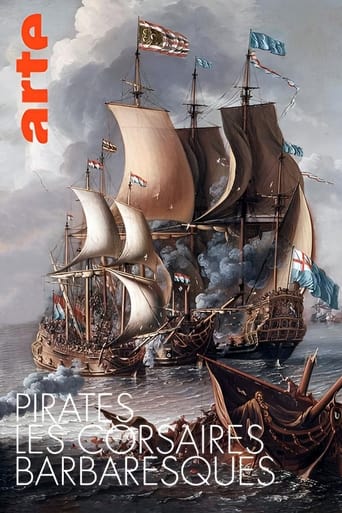
In the 18th century, the Barbary threat became serious. In July 1785, two American boats were returned to Algiers; In the winter of 1793, eleven American ships, their crews in chains, were in the hands of the dey of Algiers. To ensure the freedom of movement of its commercial fleet, the United States was obliged to conclude treaties with the main Barbary states, paying considerable sums of money as a guarantee of non-aggression. With Morocco, treaty of 1786, 30,000 dollars; Tripoli, November 4, 1796, $56,000; Tunis, August 1797, 107,000 dollars. But the most expensive and the most humiliating was with the dey of Algiers, on September 5, 1795, “treaty of peace and friendship” which cost nearly a million dollars (including 525,000 in ransom for freed American slaves). , with an obligation to pay 20,000 dollars upon the arrival of each new consul and 17,000 dollars in annual gifts to senior Algerian officials...
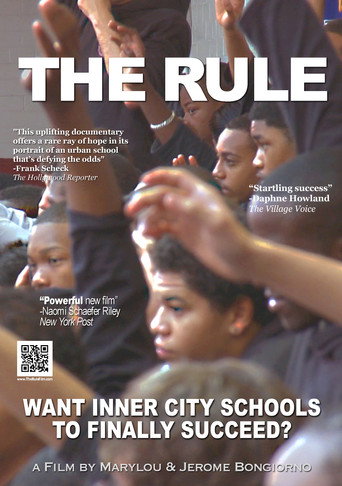
See how the Benedictine monks of Newark Abbey, in the heart of one of America's most dangerous cities, are able to achieve amazing success with the most vulnerable population: inner city African American and Latino teenage males. While Newark, NJ, with a high poverty rate of 32%, has an abysmal high school graduation rate, St. Benedict's Prep has a near 100% COLLEGE ACCEPTANCE rate. The film details how their "recipe for success" follows the 6th century Rule of Saint Benedict and how this rule can serve as a model for whole cities nationwide.

Aimee and Steph are up for an adventure; its a hot summer's night and they are fueled by cheap alcohol and teen hormones. The promise of cool water lures the two girls to an isolated fire-water tank. Once there, the intimate mood of the tank takes a dramatic turn, forcing Aimee to make a decision that she will question for the rest of her life.

Rachel Corrie, a young American woman and her friends attempt to stop a bulldozer from clearing out some homes and other buildings. Corrie was run over and killed. Witnesses claim it was deliberate.
Friedl vom Gröller's Poetry for Sale is a portrait of a young man peddling verse on the Paris metro. Reinforcing the antiquated nature of his actions, vom Groller constructs a classical scene then cedes control to her subject, with his seductive confidence, beau-laide looks and incantatory offer.

About an androgynous preteen boy, who sits while peeing and has fantasies about aliens with his deformed and badly handicapped teenage neighbor, while his macho brother rapes her, playing Mario Bro's.
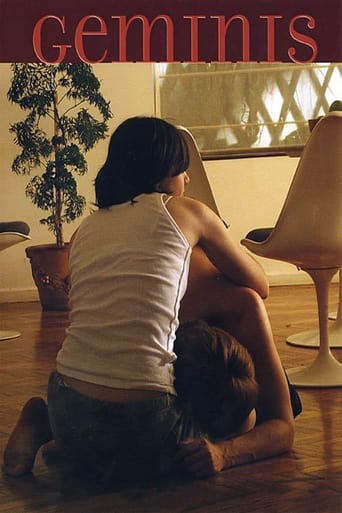
An incestuous love affair. Meme and Jeremias are the younger children in a typical bourgeois family. Their mother Lucia is the dominant force in the household, but her fixation on upholding the niceties of upper middle class life has prevented her from seeing what is going on under her roof. When the siblings’ older brother and his fiancee arrive home for their wedding, it seems inevitable that the concealment will be impossible to sustain. But equally it becomes apparent that if Lucia were to find out about the affair, there would be catastrophic consequences.

Filmed live during Black Sabbath's 1999 "Reunion" tour, this historic concert features the original lineup of the legendary metal band.
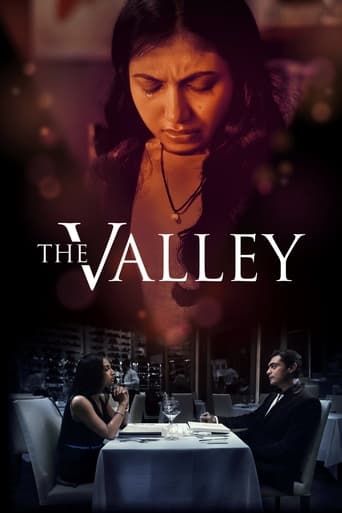
Devastated by his daughter's suicide, an immigrant entrepreneur working in high-tech seeks answers to his lingering questions.

Councilor Sven Ersson and farmer Jan Hansson have been bitter enemies for several years. Sven's neighbour Ola in Gyllby has a daughter Britta, the perfect partner for Sven's son Erik. But Erik only has eyes for Anna, the daughter of Jan Hansson. Unaware of the hostility between the families, Erik has asked Anna to marry him.

The victim of a serious accident, Camille finds himself in a strange, huge, rehabilitation centre run by Professor Helpos. He soon teams up with a group calling themselves "the wreckers" and who make their own rules, ignoring those of the medical establishment.

Amy's father, Franco, was a popular rock musician accidentally electrocuted while performing on stage. The psychological trauma leaves Amy mute and deaf. So the 8-year-old is brought by her mother, Tanya, to Melbourne to diagnose the reasons for her continued silence.

In a remote part of rural, post-apocalyptic England, now occupied by unseen alien invaders, a feisty teenage girl sets out on a desperate attempt to fight back a group of bandits and defend her parents' farm, their remaining livestock, and the solar panels that keep them safe from extraterrestrials. If she doesn't succeed, she will lose her only source of food and shelter; if she resists, she and her helpless blind sibling will be killed.

"There are two movies I saw on TV about boys who were taken from their families and then returned to them years later. One boy was on a fun spaceship for years and the other boy was kidnapped and molested. These boys were never the same again and they just couldn't re-integrate into the family. I saw these movies when I was little. I've often described them to people, always paired together. They are sort of the comedy and tragedy version of the same story and it is a mundanely spiritual story. Getting Stronger Every Day includes these boys' tales, but they are like mystical objects placed on the living reality of the man storyteller. In other parts of the movie actual mystical objects hover in peoples lives without a myth or story attached. I like to think about how these dimensions interact simply and can be enacted: real life / story / worldly / spirit / video / flat drawing."

Buttercup Bill is the psycho-sexual romance of Patrick and Pernilla- mutually obsessed soul mates clinging to childhood secrets. Closer to twins separated at birth than friends or lovers, they express love through sexual games of jealousy and subversion and seek escape from a reality they believe has no place for them.
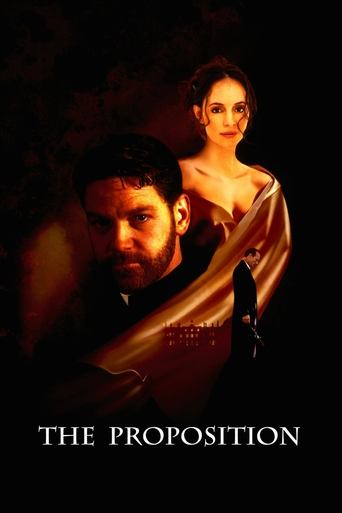
Father Michael McKinnon goes from the UK to Boston circa 1935. For unknown reasons, he avoids at all costs the most prominent parishioners, Arthur and Eleanor Barret. Meanwhile Eleanor and Arthur desperately want to have a child, but Arthur is sterile, so they hire Harvard law student Roger Martin to impregnate Eleanor, but unfortunately Roger falls in love with her.

A young woman must choose loyalty to a historical Asian clan, and her non-traditional love, amidst the deaths of her dance partners being investigated by her new lover.

The conflict of a woman with her husband when she starts defending her individuality.
In front of the salvation Army headquarters. An old man who is being teased by a flock of children, is almost run over by a car. Out of the headquarters gates march singing and playing female Salvation Army soldiers. One of the women is on her way to a nearby restaurant where the two sisters Ruth and Fanny works as waitresses.