
Recurring Phrases
2021-07-01 · 6 min · ★ 6.0
A film about endless processes. Images reappearing. New sentences being written.
Trailers are previews, not full movies.
No authorized playback source configured. Use the legal watch options below.
Production details
- Directors
- Francisco Rojas
- Production companies
- Unavailable
- Countries
- Unavailable
- Status
- Released
Top Cast
Cast unavailable.
Title information and images are supplied by TMDb. Explore our discovery guide for advice on comparing metadata and legal viewing options.
Where to watch
Availability provided by JustWatch via TMDb. Offers can change. Provider links are listed on TMDb; full playback requires a separately authorized source.
Availability not listed for this country.
Seasons & episodes
Recommendations
20 men are chosen to participate in the roles of guards and prisoners in a psychological study that ultimately spirals out of control.
The government gets wind of a plot to destroy America involving a trio of nuclear weapons for which the whereabouts are unknown. It's up to a seasoned interrogator and an FBI agent to find out exactly where the nukes are.

In 1974, Chilean-French director Alejandro Jodorowsky embarked on the quixotic project of adapting Frank Herbert's influential novel Dune (1969) for the big screen. After investing two years, and millions of dollars, the gigantic project ended in failure; but the artists Jodorowsky brought together to carry it out continued to work together, and ended up laying the foundations for modern science fiction cinema.
Victor Frankenstein is a promising young doctor who, devastated by the death of his mother during childbirth, becomes obsessed with bringing the dead back to life. His experiments lead to the creation of a monster, which Frankenstein has put together with the remains of corpses. It's not long before Frankenstein regrets his actions.
Bruce Conner's landmark experimental film consisting entirely of found footage edited to a new score.
Arthur Lipsett's first film is an avant-garde blend of photography and sound. It looks behind the business-as-usual face we put on life and shows anxieties we want to forget. It is made of dozens of pictures that seem familiar, with fragments of speech heard in passing and, between times, a voice saying, "Very nice, very nice." The film was nominated for an Oscar for Best Live Action Short Film.
Experimental short uses Ray Charles' “What'd I Say” as accompaniment to constantly shifting collage of female nude, cartoons, and newsreels of atomic bomb explosions.

A compilation of over 30 years of private home movie footage shot by Lithuanian-American avant-garde director Jonas Mekas, assembled by Mekas "purely by chance", without concern for chronological order.
In this documentary, wealthy entrepreneur Bryan Johnson puts his body and fortune on the line to defy aging and extend his life beyond all known limits.

This special explores the return of Obi-Wan Kenobi and Anakin Skywalker to the screen, as well as Ewan McGregor and Hayden Christensen to their classic roles. Director Deborah Chow leads the cast and crew as they create new heroes and villains that live alongside new incarnations of beloved Star Wars characters, and an epic story that dramatically bridges the saga films.
A nameless drifter navigates a barren landscape punctuated by satellite dishes, radio towers and droning airplanes. Stopping periodically in anonymous hotel rooms, she makes attempts to connect to an unidentified second party.

As a visually radical memoir, CAMERAPERSON draws on the remarkable footage that filmmaker Kirsten Johnson has shot and reframes it in ways that illuminate moments and situations that have personally affected her. What emerges is an elegant meditation on the relationship between truth and the camera frame, as Johnson transforms scenes that have been presented on Festival screens as one kind of truth into another kind of story—one about personal journey, craft, and direct human connection.
Nothing is as it seems when a woman experiencing misgivings about her new boyfriend joins him on a road trip to meet his parents at their remote farm.
In 1971, Stanford's Professor Philip Zimbardo conducts a controversial psychology experiment in which college students pretend to be either prisoners or guards, but the proceedings soon get out of hand. Based on a true story.
Through the lens of his stunningly immersive performance as Andy Kaufman, Jim Carrey ponders the meaning of life, reality, identity and career.

Director Michael Apted revisits the same group of British-born adults after a 7 year wait. The subjects are interviewed as to the changes that have occurred in their lives during the last seven years.
What happened after Einstein fled Nazi Germany? Using archival footage and his own words, this docudrama dives into the mind of a tortured genius.
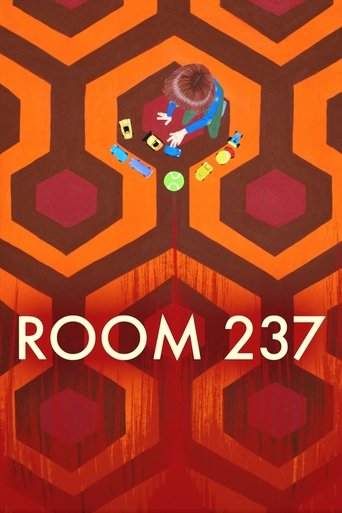
A subjective documentary that explores various theories about hidden meanings in Stanley Kubrick's classic film The Shining. Five very different points of view are illuminated through voice over, film clips, animation and dramatic reenactments.
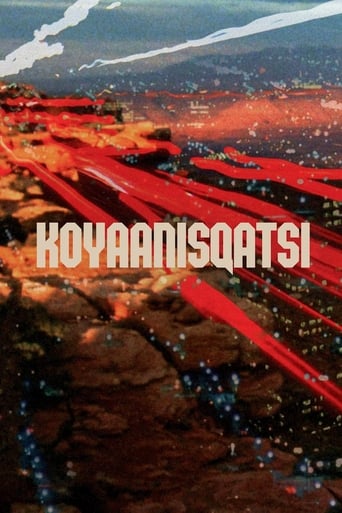
Takes us to locations all around the US and shows us the heavy toll that modern technology is having on humans and the earth. The visual tone poem contains neither dialogue nor a vocalized narration: its tone is set by the juxtaposition of images and the exceptional music by Philip Glass.
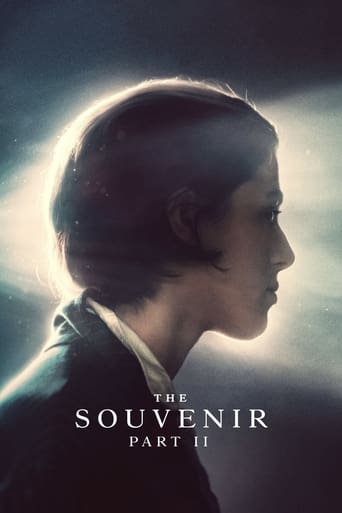
In the aftermath of her tumultuous relationship with a charismatic and manipulative older man, Julie begins to untangle her fraught love for him in making her graduation film, sorting fact from his elaborately constructed fiction.
Similar titles

In a battle of man versus machine, Martin, a top neurosurgeon who's studying brain malfunctions that cause mental illness, delves deep into his own mind to save himself from a megalomaniacal corporation.
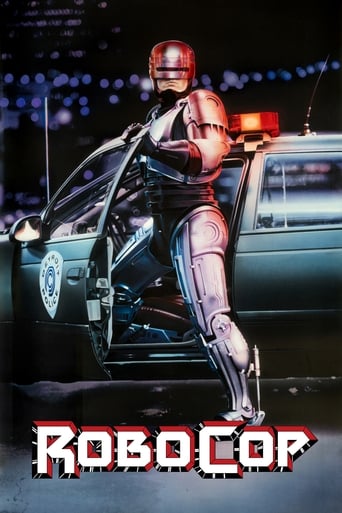
In a violent, near-apocalyptic Detroit, evil corporation Omni Consumer Products wins a contract from the city government to privatize the police force. To test their crime-eradicating cyborgs, the company leads street cop Alex Murphy into an armed confrontation with crime lord Boddicker so they can use his body to support their untested RoboCop prototype. But when RoboCop learns of the company's nefarious plans, he turns on his masters.

Tenshu is imprisoned and sentenced to death for murdering the men who raped his girlfriend. However, he manages to survive his execution and is presented with an option: face another execution attempt or subject himself to their bizarre and dangerous experiments.
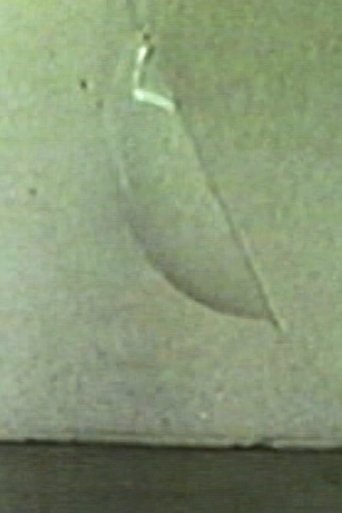
“Peter Kubelka…was teaching at Staatliche Hochschule für Bildende Künste – Städelschule (Städel) at the time. His classes, filmmaking and cooking, were very unique, and this film was made around the time I was studying with him at Städel… This is a single-shot film, moving along the passageway using a handmade dolly. I used an Arriflex 16ST camera, and I changed the filming speed from 48fps to 4-6 fps while shooting.” - Yo Ota
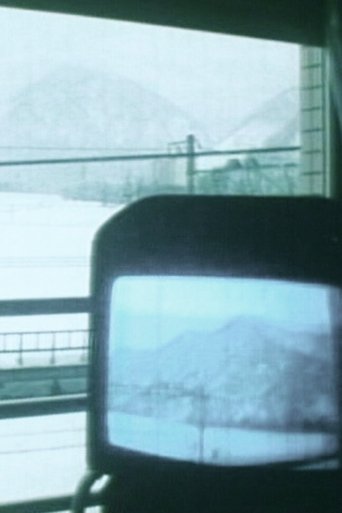
“The visual harmony of the landscape is disturbed by a screen that allows us to see into the distance (television). The film is composed of six scenes that feature a television in the landscape. The speed of the television (in NTSC) is 30 frames per second, and never changes in this film. But the landscape views pass at different speeds.” - Yo Ota
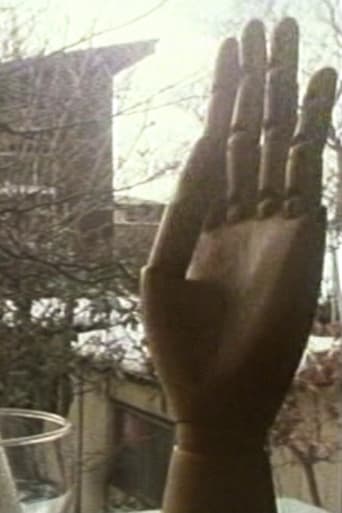
“The structure of human vision is the visual knowledge of the world. Individuals do not visually understand the world through the eyes, but through the brain. That is to say, human vision has been formed by knowledge and experience. The film can show a new vision, provided that the cinema is also a kind of visual experience and visual knowledge.” - Yo Ota
“One can not speak of time as a thing in itself. It is movements and variations that give the feeling of time. Men have always linked time and spatial movement.” - Yo Ota

“This film offers a metacinematic study of tempo and change and a figure of velocity. […] Ota recorded [three different locations in Tokyo] at the interval of hours, and sometimes even days, by using different filters and by alternating the camera speed. The result…represents an inquiry into the abstract space-time of cinema where Ota plays with the physical fact that time is a ‘function of movement in space.’” –Malin Wahlberg

“Sequences of space-time manipulation that raise the problem of continuity in the shot.” - Yo Ota
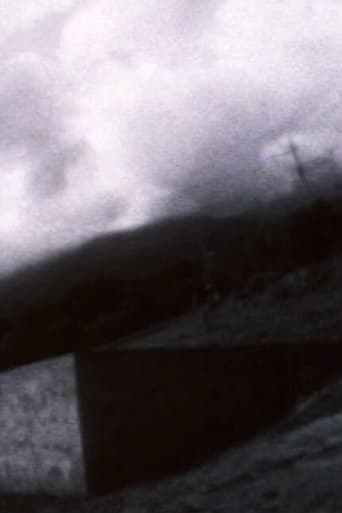
“My attempt at a filmic interpretation of Haraguchi Noriyuki’s ‘Inclined Horizon,’ a three-dimensional physical work featured in the ‘Dance Hakushu 2006’ exhibition held in the Hakushu district of Hokuto City, Yamanashi Prefecture. Haraguchi’s work was modeled out of earth that will return to its original form after about a month, and my aim was to resurrect the concept of this work on film.” - Yo Ota

After the death of his wife, a grieving man becomes the victim of a horrific experiment to cure his addiction.

Film by Paul Clipson. Music by Jefre Cantu Ledesma.

A soldier runs amok in a school. Military police and SEK take aim at the heavily armed man. Suddenly he is shot dead, but none of the snipers fired the final shot. Inspector Bischof is tasked with finding out who killed the soldier. The soldier was stationed in the very barracks that is under the command of Lieutenant Colonel Ralf Bischof, Kathrin's husband. An officer from the Military Counter-Intelligence Service is assigned to assist her in the investigation. Kathrin bites into the case. She finds out that the dead soldier was taking part in a series of scientific experiments testing methods to prevent anxiety. This research project is being led by her sister Ariane, a renowned psychiatrist. Kathrin's investigation puts her in extreme danger.
“This film was made for an event that included an exhibition of artwork by Eishi Yamatomo. Yamatomo’s metal sculpture is often finished with a chromium plating, which reflects its surroundings. For this project, I tried to obtain the image of a metal sculpture as an existing entity and its reflection as an illusion on a film medium, which can hold an image as an object. It was originally shot on 8mm film, hand-processed, edited, then re-photographed on 16mm film.” - Yo Ota
“The ‘exhibition’ held by ‘artist’ Katsuhiro Fujimura in Tokyo during the very hot summer of 2013 was one that made viewers suffer. The ‘painting’ that stood leaning against the window had very faint colors and regular scratches that could not be seen very well because of the light streaming in from the outside. The light changed with the time of day, and the surface of the painting also shifted. The paint on the front of the panel can only be perceived as ‘color’ by reflecting light. The fact that if the light changes what is seen also changes is quite obvious, but because it is a ‘painting’ viewers find this hard to accept.” - Yo Ota
“There was an art event at a closed school, Kataura Junior High School, in Nebukawa, Kanagawa Prefecture. If I did not participate in this event to show my films, I would never have got off at Nebukawa Station. I saw the sea from the school building. The installation by Tetsuya Iimuro was placed in a science room at the school, where one could see the ocean through the windows.” - Yo Ota

The pantomime of two characters exchanging roles is accompanied by a three-layered phonogram, where sophisticated narrative text is interrupted by slightly accelerated excerpt from Brezhnev’s speeches, as well as by fragments of statements of the mentally ill person with the schizophasia symptom.

In this unofficial sequel to "Every Single Minute", the boy finds himself lost in his sleep state.
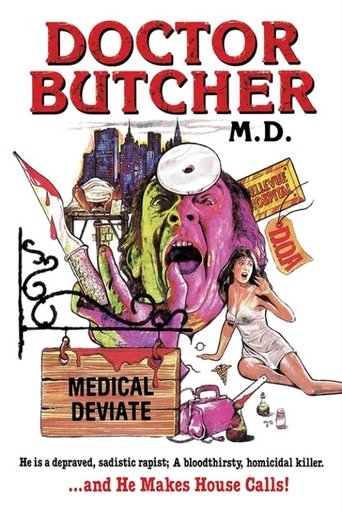
After Malukan immigrants engage in a string of corpse mutilations at various New York City hospitals, a doctor and a morgue assistant travel to the Maluku Islands to investigate.

Isaac travels to Mount Moriah with his father to make a sacrifice to God.