

Taking Back the Legislature
2020-11-07 · 46 min · ★ 3.7
After a night of planning and mourning, a storm is brewing at early hours of 1 July, 2019. In face of the absurdity of the government's indoor flag ceremony, protesters question the usefulness of peaceful protest and hope to storm the Legislative Council Complex as a last-ditch effort to ignite change in the movement. As they confront pro-democracy councillors outside the complex, their pent-up anger and despair explode.
Trailers are previews, not full movies.
No authorized playback source configured. Use the legal watch options below.
Production details
- Directors
- Hong Kong Documentary Filmmakers
- Production companies
- Unavailable
- Countries
- Hong Kong
- Status
- Released
Top Cast
Cast unavailable.
Title information and images are supplied by TMDb. Explore our discovery guide for advice on comparing metadata and legal viewing options.
Where to watch
Availability provided by JustWatch via TMDb. Offers can change. Provider links are listed on TMDb; full playback requires a separately authorized source.
Availability not listed for this country.
Seasons & episodes
Recommendations

A string of threatening emails escalates into a revenge plot involving a newly married US marshal and his ex-girlfriend.
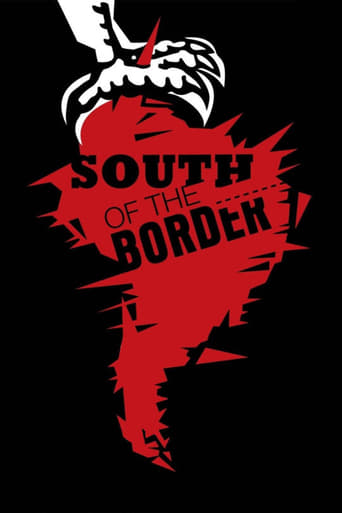
A road trip across five countries to explore the social and political movements as well as the mainstream media's misperception of South America while interviewing seven of its elected presidents.

An inside look at one of the most anticipated movie sequels ever with James Cameron and cast.
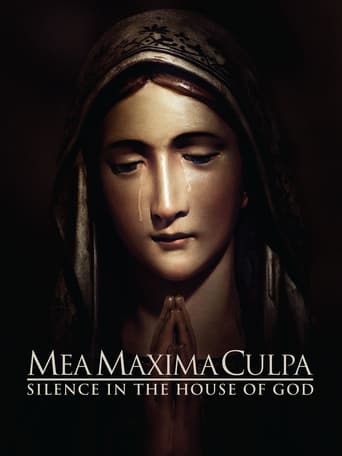
Alex Gibney explores the charged issue of pedophilia in the Catholic Church, following a trail from the first known protest against clerical sexual abuse in the United States and all way to the Vatican.
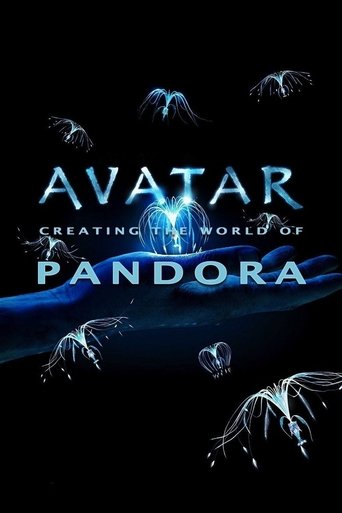
The Making-of James Cameron's Avatar. It shows interesting parts of the work on the set.
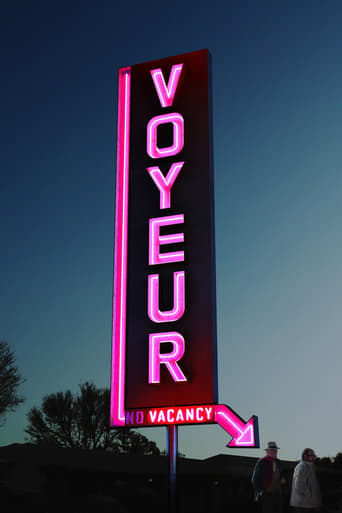
Legendary journalist Gay Talese unmasks a motel owner who spied on his guests for decades. But his bombshell story soon becomes a scandal of its own.

Through deeply personal interviews with her siblings and an examination of the photographs, letters, and belongings left behind, Mariska assembles a new portrait of her mother Jayne Mansfield, an extraordinary and complex woman.
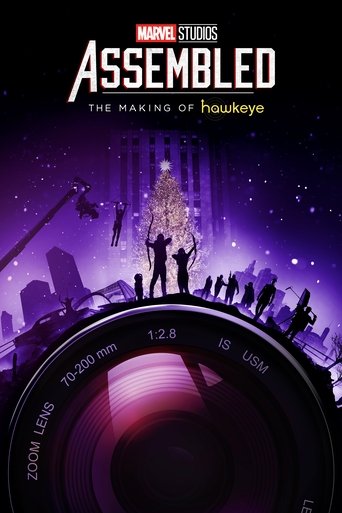
Join the likes of Jeremy Renner, Hailee Steinfeld, Florence Pugh, and Vincent D’Onofrio as they reveal how Marvel Studios’ “Hawkeye” was conceived and created. Witness firsthand what it took to pull off the show’s pulse-pounding action set pieces, and discover how iconic characters from the pages of Marvel Comics such as Kate Bishop were adapted and brought to life for the six-episode series.

A documentary that explores the downloading revolution; the kids that created it, the bands and the businesses that were affected by it, and its impact on the world at large.

Vulgar, taunting texts blow up the phones of a teen and her boyfriend. Who's sending them — and why? This twisty documentary reveals the shocking answer.

Over 35 years after Bob Lazar's revelations, this documentary exposes secrets of a facility the government still denies. Featuring Lazar's testimony, recreations, and new evidence, it reopens a case that continues to spark global curiosity
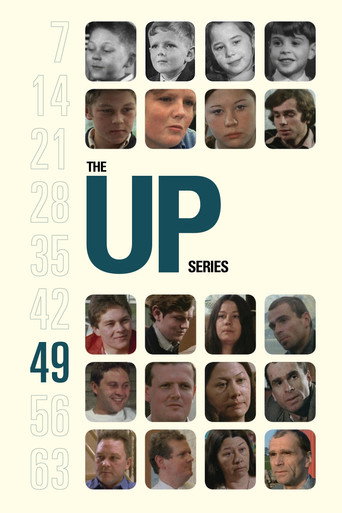
49 Up is the seventh film in a series of landmark documentaries that began 42 years ago when UK-based Granada's World in Action team, inspired by the Jesuit maxim "Give me the child until he is seven and I will give you the man," interviewed a diverse group of seven-year-old children from all over England, asking them about their lives and their dreams for the future. Michael Apted, a researcher for the original film, has returned to interview the "children" every seven years since, at ages 14, 21, 28, 35, 42 and now again at age 49.In this latest chapter, more life-changing decisions are revealed, more shocking announcements made and more of the original group take part than ever before, speaking out on a variety of subjects including love, marriage, career, class and prejudice.

A visual montage portrait of our contemporary world dominated by globalized technology and violence.

In an intimate and joyful story of love in the face of loss, celebrated poets Andrea Gibson and Megan Falley find strength—and unexpected hilarity—in what might be their final year together.
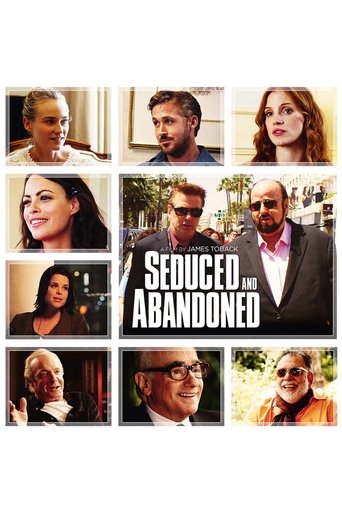
SEDUCED AND ABANDONED combines acting legend Alec Baldwin with director James Toback as they lead us on a troublesome and often hilarious journey of raising financing for their next feature film. Moving from director to financier to star actor, the two players provide us with a unique look behind the curtain at the world's biggest and most glamourous film festival, shining a light on the bitter-sweet relationship filmmakers have with Cannes and the film business. Featuring insights from directors Martin Scorsese, 'Bernando Bertolucci' and Roman Polanski; actors Ryan Gosling and Jessica Chastain and a host of film distribution luminaries.
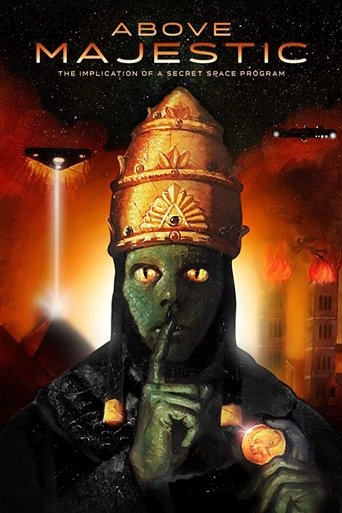
A look at the origins, history and conspiracies behind the "Majestic 12", a clandestine group of military and corporate figureheads charged with reverse-engineering extraterrestrial technology.

The film follows adventurer Jeff Johnson as he retraces the epic 1968 journey of his heroes Yvon Chouinard and Doug Tompkins to Patagonia.

When Sgt. First Class Brian Eisch is critically wounded in Afghanistan, it sets him and his sons on a journey of love, loss, redemption and legacy.
A sexual wellness company gains fame and followers, then members come forward with shocking allegations.
A documentary on the life of John Lennon, with a focus on the time in his life when he transformed from a musician into an antiwar activist.
Similar titles
Hundreds of thousands − perhaps even millions − of protestors have taken to the streets of Hong Kong since early June. Sparked initially by the government's plans for a controversial extradition bill, the movement has now transformed into a broader push for greater freedoms and democracy, with anger over police brutality fuelling a cycle of violence. The protests are Hong Kong's biggest challenge to Beijing since its return to China in 1997. If We Burn looks at the movement through the eyes of Hong Kongers whose fates, like their city's future, now hang in the balance.
The Umbrella Movement of 2014, also known as the Occupy Movement, paved the way for Hong Kong’s current upheavals, but unfolded in significantly different ways. This creative documentary focuses on the intellectual, political, and discursive underpinnings of the social and political actions of 2014, before fast-forwarding to 2019. A range of thoughtful and engaged intellectuals, students, scholars, activists, and artists including Benny Tai, Chan Kin-man, Ray Wong, and Agnes Chow (many of whom are facing imprisonment for their democratic activism) articulate a range of philosophies, viewpoints and emotions, set against Hong Kong’s spectacular urban background of skyscrapers, night lights, and street-occupying mass movements.

At the forefront of most of Hong Kong's demonstrations, 'frontliners' (aka 'the valiant', yung mo in Cantonese) are the black-clad, masked, often armed youth willing to use violence against the HK government and its heavily-armed police force. Willis Ho's remarkably revealing doc approaches from the inside, giving them voices and offering understanding, not judgment.

Political engagement spawned the wildest of wonderlands for Hong Kong’s creativity – but as a new law annihilates freedom of expression overnight, underground artists and creatives find themselves targets, and their works disappeared. Together we race to preserve the creative uprising amid China’s crackdown.
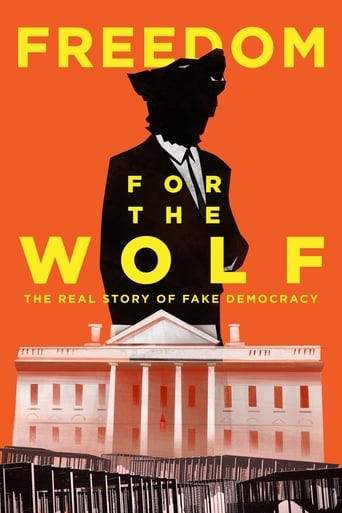
The Real Story of Fake Democracy. Filmed over three years in five countries, FREEDOM FOR THE WOLF is an epic investigation into the new regime of illiberal democracy. From the young students of Hong Kong, to a rapper in post-Arab Spring Tunisia and the viral comedians of Bollywood, we discover how people from every corner of the globe are fighting the same struggle. They are fighting against elected leaders who trample on human rights, minorities, and their political opponents.
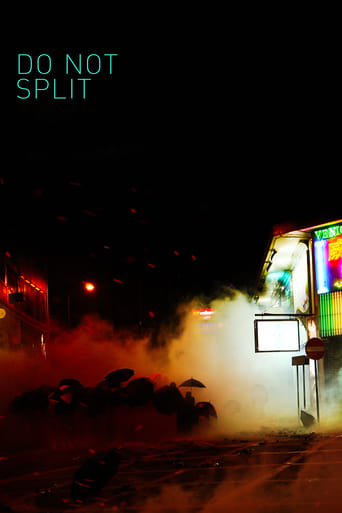
The story of the 2019 Hong Kong protests, told through a series of demonstrations by local protestors that escalate into conflict when highly armed police appear on the scene.
I made June when I didn’t have any inspiration to create a feature film. The documentary is about the rarely known stories in the social movement in June. At first the clips of videos were kept for sorting out my feelings, but after being edited, they were made into a documentary and became a record of history. Six scenes and voices were used to tell what happened during that month.

Throughout Hong Kong’s history, Hongkongers have fought for freedom and democracy but have yet to succeed. In 2019, a controversial extradition bill was introduced that would allow Hongkongers to be tried in mainland China. This decision spurred massive protests, riots, and resistance against heavy-handed Chinese rule over the City-State. Award-winning director Kiwi Chow documents the events to tell the story of the movement, with both a macro view of its historical context and footage and interviews from protestors on the front lines.
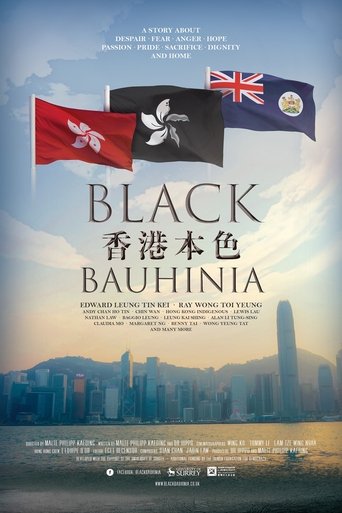
Two young Hong Kong activists reflect on their resistance against China, are forced to decide between long-term imprisonment and refugee camps for a life in exile, while their movement inspires mass protests in the city they love.

An anonymous, authentic video secretly filmed from taxi windows captures fragments of violence right in the middle of clashes between police and protesting Hong Kong residents. In addition to the contact sound of fights, screams, singing, chants of the slogan “Liberate Hong Kong! Revolution of our times!”, and the howls of those who've been beaten, we also hear the conflicting comments of taxi drivers from both sides of the border - Hong Kong and the neighboring mainland Shenzhen.

Hong Kong's high-speed rail link, the demolition of Choi Yuen Village, the impending budget and the influence of the global Occupy movement are at the centre of independent filmmaker Lo's timely measure of the city's pulse. Ostensibly the third entry in a trilogy that began with 21 years after. (2010) and to be continued (2010), which also captured public reaction to watershed moments in Hong Kong's political life since 2009. The documentary was built upon the material used in its previous installment (to be continued, 46 minutes). It disproves the notion of a passive Hong Kong in a chronicle of a generation poised for massive social change.

Hongkongers have been experiencing extremely difficult times due to the political movement caused by anti-Extradition Bill since the summer of 2019 followed by the COVID-19 pandemic. This film explores Hongkongers’ fear in various dimensions, be it a concept or actual physical experience, personal or political, private or public, or the mixing of these pairs.
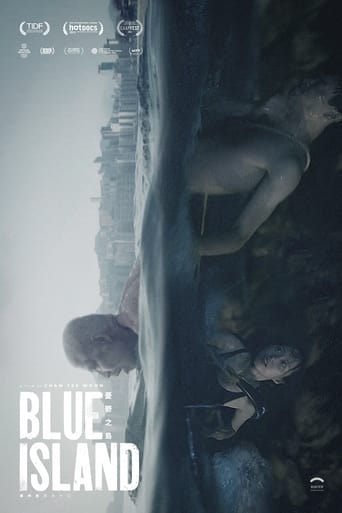
Although the Chinese government promised that Hong Kong would retain separate status until 2047, in recent years the Chinese state has consolidated its power over the metropolis. Large-scale protests by the populace have been brutally suppressed. This mix of documentary, fiction, and visions of the future reveals the current state of desolate depression among the people of Hong Kong. “A desperate attempt to capture the final moments of a sinking island”, as maker Chan Tze-woon himself puts it.

In late 2009, over twenty Hong Kong civic groups united as the "Anti-High-Speed Rail, Stop Funding" coalition, aiming to halt Legislative Council approval of the HKD 66.9 billion Express Rail Link amid deep social rifts. The "Post-80s Anti-High-Speed Rail Youth" group drew thousands of young people with their slogan “Defend Our Homeland, Protest with Joy,” leading to three funding suspensions that surprised the public. Media coverage was intense and innovative, featuring rare camera angles and lively online debate among journalists. This documentary explores how reporters shaped the movement, their emotional involvement, and the dynamic relationship between the media and activists during Hong Kong’s pivotal 2009–10 protests.
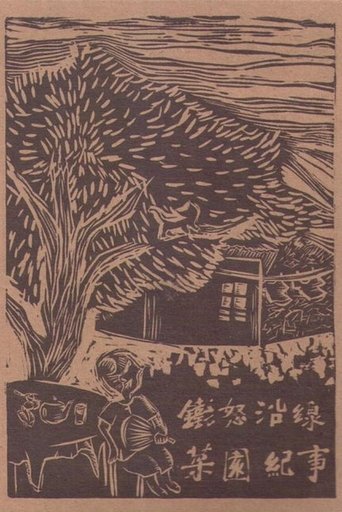
This is a film about Choi Yuen Village, documenting villagers’ lives in the summer and autumn of 2009. Suddenly, weekly meetings, guided tours, protests, and ambiguous government consultations entered their routines. They had to recount their personal histories and the meaning of life. The common belief that protests were only about money began to loosen. The word "agriculture" reemerged for Hongkongers. The timeline depicted in the film leads up to the peak of the anti-high-speed rail protests around the Legislative Council. In the end, the railway was decided to build. In spring and summer 2010, villagers searched for land and negotiated with the government to rebuild their homes and lifestyle, valuing community, and coexistence with nature. What sustains their deep connection to land and life?

Choi Yuen Village faced demolition by the express rail project. In 2009, villagers protested and petitioned, sparking the anti-express rail movement. Despite their efforts, the railway plan was approved in early 2010. Forced to choose between leaving or rebuilding, they opted for the government’s land rehabilitation scheme to create a new village together. With volunteers, they searched for land in Pat Heung and fought to prove their status as farmers. Many outsiders misunderstood, believing the villagers received generous compensation and government help. Yet, it was the villagers’ shared determination and love for their land and way of life that carried them through, even as the once-barren longan trees bloomed again in 2010.

After the anti-express rail protests, Choi Yuen Village’s struggle did not end with the railway project approval. Villagers shifted from fighting demolition to painstakingly relocating and rebuilding their community. In 2011, they planned the new village together—including house design, sewage, and land use—while facing government pressure to move out by November. Road access issues caused additional worries. As demolition began, villagers stood together to protect their homes and demanded time to build before moving. By May 2011, villagers left their longtime homes for makeshift housing on newly bought farmland, continuing their collective effort. Their unity in overcoming countless challenges set an example for other rural communities and shows that real resistance is a long journey requiring ongoing attention.

The work documented the story of Yuli, a Hong Kong domestic worker from Indonesia. She is a novelist who won a literature award and also a journalist dedicated to writing. Between the social event that happened in June in Hong Kong, her thoughts and caring about the city are far more from what people used to imagine a narrative of a domestic worker. They are not only domestic workers but they also have other social roles, e.g. a citizen who lived in Hong Kong.

As pro-democracy activists and armed police battle in the streets of Hong Kong, ordinary citizens are choosing sides. Historically an outlier of both western and Chinese power, Hong Kong wields its own economic force, affording the city and its people a spirit of independence that has now erupted into clouds of tear gas. Filmmaker Bing Zhou uses a nimble camera to follow a group of protagonists—two opposing political candidates, a tea shop owner, a cab driver, a police officer, a paramedic—on two separate days of conflict. On September 21, 2019, protestors from three districts join forces, resulting in unprecedented violence. Just 10 days later on October 1, the National Day of the People’s Republic of China, previously undecided onlookers show their stripes. Thoughts transform into action in this demonstration of how mercurial and personal Hong Kong’s politics have become.

In 2019, Hong Kong was swept by demonstrations against the controversial extradition bill. At the Polytechnic University, a group of students also takes a stand for freedom and democracy. Negotiations with the police are chaotic and aggressive, conducted via megaphones and politically charged music played over loudspeakers. The colorful umbrellas which the young people use to protect themselves against the brutal police actions emphasize the group’s bravado, which borders on recklessness. What begins as an energetic battle against the establishment turns into a lopsided game of cat and mouse when the police decide to surround the building. Within its red brick walls, the university building becomes a prison. Over the nearly two weeks that follow, as fear and exhaustion grow among the hundreds of students, so does the uncertainty. Should they hang on inside, or leave the building to face the armed police?