
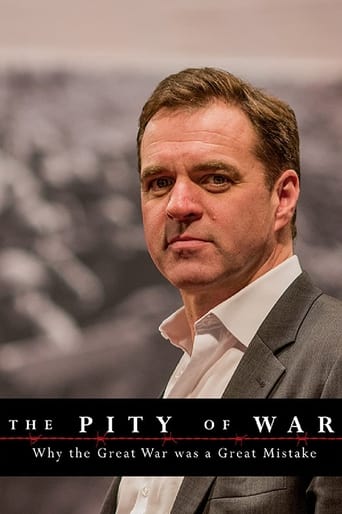
The Pity of War
2014-02-28 · 50 min · ★ 6.0
Professor Niall Ferguson argues that Britain's decision to enter the First World War was a catastrophic error that unleashed an era of totalitarianism and genocide.
Trailers are previews, not full movies.
No authorized playback source configured. Use the legal watch options below.
Production details
- Directors
- Adrian Pennink
- Production companies
- Chimerica Media
- Countries
- United Kingdom
- Status
- Released
Top Cast
 Niall FergusonSelf - Presenter
Title information and images are supplied by TMDb. Explore our discovery guide for advice on comparing metadata and legal viewing options.
Where to watch
Availability provided by JustWatch via TMDb. Offers can change. Provider links are listed on TMDb; full playback requires a separately authorized source.
Streaming
Amazon Prime Video, Amazon Prime Video with Ads, Dox Amazon Channel, Magnolia Selects Amazon Channel
With ads
Pluto TV, YouTube Free, Plex, Amazon Prime Video Free with Ads, Tubi TV, Amazon MX Player
View authorized watch options on TMDbSeasons & episodes
Recommendations

A documentary about World War I with never-before-seen footage to commemorate the centennial of Armistice Day, and the end of the war.

“The Soviet Story” is a story of an Allied power, which helped the Nazis to fight Jews and which slaughtered its own people on an industrial scale. Assisted by the West, this power triumphed on May 9th, 1945. Its crimes were made taboo, and the complete story of Europe’s most murderous regime has never been told. Until now...

Prelude to War was the first film of Frank Capra's Why We Fight propaganda film series, commissioned by the Pentagon and George C. Marshall. It was made to convince American troops of the necessity of combating the Axis Powers during World War II. This film examines the differences between democratic and fascist states.

When Sgt. First Class Brian Eisch is critically wounded in Afghanistan, it sets him and his sons on a journey of love, loss, redemption and legacy.

This documentary movie is about the battle of San Pietro, a small village in Italy. Over 1,100 US soldiers were killed while trying to take this location, that blocked the way for the Allied forces from the Germans. Preserved by the Academy Film Archive in 2005.
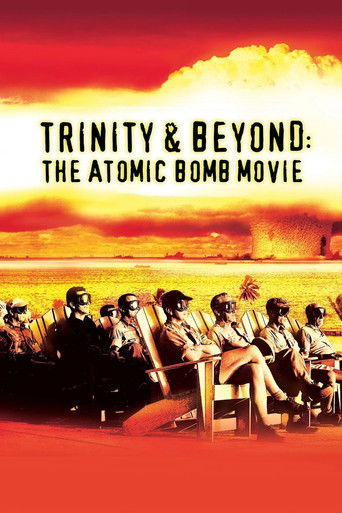
"Trinity and Beyond" is an unsettling yet visually fascinating documentary presenting the history of nuclear weapons development and testing between 1945-1963. Narrated by William Shatner and featuring an original score performed by the Moscow Symphony Orchestra, this award-winning documentary reveals previously unreleased and classified government footage from several countries.

Amid the failing counteroffensive, a journalist follows a Ukrainian platoon on their mission to traverse one mile of heavily fortified forest and liberate a strategic village from Russian occupation. But the farther they advance through their destroyed homeland, the more they realize that this war may never end.
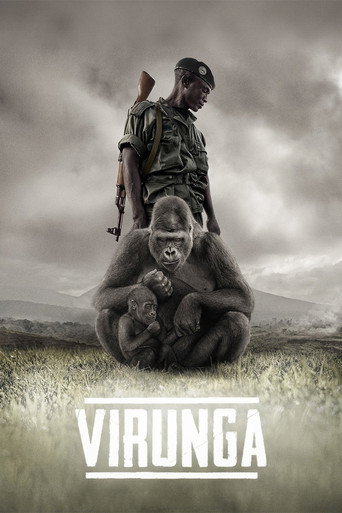
Virunga in the Democratic Republic of the Congo is Africa's oldest national park, a UNESCO world heritage site, and a contested ground among insurgencies seeking to topple the government that see untold profits in the land. Among this ongoing power struggle, Virunga also happens to be the last natural habitat for the critically endangered mountain gorilla. The only thing standing in the way of the forces closing in around the gorillas: a handful of passionate park rangers and journalists fighting to secure the park's borders and expose the corruption of its enemies. Filled with shocking footage, and anchored by the surprisingly deep and gentle characters of the gorillas themselves, Virunga is a galvanizing call to action around an ongoing political and environmental crisis in the Congo.

Korengal picks up where Restrepo left off; the same men, the same valley, the same commanders, but a very different look at the experience of war.

Set both in Latin America and the United States, the film explores the historic and current relationship of Washington with countries such as Venezuela, Bolivia and Chile. Pilger says that the film "...tells a universal story... analysing and revealing, through vivid testimony, the story of great power behind its venerable myths. It allows us to understand the true nature of the so-called "war on terror". According to Pilger, the film’s message is that the greed and power of empire is not invincible and that people power is always the "seed beneath the snow".

The history of cinematic sound, told by legendary sound designers and visionary filmmakers.

Marcel Ophuls' riveting film details the heinous legacy of the Gestapo head dubbed "The Butcher of Lyon." Responsible for over 4,000 deaths in occupied France during World War II, Barbie would escape—with U.S. help—to South America in 1951, where he lived until a global manhunt led to his 1983 arrest and subsequent trial.

Oliver Stone charts the history of the United States from the Second World War to the present.

Pete Postlethwaite stars as a man living alone in the devastated future world of 2055, looking at old footage from 2008 and asking: why didn’t we stop climate change when we had the chance?
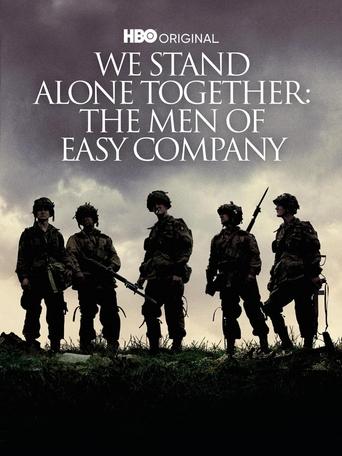
Over a period of two years, Mark Cowen and his crew travelled to thirty U.S. states and ten European cities, to interview the veterans of Easy Company. The stories told by the veterans themselves, create a history of the Second World War from the point of view of this heroic company of men, made famous in the mini-series Band of Brothers.

Decades after her untimely death, Princess Diana continues to evoke mystery, glamour, and the quintessential modern fairy tale gone wrong. As a symbol of both the widening fissures weakening the British monarchy and the destructive machinery of the press, the Princess of Wales navigated an unparalleled rise to fame and the corrosive challenges that came alongside it. Crafted entirely from immersive archival footage and free from the distraction of retrospective voices, this hypnotic and audaciously revealing documentary takes a distinctive formal approach, allowing the story of the People’s Princess to unfold before us like never before.
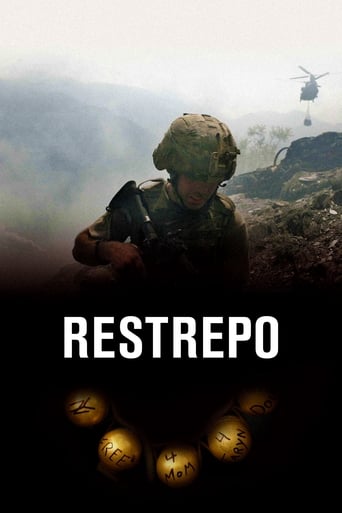
Directors Hetherington and Junger spend a year with the 2nd Battalion of the United States Army located in one of Afghanistan's most dangerous valleys. The documentary provides insight and empathy on how to win the battle through hard work, deadly gunfights and mutual friendships while the unit must push back the Taliban.
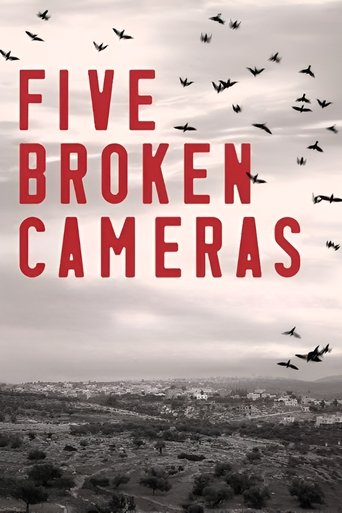
Five broken cameras – and each one has a powerful tale to tell. Embedded in the bullet-ridden remains of digital technology is the story of Emad Burnat, a farmer from the Palestinian village of Bil’in, which famously chose nonviolent resistance when the Israeli army encroached upon its land to make room for Jewish colonists. Emad buys his first camera in 2005 to document the birth of his fourth son, Gibreel. Over the course of the film, he becomes the peaceful archivist of an escalating struggle as olive trees are bulldozed, lives are lost, and a wall is built to segregate burgeoning Israeli settlements.
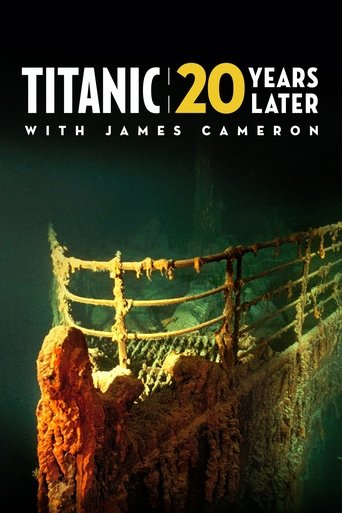
For the 20th anniversary of "Titanic," James Cameron reopens the file on the disaster.

The final entry in a trilogy of films produced for the U.S. government by John Huston. Some returning combat veterans suffer scars that are more psychological than physical. This film follows patients and staff during their treatment. It deals with what would now be called PTSD, but at the time was categorised as psychoneurosis or shell-shock. Government officials deemed this 1946 film counterproductive to postwar efforts; it was not shown publicly until 1981.
Similar titles

The Black Panther star uncovers the astounding true story of the Agoji, Benin’s female army – or as Europeans labeled them, the 'Amazons – then finds the last warrior left alive.

Family Mission is a feature documentary based on the life of TJ Lobraico, a USAF Staff Sergeant from Connecticut who gave his life for his country in Afghanistan in 2013. TJ's mother, father and step-father also served in the Air Force, and the film explores the history and dynamics of these brave Americans who consider service to others a family mission.
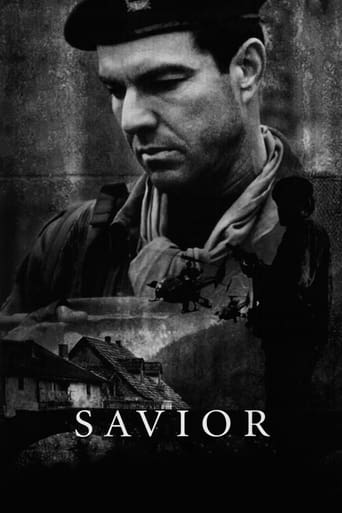
A hardened mercenary in the Foreign Legion begins to find his own humanity when confronted with atrocities during the fighting in Bosnia.
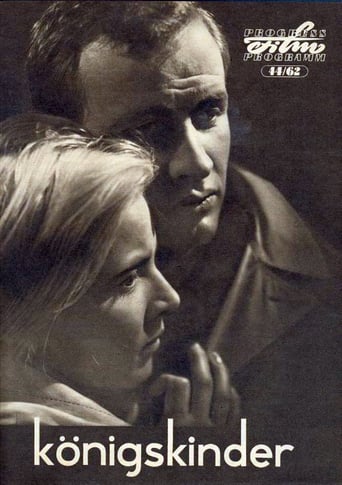
Magdalena and Michael have loved each other since they were children. But when the Nazis come to power, Michael rebels against the regime and is sentenced to fifteen years in a concentration camp. Magdalena, meanwhile, goes underground with the help of a friend and later immigrates to the Soviet Union. Michael, who has joined the Red Army, discovers on the way to Moscow that Magdalena is staying there. But when his plane lands, she is already on her way back to Germany. Michael hopes that one day, he and Magdalena will be reunited.
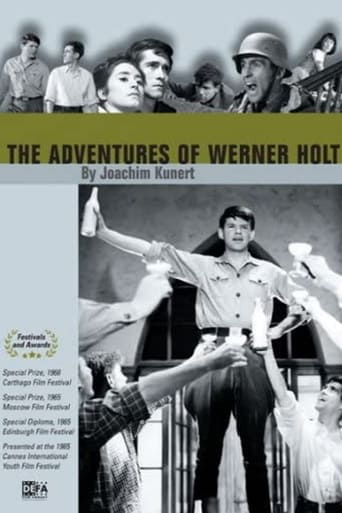
Two 17-year-olds, Werner Holt and Gilbert Wolzow, are pulled out of school and into Hitler's army. Gilbert becomes a fanatical soldier; but at the front, Werner begins to understand the senselessness of war.

The true, harrowing story of a young Jewish girl who, with her family and their friends, is forced into hiding in an attic in Nazi-occupied Amsterdam.

A 1945 Soviet war film which, along with the second part of Eisenstein's Ivan the Terrible was harshly criticized by Andrei Zhdanov and banned. A version of the film, released in 1956 during the Khrushchev Thaw, was disowned by director Grigori Kozintsev because the reediting was done without his participation.
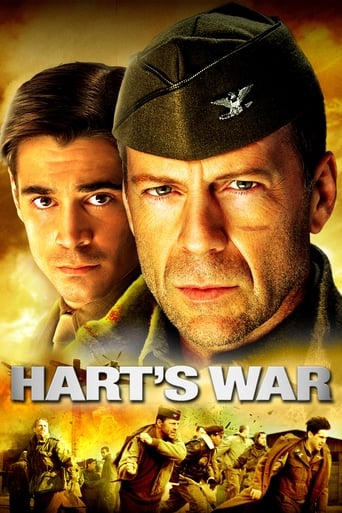
When Col. William McNamara is stripped of his freedom in a German POW camp, he's determined to keep on fighting even from behind enemy lines. Enlisting the help of a young lieutenant in a brilliant plot against his captors, McNamara risks everything on a mission to free his men and change the outcome of the war.

1969. Man lands on the moon. Half a million strong at Woodstock....and Led Zeppelin perform in the gym of the Wheaton Youth Center in front of 50 confused teenagers. Or did they? Filmmaker Jeff Krulik chronicles an enduring Maryland legend, of the very night this concert was alleged to have taken place, January 20, 1969, during the first Presidential Inauguration of Richard Nixon. Led Zeppelin Played Here presents a mid-Atlantic version of what was happening nationwide as the rock concert industry took shape. Featuring interviews with rock writers, musicians, and fans, and several who claim they were witnessing history that night.
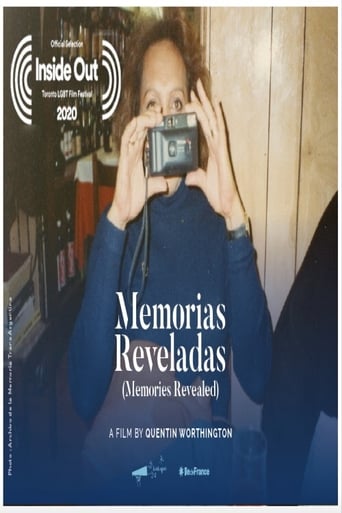
Over the course of 10 months, a camera travels to Buenos Aires, Argentina and Hanover, Germany to meet with Magalí, María Belén, Ivana and Carla, the founding members of the Archivo De La Memoria Trans Argentina, the first existing Trans Archive in the world. Taking the shape of a photo-novel, the documentary not only recounts the founding members lives as trans women under the Argentine dictatorship (1976-1983), the AIDS epidemy, state repression and mass assassinations but also years of fighting for their rights, sorority and the exaltation of life and laughter in times of death. Filming each one of them is filming them embracing their new role as curators, archivists and historians while a collection of 7,000 photos goes through the filter of their memories.
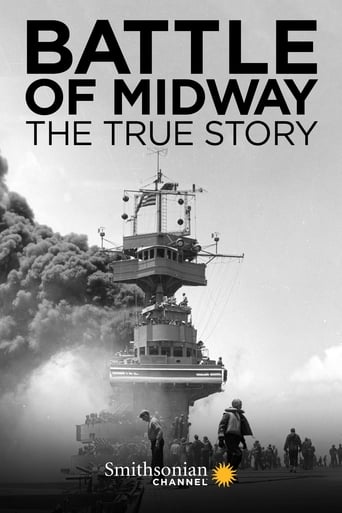
It's June 1942 and the world's fate is about to be decided by a handful of pilots and their untested aircraft. Experience an inside look at the Battle of Midway, captured through rarely seen battle footage and firsthand accounts from its hero dive-bombing pilot, "Dusty" Kleiss. This is an hour-by-hour recount of one of the most pivotal conflicts of the 20th century. Take a closer look at how this desperately needed victory came about through the design of U.S. airplanes, the skill of the pilots, the element of surprise, and a stroke of luck.
Street art, creativity and revolution collide in this beautifully shot film about art’s ability to create change. The story opens on the politically charged Thailand/Burma border at the first school teaching street art as a form of non-violent struggle. The film follows two young girls (Romi & Yi-Yi) who have escaped 50 years of civil war in Burma to pursue an arts education in Thailand. Under the threat of imprisonment and torture, the girls use spray paint and stencils to create images in public spaces to let people know the truth behind Burma's transition toward "artificial democracy." Eighty-two hundred miles away, artist Shepard Fairey is painting a 30’ mural of a Burmese monk for the same reasons and in support of the students' struggle in Burma. As these stories are inter-cut, the film connects these seemingly unrelated characters around the concept of using art as a weapon for change.

In 1962, a group of young men, stationed at a remote Air Force base, band together to undergo a dangerous mission to retrieve mail lost in the frozen landscape of Greenland.
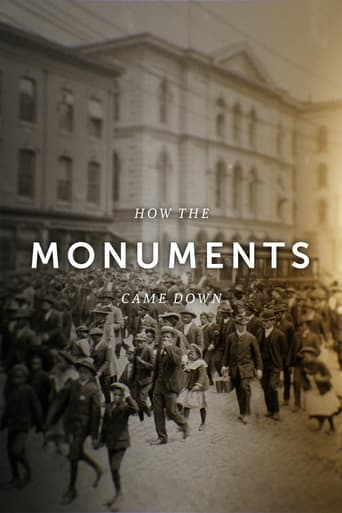
How the Monuments Came Down is a timely and searing look at the history of white supremacy and Black resistance in Richmond. The feature-length film-brought to life by history-makers, descendants, scholars, and activists-reveals how monuments to Confederate leaders stood for more than a century, and why they fell.
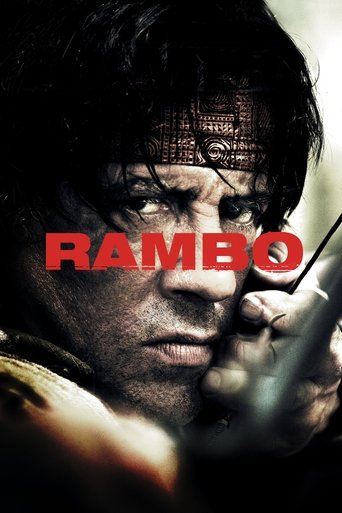
In Thailand, ex-Green Beret John James Rambo joins a group of mercenaries to venture into war-torn neighboring Myanmar to rescue a group of Christian aid workers who have been kidnapped by a ruthless local infantry unit.
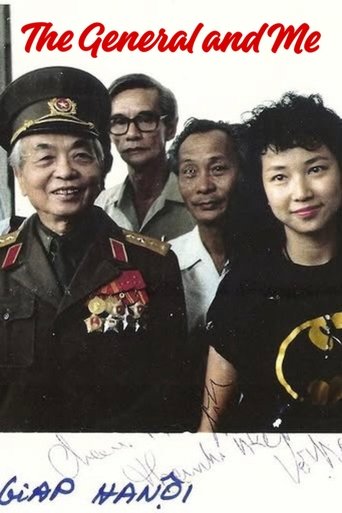
Over the period of 25 years the director met General Võ Nguyên Giáp, a legendary hero of Vietnam’s independence wars, a number of times. She was the first American who entered the home of the “Red Napoleon”. The fruit of this friendship is a film, personal and politically involved at the same time. Travelling across the country and talking to important figures as well as ordinary people, the director finds out more about her roots and offers the audience a unique perspective on Vietnam’s present and past.
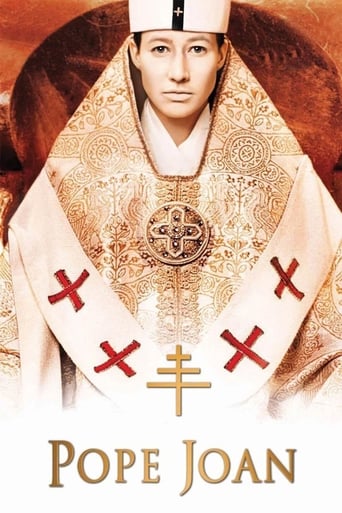
A 9th century woman of English extraction born in the German city of Ingelheim disguises herself as a man and rises through the Vatican ranks.
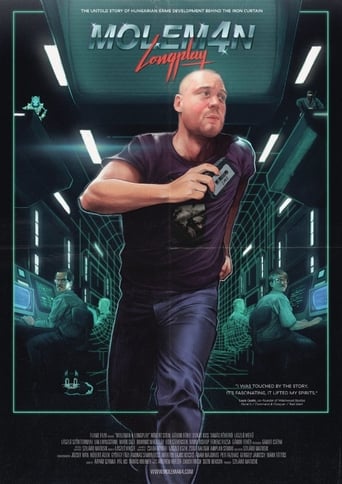
It is the year 2546. Corporations rule the world, and an agent is on a secret mission to explore the untold stories of the past. His journey leads him into a secret virtual reality where one corporation has recreated the 1980s, an era that witnessed the birth of video game development, an event in which a politically and economically restricted small European country, Hungary, had a significant role. He discovers a strange but exciting world, where computers were smuggled through the Iron Curtain and serious engineers started developing games. This small country was still under Soviet pressure when a group of people managed to set up one of the first game development studios in the world, and western computer stores started clearing room on their shelves for Hungarian products.