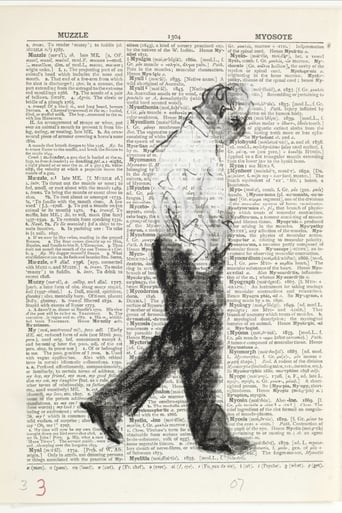
Second-hand Reading
2013-01-01 · 7 min · ★ 8.0
A film constructed from a succession of drawings on old books.
Trailers are previews, not full movies.
No authorized playback source configured. Use the legal watch options below.
Production details
- Directors
- William Kentridge
- Production companies
- Unavailable
- Countries
- South Africa
- Status
- Released
Top Cast
Cast unavailable.
Title information and images are supplied by TMDb. Explore our discovery guide for advice on comparing metadata and legal viewing options.
Where to watch
Availability provided by JustWatch via TMDb. Offers can change. Provider links are listed on TMDb; full playback requires a separately authorized source.
Availability not listed for this country.
Seasons & episodes
Recommendations
Experimental short uses Ray Charles' “What'd I Say” as accompaniment to constantly shifting collage of female nude, cartoons, and newsreels of atomic bomb explosions.
The Making-of James Cameron's Avatar. It shows interesting parts of the work on the set.
A group of friends' fishing boat capsizes off the coast of Mexico and they're left alone stranded at sea and struggling for survival.

“The Soviet Story” is a story of an Allied power, which helped the Nazis to fight Jews and which slaughtered its own people on an industrial scale. Assisted by the West, this power triumphed on May 9th, 1945. Its crimes were made taboo, and the complete story of Europe’s most murderous regime has never been told. Until now...

In an intimate and joyful story of love in the face of loss, celebrated poets Andrea Gibson and Megan Falley find strength—and unexpected hilarity—in what might be their final year together.
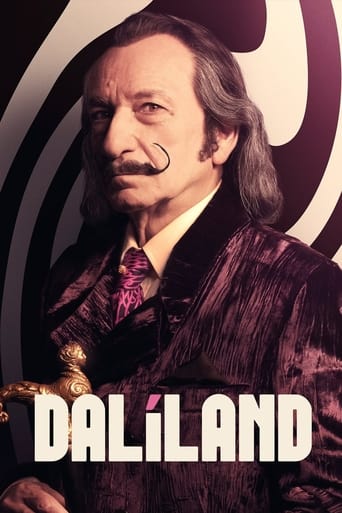
In 1973, a young gallery assistant goes on a wild adventure behind the scenes as he helps aging genius Salvador Dali prepare for a big show in New York.

In a world where superpowered people are heavily policed by robots, an ex-con teams up with a drug lord he despises to protect a teen from a corrupt cop.

An inside look at one of the most anticipated movie sequels ever with James Cameron and cast.

More interested in partying and flirting with young musicians than work, veteran rock journalist Ellie Klug has one last chance to prove her value to her magazine’s editor: a no-stone-unturned search to discover what really happened to long lost rock god, Matt Smith, who also happens to be her ex-boyfriend. Teaming up with an eccentric amateur documentary filmmaker, Ellie hits the road in search of answers.

Thomas Jerome Newton is an alien who has come to Earth in search of water to save his home planet. Aided by lawyer Oliver Farnsworth, Thomas uses his knowledge of advanced technology to create profitable inventions. While developing a method to transport water, Thomas meets Mary-Lou, a quiet hotel clerk, and begins to fall in love with her. Just as he is ready to leave Earth, Thomas is intercepted by the U.S. government, and his entire plan is threatened.
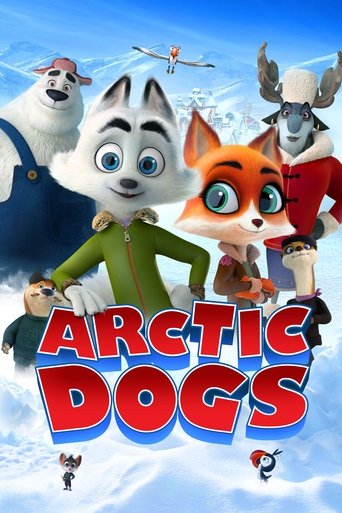
Animals band together to save the day when the evil Otto Von Walrus hatches a sinister scheme to accelerate global warming and melt the Arctic Circle.
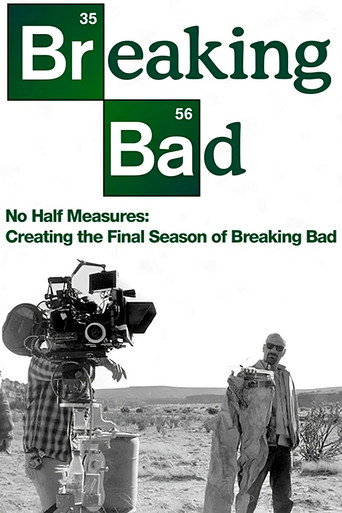
A documentary about the making of season five of the acclaimed AMC series Breaking Bad.
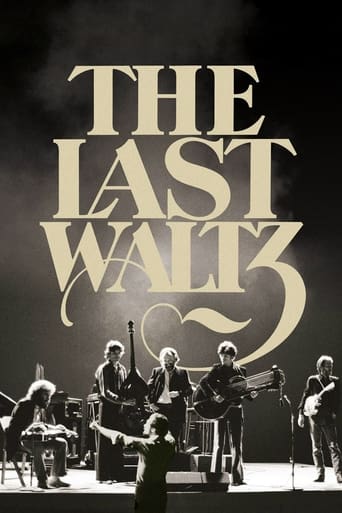
Martin Scorsese's documentary intertwines footage from The Band's incredible farewell tour with probing backstage interviews and featured performances by Bob Dylan, Joni Mitchell, Van Morrison, Eric Clapton, and other rock legends.
An aging, out-of-work actress accepts one last job, though the consequences of her decision affect her in ways she didn't consider.

A documentary filmmaker interviews the now-famous Trevor Slattery from behind bars.

Steve Coogan, an arrogant actor with low self-esteem and a complicated love life, is playing the eponymous role in an adaptation of "The Life and Opinions of Tristram Shandy, Gentleman" being filmed at a stately home. He constantly spars with actor Rob Brydon, who is playing Uncle Toby and believes his role to be of equal importance to Coogan's.

When an evil contractor goes to extreme measures to evict a testy tenant who is standing in the way of his new project, he fails to take into account that this seemingly harmless old woman is a trained killer and will do anything to protect her beloved home.

Clinging to a smooth, curved surface high above a sentient abyss, a woman tries to cover the few feet back to safety without losing purchase and falling to her death.

The history of cinematic sound, told by legendary sound designers and visionary filmmakers.
Avery (Jones) returns to college as a competitive swimmer after getting his life back on track. But his life takes another unexpected turn when he and his two friends (Bonds, Casseus) are wrongly accused of murder and end up in prison.
Similar titles
Arriving in the US with a background in abstract art, opera, and film—including work with German director Werner Schroeter—Vogl began making Super8 films in New York that stripped away the stylistic markers of Hollywood, New Wave cinema of the 1960s and ’70s, and classic avant-garde film, leaving only traces of their generic conventions. For the first hour of OK Today Tomorrow, he stages a series of fraught encounters around the city between four gentrified New Yorkers before abandoning his vague narrative of youthful angst altogether in favor of documenting the urban landscape itself. The dusk-to-dawn “city symphony” that ends the film resembles similar Super8 social studies by Vogl’s uptown contemporary John Ahearn; both recorded the daily lives of working-class black and immigrant communities on the streets of a city on the verge of the corporate takeover and sweeping gentrification that followed in the 1980s and ’90s. Preserved by The Museum of Modern Art, New York.
Features four distinct, bizarre, existential tales about people whose lives are in transition, who are each asking questions about themselves, their environments, and about God(s).
As a major storm strikes Texas in 1900, a mysterious televisual device is built and tested. Blake Williams’ experimental 3D sci-fi film immerses us in the aftermath of the Galveston disaster to fashion a haunting treatise on technology, cinema, and the medium’s future.

An experimental film shot on distressed 16mm celluloid that reveals various men on the beach or in swimming pools, in various states of lounging in the lazy California sun.

A young man goes through his everyday routine until he realizes that he is completely alone.

The pantomime of two characters exchanging roles is accompanied by a three-layered phonogram, where sophisticated narrative text is interrupted by slightly accelerated excerpt from Brezhnev’s speeches, as well as by fragments of statements of the mentally ill person with the schizophasia symptom.
“Peter Kubelka…was teaching at Staatliche Hochschule für Bildende Künste – Städelschule (Städel) at the time. His classes, filmmaking and cooking, were very unique, and this film was made around the time I was studying with him at Städel… This is a single-shot film, moving along the passageway using a handmade dolly. I used an Arriflex 16ST camera, and I changed the filming speed from 48fps to 4-6 fps while shooting.” - Yo Ota
“The visual harmony of the landscape is disturbed by a screen that allows us to see into the distance (television). The film is composed of six scenes that feature a television in the landscape. The speed of the television (in NTSC) is 30 frames per second, and never changes in this film. But the landscape views pass at different speeds.” - Yo Ota
“The structure of human vision is the visual knowledge of the world. Individuals do not visually understand the world through the eyes, but through the brain. That is to say, human vision has been formed by knowledge and experience. The film can show a new vision, provided that the cinema is also a kind of visual experience and visual knowledge.” - Yo Ota
“One can not speak of time as a thing in itself. It is movements and variations that give the feeling of time. Men have always linked time and spatial movement.” - Yo Ota

“This film offers a metacinematic study of tempo and change and a figure of velocity. […] Ota recorded [three different locations in Tokyo] at the interval of hours, and sometimes even days, by using different filters and by alternating the camera speed. The result…represents an inquiry into the abstract space-time of cinema where Ota plays with the physical fact that time is a ‘function of movement in space.’” –Malin Wahlberg

“Sequences of space-time manipulation that raise the problem of continuity in the shot.” - Yo Ota
“My attempt at a filmic interpretation of Haraguchi Noriyuki’s ‘Inclined Horizon,’ a three-dimensional physical work featured in the ‘Dance Hakushu 2006’ exhibition held in the Hakushu district of Hokuto City, Yamanashi Prefecture. Haraguchi’s work was modeled out of earth that will return to its original form after about a month, and my aim was to resurrect the concept of this work on film.” - Yo Ota
“This film was made for an event that included an exhibition of artwork by Eishi Yamatomo. Yamatomo’s metal sculpture is often finished with a chromium plating, which reflects its surroundings. For this project, I tried to obtain the image of a metal sculpture as an existing entity and its reflection as an illusion on a film medium, which can hold an image as an object. It was originally shot on 8mm film, hand-processed, edited, then re-photographed on 16mm film.” - Yo Ota
“The ‘exhibition’ held by ‘artist’ Katsuhiro Fujimura in Tokyo during the very hot summer of 2013 was one that made viewers suffer. The ‘painting’ that stood leaning against the window had very faint colors and regular scratches that could not be seen very well because of the light streaming in from the outside. The light changed with the time of day, and the surface of the painting also shifted. The paint on the front of the panel can only be perceived as ‘color’ by reflecting light. The fact that if the light changes what is seen also changes is quite obvious, but because it is a ‘painting’ viewers find this hard to accept.” - Yo Ota
“There was an art event at a closed school, Kataura Junior High School, in Nebukawa, Kanagawa Prefecture. If I did not participate in this event to show my films, I would never have got off at Nebukawa Station. I saw the sea from the school building. The installation by Tetsuya Iimuro was placed in a science room at the school, where one could see the ocean through the windows.” - Yo Ota
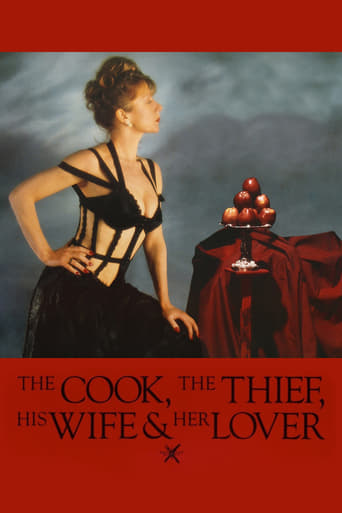
When churlish mobster Albert Spica acquires an upscale French restaurant in London, he dines there nightly, effectively scaring off the clientele with his bad manners. His wife, Georgina, is especially disgusted by him, and soon begins an affair with regular guest Michael. Despite their best efforts to keep it secret, Spica learns about their trysts, and he plots a terrible revenge.

An experimental media installation of three windows exploring fragments of liminality. Three unique re-constructions of experiential instances volumising the cataclysms of thresholds. Experience the absence of definition, the absence of boundaries set and the absence of rationale. A myth is not to be understood, a myth is passed on, like a game of Chinese whispers, it takes its course and ages with time, suiting the demography and tale, it warps and distorts
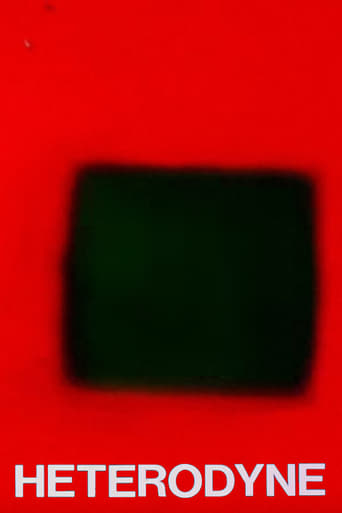
“Geometric animation made entirely by sculptural methods: cutting, punching, welding colored leader. HETERODYNE is related to some of my other work as RNA to a protein or polypeptide. It was made in abject (if blissful) ignorance of Paul Sharits’ early work.” –Hollis Frampton

In 17th-century Tuscany, a church play is performed for the benefit of young aristocrat Cosimo. In the play, a grotesque old woman gives birth to a beautiful baby boy. The child's older sister is quick to exploit the situation, selling blessings from the baby, and even claiming she's the true mother by virgin birth. However, when she attempts to seduce the bishop's son, the Church exacts a terrible revenge.