The Wind
2015-09-13 · 4 min · Not rated
The tragedy of the Syrian people: War, conflict, loss, migration, exile, asylum, detention, drowning… A deserted place. Abandoned people. Abandoned country. The doors slammed shot; the doors are now locked - the keys thrown away...for what seems forever.
Trailers are previews, not full movies.
No authorized playback source configured. Use the legal watch options below.
Production details
- Directors
- Lina Ghaibeh, May Ghaibeh
- Production companies
- Teir el Akhdar
- Countries
- France, Lebanon, Syrian Arab Republic
- Status
- Released
Top Cast
Cast unavailable.
Title information and images are supplied by TMDb. Explore our discovery guide for advice on comparing metadata and legal viewing options.
Where to watch
Availability provided by JustWatch via TMDb. Offers can change. Provider links are listed on TMDb; full playback requires a separately authorized source.
Availability not listed for this country.
Seasons & episodes
Recommendations

A love letter from a young mother to her daughter, the film tells the story of Waad al-Kateab’s life through five years of the uprising in Aleppo, Syria as she falls in love, gets married and gives birth to Sama, all while cataclysmic conflict rises around her. Her camera captures incredible stories of loss, laughter and survival as Waad wrestles with an impossible choice– whether or not to flee the city to protect her daughter’s life, when leaving means abandoning the struggle for freedom for which she has already sacrificed so much.
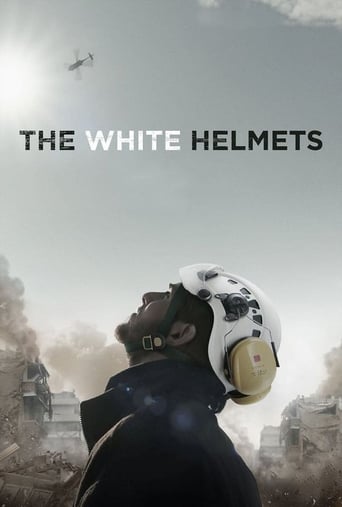
As daily airstrikes pound civilian targets in Syria, a group of indomitable first responders risk their lives to rescue victims from the rubble.
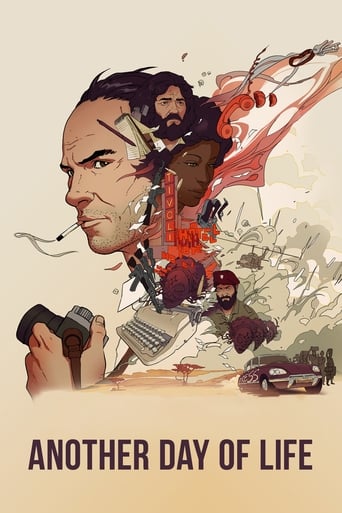
In 1975, Ryszard Kapuściński, a veteran Polish journalist, embarked on a seemingly suicidal road trip into the heart of the Angola's civil war. There, he witnessed once again the dirty reality of war and discovered a sense of helplessness previously unknown to him. Angola changed him forever: it was a reporter who left Poland, but it was a writer who returned…
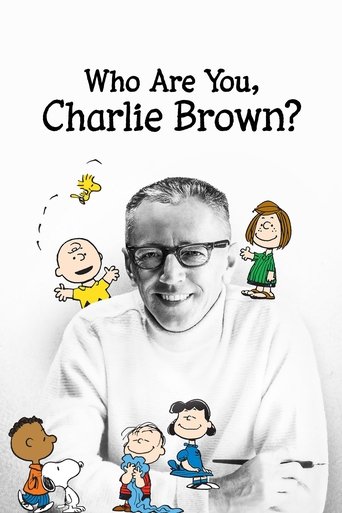
Lupita Nyong'o narrates a documentary about Peanuts and its creator, Charles M. Schulz. Famous fans—including Drew Barrymore, Kevin Smith, and Al Roker—share its influence on them, and a new animated story finds Charlie Brown on a quest.

Amid the failing counteroffensive, a journalist follows a Ukrainian platoon on their mission to traverse one mile of heavily fortified forest and liberate a strategic village from Russian occupation. But the farther they advance through their destroyed homeland, the more they realize that this war may never end.

Prelude to War was the first film of Frank Capra's Why We Fight propaganda film series, commissioned by the Pentagon and George C. Marshall. It was made to convince American troops of the necessity of combating the Axis Powers during World War II. This film examines the differences between democratic and fascist states.
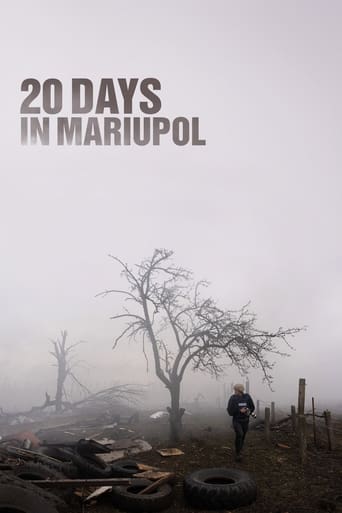
As the Russian invasion begins, a team of Ukrainian journalists trapped in the besieged city of Mariupol struggle to continue their work documenting the war's atrocities.

This documentary movie is about the battle of San Pietro, a small village in Italy. Over 1,100 US soldiers were killed while trying to take this location, that blocked the way for the Allied forces from the Germans. Preserved by the Academy Film Archive in 2005.

A unique cinematic experience that invites audiences on a vibrant journey through the life of cultural icon Pharrell Williams. Told through the lens of LEGO® animation, turn up the volume on your imagination and witness the evolution of one of music's most innovative minds.
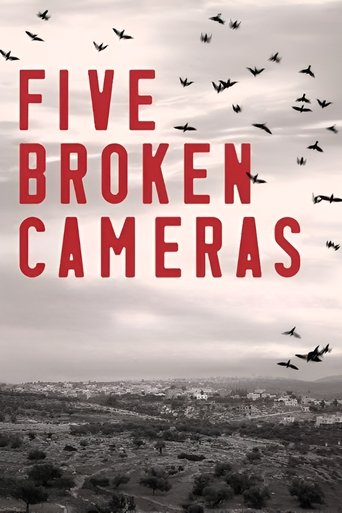
Five broken cameras – and each one has a powerful tale to tell. Embedded in the bullet-ridden remains of digital technology is the story of Emad Burnat, a farmer from the Palestinian village of Bil’in, which famously chose nonviolent resistance when the Israeli army encroached upon its land to make room for Jewish colonists. Emad buys his first camera in 2005 to document the birth of his fourth son, Gibreel. Over the course of the film, he becomes the peaceful archivist of an escalating struggle as olive trees are bulldozed, lives are lost, and a wall is built to segregate burgeoning Israeli settlements.

An unprecedented and intimate look at the life, work and enduring legacy of British actress Audrey Hepburn (1929-1993).
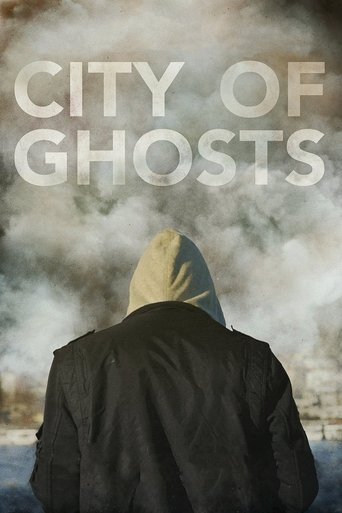
With unprecedented access, this documentary follows the extraordinary journey of “Raqqa is Being Slaughtered Silently”—a group of anonymous citizen journalists who banded together after their homeland was overtaken by ISIS—as they risk their lives to stand up against one of the greatest evils in the world today.

Combining archival footage with rotoscopic animation, Tower reveals the action-packed untold stories of the witnesses, heroes and survivors of America's first mass school shooting, when the worst in one man brought out the best in so many others.
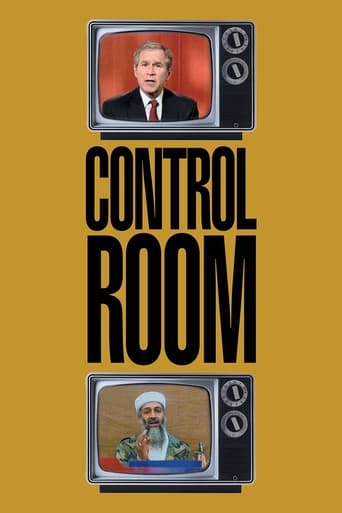
A chronicle which provides a rare window into the international perception of the Iraq War, courtesy of Al Jazeera, the Arab world's most popular news outlet. Roundly criticized by Cabinet members and Pentagon officials for reporting with a pro-Iraqi bias, and strongly condemned for frequently airing civilian causalities as well as footage of American POWs, the station has revealed (and continues to show the world) everything about the Iraq War that the Bush administration did not want it to see.
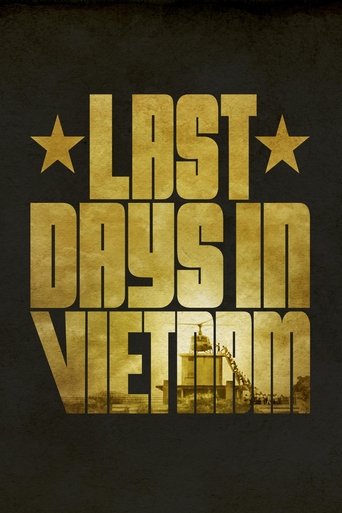
During the chaotic final weeks of the Vietnam War, the North Vietnamese Army closes in on Saigon as the panicked South Vietnamese people desperately attempt to escape. On the ground, American soldiers and diplomats confront a moral quandary: whether to obey White House orders to evacuate only U.S. citizens.

“The Soviet Story” is a story of an Allied power, which helped the Nazis to fight Jews and which slaughtered its own people on an industrial scale. Assisted by the West, this power triumphed on May 9th, 1945. Its crimes were made taboo, and the complete story of Europe’s most murderous regime has never been told. Until now...

Cameramen and women discuss the craft and art of cinematography and of the "DP" (the director of photography), illustrating their points with clips from 100 films, from Birth of a Nation to Do the Right Thing. Themes: the DP tells people where to look; changes in movies (the arrival of sound, color, and wide screens) required creative responses from DPs; and, these artisans constantly invent new equipment and try new things, with wonderful results. The narration takes us through the identifiable studio styles of the 30s, the emergence of noir, the New York look, and the impact of Europeans. Citizen Kane, The Conformist, and Gordon Willis get special attention.
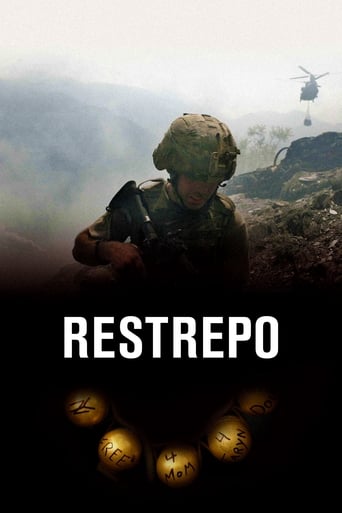
Directors Hetherington and Junger spend a year with the 2nd Battalion of the United States Army located in one of Afghanistan's most dangerous valleys. The documentary provides insight and empathy on how to win the battle through hard work, deadly gunfights and mutual friendships while the unit must push back the Taliban.

The final entry in a trilogy of films produced for the U.S. government by John Huston. Some returning combat veterans suffer scars that are more psychological than physical. This film follows patients and staff during their treatment. It deals with what would now be called PTSD, but at the time was categorised as psychoneurosis or shell-shock. Government officials deemed this 1946 film counterproductive to postwar efforts; it was not shown publicly until 1981.

Pete Postlethwaite stars as a man living alone in the devastated future world of 2055, looking at old footage from 2008 and asking: why didn’t we stop climate change when we had the chance?
Similar titles

Marcel is an adorable one-inch-tall shell who ekes out a colorful existence with his grandmother Connie and their pet lint, Alan. Once part of a sprawling community of shells, they now live alone as the sole survivors of a mysterious tragedy. When a documentarian discovers them amongst the clutter of his Airbnb, his resulting short film brings Marcel millions of passionate fans, as well as unprecedented dangers and a new hope at finding his long-lost family.

Stop motion characters stumble and fumble their way through a clearing in the woods.


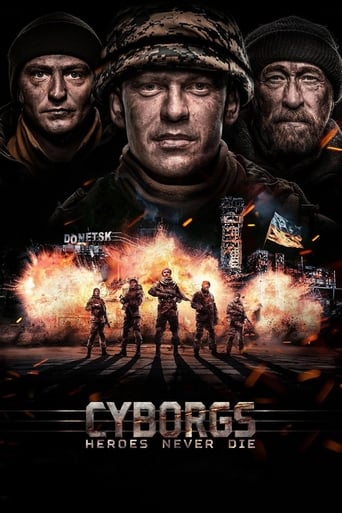
‘The Cyborgs’ is re-telling the recent history of Ukraine – the legendary fight for Donetsk Airport in 2014 during Russian invasion. The freedom fighters from various divisions of Ukrainian army and volunteer battalions took a 242-days stand against the Russian backed militants until the complete destruction of the airport’s terminal.

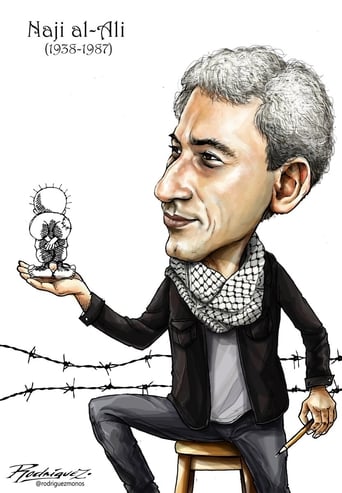
In July 1987, Palestinian cartoonist Naji Al Ali was shot by an unknown assassin. This documentary traces his life and work from his birth in Galilee to his death in London. It examines the forces that shaped Naj Al Ali as an artist and as a human being and shows how his experiences mirrored those of other exiled Palestinians.
A cartoon from Pat Sullivan featuring Charley Chaplin.
Poetry is everywhere, even in the refugee camps where absolute misery reigns. In front of old plastic advertising posters on which are drawn in giant format the big icons of luxury and consumerism that make up their shelters, refugee children stand like kings. Symbols of life at the heart of war, fragility, and death, these children are shown by Jocelyne Saab as precious notes of hope in the heart of a dehumanized world. One Dollar a Day was filmed in the Syrian refugee camps of the Bekaa plain, Lebanon in 2015, with text by Etel Adnan.

A suicidal war veteran finds like-minded souls in a surf therapy program that helps traumatized soldiers heal while riding the waves.

It's excitement all round when a wedding invitation arrives and the Pingu family make their way to the gathering. However things do not go quite as planned with an absentee groom, a new arrival and the havoc wreaked by a damaged gift.
2010 documentary film on the Armenian Genocide by the Young Turk government of the Ottoman Empire during World War I. It is based on eyewitness reports by European and American personnel stationed in the Near East at the time, Armenian survivors and other contemporary witnesses which are recited by modern German actors.
The film Crustaceans treats itself like an impressionist picture or a Japanese Haiku. Crustaceans is a matter of reflection on an instance in life with the social-economical crisis as a landscape. The heartbreak in times of crisis. The film was filmed as demonstrations in the streets against crisis and social welfare cuts took place. For two years, it filmed street demonstrations and incorporated actors in the social landscape. The result, is a film in which the collective and the intimate come together. Both the characters and the people in the street, like identical crustaceans, take to the street to express their shame and rage for what is happening and try to find a solution. A time of anxiety, uncertainty and protest that conforms the landscape in which the characters, such as crustaceans hide their wounds under their hard shell is seen.
During a demonstration, with the assistance of a man named Manouchehr, Fereshteh succeeds to get rid of the security forces. After victory of the revolution, they accidentally meet each other and consequently get married despite disagreement of Fereshteh’s family. Coming back from the honeymoon, they are encountered with a new situation altering all the peoples’ lives. The men should go to the war front for defending their country after the invasion of Iraqi Army to Iran.

Zhenya is a young girl who find a old beautiful house in the city when she followed a dog that he stole her donuts. At the old house, a old woman lives. The old woman offers to Zhenya a magic flower. When Zhenya pull up a petal of the flower, she can make a wish. In this moment, Zhenya should decide correctly her wishes.
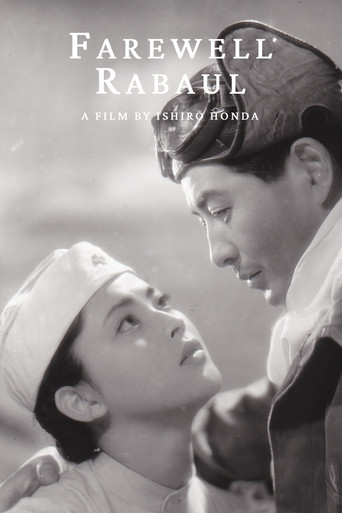
A squadron of Japanese fighter pilots realise that they are never going to win the war when they understand that Japanese military tactics have little regard for life. Seeking the companionship of any woman who will have them, they spend their days indulging in every fantasy in order to escape the overwhelming fear of death looming just over the horizon.

An exploration of temporal patterns found in routinized pathways. Automobiles and pedestrians are torn from their linear relationship to time to demonstrate the machinery behind our fourth dimensional veil.

An exploration of entering and leaving consciousness from the perspective of non-human bodies trapped in everlasting cycles of abuse.

Jorge, a young Ecuadorian, is unexpectedly in the middle of the jungle as an inexperienced soldier. At first, Jorge is confident that military experience makes you a recognized and respected man. But he finds out that the reality is very different; as the private may face neglect, hunger, death and nature, especially human nature. Captive in an enemy camp, Jorge must discover who he has become as he recovers from his injuries and struggles to escape with his fellow prisoner Hugo or stay there under the care of the Peruvian nurse Dolores. Difficult decisions ... beyond the target and border that divides them are abound.