
The Dance
1970-01-04 · 5 min · ★ 2.0
With an irresistible humour, Rimmer speculates in The Dance on the nature of the film loop. We see a (1920s) couple whilring around a dance floor at a dizzying pace... Uncanny in its ability to evoke complexity of responses from a simplicity of means. Preserved by the Academy Film Archive in 2015.
Trailers are previews, not full movies.
No authorized playback source configured. Use the legal watch options below.
Production details
- Directors
- David Rimmer
- Production companies
- Unavailable
- Countries
- Unavailable
- Status
- Released
Top Cast
Cast unavailable.
Title information and images are supplied by TMDb. Explore our discovery guide for advice on comparing metadata and legal viewing options.
Where to watch
Availability provided by JustWatch via TMDb. Offers can change. Provider links are listed on TMDb; full playback requires a separately authorized source.
Availability not listed for this country.
Seasons & episodes
Recommendations
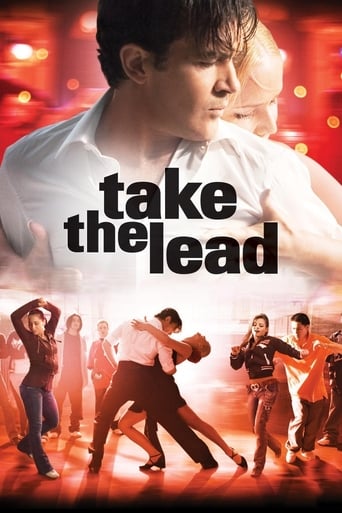
A former professional dancer volunteers to teach dance in the New York public school system and, while his background first clashes with his students' tastes, together they create a completely new style of dance. Based on the story of ballroom dancer, Pierre Dulane.
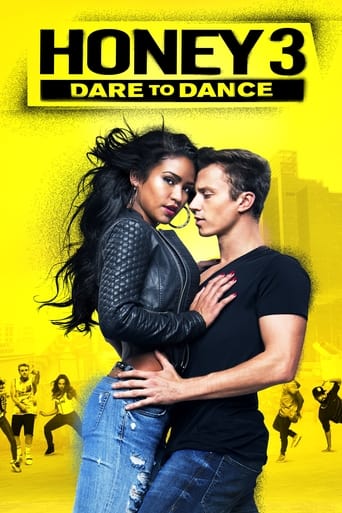
While attending college in Cape Town, Melea Martin feels constrained by the school's strict policies, and decides to set out on her own. Searching for a way to use her talents as a dancer and inspire the community around her, Melea rents a failing theater in order to put on a Hip-Hop Romeo and Juliet performance. But much like the Capulets and Montagues, conflicts between cast members threaten to bring the whole performance to a halt...

A Seattle couple travel to New York to interview colorful former dancer Tobi for research on a dissertation about dance. But soon, common niceties and social graces erode when the questions turn personal and the true nature of the interview is called into question.
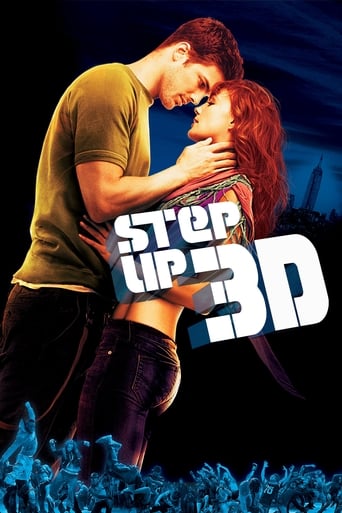
A tight-knit group of New York City street dancers, including Luke and Natalie, team up with NYU freshman Moose, and find themselves pitted against the world's best hip-hop dancers in a high-stakes showdown that will change their lives forever.
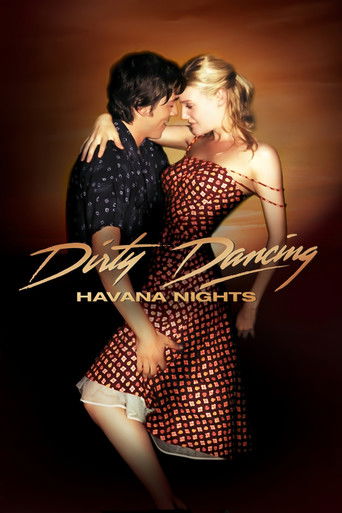
In pre-revolution Cuba, Katey Miller is about to defy everyone's expectations. Instead of a parent-approved suitor, Katey is drawn to the sexy waiter, Javier, who spends his nights dancing in Havana's nightclubs. As she secretly learns to dance with Javier, she learns the meanings of love, sensuality and independence.

In a vibrant city pulsating with rhythm and movement, an elderly man and his young-at-heart wife rekindle their youthful passion for life and each other on one magical night.

This 2017 movie follows the original dance academy TV show and tracks where the characters are in their lives now.
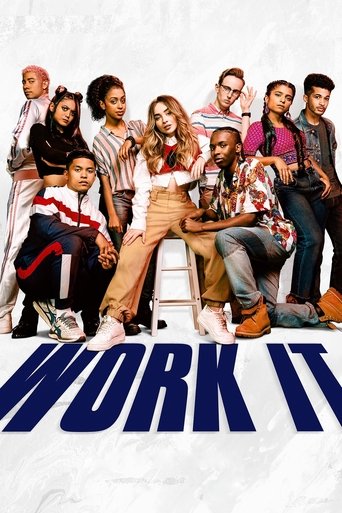
A brilliant but clumsy high school senior vows to get into her late father's alma mater by transforming herself and a misfit squad into dance champions.

In the midst of the Great Depression, manipulative emcee Rocky enlists contestants for a dance marathon offering a $1,500 cash prize. Among them are a failed actress, a middle-aged sailor, a delusional blonde and a pregnant girl.
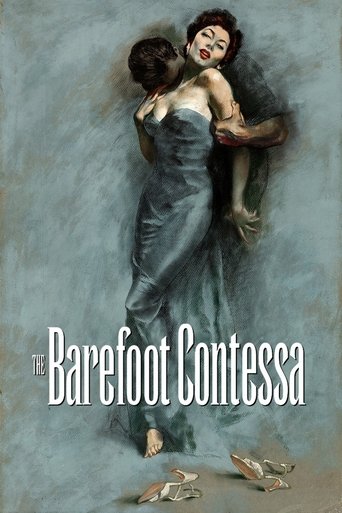
A washed-up filmmaker gets a second chance at stardom when he discovers stunning peasant Maria Vargas dancing in a Madrid nightclub. Goaded by his producer, the director convinces Maria to screen test for, and then star in, his next big picture. But as the producer's possessive nature and the realities of stardom weigh on Maria, she seeks a genuine lover with whom she can escape.
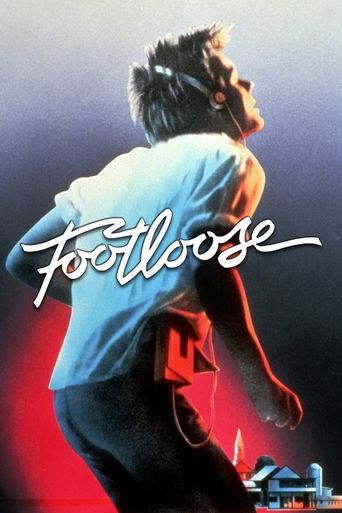
When teenager Ren and his family move from big-city Chicago to a small town in the West, he's in for a real case of culture shock after discovering he's living in a place where music and dancing are illegal.

After a brush with the law, Maria has returned to her gritty Bronx roots to rebuild her life with nothing but a talent for street dance and a burning ambition to prove herself.
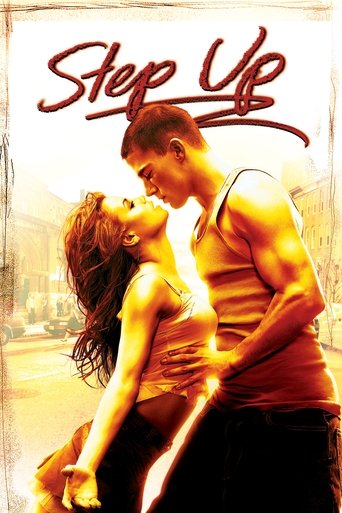
Delinquent Tyler Gage receives the opportunity of a lifetime after vandalizing a performing arts school, gaining him the chance to earn a scholarship and dance with up-and-coming dancer Nora.
Joe Gideon is at the top of the heap, one of the most successful directors and choreographers in musical theater. But he can feel his world slowly collapsing around him - his obsession with work has almost destroyed his personal life, and only his bottles of pills keep him going.

Hope is tasked with teaching Manhattan's former "Most Eligible Bachelor" how to dance for his extravagant, society wedding. But as the dance lessons progress, complications ensue when feelings begin to develop between student and instructor.

In 1927 Hollywood, a silent film star falls for a chorus girl just as he and his paranoid screen partner struggle to make the difficult transition to talking pictures.

Zander Raines, a dazzling and tempestuous young choreographer, gives the break of a lifetime to two hopeful artists when he casts a stunning contemporary dancer, Barlow, and innovative pianist, Charlie, in New York’s most-anticipated new Broadway show: Free Dance. But the move throws off the show’s delicate creative balance when Charlie falls hard for Barlow, while Zander embraces her as his muse.

Two cross-town rival dance teams go head to head for the National Nationals Championship.

This is the story of the internal struggle between a man's Brain—a pragmatic protector who calculates his every move, and his Heart—a free-spirited adventurer who wants to let loose.
A committed dancer struggles to maintain her sanity after winning the lead role in a production of Tchaikovsky's "Swan Lake."
Similar titles
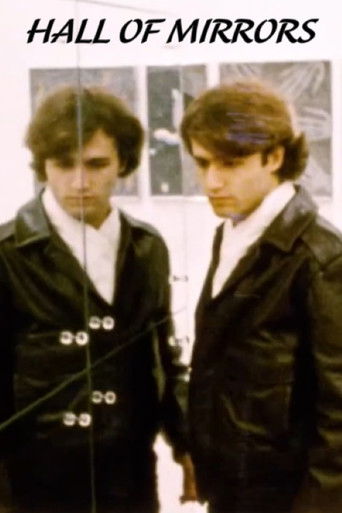
This film is an outgrowth of one of Sonbert's film classes at NYU, in which he was given outtakes from a Hollywood film photographed by Hal Mohr to re-edit into a narrative sequence. Adding to this found footage, Sonbert filmed Warhol's superstars Rene Ricard and Gerard Malanga in more private and reflective moments. -- Jon Gartenberg. Preserved by the Academy Film Archive in partnership with Estate Project for Artists with AIDS in 1998.
One of the most profound themes coursing throughout Sonbert's work is that of love between couples in all its pitfalls and perfect moments. To express this theme between his protagonists onscreen as well as in the relationship between his ever-roving hand-held camera and the human subjects in his field of vision, Sonbert employed diverse cinematic strategies, including in-camera editing (in The Bad and the Beautiful), twin-screen effects (in Ted and Jessica), and montage of discrete shots filmed in distinct spaces (in Honor and Obey). -- Jon Gartenberg. Preserved by the Academy Film Archive in partnership with the Estate Project for Artists with AIDS in 1998.
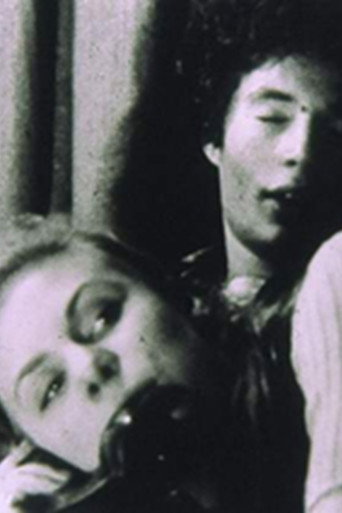
Truth Serum is a rare work by Sonbert made in New York City in 1967. The completed film (that is missing its original soundtrack) provides a unique glimpse into his life and friends at the time including fellow filmmakers Nathaniel Dorsky and Jerome Hiller. Preserved by the Academy Film Archive in partnership with Estate Project for Artists with AIDS in 1998.
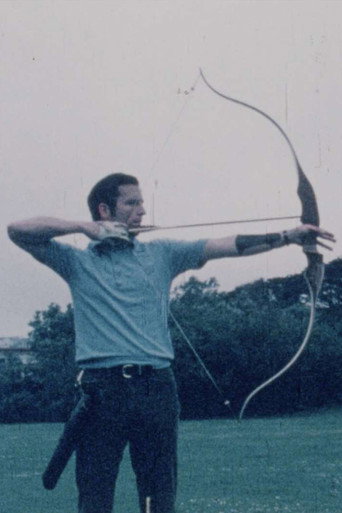
Sonbert's vivid color palette enhances the ritualistic nature of each action observed. Set against this lush panorama, Sonbert subverts the expectation of classic cinematography with a liberal sprinkling of avant-garde techniques. The incorporation of the materiality of film, the treatment of light, and the use of a hand-held camera, all suggest the influence of Stan Brakhage (Sonbert's "hero"). Sonbert's use of the shot as the foundation of his silent montage works parallels the use of the frame as the basic filmmaking unit in the films of Gregory Markopoulos (Sonbert's "mentor"). -- Jon Gartenberg. Preserved by the Academy Film Archive in 1998.
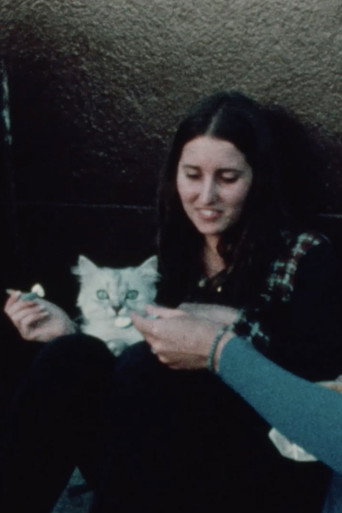
Warren Sonbert described Divided Loyalties as a film 'about art vs. industry and their various crossovers.' According to film critic Amy Taubin, "There is a clear analogy between the filmmaker and the dancers, acrobats and skilled workers who make up so much of his subject matter." -- Jon Gartenberg. Preserved by the Academy Film Archive in partnership with Estate Project for Artists with AIDS in 1998.
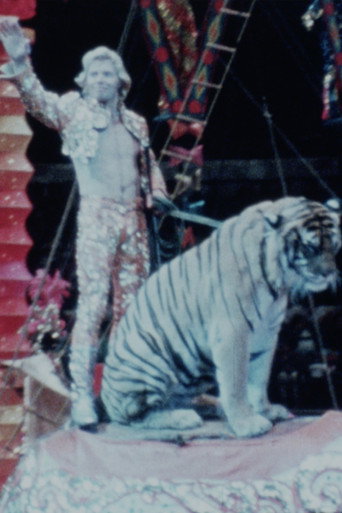
The style is relatively unchanged, but the images--press conferences, news events, disasters--convey his vision of the world in a new, direct, political fashion. Featuring startling footage of the City Hall riots after Councilman Dan White received a light prison sentence for slaying San Francisco Mayor George Moscone and Supervisor Harvey Milk, Noblesse Oblige opens a new chapter on Sonbert's career. --David Ehrenstein, LA Reader. Preserved by the Academy Film Archive in partnership with Estate Project for Artists with AIDS in 1998.
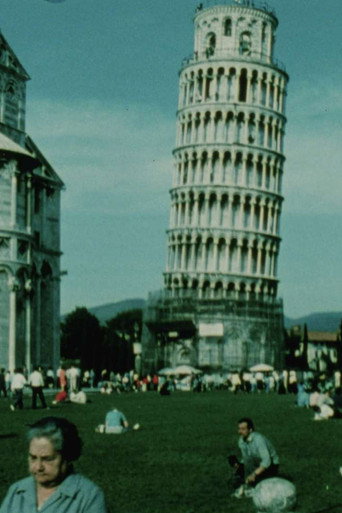
The Cup and the Lip is a complex and challenging picture that will stimulate adventurous filmmakers for years to come. Although its imagery is too dense, varied and fast-moving to be thoroughly parsed after one viewing, the film appears to be a regretful and perhaps sardonic essay on human frailty--and on the effort to stave off chaos by means of political and religious institutions, which carry their own dangers of social control and mental manipulation.

In Warren Sonbert's Honor and Obey soldiers march in formation, a tiger stalks through the snow, religious processions wind through the streets, and palm trees wave in a tropical breeze. As brightly colored images of authority figures blend into scenes of cocktail parties, this 21-minute silent film flows along with the grace of a musical score built on complex tensions hidden among the notes. "Whose authority will you obey?" the film seems to ask, as it deftly avoids simple-minded juxtapositions. Instead, we see a melange of images so full of geography (Notre Dame Cathedral, the Sydney Opera House, Fifth Avenue), that the work mocks the idea of any specific setting. -- Caryn James, The New York Times. Preserved by the Academy Film Archive, in partnership with Estate Project for Artists with AIDS, in 1998.
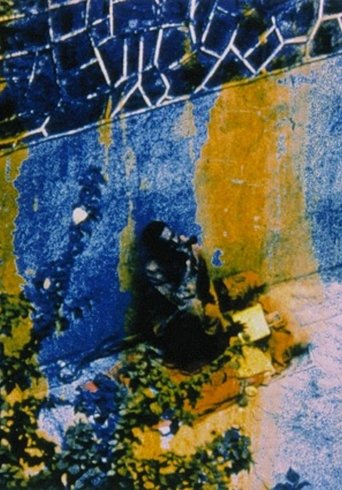
In Friendly Witness, Sonbert returned, after 20 years, to sound. In the first section of the film, he deftly edits a swirling montage of images - suggestive of loves gained and love lost--to the tunes of four rock songs. Fred Camper said, "At times the words of the songs seem to relate directly to the images we see...; at other times words and images seem to be working almost at cross-purposes or relating only ironically. Similarly, at times the image rhythm and music rhythm appear to dance together, while at others they go their separate ways." -- Jon Gartenberg. Preserved by the Academy Film Archive in partnership with Estate Project for Artists with AIDS in 1998.
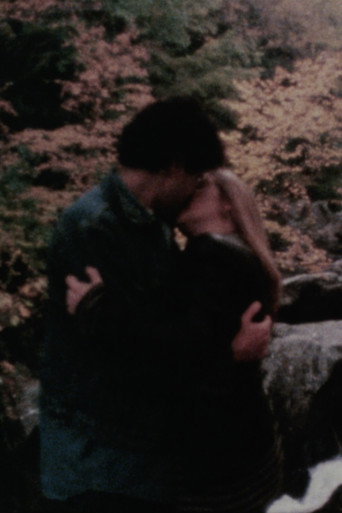
During the years preceeding his death, Sonbert channeled his energy into making Whiplash. His vision and motor skills impaired, he gave his companion, Ascension Serrano, detailed instructions about the assembly of specific shots and the music to be used as a counterpoint to the images. Before his death in 1995, he asked filmmaker Jeff Scher (a former student of Sonbert's at Bard) to complete the film. --Jon Gartenberg. Preserved by the Academy Film Archive in partnership with Estate Project for Artists with AIDS in 1996.

In Flesh Flows we see a balance of Beckett’s keen drawing ability, in the probing erotic forms, and his technical acuity, which transforms the carnal images into a compelling, transcendent experience. Preserved by the Academy Film Archive in partnership with iotaCenter and National Film Preservation Foundation in 2007.

In 1672 Cuban revolutionaries launch an uprising against the Spanish who are occupying the country. Preserved by the Academy Film Archive in 2017.
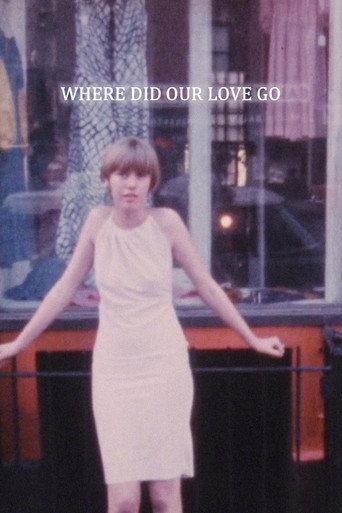
Warhol Factory days... serendipity visits, Janis and Castelli and Bellevue glances... Malanga at work ... glances at Le Mépris and North by Northwest... girl rock groups and a disco opening... a romp through the Modern. My second film. Preserved by the Academy Film Archive in partnership with Estate Project for Artists with AIDS in 1998.
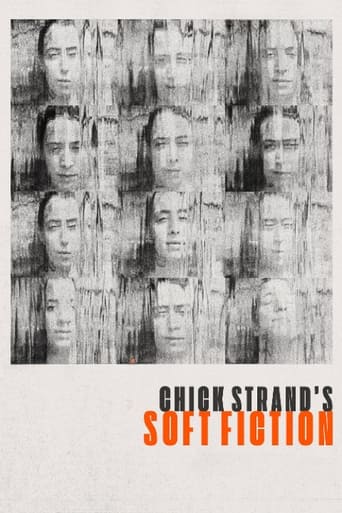
Chick Strand's SOFT FICTION is a personal documentary that brilliantly portrays the survival power of female sensuality. It combines the documentary approach with a sensuous lyrical expressionism. Strand focuses her camera on people talking about their own experience, capturing subtle nuances in facial expressions and gestures that are rarely seen in cinema. Preserved by the Academy Film Archive in partnership with The Film Foundation in 2015.

"Whereas SQUARE INCH FIELD was composed largely in the camera, Rimmer's next film, MIGRATION, made full use of rear-projection rephotography, stop-framing, and slow motion. The migration of the title is interpreted as the flight of a ghost bird through aeons of space/time, through the micro-macro universe, through a myriad of complex realities. A seagull is seen flying gracefully in slow motion against a grainy green sky; suddenly the frame stops, warps and burns, as though caught in the gate of the projector. Now begins an alternation of fast and slow sequences in which the bird flies through time-lapse clouds and fog and, in a stroboscopic crescendo, hurtles into the sun's corona. Successive movements of the film develop rhythmic, organic counterpoints in which cosmic transformations send jelly fish into the sky and ocean waves into the sun." - Gene Youngblood. Preserved by the Academy Film Archive in 2014.

Blue Movie was made for the international Dome Show where it was projected down onto the muslin surface of David Rimmer's geodesic dome. The audience lay on the floor looking up at it, the inside of each eye finishing the globe. Preserved by the Academy Film Archive in 2013.

"Treefall" was originally made for a dance performance at the Vancouver Art Gallery, April, 1970. Structured in the form of two loops of high-contrast images of trees falling, reprinted and overlapped. Preserved by the Academy Film Archive in 2014.

In three virtuosic sequences created entirely in-camera, Benning alternates contrary camera movements in a trio of Chicago locations with increasing rapidity to a point where they first fracture and then merge in the viewer’s eye. Preserved by the Academy Film Archive in partnership with Austrian Film Museum in 2013.

This short focuses on the job of the costume designer in the production of motion pictures. The costume designer must design clothing that is correct for the film historically and geographically, and must be appropriate for the mood of the individual scene. We see famed costume designer Edith Head at work on a production. The Costume Designer was part of The Industry Film Project, a twelve-part series produced by the film studios and the Academy. Each series episode was produced to inform the public on a specific facet of the motion picture industry. Preserved by the Academy Film Archive in 2012.
One of Brakhage's series of short films painted directly on film, from 1999. Preserved by the Academy Film Archive in 2013.