Long Film for Ambient Light
1975-06-18 · 1440 min · Not rated
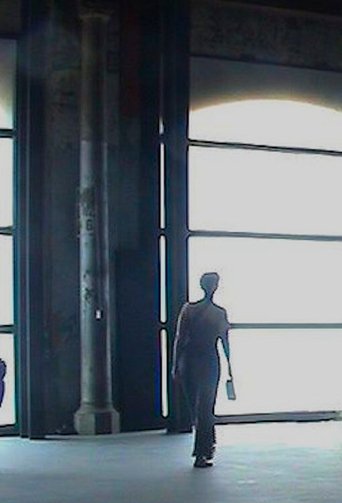
This experimental "film" consists of an empty room with a bare lightbulb, and windows covered with a translucent material, for a duration of 24 hours. It is not necessary for visitors to stay for the entire duration - they can come and go as they please. Created by Anthony McCall, it is based on the architectural framing of time and light. It came at the end of a series of works in which McCall was stripping back cinema to its absolute minimum - light, time, and human experience/perception.
Trailers are previews, not full movies.
No authorized playback source configured. Use the legal watch options below.
Production details
- Directors
- Anthony McCall
- Production companies
- Unavailable
- Countries
- United States of America
- Status
- Released
Top Cast
Cast unavailable.
Title information and images are supplied by TMDb. Explore our discovery guide for advice on comparing metadata and legal viewing options.
Where to watch
Availability provided by JustWatch via TMDb. Offers can change. Provider links are listed on TMDb; full playback requires a separately authorized source.
Availability not listed for this country.
Seasons & episodes
Recommendations

Live Aid was held on 13 July 1985, simultaneously in Wembley Stadium in London, England, and the John F. Kennedy Stadium in Philadelphia, United States. It was one of the largest scale satellite link-ups and television broadcasts of all time: watched live by an estimated global audience of 1.9 billion, across 150 nations. "It's twelve noon in London, seven AM in Philadelphia, and around the world it's time for Live Aid...!"
Following the release of Part III in 1990, Coppola, Barry Malkin, and Walter Murch edited the three films into chronological order to create this nearly ten-hour epic, incorporating scenes not part of the theatrical releases.

Oliver Stone charts the history of the United States from the Second World War to the present.

Stephen King's take on the masterpiece series by Lars von Trier. The story takes place in a hospital in Lewiston, Maine, built on the site of a Civil War-era mill fire in which many children died.
Similar titles

A short film by John G. Avildsen.

A young model falls victim to a sadistic cult of sexual slavery, snuff tapes and black magic.

A mass murderer kills his victims, then cooks and eats them
An experimental documentary about the spectacle of substance abuse on social media. More than 45 hours of footage, hundreds of pages of blog posts and interviews were distilled and remixed using glitch and cut-up techniques to insure anonymity, transcend the shock factor and unfold this complex, singular and stratified use of social media.

Three screams in a mental system composed of barbed wire and napalm. A plastic tank encloses the geometry of a sex. Outside is a corrupt clue. Incisions are the incantation of melancholy. No way out. (Industrial drone improvised on improvised images, deficient results).

The evolution of mainstream pornography’s extremities and the early days of pay-per-view channels' noise.
“Peter Kubelka…was teaching at Staatliche Hochschule für Bildende Künste – Städelschule (Städel) at the time. His classes, filmmaking and cooking, were very unique, and this film was made around the time I was studying with him at Städel… This is a single-shot film, moving along the passageway using a handmade dolly. I used an Arriflex 16ST camera, and I changed the filming speed from 48fps to 4-6 fps while shooting.” - Yo Ota
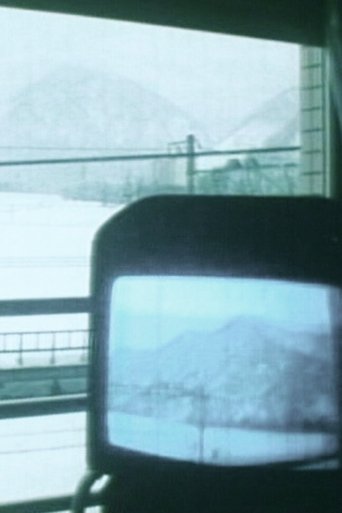
“The visual harmony of the landscape is disturbed by a screen that allows us to see into the distance (television). The film is composed of six scenes that feature a television in the landscape. The speed of the television (in NTSC) is 30 frames per second, and never changes in this film. But the landscape views pass at different speeds.” - Yo Ota
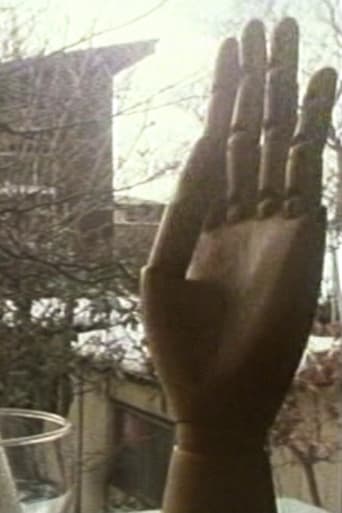
“The structure of human vision is the visual knowledge of the world. Individuals do not visually understand the world through the eyes, but through the brain. That is to say, human vision has been formed by knowledge and experience. The film can show a new vision, provided that the cinema is also a kind of visual experience and visual knowledge.” - Yo Ota
“One can not speak of time as a thing in itself. It is movements and variations that give the feeling of time. Men have always linked time and spatial movement.” - Yo Ota

“This film offers a metacinematic study of tempo and change and a figure of velocity. […] Ota recorded [three different locations in Tokyo] at the interval of hours, and sometimes even days, by using different filters and by alternating the camera speed. The result…represents an inquiry into the abstract space-time of cinema where Ota plays with the physical fact that time is a ‘function of movement in space.’” –Malin Wahlberg

“Sequences of space-time manipulation that raise the problem of continuity in the shot.” - Yo Ota
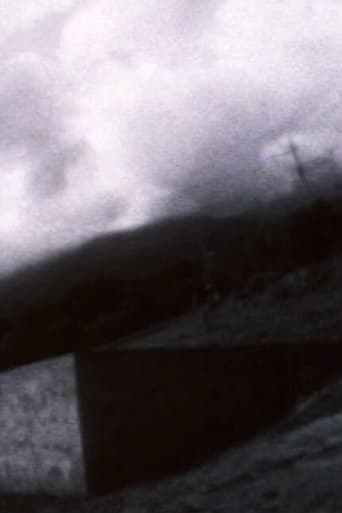
“My attempt at a filmic interpretation of Haraguchi Noriyuki’s ‘Inclined Horizon,’ a three-dimensional physical work featured in the ‘Dance Hakushu 2006’ exhibition held in the Hakushu district of Hokuto City, Yamanashi Prefecture. Haraguchi’s work was modeled out of earth that will return to its original form after about a month, and my aim was to resurrect the concept of this work on film.” - Yo Ota
Identically dressed and with sibling-like resemblance, performance artists Trevor Martin and Kym Olsen shift between spoken word and athletic dance choreography in a collection of 29 scenes. Set in various locations - including a gymnasium, an abandoned hospital, and a trailer park circus - Martin and Olsen slip between a ventriloquist and his dummy, a seducer and his surrogate, a doctor and his patient, and synchronized dance partners. The film examines a complex social psychology - questioning the colonization of the human body for various political, medical and religious agendas.
Experimental short film with focus on Bahia(Brazilian State) Christian iconography.
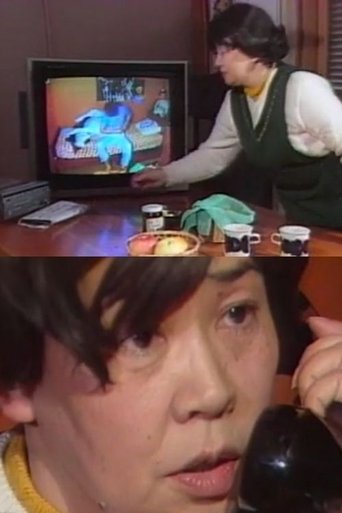
Hideo, a young man living away from his parents, is kept under constant surveillance by his doting mother via an omnipresent television monitor. Mama can only communicate with her beloved, absent son through the video screen.
“This film was made for an event that included an exhibition of artwork by Eishi Yamatomo. Yamatomo’s metal sculpture is often finished with a chromium plating, which reflects its surroundings. For this project, I tried to obtain the image of a metal sculpture as an existing entity and its reflection as an illusion on a film medium, which can hold an image as an object. It was originally shot on 8mm film, hand-processed, edited, then re-photographed on 16mm film.” - Yo Ota
“The ‘exhibition’ held by ‘artist’ Katsuhiro Fujimura in Tokyo during the very hot summer of 2013 was one that made viewers suffer. The ‘painting’ that stood leaning against the window had very faint colors and regular scratches that could not be seen very well because of the light streaming in from the outside. The light changed with the time of day, and the surface of the painting also shifted. The paint on the front of the panel can only be perceived as ‘color’ by reflecting light. The fact that if the light changes what is seen also changes is quite obvious, but because it is a ‘painting’ viewers find this hard to accept.” - Yo Ota
“There was an art event at a closed school, Kataura Junior High School, in Nebukawa, Kanagawa Prefecture. If I did not participate in this event to show my films, I would never have got off at Nebukawa Station. I saw the sea from the school building. The installation by Tetsuya Iimuro was placed in a science room at the school, where one could see the ocean through the windows.” - Yo Ota

The pantomime of two characters exchanging roles is accompanied by a three-layered phonogram, where sophisticated narrative text is interrupted by slightly accelerated excerpt from Brezhnev’s speeches, as well as by fragments of statements of the mentally ill person with the schizophasia symptom.