Under the Radar: Burma
2010-01-01 · Runtime unavailable · Not rated
While traveling undercover throughout Burma, Henry Rollins exposes the country's repressive military dictatorship.
Trailers are previews, not full movies.
No authorized playback source configured. Use the legal watch options below.
Production details
- Directors
- Neil Hollander
- Production companies
- Adventure Film Productions
- Countries
- Myanmar
- Status
- Released
Top Cast
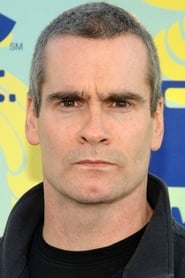 Henry RollinsSelf
Title information and images are supplied by TMDb. Explore our discovery guide for advice on comparing metadata and legal viewing options.
Where to watch
Availability provided by JustWatch via TMDb. Offers can change. Provider links are listed on TMDb; full playback requires a separately authorized source.
Availability not listed for this country.
Seasons & episodes
Recommendations
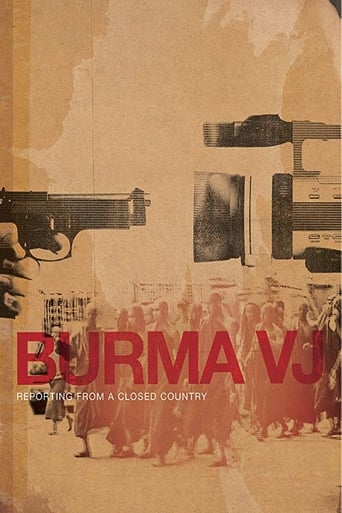
Going beyond the occasional news clip from Burma, the acclaimed filmmaker, Anders Østergaard, brings us close to the video journalists who deliver the footage. Though risking torture and life in jail, courageous young citizens of Burma live the essence of journalism as they insist on keeping up the flow of news from their closed country.
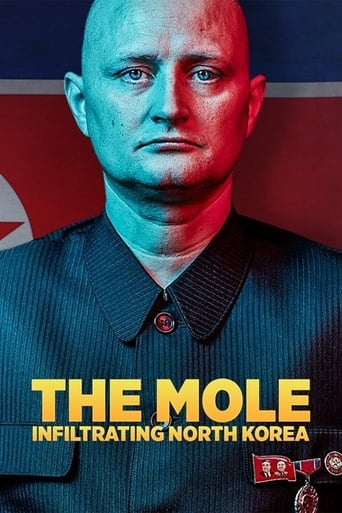
A real-life undercover thriller about two ordinary men who embark on an outrageously dangerous ten-year mission to penetrate the world's most secretive and brutal dictatorship: North Korea.
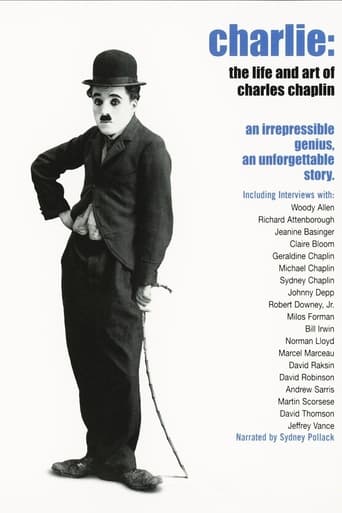
Brilliant, long in-the-works story of the life and art of the world's greatest comedian and the cinema's first genius, Charlie Chaplin. Produced, written and directed by renowned film critic Richard Schickel.

A string of threatening emails escalates into a revenge plot involving a newly married US marshal and his ex-girlfriend.
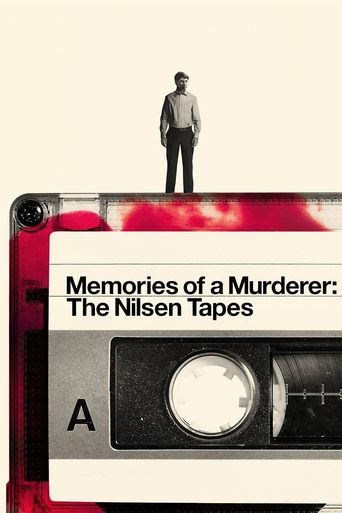
Serial killer Dennis Nilsen narrates his life and horrific crimes via a series of chilling audiotapes recorded from his jail cell.

A 1993 documentary film about Bruce Lee. The film includes interviews from some of his fellow students and opponents who worked alongside him in his movies.

When Sgt. First Class Brian Eisch is critically wounded in Afghanistan, it sets him and his sons on a journey of love, loss, redemption and legacy.
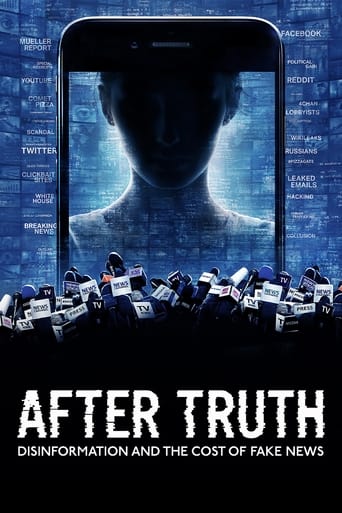
An investigation into the ongoing threat caused by the phenomenon of “fake news” in the U.S., focusing on the real-life consequences that disinformation, conspiracy theories and false news stories have on the average citizen.
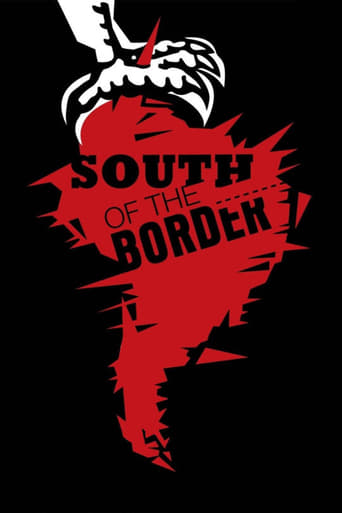
A road trip across five countries to explore the social and political movements as well as the mainstream media's misperception of South America while interviewing seven of its elected presidents.

Al Pacino's deeply-felt rumination on Shakespeare's significance and relevance to the modern world through interviews and an in-depth analysis of "Richard III."

Over 35 years after Bob Lazar's revelations, this documentary exposes secrets of a facility the government still denies. Featuring Lazar's testimony, recreations, and new evidence, it reopens a case that continues to spark global curiosity
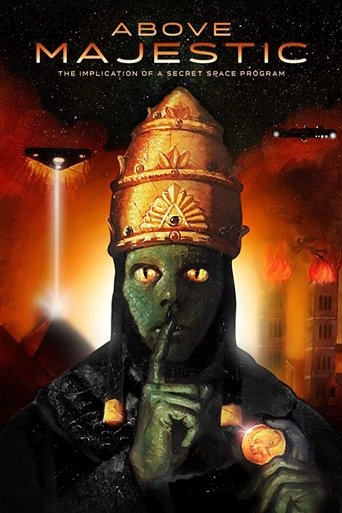
A look at the origins, history and conspiracies behind the "Majestic 12", a clandestine group of military and corporate figureheads charged with reverse-engineering extraterrestrial technology.

In an intimate and joyful story of love in the face of loss, celebrated poets Andrea Gibson and Megan Falley find strength—and unexpected hilarity—in what might be their final year together.

When Allied forces liberated the Nazi concentration camps in 1944-45, their terrible discoveries were recorded by army and newsreel cameramen, revealing for the first time the full horror of what had happened. Making use of British, Soviet and American footage, the Ministry of Information’s Sidney Bernstein (later founder of Granada Television) aimed to create a documentary that would provide lasting, undeniable evidence of the Nazis’ unspeakable crimes. He commissioned a wealth of British talent, including editor Stewart McAllister, writer and future cabinet minister Richard Crossman – and, as treatment advisor, his friend Alfred Hitchcock. Yet, despite initial support from the British and US Governments, the film was shelved, and only now, 70 years on, has it been restored and completed by Imperial War Museums under its original title "German Concentration Camps Factual Survey".
An exploration of technologically developing nations and the effect the transition to Western-style modernization has had on them.

Through deeply personal interviews with her siblings and an examination of the photographs, letters, and belongings left behind, Mariska assembles a new portrait of her mother Jayne Mansfield, an extraordinary and complex woman.

The life and career of one of comedy's most inimitable modern voices, Mr. Gilbert Gottfried.

A visual montage portrait of our contemporary world dominated by globalized technology and violence.
A presentation of a case for a needed transition out of the current socioeconomic monetary paradigm which governs the entire world society. This subject matter will transcend the issues of cultural relativism and traditional ideology and move to relate the core, empirical 'life ground' attributes of human and social survival, extrapolating those immutable natural laws into a new sustainable social paradigm called a 'Resource-Based Economy'.

A subjective documentary that explores various theories about hidden meanings in Stanley Kubrick's classic film The Shining. Five very different points of view are illuminated through voice over, film clips, animation and dramatic reenactments.
Similar titles
In the spring of 1974, a camera team from Studio H&S succeeded against the explicit orders of the Junta’s Chancellery, entered into two large concentration camps in the north of the country - Chacabuco and Pisagua - leaving with filmed sequences and sound recordings.
Explores the life and work of English journalist Robert Cox, the former editor of "The Buenos Aires Herald" daily newspaper, whose investigative reporting in the late 1970s exposed the shocking human rights crimes of Argentina's military dictators.
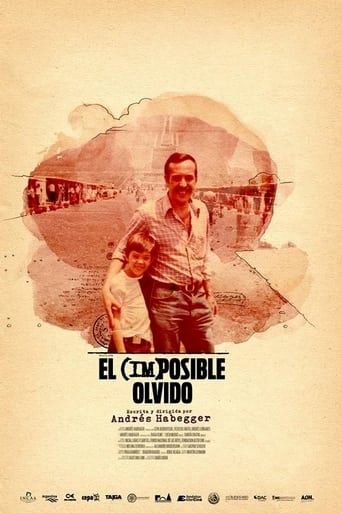
Argentine filmmaker Andrés Habegger embarks on a deeply personal journey in this documentary, seeking to recover memories and information about his father, Norberto Habegger, a journalist and Montonero activist who disappeared in Brazil in 1978 during a joint operation between the Argentine and Brazilian military. Traveling to places that were part of his life and revisiting old photos and his childhood diaries, the director fills in the gaps in a family history that was interrupted.
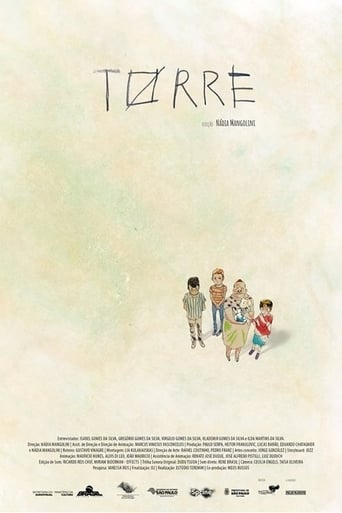
Four siblings, whose father disappeared during Brazilian Military Dictatorship, report their childhood during the regime.
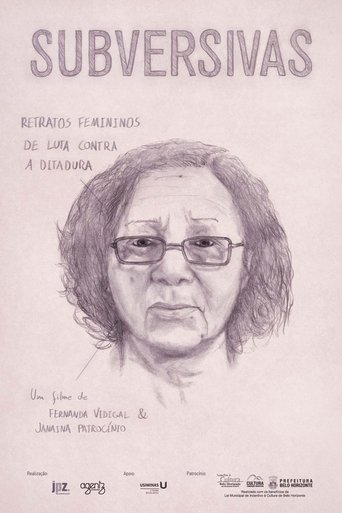
"Subversivas" is a documentary that reveals the brazilian military dictatorship from the perspective of women. Teresa Angelo, Gilse Cosenza, Thereza Vidigal, Angela Pezzuti and Delsy Gonçalves joined the resistance to the military regime in different ways. Their memories bring out events that marked that time and their life. These statements reveal their effort for freedom and democracy not only in political actions, but also in their family, work and everyday relationships, imbued with a belief and search for a fair and free country.
A plea against the government of General Hugo Banzer (1971-1978) and specifically against the Bolivian military during the seven-year dictatorship. Includes interviews with prominent politicians, union leaders, and former CIA agents, as well as with Régis Debray, advisor to President Mitterrand.

Long ago, Geamăna was a Romanian village in the Apuseni Mountains, home to about 1000 people. Today, only the church spire rises from the poisonous mud of a neighbouring copper mine. Almost all the houses have sunk and their inhabitants fled. On the edge of the past, Valeria Praţa strives for her present - and is threatened by the future.

Margherita Sarfatti, Mussolini's lover and advisor, was a woman who exerted a great influence on the Duce and on Italian cultural life. Through archival documents, autobiographical texts and love letters, the documentary paints a portrait of the woman who helped create the myth of the Duce.
It follows Chilean writer Antonio Skármeta as he celebrates the end of the autocrats. Cheerful farewell rituals accompany others facing political persecution on their way to fly home.
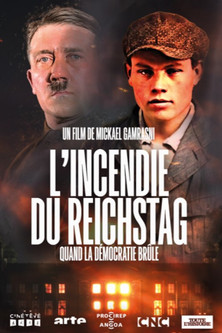
Berlin, February 27, 1933. The Reichstag is in flames. A young Dutch unemployed man, Marinus van der Lubbe, was found alone in the building. For Hitler, it was a plot by the "Reds". One hundred thousand communists and sympathizers were arrested during the night and in the days that followed and locked up in the first Nazi concentration camps. In March, the Chancellor obtained full powers. On September 21, the trial opened in Leipzig, broadcast on the radio. For the Nazis and the Communists alike, van der Lubbe was the perfect scapegoat. On December 23, 1933, he was sentenced to death, while his four co-defendants were acquitted.
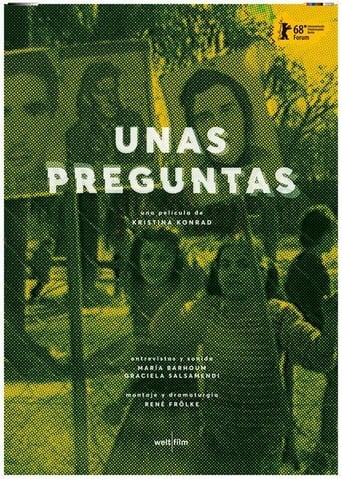
In 1986, the Uruguayan Parliament passed a law granting amnesty for all crimes and human rights violations committed by the military and police during the dictatorship (1973-85). This law of impunity prevented the clarification demanded by the relatives of those who had disappeared and been murdered by the former regime. A public initiative arose calling for a referendum in which the law be subject to the vote of the people. Unas preguntas uses U-matic footage, mostly of interviews recorded on the streets of Uruguay between 1987 and 1989, to present a time capsule of the period.

Florian Hartung and Dirk Pohlmann have reconstructed a previously unknown dimension of the collaboration between Nazis and the CIA in the Cold War. Drawing upon recently released documents, the film exposes for the first time a perfidious, worldwide net that reaches deep into the power structures of the Federal Republic of Germany. Lending their authority to the fact-finders’ mission are high-ranking statesmen, journalists and historians.
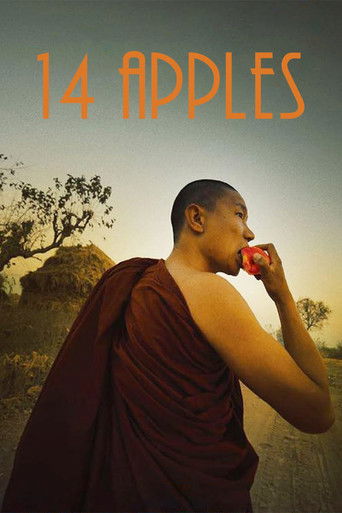
Wang Shin-hong is suffering from insomnia. A fortune teller advises the Mandalay businessman, whose car and bulging wallet suggest that business is going pretty well, to spend 14 days in a monastery, living life as a monk and eating an apple a day. Such a thing is possible in Burma today. Wang Shin-hong arrives at the rural monastery, has his head shaved and dons a red robe, in which he instantly becomes an authority. During the welcome procession, the village women, their poverty clear from their clothing and the huts in the background, put more than they have in his alms bowl. During his fleeting role as their advisor, Wang Shin-hong soon learns of the villagers’ attempts to survive and make a living as legal or illegal migrants in China, Thailand or Malaysia. He also finds out how the other monks try to generate profit and additional income.
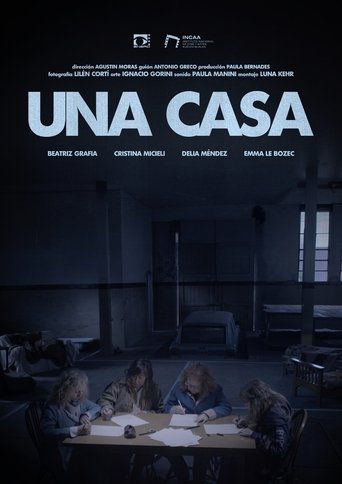
In an empty warehouse, four women remember the rooms of the house where they were tortured during the last dictatorship. After testifying about their experience, the women make a sketch, similar to the one used by Judge Rafecas in 2020 to identify the site of the clandestine center.
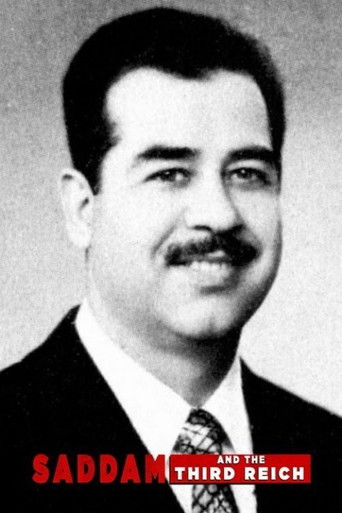
The key individuals of the Iraqi-Nazi connection.

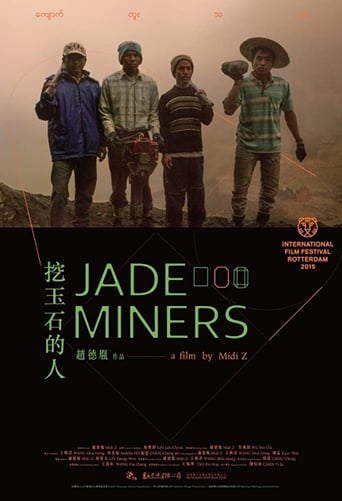
A fascinating documentary, shot in the mountainous north of Burma. No filmmaker is welcome there, because, against the background of a civil war, the jade miners enter the deserted mines illegally. With the aid of filming locals, however, Midi Z was able to compile this portrait. Getting rich quick turns out to be hard and risky work Jade has always been a valuable commodity in Asia. In the mountains in the north of Burma there are valuable deposits of jade. The area forms part of Kachin State, inhabited by many ethnic groups which found themselves embroiled in the Civil War in 2010 with the Burmese government. Jade mining was halted because of the conflict. Thousands of workers, however, went to the war zone in order to dig for illegal jade. It turned the region into a no-go area and the filmmaker Midi Z, who had so far made feature films in Burma, saw no opportunity to go and film there. It was far too dangerous. © iffr.com
When Mariana connects the Military Dictatorship's violent legacy as the structure behind Brazilian families, she embarks on an introspective journey to deconstruct her family life growing up in Brazil.


Two young Swiss bankers decide to break out of their gilded cage. They leave their promising careers as managers behind and found a relief organisation for underprivileged children in Southeast Asia. In order to finance their humanitarian projects, they put to use not only their know-how from the world of finance, but also the international network they developed as bankers. The glamour world of European metropolises meets the jungle in the Mekong Delta. A reflection on the meaning of life and happiness in life.