Wittmann v Ekins: The Death of a Panzer Ace
2010-05-01 · 77 min · Not rated
At about 1230 on the 8th August 1944 near St Aignan in Normandy Hauptsturmführer Michael Wittmann the top German tank ace and Coy Comd in an SS Heavy Tank Coy (Tiger) was killed when his tank was knocked out in counter attack against British and Canadian Forces taking part in Op Totalise. Over the years much controversy had grown up over who destroyed Wittmann's tank Joe Ekins of the British Northants Yeomanry, a Canadian tank of the Sherbrooke Fusiliers or a rocket from an RAF Typhoon. In this film the BHTV examine the latest information on the ground, including testimony from German survivors and Joe Ekins himself.. The BHTV team believe that the main weight of the evidence shows that it was most probably Ekins Sherman Firefly that struck the killer blow.
Trailers are previews, not full movies.
No authorized playback source configured. Use the legal watch options below.
Production details
- Directors
- Unavailable
- Production companies
- Battlefield History TV
- Countries
- United Kingdom
- Status
- Released
Top Cast
Title information and images are supplied by TMDb. Explore our discovery guide for advice on comparing metadata and legal viewing options.
Where to watch
Availability provided by JustWatch via TMDb. Offers can change. Provider links are listed on TMDb; full playback requires a separately authorized source.
Availability not listed for this country.
Seasons & episodes
Recommendations

When Sgt. First Class Brian Eisch is critically wounded in Afghanistan, it sets him and his sons on a journey of love, loss, redemption and legacy.

Prelude to War was the first film of Frank Capra's Why We Fight propaganda film series, commissioned by the Pentagon and George C. Marshall. It was made to convince American troops of the necessity of combating the Axis Powers during World War II. This film examines the differences between democratic and fascist states.
"Trinity and Beyond" is an unsettling yet visually fascinating documentary presenting the history of nuclear weapons development and testing between 1945-1963. Narrated by William Shatner and featuring an original score performed by the Moscow Symphony Orchestra, this award-winning documentary reveals previously unreleased and classified government footage from several countries.

“The Soviet Story” is a story of an Allied power, which helped the Nazis to fight Jews and which slaughtered its own people on an industrial scale. Assisted by the West, this power triumphed on May 9th, 1945. Its crimes were made taboo, and the complete story of Europe’s most murderous regime has never been told. Until now...

A documentary about World War I with never-before-seen footage to commemorate the centennial of Armistice Day, and the end of the war.

Set both in Latin America and the United States, the film explores the historic and current relationship of Washington with countries such as Venezuela, Bolivia and Chile. Pilger says that the film "...tells a universal story... analysing and revealing, through vivid testimony, the story of great power behind its venerable myths. It allows us to understand the true nature of the so-called "war on terror". According to Pilger, the film’s message is that the greed and power of empire is not invincible and that people power is always the "seed beneath the snow".

Amid the failing counteroffensive, a journalist follows a Ukrainian platoon on their mission to traverse one mile of heavily fortified forest and liberate a strategic village from Russian occupation. But the farther they advance through their destroyed homeland, the more they realize that this war may never end.

This documentary movie is about the battle of San Pietro, a small village in Italy. Over 1,100 US soldiers were killed while trying to take this location, that blocked the way for the Allied forces from the Germans. Preserved by the Academy Film Archive in 2005.
Korengal picks up where Restrepo left off; the same men, the same valley, the same commanders, but a very different look at the experience of war.
WWII from Space delivers World War II in a way you've never experienced it before. This HISTORY special uses an all-seeing CGI eye that offers a satellite view of the conflict, allowing you to experience it in a way that puts key events and tipping points in a global perspective. By re-creating groundbreaking moments that could never have been captured on camera, and by illustrating the importance of simultaneity and the hidden effects of crucial incidents, HISTORY presents the war's monumental moments in a never-before-seen context. And with new information brought to the forefront, you'll better understand how a nation ranked 19th in the world's militaries in 1939 emerged six years later as the planet's only atomic superpower.
Over a period of two years, Mark Cowen and his crew travelled to thirty U.S. states and ten European cities, to interview the veterans of Easy Company. The stories told by the veterans themselves, create a history of the Second World War from the point of view of this heroic company of men, made famous in the mini-series Band of Brothers.

Pete Postlethwaite stars as a man living alone in the devastated future world of 2055, looking at old footage from 2008 and asking: why didn’t we stop climate change when we had the chance?
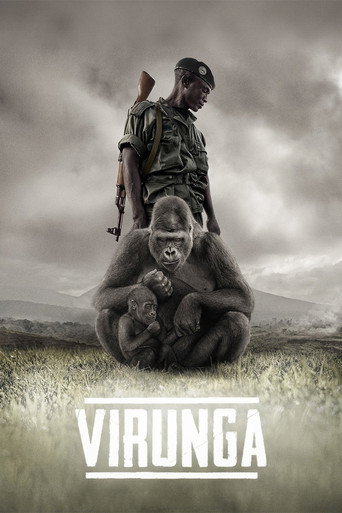
Virunga in the Democratic Republic of the Congo is Africa's oldest national park, a UNESCO world heritage site, and a contested ground among insurgencies seeking to topple the government that see untold profits in the land. Among this ongoing power struggle, Virunga also happens to be the last natural habitat for the critically endangered mountain gorilla. The only thing standing in the way of the forces closing in around the gorillas: a handful of passionate park rangers and journalists fighting to secure the park's borders and expose the corruption of its enemies. Filled with shocking footage, and anchored by the surprisingly deep and gentle characters of the gorillas themselves, Virunga is a galvanizing call to action around an ongoing political and environmental crisis in the Congo.
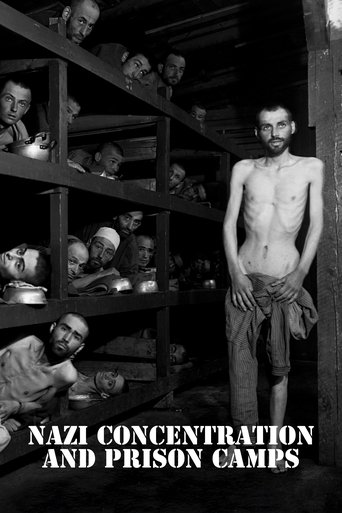
Produced and presented as evidence at the Nuremberg war crimes trial of Hermann Göring and twenty other Nazi leaders, this film consists primarily of dead and surviving prisoners and of facilities used to kill and torture during the World War II.
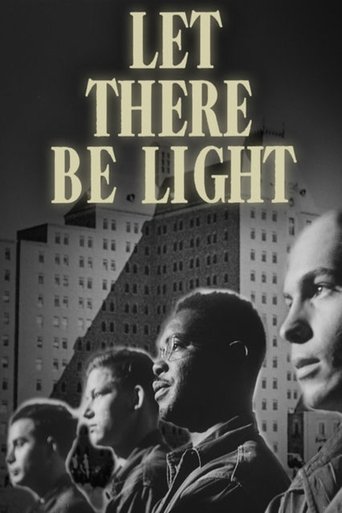
The final entry in a trilogy of films produced for the U.S. government by John Huston. Some returning combat veterans suffer scars that are more psychological than physical. This film follows patients and staff during their treatment. It deals with what would now be called PTSD, but at the time was categorised as psychoneurosis or shell-shock. Government officials deemed this 1946 film counterproductive to postwar efforts; it was not shown publicly until 1981.

Director Peter Joseph examines examples of economic subjugation and offers solutions based on alignment with nature.

Marcel Ophuls' riveting film details the heinous legacy of the Gestapo head dubbed "The Butcher of Lyon." Responsible for over 4,000 deaths in occupied France during World War II, Barbie would escape—with U.S. help—to South America in 1951, where he lived until a global manhunt led to his 1983 arrest and subsequent trial.
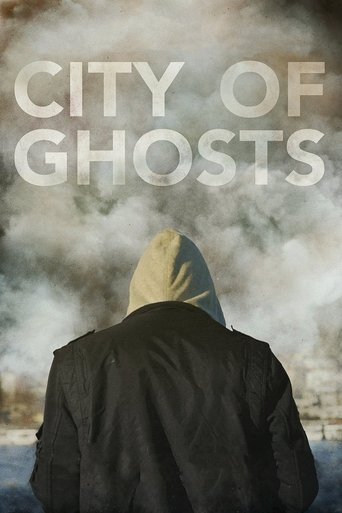
With unprecedented access, this documentary follows the extraordinary journey of “Raqqa is Being Slaughtered Silently”—a group of anonymous citizen journalists who banded together after their homeland was overtaken by ISIS—as they risk their lives to stand up against one of the greatest evils in the world today.

The history of cinematic sound, told by legendary sound designers and visionary filmmakers.
Meet the real-life airmen who inspired Masters of the Air as they share the harrowing and transformative events of the 100th Bomb Group.
Similar titles
This rare documentary was filmed with the participation and personal camera of Wolfgang Gorther, a German military cinematographer of the 1st mining division, who participated in the legendary ascent of Elbrus on the night of August 21, 1942. From the beginning of the Second World War and the last international winter sports week in Garmisch-Partenkirchen follows the invasion of the German troops into the Soviet Union: Dnieper, Zaporozhy, Kharkov, Rostov-on-Don, Nogaean Steppe, Caucasus – fighting at 50 degrees below zero, military expedition into the world of ice and snow; – ascent of mountain arrows and subsequent hoisting of flags on the Elbrus at an altitude of 5,633 meters.
Ari Ben Canaan, a passionate member of the Jewish paramilitary group Haganah, attempts to transport 600 Jewish refugees on a dangerous voyage from Cyprus to Palestine on a ship named the Exodus. He faces obstruction from British forces, who will not grant the ship passage to its destination.
During World War I, English officer Thomas Edward 'T.E.' Lawrence sets out to unite and lead the diverse, often warring, Arab tribes to fight the Turks.
The dramatised story of the Irish civil rights protest march on January 30 1972 which ended in a massacre by British troops.
A powerful and poignant film in which families and friends of those who have died fighting in Afghanistan and Iraq talk openly about their loved ones and their grief. Epic in scale and spanning seven years of war, this landmark three-hour film gives a rare insight into the personal impact and legacy of this loss.
An Irish rogue uses his cunning and wit to work his way up the social classes of 18th century England, transforming himself from the humble Redmond Barry into the noble Barry Lyndon.
A disgraced officer risks his life to help his childhood friends in battle.
Sir Robert Beaumont is behind schedule on a railroad in Africa. Enlisting noted engineer John Henry Patterson to right the ship, Beaumont expects results. Everything seems great until the crew discovers the mutilated corpse of the project's foreman, seemingly killed by a lion. After several more attacks, Patterson calls in famed hunter Charles Remington, who has finally met his match in the bloodthirsty lions.

Rojda, a native of Iraqi Kurdistan and a soldier in the German army, travels to a refugee camp in Greece where she manages to meet her mother, who has bad news about her sister Dilan.
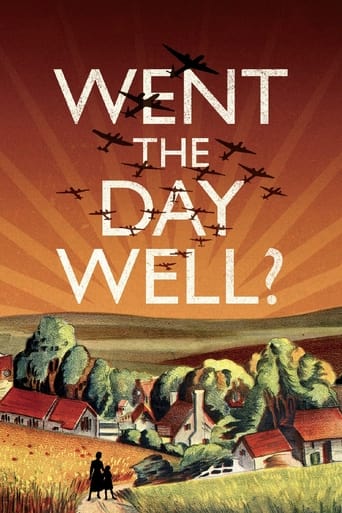
The quiet village of Bramley End is taken over by German troops posing as Royal Engineers. Their task is to disrupt England's radar network in preparation for a full scale German invasion. Once the villagers discover the true identity of the troops, they do whatever they can to thwart the Nazis plans.
The movie depicts the events from July until September of 1914 which led to the defeat of the German troops at the Marne. While Sebastian Haffner explains and comments on operations and decisions on the basis of situation maps, key scenes are depicted by actors. A main focus is thereby placed by Haffner onto the controversial mission of lieutenant-colonel Richard Hentsch who is said to have, during a war patrol to the various army high commands, contributed to the abortion of the operations significantly.
Troops play up for the camera in the shadow of Edinburgh Castle.
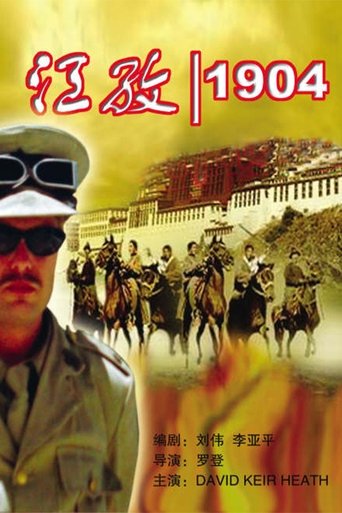
David Austin, a Scottish scholar of the Orient, befriends Awang Dunzhu on the bustling streets of Kathmandu, not knowing that the two will soon both become translators for opposing sides in the British invasion of Tibet.
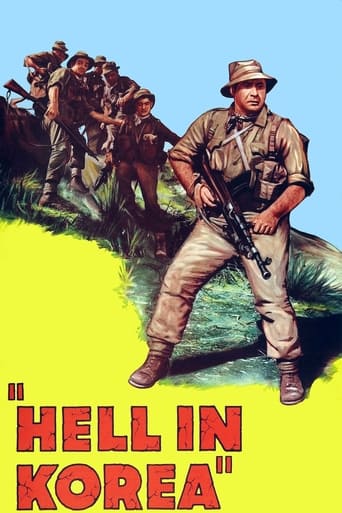
Based on real events, A Hill in Korea charts the fortunes of a small group of British soldiers serving in the Korean War. Out on a routine patrol, the soldiers find that Chinese troop movements have cut them off from their own lines. They try to fight their way back to safety but with the enemy surrounding them on all sides, the prospects look bleak. Facing almost insurmountable odds, they decide to stand a fight.

First transmitted in 1977, this documentary follows three months in the life of the 1st Battalion of the Royal Green Jackets (also known as the Black Mafia) as they move from their Dover barracks for a tour of duty at the Tower of London. The Royal Green Jackets are light infantry, trained to move fast. Above all they are riflemen and take pride in their reputation of being thinking fighting soldiers.
69 Infantry Brigade had a highly successful landing and now had to fight its way through German defences to its objectives eight miles away. It was here that the veteran warrior, Sergeant Major Stan Hollis, continued the actions that led to him receiving the only D Day Victoria Cross.Meanwhile, 231 Infantry Brigade,were attempting to recover the situation and fight through German strong points towards Arromanches and Point 54 ridge. These battles lacked the coordination between infantry and tanks achieved by 69 Brigade and were up against field grade German infantry. Hours behind schedule, the village of Ryes was taken. This allowed the much delayed second wave consisting of 56th and 151 Infantry Brigades to deploy and exploit the early successes, reaching the outskirts of Bayeux by dusk. Meanwhile, in the west, the hard pressed 231 Infantry Brigade and 47 Commando continued its advance through enemy held territory to Port en Bessin, Arromanches and the Longues sur Mer Battery.
Lt. Robert Cappa and his platoon of 2nd Infantry Division soldiers must defend a vital supply depot from being captured by attacking German soldiers.
On the 6th June 1944, Maj Howard’s Coy of the OX & Bucks LI carried out one of the greatest and most successful small unit actions in history in capturing the two Orne Bridges as a precursor to D Day. The initial part of the film traces the development of the British Airborne Forces to the stage where they can play a major part in the allied plan to storm Hitler’s Fortress Europe. The BHTV team then tell the story of this heroic action and the equally heroic follow up actions of 7 Para in holding the bridges against the might of 21st Pz Div. This action exemplified the British soldier at his best whether in The Glider Pilot Regiment, The Glider Infantry ( Ox & Bucks)or the Parachute Regiment, all showed courage skill and commitment.
Jumping in to Drop Zones eight to ten miles from Arnhem on the second day of Operation Market Garden was always going to be difficult for Brigadier “Shan” Hackett's 4th British Parachute Brigade. With little information on how 1 Para Brigade's battle went the day before or what faced them on the ground the stage was set for an epic battle. John Waddy, v company commander in 156 Para Battalion and a team of Arnhem experts cover the ground where 4 Para Brigade fought with 9 SS Pz Div in the woods to the west of Arnhem in what was to be an unequal but heroic battle; the result of a flawed concept and plan.Driven back the Brigade was withdrawing across LZ P when the Polish heavy lift gliders swept in to cause. Captain Quirepel was awarded a posthumous Victoria Cross for his action in helping stem the enemy advance long enough for the Paratroopers to escape across the railway embankment by nightfall.
The Battle of Arnhem, fought in the early autumn of 1944, remains without a doubt the most hotly debated battle of the North West European Campaign, both then and now. From its inception in the sixteen cancelled airborne operations during August, we will chart the problems, many of which were ignored by men desperate to get into battle, the compromises and mistakes that pitched lightly armed and ill equipped paratroopers and glider infantry into an unequal struggle against an SS panzer troops. We follow the eight mile route that 2 Para took to reach the bridge at Arnhem, slipping through the German defences.In Part 2, a separate film we look at their epic battle.