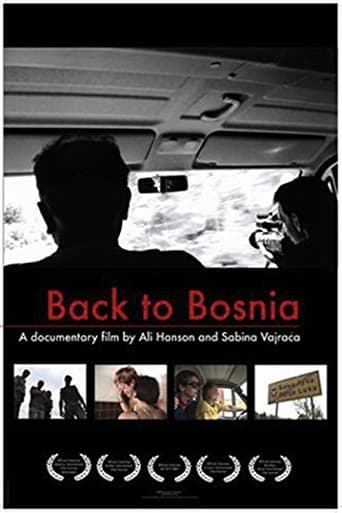
Back to Bosnia
2005-01-01 · 75 min · ★ 8.0
Filmmaker Sabina Vajraca documents her Bosnian Muslim family's return to their home of Banja Luka, Bosnia, to recover their stolen belongings many years after being forced to flee to the United States. In Bosnia, they witness the devastation of the city, visit war crimes sites, and confront the family that has been living in their former apartment -- with all their furnishings -- for a decade.
Trailers are previews, not full movies.
No authorized playback source configured. Use the legal watch options below.
Production details
- Directors
- Sabina Vajrača
- Production companies
- Alternate Plan Productions
- Countries
- United States of America, Bosnia and Herzegovina
- Status
- Released
Top Cast
Cast unavailable.
Title information and images are supplied by TMDb. Explore our discovery guide for advice on comparing metadata and legal viewing options.
Where to watch
Availability provided by JustWatch via TMDb. Offers can change. Provider links are listed on TMDb; full playback requires a separately authorized source.
Rental
Amazon Video, Fandango At Home
Purchase
Amazon Video, Fandango At Home
Free
Fawesome
With ads
Fandango at Home Free, Filmzie, Xumo Play, Tubi TV
View authorized watch options on TMDbSeasons & episodes
Recommendations

A love letter from a young mother to her daughter, the film tells the story of Waad al-Kateab’s life through five years of the uprising in Aleppo, Syria as she falls in love, gets married and gives birth to Sama, all while cataclysmic conflict rises around her. Her camera captures incredible stories of loss, laughter and survival as Waad wrestles with an impossible choice– whether or not to flee the city to protect her daughter’s life, when leaving means abandoning the struggle for freedom for which she has already sacrificed so much.

Amid the failing counteroffensive, a journalist follows a Ukrainian platoon on their mission to traverse one mile of heavily fortified forest and liberate a strategic village from Russian occupation. But the farther they advance through their destroyed homeland, the more they realize that this war may never end.
Korengal picks up where Restrepo left off; the same men, the same valley, the same commanders, but a very different look at the experience of war.

Prelude to War was the first film of Frank Capra's Why We Fight propaganda film series, commissioned by the Pentagon and George C. Marshall. It was made to convince American troops of the necessity of combating the Axis Powers during World War II. This film examines the differences between democratic and fascist states.
As the Russian invasion begins, a team of Ukrainian journalists trapped in the besieged city of Mariupol struggle to continue their work documenting the war's atrocities.
During the chaotic final weeks of the Vietnam War, the North Vietnamese Army closes in on Saigon as the panicked South Vietnamese people desperately attempt to escape. On the ground, American soldiers and diplomats confront a moral quandary: whether to obey White House orders to evacuate only U.S. citizens.

This documentary movie is about the battle of San Pietro, a small village in Italy. Over 1,100 US soldiers were killed while trying to take this location, that blocked the way for the Allied forces from the Germans. Preserved by the Academy Film Archive in 2005.
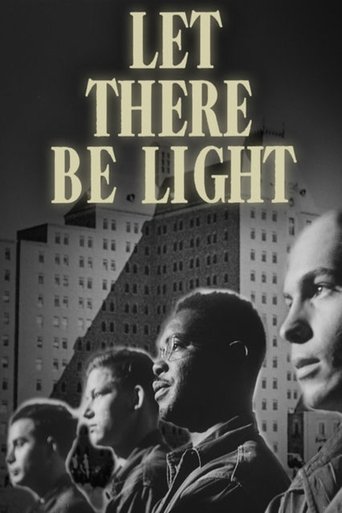
The final entry in a trilogy of films produced for the U.S. government by John Huston. Some returning combat veterans suffer scars that are more psychological than physical. This film follows patients and staff during their treatment. It deals with what would now be called PTSD, but at the time was categorised as psychoneurosis or shell-shock. Government officials deemed this 1946 film counterproductive to postwar efforts; it was not shown publicly until 1981.

A documentary about World War I with never-before-seen footage to commemorate the centennial of Armistice Day, and the end of the war.
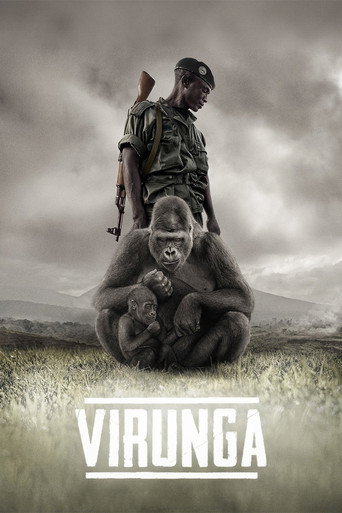
Virunga in the Democratic Republic of the Congo is Africa's oldest national park, a UNESCO world heritage site, and a contested ground among insurgencies seeking to topple the government that see untold profits in the land. Among this ongoing power struggle, Virunga also happens to be the last natural habitat for the critically endangered mountain gorilla. The only thing standing in the way of the forces closing in around the gorillas: a handful of passionate park rangers and journalists fighting to secure the park's borders and expose the corruption of its enemies. Filled with shocking footage, and anchored by the surprisingly deep and gentle characters of the gorillas themselves, Virunga is a galvanizing call to action around an ongoing political and environmental crisis in the Congo.

“The Soviet Story” is a story of an Allied power, which helped the Nazis to fight Jews and which slaughtered its own people on an industrial scale. Assisted by the West, this power triumphed on May 9th, 1945. Its crimes were made taboo, and the complete story of Europe’s most murderous regime has never been told. Until now...

When Sgt. First Class Brian Eisch is critically wounded in Afghanistan, it sets him and his sons on a journey of love, loss, redemption and legacy.

Director Michael Apted revisits the same group of British-born adults after a 7 year wait. The subjects are interviewed as to the changes that have occurred in their lives during the last seven years.

Documentary filmmaker Amy Berg investigates the life of 30-year pedophile Father Oliver O'Grady and exposes the corruption inside the Catholic Church that allowed him to abuse countless children. Victims' stories and a disturbing interview with O'Grady offer a view into the troubled mind of the spiritual leader who moved from parish to parish gaining trust ... all the while betraying so many.

As a visually radical memoir, CAMERAPERSON draws on the remarkable footage that filmmaker Kirsten Johnson has shot and reframes it in ways that illuminate moments and situations that have personally affected her. What emerges is an elegant meditation on the relationship between truth and the camera frame, as Johnson transforms scenes that have been presented on Festival screens as one kind of truth into another kind of story—one about personal journey, craft, and direct human connection.
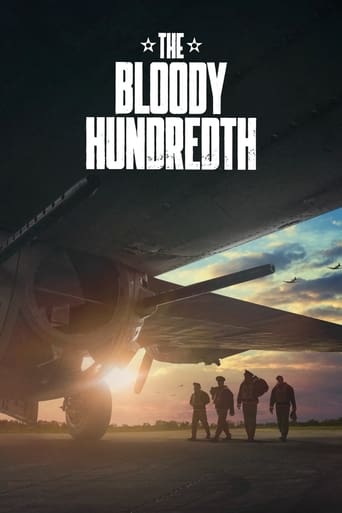
Meet the real-life airmen who inspired Masters of the Air as they share the harrowing and transformative events of the 100th Bomb Group.

Through deeply personal interviews with her siblings and an examination of the photographs, letters, and belongings left behind, Mariska assembles a new portrait of her mother Jayne Mansfield, an extraordinary and complex woman.

This special explores the return of Obi-Wan Kenobi and Anakin Skywalker to the screen, as well as Ewan McGregor and Hayden Christensen to their classic roles. Director Deborah Chow leads the cast and crew as they create new heroes and villains that live alongside new incarnations of beloved Star Wars characters, and an epic story that dramatically bridges the saga films.
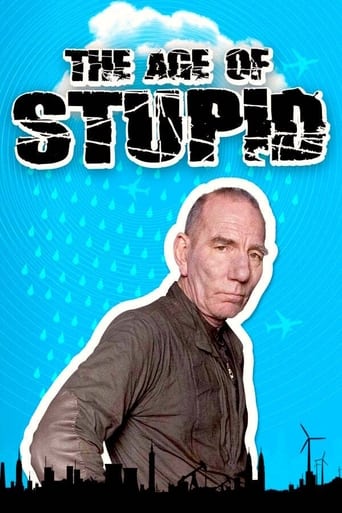
Pete Postlethwaite stars as a man living alone in the devastated future world of 2055, looking at old footage from 2008 and asking: why didn’t we stop climate change when we had the chance?

Documentary about the art of film editing. Clips are shown from many groundbreaking films with innovative editing styles.
Similar titles
Two children fleeing from a recon helicopter. They flee to a village and, without knowing it, bring the horror with them.
Can there be pornography for women? In search of an answer, Esther Gronenborn stumbles through Germany's porn scene like Alice in Wonderland and interviews Beate Uhse, activist Monika Treut from the PorNo movement, and other minor and major figures from the porn industry.
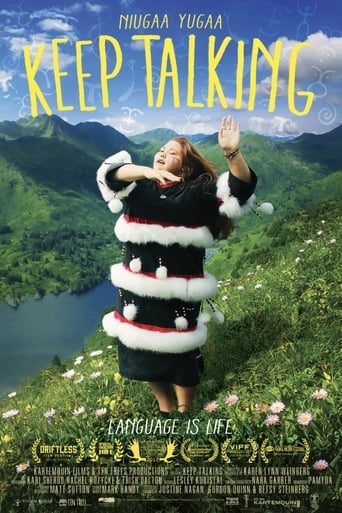
Three Alaska Native women work to save their endangered language, Kodiak Alutiiq, and ensure the future of their culture while confronting their personal demons. With just 41 fluent Native speakers remaining, mostly Elders, some estimate their language could die out within ten years. The small community travels to a remote Island, where a language immersion experiment unfolds with the remaining fluent Elders. Young camper Sadie, an at-risk 13 year old learner and budding Alutiiq dancer, is inspired and gains strength through her work with the teachers. Yet PTSD and politics loom large as the elders, teachers, and students try to continue the difficult task of language revitalization over the next five years.
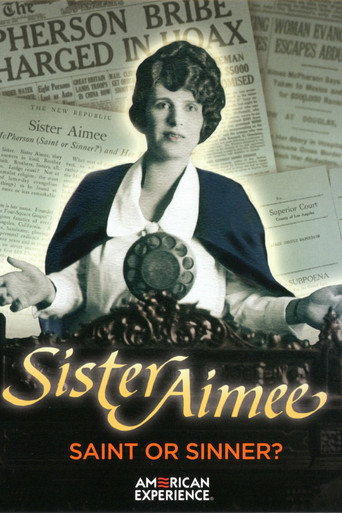
At the peak of her immense popularity in the 1920s, evangelist Aimee Semple McPherson was drawing larger crowds to her revivals than those of P.T. Barnum or Harry Houdini. This chapter of "American Experience" paints a vivid portrait of the controversial and charismatic religious figure. Credited with mainstreaming religion in American culture, Sister Aimee created one of the country's first Christian radio stations, among other accomplishments.

The film meticulously unravels the case of Norma Khouri, whose best-selling memoir about an honor killing captivated the world before her entire story began to collapse under the weight of its own fabrications. More than just a look at a spectacular con, this is a timely and unsettling exploration of media manipulation, cultural differences, and the dangerous power of a compelling narrative. Broinowski’s film is a riveting study of a pathological liar, but it also holds a mirror up to a world eager to embrace a good story, fact or fiction.

Jon Stewart performs a solo standup routine, telecast live from Miami, Florida.
The Fighting Cholitas is a documentary short about a group of bold and fierce female Bolivian wrestlers. These indigenous Indian women jump into the ring every Sunday in their traditional vibrant mulitlayered skirts and perform the acrobatic maneuvers of Lucha Libre (a blend of Mexican and American professional wrestling). The Fighting Cholitas documents this weekly fight and goes behind the scenes to find out who these women are and what draws them to this unusual sport.
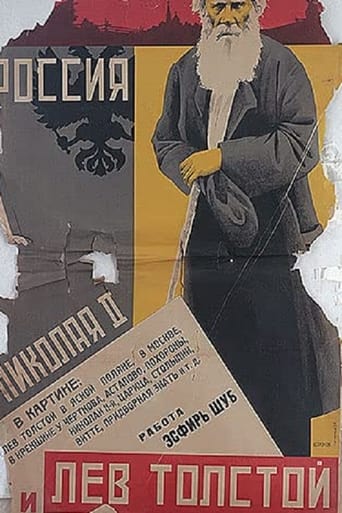
Lev Tolstoy and the Russia of Nicolai II is a 1928 Soviet silent documentary film directed by Esfir Shub. The film is considered lost. Lev Tolstoy and the Russia of Nicolai II is the final film in Esfir Shub's trilogy of films that began with The Fall of the Romanov Dynasty (1927) and continued with The Great Road (1927).
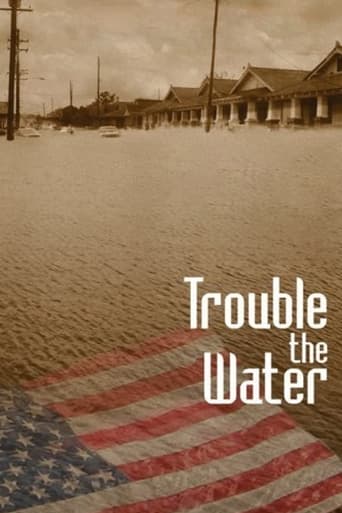
"Trouble the Water" takes you inside Hurricane Katrina in a way never before seen on screen. The film opens the day before the storm makes landfall--just blocks away from the French Quarter but far from the New Orleans that most tourists knew. Kimberly Rivers Roberts, an aspiring rap artist, is turning her new video camera on herself and her Ninth Ward neighbors trapped in the city. Weaving an insider's view of Katrina with a mix of verité and in-your-face filmmaking, it is a redemptive tale of self-described street hustlers who become heroes--two unforgettable people who survive the storm and then seize a chance for a new beginning.

Kasha Sequoia Slavner, aka The Sunrise Storyteller, is an 18-year old filmmaker, photographer, entrepreneur, young global leader and peace advocate. As a concerned high school student, disillusioned and outraged by the negativity and powerlessness she felt as a consumer of mainstream media, Kasha was compelled to find an alternative narrative. On her 16th birthday on an ambitious mission to travel the world for six months with her mom, camera in hand and no clear road map, she finds herself intersecting with the lives of people determined to rise above adversity.

An exploratory journey highlighting the largely unrecognized yet hugely vibrant Pan European feminist movement that is very much alive today, from Turkey to Portugal, by the way of the Balkans, to Italy, Spain and Portugal.

A documentary that explores AIDS activism in Frankfurt, focusing on activists, affected individuals, and organizations fighting the epidemic, raising awareness, and advocating for policy changes. Directors Lou Deinhart, Evi Rohde, and Zoë Struif incorporate 1980s/90s theatre productions, news footage, and protest recordings into their research. Alternating between present-day encounters and historical media, they interview numerous witnesses, constructing a collage of diverse memories rather than a single narrative, highlighting grassroots movements' struggles, solidarity, and impact.
A collection of material shot before and during WW2 in the director’s hometown of Banja Luka, where its quiet life was disrupted by the enemy.

This one hour documentary examines the life of the famed Sharp Shooter and Wild West performer, Annie Oakley from her birth in mid nineteenth century rural Pennsylvania to her death in 1926. Many myths are overturned and the program also features a little known trial when Annie Oakley had to sue The Hearst Newspaper chain all throughout the country for libel when they reported the activities of someone who was impersonating the famed sharpshooter and besmirching her reputation.
World War II was not just the most destructive conflict in humanity, it was also the greatest theft in history: lives, families, communities, property, culture and heritage were all stolen. The story of Nazi Germany's plundering of Europe's great works of art during World War II and Allied efforts to minimize the damage.

A profile of the life of Liberian activist Silas Siakor, a tireless crusader against illegal logging and a symbol of resistance for a new generation.

Saroyanland is a docu-drama focusing on the journey of famous writer William Saroyan to the birthplace of his Armenian family Bitlis, in Turkey in 1964. While retaking the same road, the film aims to understand Saroyan's unique attitude to belonging, witnessing the self-discovery of a man who followed the traces of his Armenian ancestors.

Don’t Breathe is a dark comedy set in Georgia that follows the tribulations of a middle-aged man, Levan, who is suddenly led to question his existence because of a routine medical examination. It sends him into a downward spiral of paranoia and doubt as he fumbles his way through the theatre of the absurd that we call life. Using humour and a playful tone, the film examines the fragility of human nature, when our bearings get lost and our imagination takes over, highlighting our common fears, doubts, hopes and resilience.
Another kind of utopia is presented in the films of Naomi Uman, whose search for her family roots in the Ukraine led her to move to the small village of Legedzine. In "Unnamed Film", she shoots the old bubushka ladies as they expertly prepare pickles, pick vegetables, and sing odes to vodka. Shot on 16mm with non-sync sound, it has an intimate, handmade quality, only heightened by the use of explanatory inter-titles in place of subtitles. Uman’s Ukrainain was weak, so she wanted the viewer to have the same experience as she did, just getting the gist of things. As with Uruphong’s work, there is a nostalgia for the old ways, which were self-sufficient but took an incredible toll on the body. The bubushkas complain about their aching backs and the never-ending poverty, spiking any drift towards romanticization.

The horrors of war are examined from the view points of lifelong friends (Linus Roache, Vincent Perez), who end up on opposing sides in the civil war in Sarajevo. One is an expert marksman, who trains the snipers used to terrify the city and the other becomes a freedom fighter, who rejects his friend's offer to gain an escape from the city. As might be expected, the two eventually have to face-off against one another.