Reunion
1946-01-02 · 32 min · ★ 6.8
Live footage from concentration camps after the liberation, and the complex transport and lodging of masses of prisoners of war and other deported people back to their home countries, at the end of World War II. A 45min 35mm print also exists (shown at Cinémathèque française in 2023).
Trailers are previews, not full movies.
No authorized playback source configured. Use the legal watch options below.
Production details
- Directors
- Richard Banks, Henri Cartier-Bresson, G. Krimsky
- Production companies
- Office of War Information, Ministère des Prisonniers de Guerre et des Déportés, U.S. Army Signal Corps
- Countries
- United States of America, France
- Status
- Released
Top Cast
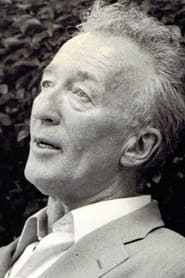 Claude RoyNarrator (voice)
Title information and images are supplied by TMDb. Explore our discovery guide for advice on comparing metadata and legal viewing options.
Where to watch
Availability provided by JustWatch via TMDb. Offers can change. Provider links are listed on TMDb; full playback requires a separately authorized source.
Availability not listed for this country.
Seasons & episodes
Recommendations

Filmmaker Alain Resnais documents the atrocities behind the walls of Hitler's concentration camps.

When Allied forces liberated the Nazi concentration camps in 1944-45, their terrible discoveries were recorded by army and newsreel cameramen, revealing for the first time the full horror of what had happened. Making use of British, Soviet and American footage, the Ministry of Information’s Sidney Bernstein (later founder of Granada Television) aimed to create a documentary that would provide lasting, undeniable evidence of the Nazis’ unspeakable crimes. He commissioned a wealth of British talent, including editor Stewart McAllister, writer and future cabinet minister Richard Crossman – and, as treatment advisor, his friend Alfred Hitchcock. Yet, despite initial support from the British and US Governments, the film was shelved, and only now, 70 years on, has it been restored and completed by Imperial War Museums under its original title "German Concentration Camps Factual Survey".
Director Claude Lanzmann spent 11 years on this sprawling documentary about the Holocaust, conducting his own interviews and refusing to use a single frame of archival footage. Dividing Holocaust witnesses into three categories – survivors, bystanders, and perpetrators – Lanzmann presents testimonies from survivors of the Chelmno concentration camp, an Auschwitz escapee, and witnesses of the Warsaw Ghetto Uprising, as well as a chilling report of gas chambers from an SS officer at Treblinka.

This revealing documentary honors the legendary Sidney Poitier—iconic actor, filmmaker, and civil rights activist. Featuring interviews with Denzel Washington, Spike Lee, Halle Berry, and more.

Through deeply personal interviews with her siblings and an examination of the photographs, letters, and belongings left behind, Mariska assembles a new portrait of her mother Jayne Mansfield, an extraordinary and complex woman.

Over 35 years after Bob Lazar's revelations, this documentary exposes secrets of a facility the government still denies. Featuring Lazar's testimony, recreations, and new evidence, it reopens a case that continues to spark global curiosity
Documentarian Ross McElwee originally set out to make a travelogue of sorts tracing General William T. Sherman's infamous scorched-earth march through the Confederacy in the latter stages of the Civil War. Instead, haunted by a recent breakup with a girlfriend, McElwee ends up documenting his progress -- or lack thereof -- in starting a new relationship. His journey then becomes one of self-reflection and self-discovery rather than a historical/sociological exploration.

In an intimate and joyful story of love in the face of loss, celebrated poets Andrea Gibson and Megan Falley find strength—and unexpected hilarity—in what might be their final year together.
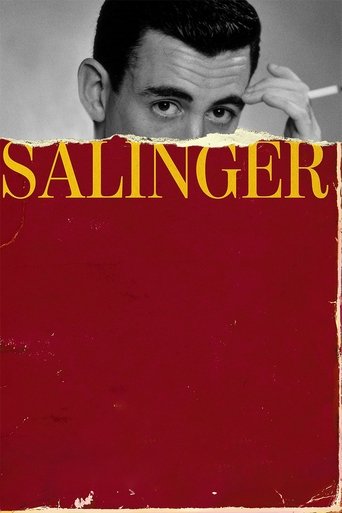
An in-depth investigation into the private world of the American writer J. D. Salinger (1919-2010), who lived most of his life behind the impenetrable wall of a self-imposed seclusion: how his dramatic experiences during World War II influenced his life and work, his relationships with very young women, his obsessive writing methods, his many literary secrets.
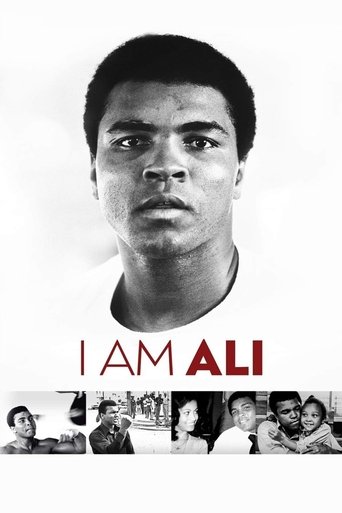
Unprecedented access to Muhammad Ali's personal archive of "audio journals" as well as interviews and testimonials from his inner circle of family and friends are used to tell the legend's life story.
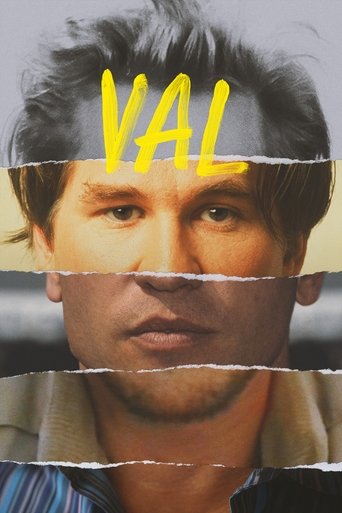
For over 40 years Val Kilmer, one of Hollywood's most mercurial and/or misunderstood actors, has been documenting his own life and craft through film and video. He has amassed thousands of hours of footage, from 16mm home movies made with his brothers, to time spent in iconic roles for blockbuster movies like Top Gun, The Doors, Tombstone, and Batman Forever. This raw, wildly original and unflinching documentary reveals a life lived to extremes and a heart-filled, sometimes hilarious look at what it means to be an artist and a complex man.

The life and career of an actor, artist, and icon. His own journey through his own camera.

As a visually radical memoir, CAMERAPERSON draws on the remarkable footage that filmmaker Kirsten Johnson has shot and reframes it in ways that illuminate moments and situations that have personally affected her. What emerges is an elegant meditation on the relationship between truth and the camera frame, as Johnson transforms scenes that have been presented on Festival screens as one kind of truth into another kind of story—one about personal journey, craft, and direct human connection.
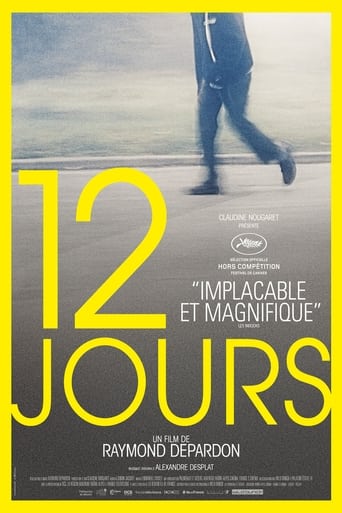
A new documentary by filmmaker-photographer Raymond Depardon – where justice and psychiatry meet.

Director Michael Apted revisits the same group of British-born adults after a 7 year wait. The subjects are interviewed as to the changes that have occurred in their lives during the last seven years.

Told through performances, TV interviews, home movies, family photographs, private letters and unpublished memoirs, the film reveals the essence of an extraordinary woman who rose from humble beginnings in New York City to become a glamorous international superstar and one of the greatest artists of all time.
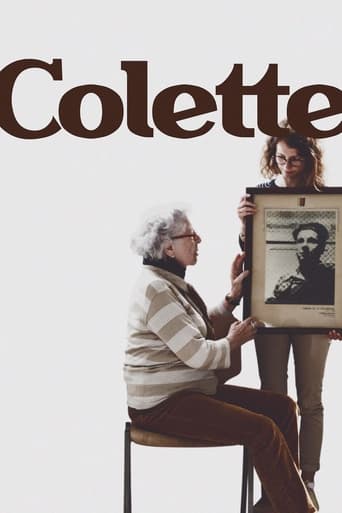
World War II. Not all warriors wore uniforms. Not all warriors were men. Meet ninety-year-old Colette Catherine who, as a young girl, fought the Nazis as a member of the French Resistance. Now she’s about to re-open old wounds, re-visting the terrors of that time. Some nightmares are too terrible to remember. But also, too dangerous to forget.

A documentary on the expletive's origin, why it offends some people so deeply, and what can be gained from its use.
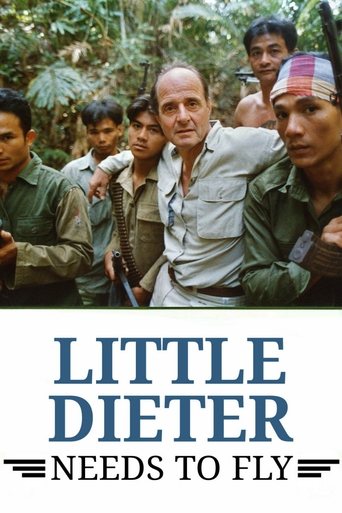
Three decades after German-American pilot Dieter Dengler was shot down over Laos, he returns to the places where he was held prisoner during the early years of the Vietnam War. Accompanied by director Werner Herzog, Dengler describes in unusually candid detail his captivity, the friendships he made, and his daring escape. Not willing to stop there, Herzog even persuades his subject to re-enact certain tortures, with the help of some willing local villagers.

From a prolific career in film and television, Anton Yelchin left an indelible legacy as an actor. Through his journals and other writings, his photography, the original music he wrote, and interviews with his family, friends, and colleagues, this film looks not just at Anton's impressive career, but at a broader portrait of the man.
Similar titles
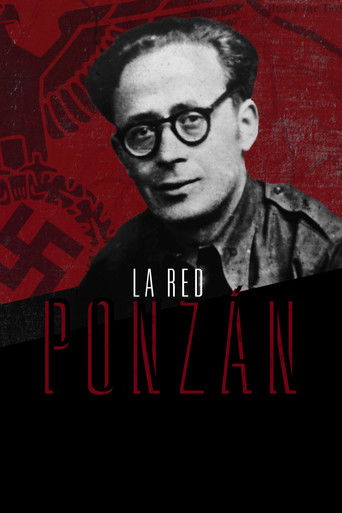
During the Spanish Civil War (1936-1939) and the Second World War (1939-1945), around three thousand people managed to elude their pursuers, and probably also avoided being killed, thanks to the heroic and very efficient efforts of the Ponzán Team, a brave group of people — mountain guides, forgers, safe house keepers and many others —, led by Francisco Ponzán Vidal, who managed to save their lives, both on one side and the other of the border between Spain and France.
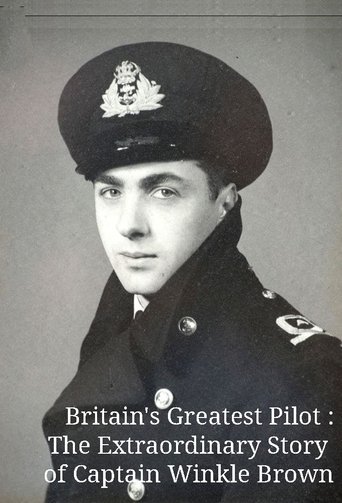
Captain Eric 'Winkle' Brown recounts his flying experiences, encounters with the Nazis and other adventures leading up to and during the Second World War. Illustrated with archive footage and Captain Brown's own photos.
World War II propaganda short which focuses on the dangers of inadvertent dispersal of military information.

After the World War I, Mussolini's perspective on life is severely altered; once a willful socialist reformer, now obsessed with the idea of power, he founds the National Fascist Party in 1921 and assumes political power in 1922, becoming the Duce, dictator of Italy. His success encourages Hitler to take power in Germany in 1933, opening the dark road to World War II. (Originally released as a two-part miniseries. Includes colorized archival footage.)
A captivating and personal detective story that uncovers the truth behind the childhood of Michaël Prazan's father, who escaped from Nazi-occupied France in 1942 thanks to the efforts of a female smuggler with mysterious motivations.
The documentary that captures the compelling story and eyewitness account of six survivors in war-torn Netherlands during World War II.
Soviet documentary shot right after liberation of Auschwitz. It was used as evidence by the Soviet prosecution at the Nuremberg trials. In 2014, footage shot by cameraman Aleksandr Vorontsov, as well as his interview given in 1986 for German television, were included in Andre Singer’s documentary “Night Will Fall”.

Documentary about nazi concentration camp Sachsenhausen.
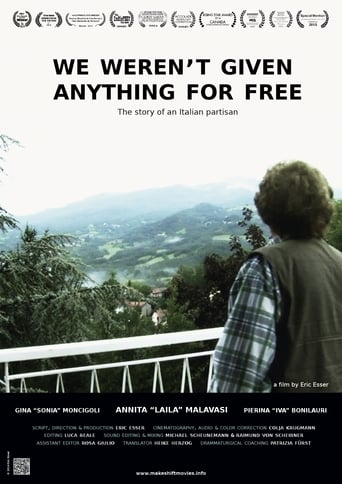
Annita Malavasi was just 22 when the Germans occupied Italy, their former allies, in 1943. As a partisan in the Italian resistance named “Laila”, she moved throughout the Apennines with and between fighting units, delivering information, transporting weapons, and taking part in battles. She spent over a year in the Apennines, fighting against the German occupation. At the same time, she had to assert herself against the men of the mountain villages. By the end of the war, Laila had risen among the ranks to become one of the few female commanders in the Italian resistance. This film chronicles the story of a lifelong struggle for emancipation that began with the battle for Italy’s liberation from fascism. Laila and her two comrades, Gina “Sonia” Moncigoli and Pierina “Iva” Bonilauri talk about their time in the Resistenza and what it meant to them and many other women.
The life story of Mania Hartmayer-Breuer, who fled Germany at the age of 16 after the "Reichskristallnacht" and made her way via Antwerp and southern France to Rome, where she found shelter with Catholic nuns and finally experienced liberation. From there she arrived in the USA with the first refugee transport.

Learn how the longest reigning monarch in British history was shaped by World War II. Princess Elizabeth’s experiences during the war mirrored those of the public and helped shape her into the Queen she is today.

In 1940 the Channel Islands became the only part of Britain to fall under Nazi rule. Now in this film Islanders speak from the heart about one of the most extraordinary periods in our history. Reliving in their own words the horror of the first air raids, the shock of occupation and the islands' gradual five year long decent into privation and starvation before experiencing the capitulation of the German forces and the joy of liberation.

As soon as Hitler's forces occupied the Channel Islands in 1940 he ordered a series of fortifications to defend the only British territory he ever conquered. The problem was he never stopped - pouring men, concrete and weapons into the islands. By 1944 his officers talked of the Fuehrer's inselwahn - his 'island madness' and the Channel Islands had become the most fortified place on earth.
In 1940, carried on a wave of rumour and panic, thirty thousand Channel Islanders fled their homes, their livelihoods and the islands for five long years in exile. Arriving in England with just one small case and only twenty pounds in cash, they were sent by rail across the country from Oldham to Glasgow. Children separated from parents, all cast adrift in an alien culture. Homeless and jobless, the adventures that befell them helped forge friendships the length and breadth of Great Britain which survive to this day. This is their story.


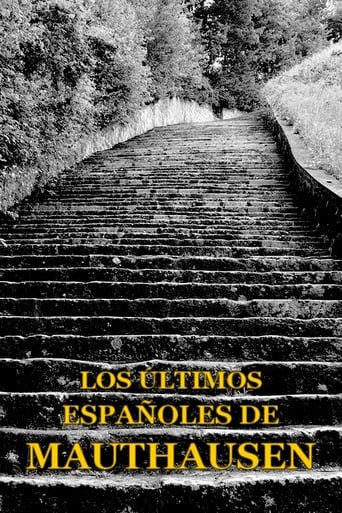
The story of the more than nine thousand Spaniards who were interned in the Nazi concentration camps, through the testimony of a group of survivors who tell what life and death were like in Mauthausen, Auschwitz, Buchenwald and Ravensbrück.
Normandy is a place steeped in history – after the Allied landings on 6th June 1944, it became one of the Second World War’s most hotly contested territories. Making direct reference to Jean Grémillon’s film Le six juin à l’aube, which was shot in 1944/5 under the direct influence of the total destruction of the region, this documentary essay carries out an inspection in search of the traces left behind by history 70 years later.