
Clara Immerwahr
2014-05-28 · 90 min · ★ 6.8
Clara Immerwahr and her husband to be Fritz Haber are both young and gifted chemists. Their struggle for acknowledgment in nationalistic Germany during World War I lead to the development and use of the first chemical weapons.
Trailers are previews, not full movies.
No authorized playback source configured. Use the legal watch options below.
Production details
- Directors
- Harald Sicheritz
- Production companies
- ARD
- Countries
- Germany
- Status
- Released
Top Cast
 Katharina SchüttlerClara Immerwahr
 Maximilian BrücknerFritz Haber
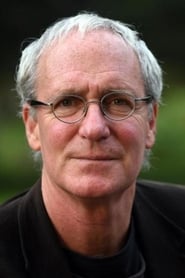 August ZirnerPhilipp Immerwahr
 Elisabeth OrthGroßmama Immerwahr
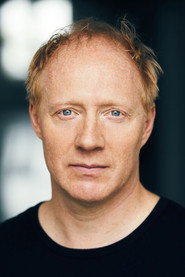 Simon SchwarzOtto Sackur
 Philipp HochmairDavid Sachs
 Wolf BachofnerSiegfried Haber
 Peter SimonischekRektor Engler
 Adele NeuhauserFräulein Knittel
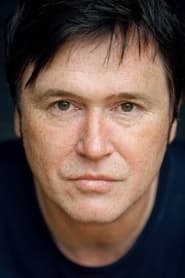 Uwe BohmFriedrich
 Lucas GregorowiczProf. Abegg
 Martina EbmRosa
 Bernd StegemannGeheimrat KoppelUwe BohmBASF Direktor Friedrich
 Nikolaus ParylaKunde im Farbenladen
 Cecile Nordegg
 Johann Adam Oest
Title information and images are supplied by TMDb. Explore our discovery guide for advice on comparing metadata and legal viewing options.
Where to watch
Availability provided by JustWatch via TMDb. Offers can change. Provider links are listed on TMDb; full playback requires a separately authorized source.
Availability not listed for this country.
Seasons & episodes
Recommendations

At the tense 1938 Munich Conference, former friends who now work for opposing governments become reluctant spies racing to expose a Nazi secret.
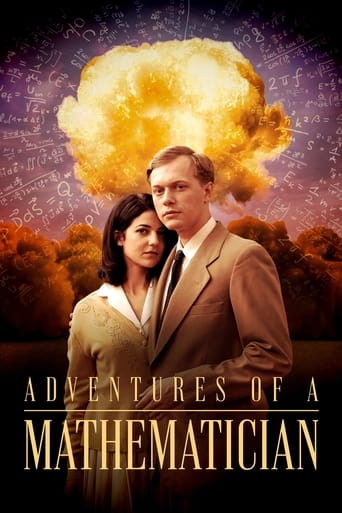
The warmhearted story of Polish immigrant and mathematician Stan Ulam, who moved to the U.S. in the 1930s. Stan deals with the difficult losses of family and friends all while helping to create the hydrogen bomb and the first computer.
In autumn 1943, in Gross-Partsch, 26-year-old Rosa, who had come from Berlin to stay with the parents of her husband Gregor, who was fighting on the Russian front, was taken by the SS to a mysterious place. Forced to taste a dish, she joins the group of tasters responsible for checking that the food destined for Hitler is not poisoned.

Young women toiling in a factory are exposed to hazardous material which takes a disastrous toll on their health.

The film follows Kaspar Hauser, who lived the first seventeen years of his life chained in a tiny cellar with only a toy horse to occupy his time, devoid of all human contact except for a man who wears a black overcoat and top hat who feeds him.
At the behest of an old and dear friend, playwright Lillian Hellman undertakes a dangerous mission to smuggle funds into Nazi Germany.

A story set in 19th century China and centered on the lifelong friendship between two girls who develop their own secret code as a way to contend with the rigid cultural norms imposed on women.

A fictional account of one year in the life of Empress Elisabeth of Austria. On Christmas Eve 1877, Elisabeth, once idolized for her beauty, turns 40 and is officially deemed an old woman; she starts trying to maintain her public image.

Follow-up to the TV trilogy “Heimat”, this time for cinemas, set again in the fictional village Schabbach in the Hunsrück region of Rhineland-Palatinate.

Jewish aesthete Cioma, 21, does not let anyone take away his joy of life, especially not the Nazis. In 1942, he has to find new ways to make his living in Berlin and escape deportation. In the process he discovers his talent for forgery: not only with passports, but also his own identity.

Stephen Glass is a staff writer for the respected current events and policy magazine The New Republic and a freelance feature writer for publications such as Rolling Stone, Harper's and George. By the mid-90s, Glass' articles had turned him into one of the most sought-after young journalists in Washington, but a bizarre chain of events - chronicled in Buzz Bissinger's September 1998 Vanity Fair article - suddenly stopped his career in its tracks.
Desperate to help her son, Rabiye Kurnaz, a housewife and loving mother from Bremen, goes to the police, notifies authorities and almost despairs at their impotence and in the end, against all the odds, something truly remarkable happens.
In this sprawling, fictionalized history of the Black Panthers, 1960s Oakland becomes a war zone as the Panthers battle for the right to exist.
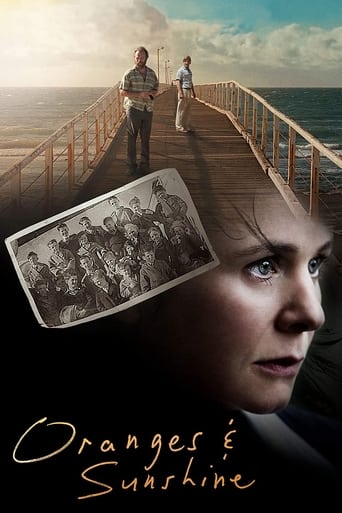
The story of Margaret Humphreys, a social worker from Nottingham, who uncovers one of the most significant social scandals in recent times – the forced migration of children from the United Kingdom to Australia and other Commonwealth countries. Almost singlehandedly, Margaret reunited thousands of families, brought authorities to account and worldwide attention to an extraordinary miscarriage of justice.

War photographer W. Eugene Smith travels back to Japan where he documents the devastating effect of mercury poisoning in coastal communities.

Set during the fading glory of the Austro-Hungarian empire, the film tells of the rise and fall of Alfred Redl, an ambitious young officer who proceeds up the ladder to become head of the Secret Police only to become ensnared in political deception.

Constance, 1410. Marie, daughter of the richest bourgeois of the city, is on the eve of marrying a prestigious lawyer, son of an earl. Although the compromise fills with pride the girl's father, anxious to ennoble, Marie is not just convinced about her fiancé, who she has only seen twice. Her suspicions are confirmed tragically on the eve of the wedding when, after signing the marriage contract, a stranger breaks into the house ensuring that Marie has slept with other men in exchange for gifts, like a vile harlot. From that moment, the life of the girl will give a terrible unexpected turnaround. Alone, with his reputation ruined, she will have no choice to survive than partnering with a prostitute and lying on the roads.

Yale University, 1961. Stanley Milgram designs a psychology experiment that still resonates to this day, in which people think they’re delivering painful electric shocks to an affable stranger strapped into a chair in another room. Despite his pleads for mercy, the majority of subjects don’t stop the experiment, administering what they think is a near-fatal electric shock, simply because they’ve been told to do so. With Nazi Adolf Eichmann’s trial airing in living rooms across America, Milgram strikes a nerve in popular culture and the scientific community with his exploration into people’s tendency to comply with authority. Celebrated in some circles, he is also accused of being a deceptive, manipulative monster, but his wife Sasha stands by him through it all.
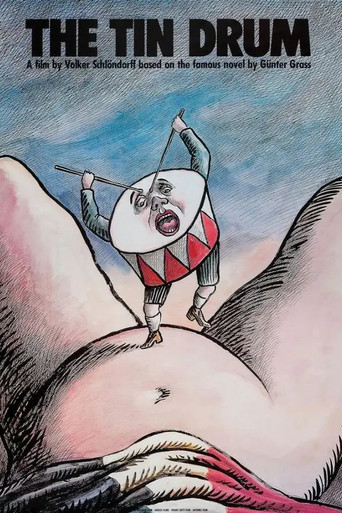
In 1924, Oskar Matzerath is born in the Free City of Danzig. At age three, he falls down a flight of stairs and stops growing. In 1939, World War II breaks out.

When Andreas arrives in the remote valley in the Austrian Alps, he is only about four years old - nobody knows for sure. He grows up to become a skilled farmhand and, as a young man, joins a work crew that builds one of the first mountain railroads, bringing light and noise to the valley along with electricity. He also finds the love of his life in Marie, but their happiness is short-lived. Only many years later, when Andreas embarks on his final journey, she is with him once again. And in amazement Andreas looks back at all the years that lie behind him.
Similar titles
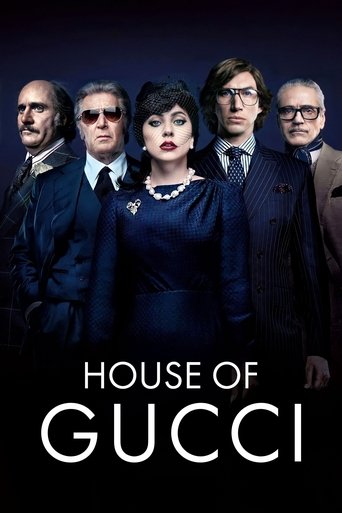
When Patrizia Reggiani, an outsider from humble beginnings, marries into the Gucci family, her unbridled ambition begins to unravel the family legacy and triggers a reckless spiral of betrayal, decadence, revenge, and ultimately… murder.

Based on real events, Canada's most notorious serial killers, Paul Bernardo and wife Karla Homolka kidnap, sexually abuse, and murder three young girls.

Comedian Harmonists tells the story of a famous, German male sextet, five vocals and piano, the "Comedian Harmonists", from the day they meet first in 1927 to the day in 1934, when they become banned by the upcoming Nazis, because three of them are Jewish.

While researching his book In Cold Blood, writer Truman Capote develops a close relationship with convicted murderers Dick Hickock and Perry Smith.

From double BAFTA nominated Writer and Director John Walsh. Monarch is part fact, part fiction and unfolds around one night when the injured ruler arrives at a manor house closed for the season.

Lyle and Eric Menendez were nice, educated boys from Beverly Hills, which makes the murder of their parents even more inexplicable. Never-before-seen details emerge in this investigation into their lives.


On March 2, 1955, like every day, Claudette Colvin, a 15-year-old black girl from Alabama, bought her ticket at the front of the bus, but had to get on the back. If the front is reserved for White, when they have no more room, Black must give up theirs, to the rear. It's the law. But that day, the teenager refuses to give way to a White. Claudette Colvin says no. Arrested, she pleaded not guilty and sued the city, a first. However, we will not make an example of it. We will wait for Rosa Parks, a lighter-skinned seamstress, who, nine months after Claudette, will make the same gesture, soon supported by the young Martin Luther King. History is on the move. Claudette Colvin allowed everything, but she is the one we have forgotten.

A portrait of the British writer Thomas Hardy (1840-1928), who, although he had radical instincts, hated hypocrisy, was of great poetic brilliance, had a tragic perception of life and a calm outward appearance, was at heart a man of seething and somber darkness.

A chronicle of country music legend Johnny Cash's life, from his early days on an Arkansas cotton farm to his rise to fame with Sun Records in Memphis, where he recorded alongside Elvis Presley, Jerry Lee Lewis and Carl Perkins.

Women's work, gender equality, prison conditions, AIDS patients, humanization of hospitals, parental authority, equal pay... Simone Veil fought many battles that are little known today. As we prepare to celebrate the 50th anniversary of the law on abortion, enacted on January 17, 1975, the time has come to tell her story in a new way through this portrait of a woman ahead of her time: in the light of her other struggles.
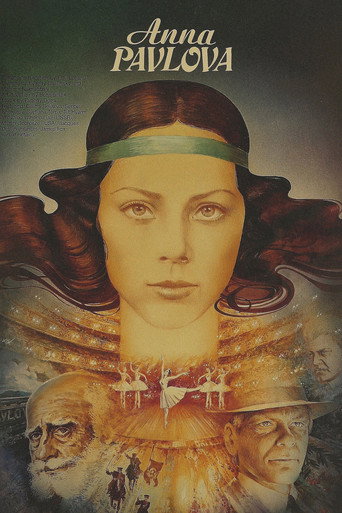
The young talented girl Anya, dreaming of a ballet, enters the choreographic school. Due to poor health, learning for her becomes unbearably difficult, but dreams of a ballerina career make her stubbornly deal with adversity. Anna’s performance and determination does not go unnoticed by the celebrated choreographer Marius Petipa, who helps to stage Pavlova's examination performance. Such a gift becomes a starting point for Ani in the world of big ballet, her fast-paced career, position in high society and world fame make her forget about close friends and especially her faithful Michel Fokine, who invested a lot of energy in the formation of a ballerina.
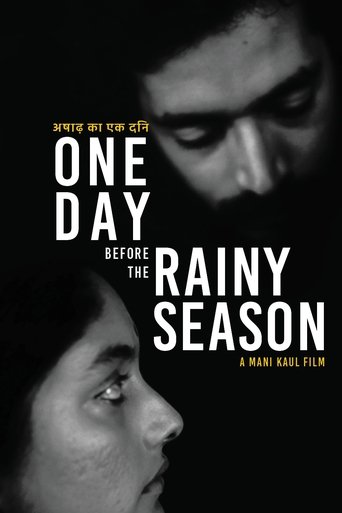
A literary film based on a play in three acts, One Day Before the Rainy Season (Ashad Ka Ek Din) portrays the love of Mallika and Kalidasa, the renowned Sanskrit poet and dramatist. Vilom, a friend to both and interested in Mallika, is a passive onlooker for the first two acts. Kalidasa leaves his verdant mountain valley home for the splendour of far off Ujjain, where he wins fame. The action of the film is rooted in the village to which Kalidasa returns years later and finds Mallika married to Vilom and the mother of his child. Mallika sacrificed her love so that the poet could pursue his muse.

Two sisters Tae and Yo come back to their old house which is soon to be torn down. Clearing up the family mementos, Tae finds a red box full of recipes and letters written by their mother who died 20 years ago. In these recipes and letters, she finds out how her mother had struggled in her life due to relocation from Japan to Taiwan, the death of her Taiwanese husband, and a battle with cancer. Tae travels to Taiwan to trace her mother's past, reminiscing about the dishes she made for the family.
This documentary brings alive a remarkable artist’s passionate journey through a turbulent century. Both epic and surprisingly intimate, the film presents a classic American immigrant saga, an inspiring search for artistic independence, and a great romance. Along the way, Biberman's growing commitment to social justice and struggle against McCarthy-era repression (his brother, director Herbert Biberman, went to prison as one of The Hollywood Ten) combine with his efforts to create both a loving family life and a groundbreaking body of work. With its grand scope, rich personalities, and vast array of breathtaking artwork, Brush With Life connects us in a deeply personal way to a brilliant artist who lived by the same high standards he set for his paintings.
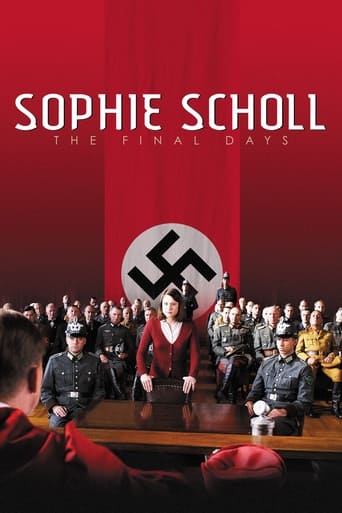
In 1943, as Hitler continues to wage war across Europe, a group of college students mount an underground resistance movement in Munich. Dedicated expressly to the downfall of the monolithic Third Reich war machine, they call themselves the White Rose. One of its few female members, Sophie Scholl is captured during a dangerous mission to distribute pamphlets on campus with her brother Hans. Unwavering in her convictions and loyalty to the White Rose, her cross-examination by the Gestapo quickly escalates into a searing test of wills as Scholl delivers a passionate call to freedom and personal responsibility.

From his birth in Bethlehem to his death and eventual resurrection, the life of Jesus Christ is given the all-star treatment in this epic retelling. Major aspects of Christ's life are touched upon, including the execution of all the newborn males in Egypt by King Herod; Christ's baptism by John the Baptist; and the betrayal by Judas after the Last Supper that eventually leads to Christ's crucifixion and miraculous return.

The film consists of a monologue performed by Walter Sedlmayr, who plays Theodor Hierneis, the chef at the court of Ludwig II of Bavaria. The screenplay was written by Syberberg and Sedlmayr and is based on the memoirs of Hierneis.

Mexican immigrant and single mother Flor Moreno finds housekeeping work with Deborah and John Clasky, a well-off couple with two children of their own. When Flor admits she can't handle the schedule because of her daughter, Cristina, Deborah decides they should move into the Clasky home. Cultures clash and tensions run high as Flor and the Claskys struggle to share space while raising their children on their own, and very different, terms.

In October 1991, a confluence of weather conditions combined to form a killer storm in the North Atlantic. Caught in the storm was the sword-fishing boat Andrea Gail.