Stuck
1974-04-23 · 9 min · Not rated
Short video art piece.
Trailers are previews, not full movies.
No authorized playback source configured. Use the legal watch options below.
Production details
- Directors
- Tom DeFanti, Dan Sandin
- Production companies
- Copy-It-Right
- Countries
- United States of America
- Status
- Released
Top Cast
Cast unavailable.
Title information and images are supplied by TMDb. Explore our discovery guide for advice on comparing metadata and legal viewing options.
Where to watch
Availability provided by JustWatch via TMDb. Offers can change. Provider links are listed on TMDb; full playback requires a separately authorized source.
Availability not listed for this country.
Seasons & episodes
Recommendations
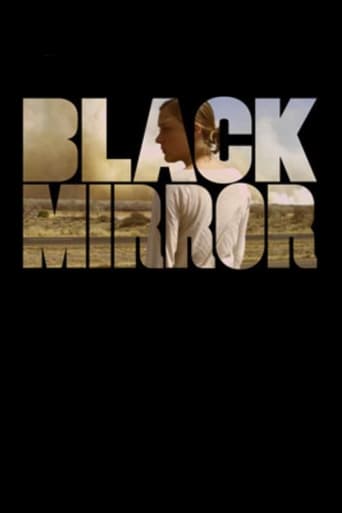
A nameless drifter navigates a barren landscape punctuated by satellite dishes, radio towers and droning airplanes. Stopping periodically in anonymous hotel rooms, she makes attempts to connect to an unidentified second party.
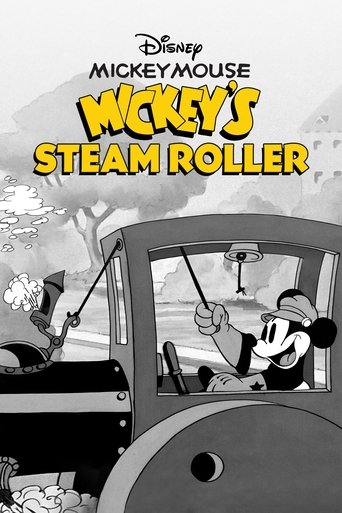
While streetworker Mickey romances Minnie, Mickey's nephews Morty and Ferdie take control of his steamroller and it's full speed ahead on a very destructive ride.
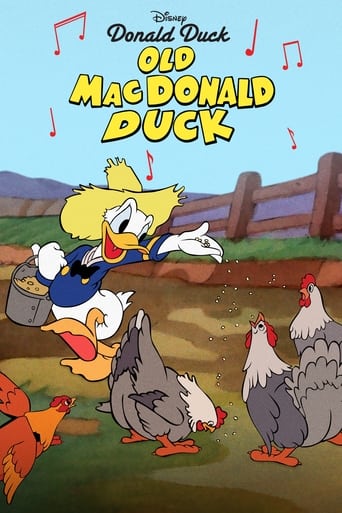
Farmer Donald goes through his farmer day until a fly causes him to lose control while milking a cow.

This is the story of the internal struggle between a man's Brain—a pragmatic protector who calculates his every move, and his Heart—a free-spirited adventurer who wants to let loose.
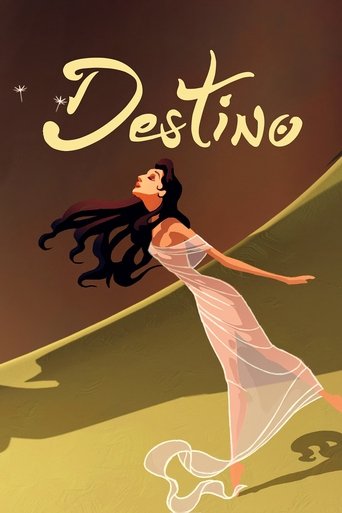
Short film to a song of love lost and rediscovered, a woman sees and undergoes surreal transformations. Her lover's face melts off, she dons a dress from the shadow of a bell and becomes a dandelion, ants crawl out of a hand and become Frenchmen riding bicycles. Not to mention the turtles with faces on their backs that collide to form a ballerina, or the bizarre baseball game.

Short film made with the help of the Sundance Film Institute and serving as a proof-of-concept for the subsequent feature film.

One by one, a flock of small birds perches on a telephone wire. Sitting close together has problems enough, and then comes along a large dopey bird that tries to join them. The birds of a feather can't help but make fun of him - and their clique mentality proves embarrassing in the end.
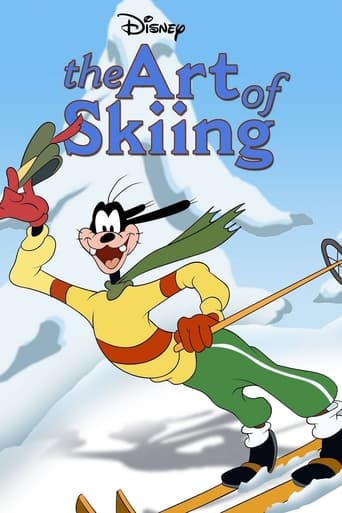
Goofy, staying at the Sugar Bowl resort, demonstrates the basics of downhill skiing, which the titles and announcer insist is pronounced "SHEEing". The equipment is, of course, of the era. As you can imagine, Goofy has much trouble keeping his skis parallel and pointing downhill. The final ski jump conveniently lands Goofy right back in bed.

Donald has to get up early, but everything seems to be working to keep him awake. His loudly ticking alarm clock resists several attempts to quiet it. Donald ultimately swallows it; the glow-in-the-dark dial can be seen through his feathers. Then his folding bed folds up on him. Springs start popping out of it; Donald builds an elaborate framework to hold it down. Finally, enough of the clock reassembles itself to sound the alarm and night is over.

Mickey and his friends are staging a sort of olympics in a makeshift stadium on his farm. The main event is a sort of quadrathlon, with running, pole vaulting, rowing, and cycling. Mickey gets a late start due to some foul play by Pete, and that's not the only foul play.

Minnie's old friend, Mortimer Mouse, drops in on Mickey and Minnie's picnic. His practical jokes and coming on to Minnie soon have Mickey stewing, and their car isn't happy either. When Mortimer gets a nearby bull enraged and takes off, the car comes to the rescue after Mickey gets tangled up in a red blanket.
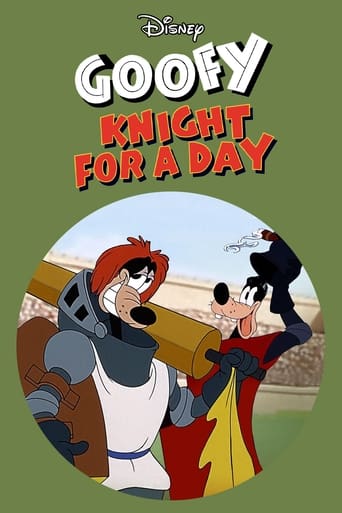
By accident, Cedric (Goofy), replaces his master, Sir Loinsteak, in the armor just before the joust with champion Sir Cumference.
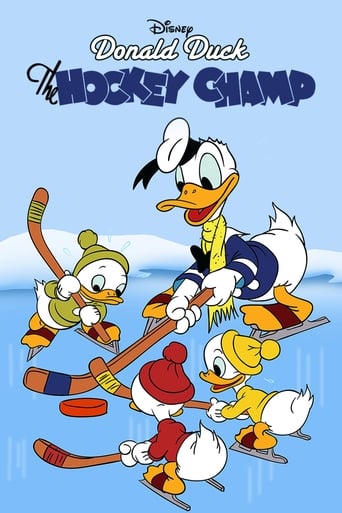
Donald shows his nephews the moves that won him his hockey trophy. But the boys have a few moves of their own.
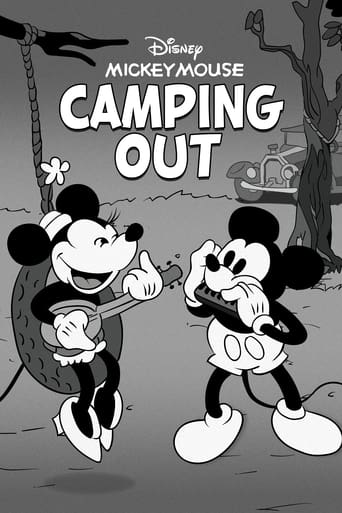
The gang is sitting around their campsite when a mosquito spoils their fun. And then he gets hundreds of his friends and they really cause trouble. Horace squirts some with molasses, which helps a bit. Everyone retreats to the tent, where they still get stung but can fight back a bit, eventually trapping all the mosquitoes in a pair of bloomers and sending them on their way.
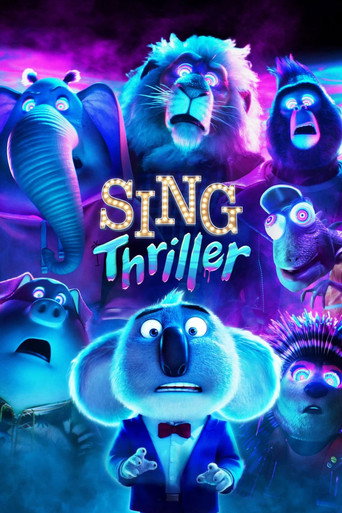
Buster Moon dreams up a star-studded spectacle set to Michael Jackson's "Thriller" in this animated short featuring characters from the hit "Sing" films.
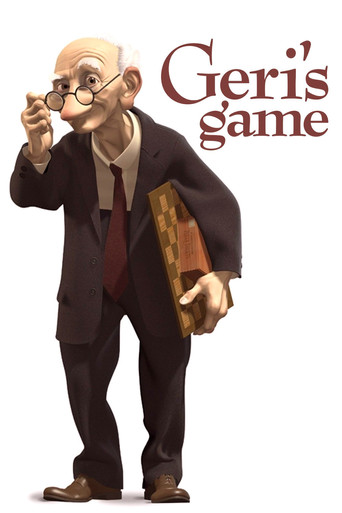
An aging codger named Geri plays a daylong game of chess in the park against himself. Somehow, he begins losing to his livelier opponent. But just when the game's nearly over, Geri manages to turn the tables.

Donald needs a log for his fire. Unfortunately, the one he picks is occupied by a couple of chipmunks and their stash of acorns. When he cuts it down, Chip and Dale fall out, but their acorns stay behind, so they work at putting out Donald's fire and retrieving their stash. Donald, of course, takes this as calmly and cheerfully as you would expect.
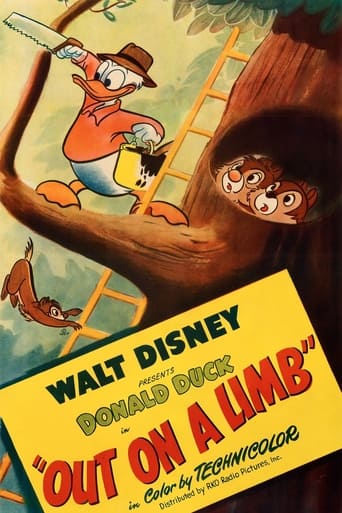
Donald's doing a little tree surgery when he spots Chip 'n' Dale gathering nuts. He saws off the branch outside their hole and paints it with tar, which Dale gets stuck in. Then Donald has a little fun with the long-handled pruning shears.
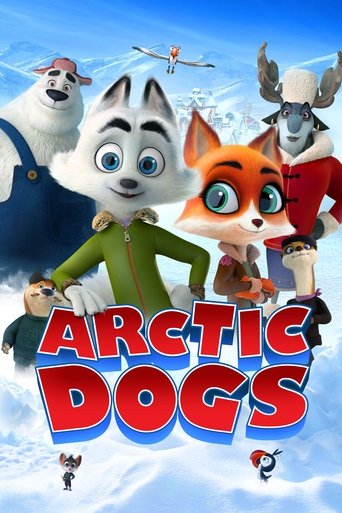
Animals band together to save the day when the evil Otto Von Walrus hatches a sinister scheme to accelerate global warming and melt the Arctic Circle.

With his best friend Luca away at school, Alberto is enjoying his new life in Portorosso working alongside Massimo—the imposing, tattooed, one-armed fisherman of few words—who's quite possibly the coolest human in the entire world as far as Alberto is concerned. He wants more than anything to impress his mentor, but it's easier said than done.
Similar titles
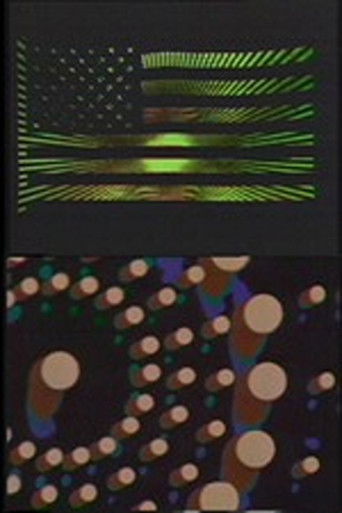
Produced by WGBH-TV in Boston, the Medium Is the Medium is one of the earliest and most prescient examples of the collaboration between public television and the emerging field of video art in the U.S. WGBH commissioned artists — Allan Kaprow, Nam June Paik, Otto Piene, James Seawright, Thomas Tadlock and Aldo Tambellini — to create original works for broadcast television. Their works explored the parameters of the new medium, from image processing and interactivity to video dance and sculpture.
Short video art piece.
Short video art redux.
Single channel HD video. Part of the "Distortion III" video album.
Single channel HD video. Part of the "Distortion III" video album.
Single channel HD video. Part of the "Distortion III" video album.
Single channel HD video. Part of the "Distortion III" video album.
13 minute video art piece by Phil Morton.

An experimental short film from Toshio Matsumoto featuring Mona Lisa.
Phil Morton's General Motors was created in 1976. Then based in Chicago, the late Phil Morton created this project as a playful and critical video response in conversation with a local General Motors dealership from whom he had purchased a van. Segments 'Colorful Colorado' and 'RYRAL' begin after the video-complaints cease. Produced at the School of the Art Institute of Chicago (where Morton founded the Video Area), this work includes Dan Sandin and Tom DeFanti who collaboratively developed the early Video Art scene in Chicago.
The Second Electronic Visualization Event took place at The University of Illinois Chicago Circle Campus in 1976. This documentation features Bob Snyder on EMU Synthesizer, Phil Morton on the Sandin Image Processor by Dan Sandin and Guenther Tetz on the GRASS (GRaphics Symbiosis System) by Tom DeFanti. In Morton's words these artists perform live realtime audio and video synthesis "using both analog and digital computers as 'visual instruments'..." Other artists credited with participation in the Electronic Visualization Events between 1975 and 1978 include Drew Browning, Larry Cuba, Barbara Latham, John Manning, Faramarz Rahbar, Ed Rankus, Michael Sterling, Barbara Sykes and Jane Veeder.
Features four distinct, bizarre, existential tales about people whose lives are in transition, who are each asking questions about themselves, their environments, and about God(s).
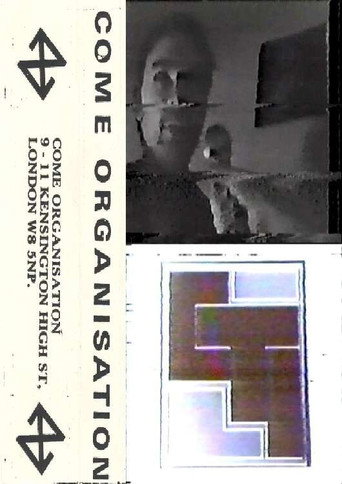
Video collage distributed by the label Come Organisation. I - IV. Noise, smut, medical procedures, studies on art, interviews and other assorted madness.
Yamaguchi writes, "In April 1969, Image Modulator was shown at the Sony Building exhibition Electromagica '69, using three Trinitron color TV monitors behind a glass that created an optical effect. The glass acted as a literal filter, adding a mosaic effect to the video images."
A video installation using three monitors and mirrors, Ooi and Environs depicts the Tokyo cityscape with electronically modified footage of the city. Aiming to create an interactive environment, images reflected on the mirror shift as audience members move.
Writes Ando, "Oh! My Mother was the first work I made using a newly bought 16mm camera I had purchased with the writer Shuji Terayama in Paris. This piece was selected for the Oberhausen International Film Festival. In 1969, there were, of course, no video cameras like ones we see now, and color TVs were only found at broadcast television studios. I had just been employed at the TBS (Tokyo Broadcasting System), and I often snuck into the studios after hours to experiment with the equipment. Oh! My Mother was made using the feedback effect, which is produced by infinitely expanding the image by looping the video."
Camera, Monitor, Frame is the first installment of Takahiko Iimura's "Video Semiotics Triptych" (the other two works are Observer/Observed, made in 1975, and Observer/Observed/Observer, made in 1976). The work analyzes the fundamental components of video: the camera, the monitor, and the frame, focusing on the role of each within a system of video as analogous to the functions of vision and speech.
Using video technology as an extension of his body, Yamamoto interacts with a pre-recorded image of his hand displayed on a monitor.
Computer Movie No. 2 is a CGI animation created in advance of video-editing software. CTG programmed graphics on an IBM computer, filmed the screen with a 16mm camera, and assembled the frames as an animated film.
Sylvia Kristel – Paris is a portrait of Sylvia Kristel , best known for her role in the 1970’s erotic cult classic Emmanuelle, as well as a film about the impossibility of memory in relation to biography. Between November 2000 and June 2002 Manon de Boer recorded the stories and memories of Kristel. At each recording session she asked her to speak about a city where Kristel has lived: Paris, Los Angeles, Brussels or Amsterdam; over the two years she spoke on several occasions about the same city. At first glance the collection of stories appears to make up a sort of biography, but over time it shows the impossibility of biography: the impossibility of ‘plotting’ somebody’s life as a coherent narrative.