
Bashlibel: Diary of a Siege
2025-06-24 · 120 min · Not rated
The months of struggle people of Bashlibel had to overcome to live during the first Karabakh war and their escape into safety.
Trailers are previews, not full movies.
No authorized playback source configured. Use the legal watch options below.
Production details
- Directors
- Rövşən Ağayev, Pərviz Həsənov
- Production companies
- Unavailable
- Countries
- Unavailable
- Status
- Released
Top Cast
Title information and images are supplied by TMDb. Explore our discovery guide for advice on comparing metadata and legal viewing options.
Where to watch
Availability provided by JustWatch via TMDb. Offers can change. Provider links are listed on TMDb; full playback requires a separately authorized source.
Availability not listed for this country.
Seasons & episodes
Recommendations

A documentary about World War I with never-before-seen footage to commemorate the centennial of Armistice Day, and the end of the war.

Prelude to War was the first film of Frank Capra's Why We Fight propaganda film series, commissioned by the Pentagon and George C. Marshall. It was made to convince American troops of the necessity of combating the Axis Powers during World War II. This film examines the differences between democratic and fascist states.

Amid the failing counteroffensive, a journalist follows a Ukrainian platoon on their mission to traverse one mile of heavily fortified forest and liberate a strategic village from Russian occupation. But the farther they advance through their destroyed homeland, the more they realize that this war may never end.

Marcel Ophuls' riveting film details the heinous legacy of the Gestapo head dubbed "The Butcher of Lyon." Responsible for over 4,000 deaths in occupied France during World War II, Barbie would escape—with U.S. help—to South America in 1951, where he lived until a global manhunt led to his 1983 arrest and subsequent trial.

When Sgt. First Class Brian Eisch is critically wounded in Afghanistan, it sets him and his sons on a journey of love, loss, redemption and legacy.

A love letter from a young mother to her daughter, the film tells the story of Waad al-Kateab’s life through five years of the uprising in Aleppo, Syria as she falls in love, gets married and gives birth to Sama, all while cataclysmic conflict rises around her. Her camera captures incredible stories of loss, laughter and survival as Waad wrestles with an impossible choice– whether or not to flee the city to protect her daughter’s life, when leaving means abandoning the struggle for freedom for which she has already sacrificed so much.

Cameramen and women discuss the craft and art of cinematography and of the "DP" (the director of photography), illustrating their points with clips from 100 films, from Birth of a Nation to Do the Right Thing. Themes: the DP tells people where to look; changes in movies (the arrival of sound, color, and wide screens) required creative responses from DPs; and, these artisans constantly invent new equipment and try new things, with wonderful results. The narration takes us through the identifiable studio styles of the 30s, the emergence of noir, the New York look, and the impact of Europeans. Citizen Kane, The Conformist, and Gordon Willis get special attention.

“The Soviet Story” is a story of an Allied power, which helped the Nazis to fight Jews and which slaughtered its own people on an industrial scale. Assisted by the West, this power triumphed on May 9th, 1945. Its crimes were made taboo, and the complete story of Europe’s most murderous regime has never been told. Until now...
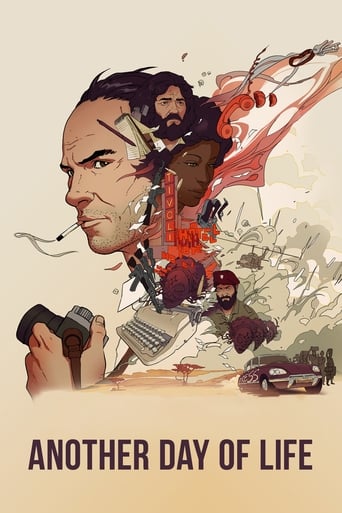
In 1975, Ryszard Kapuściński, a veteran Polish journalist, embarked on a seemingly suicidal road trip into the heart of the Angola's civil war. There, he witnessed once again the dirty reality of war and discovered a sense of helplessness previously unknown to him. Angola changed him forever: it was a reporter who left Poland, but it was a writer who returned…

Korengal picks up where Restrepo left off; the same men, the same valley, the same commanders, but a very different look at the experience of war.

Set both in Latin America and the United States, the film explores the historic and current relationship of Washington with countries such as Venezuela, Bolivia and Chile. Pilger says that the film "...tells a universal story... analysing and revealing, through vivid testimony, the story of great power behind its venerable myths. It allows us to understand the true nature of the so-called "war on terror". According to Pilger, the film’s message is that the greed and power of empire is not invincible and that people power is always the "seed beneath the snow".
With unprecedented access, this documentary follows the extraordinary journey of “Raqqa is Being Slaughtered Silently”—a group of anonymous citizen journalists who banded together after their homeland was overtaken by ISIS—as they risk their lives to stand up against one of the greatest evils in the world today.
Documentary about the art of film editing. Clips are shown from many groundbreaking films with innovative editing styles.

An unprecedented and intimate look at the life, work and enduring legacy of British actress Audrey Hepburn (1929-1993).
During the chaotic final weeks of the Vietnam War, the North Vietnamese Army closes in on Saigon as the panicked South Vietnamese people desperately attempt to escape. On the ground, American soldiers and diplomats confront a moral quandary: whether to obey White House orders to evacuate only U.S. citizens.

The history of cinematic sound, told by legendary sound designers and visionary filmmakers.
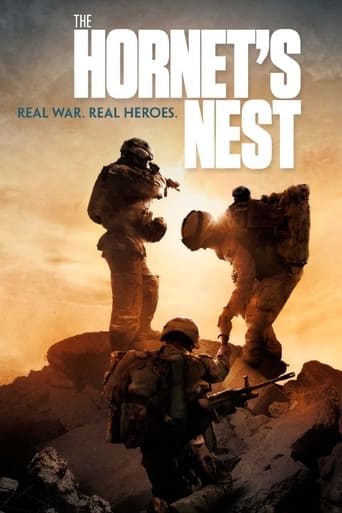
Armed only with their cameras, Peabody and Emmy Award-winning conflict Journalist Mike Boettcher, and his son, Carlos, provide unprecedented access into the longest war in U.S. history: they are embed with U.S. troops during nine days of intense combat in Afghanistan.

Pete Postlethwaite stars as a man living alone in the devastated future world of 2055, looking at old footage from 2008 and asking: why didn’t we stop climate change when we had the chance?
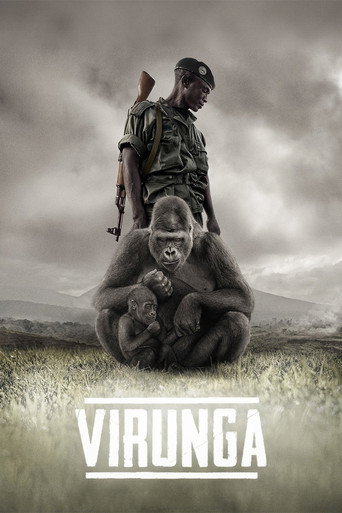
Virunga in the Democratic Republic of the Congo is Africa's oldest national park, a UNESCO world heritage site, and a contested ground among insurgencies seeking to topple the government that see untold profits in the land. Among this ongoing power struggle, Virunga also happens to be the last natural habitat for the critically endangered mountain gorilla. The only thing standing in the way of the forces closing in around the gorillas: a handful of passionate park rangers and journalists fighting to secure the park's borders and expose the corruption of its enemies. Filled with shocking footage, and anchored by the surprisingly deep and gentle characters of the gorillas themselves, Virunga is a galvanizing call to action around an ongoing political and environmental crisis in the Congo.

The final entry in a trilogy of films produced for the U.S. government by John Huston. Some returning combat veterans suffer scars that are more psychological than physical. This film follows patients and staff during their treatment. It deals with what would now be called PTSD, but at the time was categorised as psychoneurosis or shell-shock. Government officials deemed this 1946 film counterproductive to postwar efforts; it was not shown publicly until 1981.
Similar titles
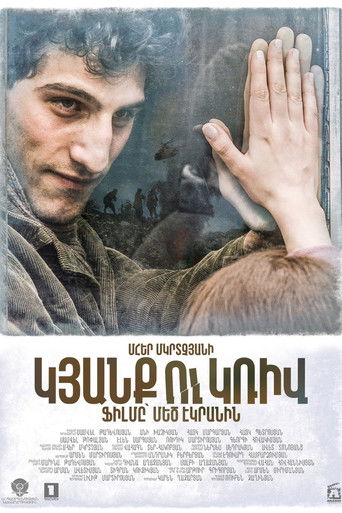
Taking place in 1991, Tigran, who teaches math at a village school to avoid the army, loses the girl he loves. Consumed by abject wretchedness, he decides to enlist as a volunteer in the Nagorno‑Karabakh war to give meaning to his hollow life.
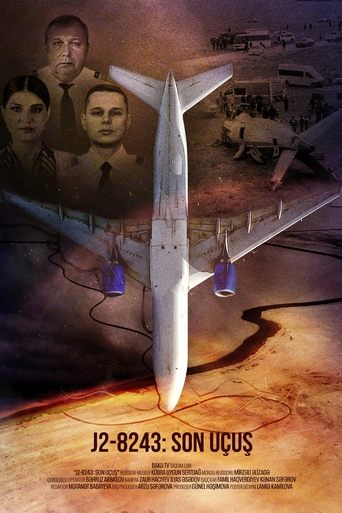

The film consists of three novels: the first novel about Gobustan, an ancient human settlement. The second novel deals with the theme of the East and women. The third novel tells about January 20, 1990 and the Khojaly tragedy.
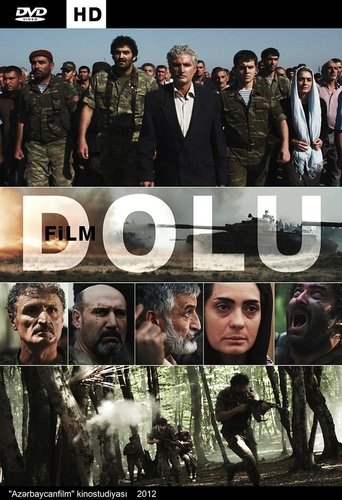
The film based on Agil Abbas's novel about Nagorno-Karabakh War. The film tells about the heroism of the sons of Azerbaijan, who fought for the Motherland to the last drop of blood in spite of everything in the Karabakh war.
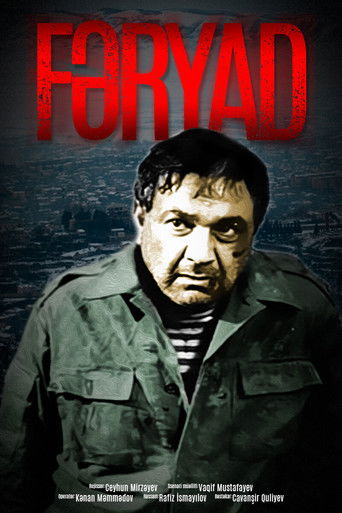
Shot during the Nagorno-Karabakh War, "Fəryad" is only one of its kind. Following the Khojaly Massacre, Ismayil, an officer tasked with collecting the bodies, crosses enemy lines to avenge the brutal murder of a local schoolgirl. There he gets captured by Armenians and waits for the day to be exchanged for an enemy POW.
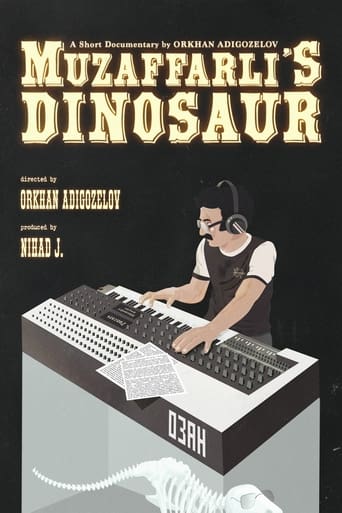
It is a revealing documentary about the iconic musician and the impact he has had on the music industry and society. Through an archive of previously unpublished stories and media, the film uncovers Muzaffarli's lesser-known public and social activities, giving audiences a fresh perspective on the man behind the music.
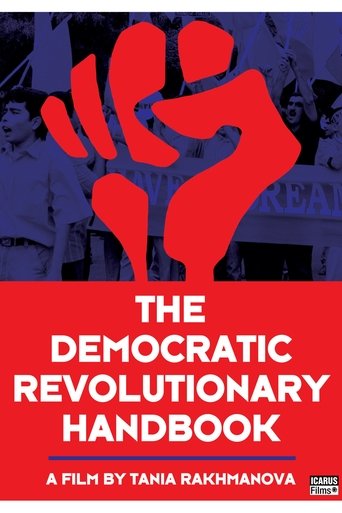
The recent democratic revolutions throughout Eastern Europe—Serbia in 2000, Georgia in 2003, and the Ukraine in 2004—all seemed to follow a quick and easy pattern: the exposure of rigged elections, followed by massive street protests, and a regime that collapsed without a fight. But THE DEMOCRATIC REVOLUTIONARY HANDBOOK reveals the lengthy and meticulous preparations behind these seemingly spontaneous demonstrations, showing how modern marketing techniques have combined with revolutionary politics to transform the region's governments.
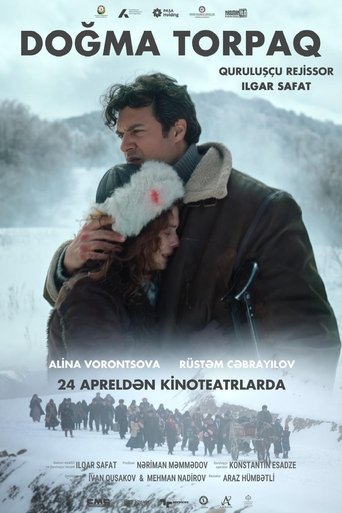
1992. Independent Azerbaijan is fighting separatists in Karabakh. Journalist Miranda arrives from London to shoot a documentary about the Caucasian leopard. Fate brings her together with the scout Emil. Together, they go through severe trials, during which Miranda learns a lot about the Caucasian leopard and the tragic pages of Azerbaijan's recent history.
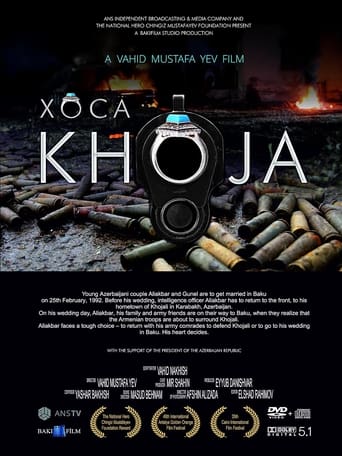
The film on the Khojaly tragedy, tells the story of a young officer, unfolding against the backdrop of the terrible events of February 1992.

In the early 1990's, as the Soviet Empire disintegrated, two former Soviet Republics, Armenia and Azerbaijan, squared off against each other over the fate of the 170,000 Armenians living in the small mountainous region of Nagorno-Karabakh. The war eventually claimed tens of thousands of lives and displaced close to a million people. By the time of the tenuous cease-fire, most of the enclave was in the hands of its longtime Armenian inhabitants. Dark Forest in the Mountains was shot on location in Nagorno-Karabakh and uses a mix of digital animation, live footage and expert interviews to tell the story of that region of the world, and the events that led up to the conflict. It also focuses on N.K.'s northernmost territory, Shahumian, and the partisans who manned its treacherous Gulistan Front.
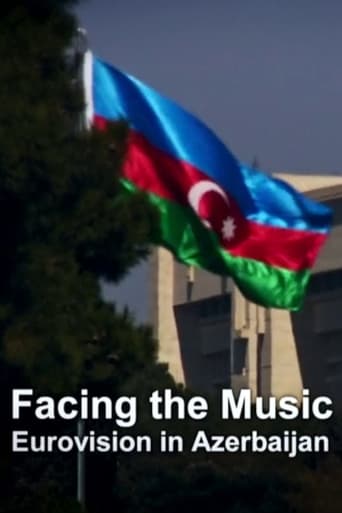
It's one of the most corrupt countries in the world and widely criticised for its human rights record but this year Azerbaijan is hosting Eurovision - one of the most glitzy TV music competitions in the world.

A feature documentary presented and directed by former Royal Marines Commando Emile Ghessen. The documentary tells the story of the 2020 war between Armenia and Azerbaijan over the disputed region of Nagorno Karabakh. In the fall of 2020, Armenia and Azerbaijan fought a brutal bloody war. Azerbaijan won, decisively. The feature documentary 45 Days: The Fight for a Nation tells the story of this conflict, from the Armenian perspective, focusing on the human cost of war and its impact on the large Armenian diaspora.
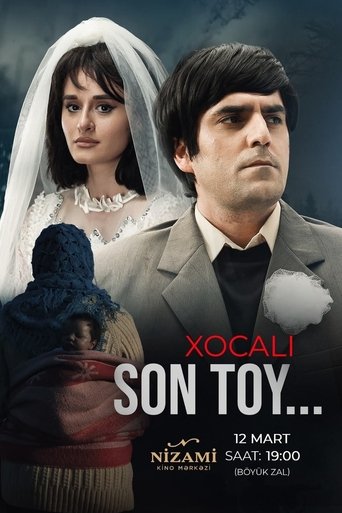
The film is dedicated to the last wedding ceremony, which was interrupted by the Armenian shelling of Khojaly in 1992. The main plot of the screenplay is based on the fact that the family and the guests at that wedding, who returned to Khojaly years later, continue the unfinished ceremony.
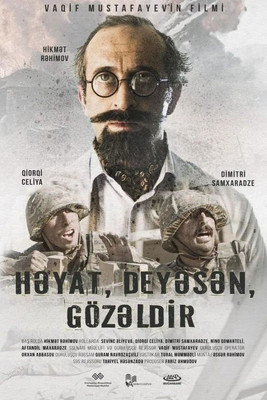
Sequel to Fəryad (1993). The film tells the story of Azerbaijani victory in the 44-day Patriotic War for the lands of Karabakh, which the Armenian invaders had occupied for nearly 30 years.
The story of a DJ who volunteers to go to the front during the Second Karabakh War.

The film "Last Autumn", written and directed by Rustam Babazadeh, is a comedy genre with elements of grotesque and satire.
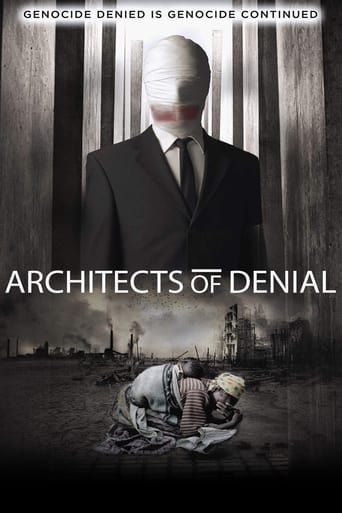
Though both the historical and modern-day persecution of Armenians and other Christians is relatively uncovered in the mainstream media and not on the radar of many average Americans, it is a subject that has gotten far more attention in recent years.
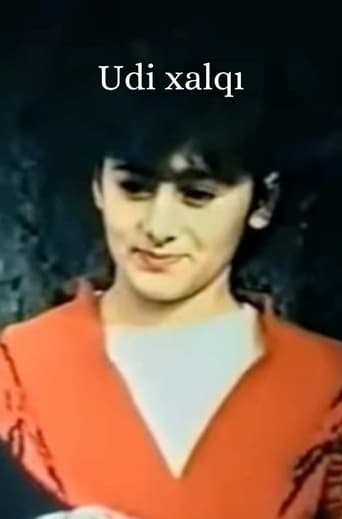
The film is dedicated to the ethnogenesis of a small people, preserving their traditions and language, the Udi people

Samad is a 14-year-old boy, living in a refugee camp in Imishli. After blacking out in the forest, he finds himself in the midst of the Nagorno-Karabakh War that happened ten years ago.

The film is about the inner suffering and conflictions of Yavar, father of a soldier, who can't give the news of his son's death in the war to his heart-sick wife.