
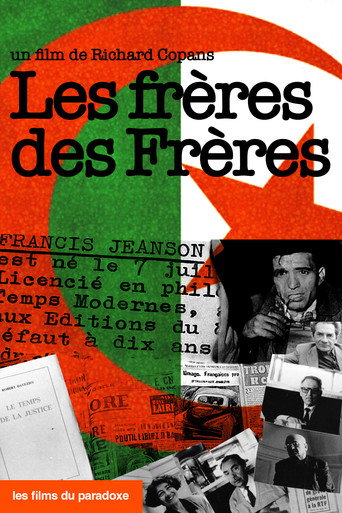
Brothers in Arms
1992-03-14 · 104 min · ★ 10.0
From 1954 to 1962, during the Algerian War, French citizens provided concrete assistance to the FLN in France: sheltering refugees, forging documents, facilitating border crossings, and transporting funds. Whether committed to the ideals of the Republic or driven by Third Worldist revolutionaries, they sought to build a bridge of friendship between nations. They paid for their commitment with imprisonment and exile. Four veterans of the Jeanson network recall this period. Today, they are no longer seen as traitors or heroes, but as witnesses recounting "their" war... Silent for 30 years, the "Jeanson network" now bears witness to this history.
Trailers are previews, not full movies.
No authorized playback source configured. Use the legal watch options below.
Production details
- Directors
- Richard Copans
- Production companies
- Les Films d'Ici, La Sept-Arte
- Countries
- France
- Status
- Released
Top Cast
 Francis JeansonSelf (archive footage)
 Hélène CuenatSelf (archive footage)
 Jacques VergèsSelf (archive footage)
 Zina HaraigueSelf (archive footage)
 Henri CurielSelf (archive footage)
 Jean-Paul SartreSelf (archive footage)
 Simone de BeauvoirSelf (archive footage)
 Jacques CharbySelf (archive footage)
 Colette JeansonSelf (archive footage)
 Paul CrauchetSelf (archive footage)
 Michèle FirkSelf (archive footage)
Title information and images are supplied by TMDb. Explore our discovery guide for advice on comparing metadata and legal viewing options.
Where to watch
Availability provided by JustWatch via TMDb. Offers can change. Provider links are listed on TMDb; full playback requires a separately authorized source.
Availability not listed for this country.
Seasons & episodes
Recommendations
A documentary about World War I with never-before-seen footage to commemorate the centennial of Armistice Day, and the end of the war.

“The Soviet Story” is a story of an Allied power, which helped the Nazis to fight Jews and which slaughtered its own people on an industrial scale. Assisted by the West, this power triumphed on May 9th, 1945. Its crimes were made taboo, and the complete story of Europe’s most murderous regime has never been told. Until now...
Bastien is twenty years old and has been an activist for five years in the main extreme right party. When the presidential campaign begins, he's invited by his superior to commit even further. Initiated into the art of decking himself out like a politician, he starts to dream of a career, but old demons surge forth...
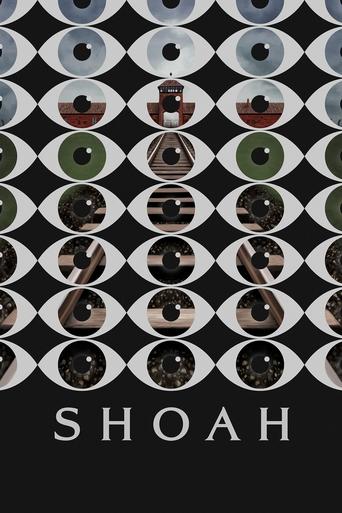
Director Claude Lanzmann spent 11 years on this sprawling documentary about the Holocaust, conducting his own interviews and refusing to use a single frame of archival footage. Dividing Holocaust witnesses into three categories – survivors, bystanders, and perpetrators – Lanzmann presents testimonies from survivors of the Chelmno concentration camp, an Auschwitz escapee, and witnesses of the Warsaw Ghetto Uprising, as well as a chilling report of gas chambers from an SS officer at Treblinka.

Alexander McQueen's rags-to-riches story is a modern-day fairy tale, laced with the gothic. Mirroring the savage beauty, boldness and vivacity of his design, this documentary is an intimate revelation of McQueen's own world, both tortured and inspired, which celebrates a radical and mesmerizing genius of profound influence.
A new documentary by filmmaker-photographer Raymond Depardon – where justice and psychiatry meet.

In an intimate and joyful story of love in the face of loss, celebrated poets Andrea Gibson and Megan Falley find strength—and unexpected hilarity—in what might be their final year together.
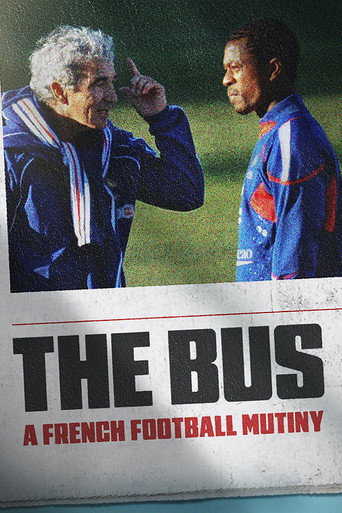
This documentary revisits the French football team's controversial 2010 World Cup and the bus strike that sparked global headlines and national outrage.

A documentary about ten very different lives connected by having appeared onscreen wearing masks or helmets in Star Wars.
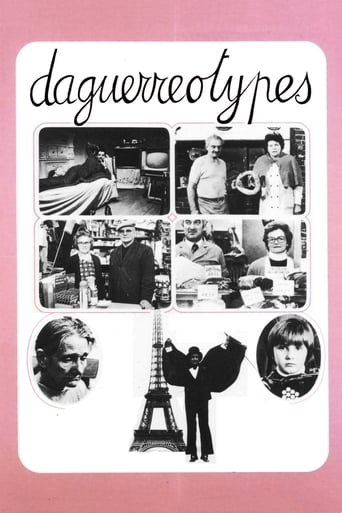
An intimate portrait of the small shops and shopkeepers of the Rue Daguerre in Paris, a picturesque street that has been the filmmaker’s home for more than 50 years.
A look at the origins, history and conspiracies behind the "Majestic 12", a clandestine group of military and corporate figureheads charged with reverse-engineering extraterrestrial technology.
Stars of "The Walking Dead," Andrew Lincoln and Danai Gurira, walk down memory lane and visit iconic locations where pivotal moments between their characters, Rick and Michonne, were filmed.
A documentary on Jacques Vergès, the controversial lawyer and former Free French Forces guerrilla, exploring how Vergès assisted, from the 1960s onwards, anti-imperialist terrorist cells operating in Africa, Europe, and the Middle East. Participants interviewed include Algerian nationalists Yacef Saadi, Zohra Drif, Djamila Bouhired and Abderrahmane Benhamida, Khmer Rouge members Nuon Chea and Khieu Samphan, once far-left activists Hans-Joachim Klein and Magdalena Kopp, terrorist Carlos the Jackal, lawyer Isabelle Coutant-Peyre, neo-Nazi Ahmed Huber, Palestinian politician Bassam Abu Sharif, Lebanese politician Karim Pakradouni, political cartoonist Siné, former spy Claude Moniquet, novelist and ghostwriter Lionel Duroy, and investigative journalist Oliver Schröm.

A documentary about the life and films of director John Ford.

In the Realms of the Unreal is a documentary about the reclusive Chicago-based artist Henry Darger. Henry Darger was so reclusive that when he died his neighbors were surprised to find a 15,145-page manuscript along with hundreds of paintings depicting The Story of the Vivian Girls, in What is Known as the Realms of the Unreal, of the Glodeco-Angelinnian War Storm, Cased by the Child Slave Rebellion.
Louis Theroux travels to California to meet the man dubbed "the most dangerous racist in America"; Tom Metzger. Louis meets him, his family and his publicity manager as well as following him to skinhead rallies and on a visit to Mexico.
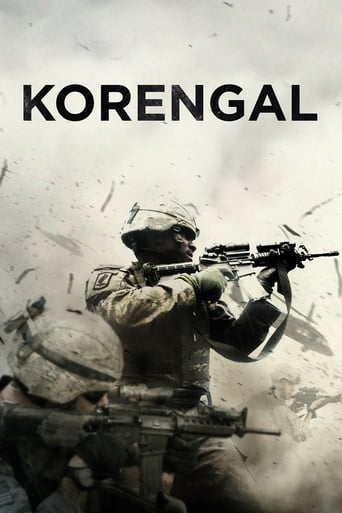
Korengal picks up where Restrepo left off; the same men, the same valley, the same commanders, but a very different look at the experience of war.

This revealing documentary honors the legendary Sidney Poitier—iconic actor, filmmaker, and civil rights activist. Featuring interviews with Denzel Washington, Spike Lee, Halle Berry, and more.
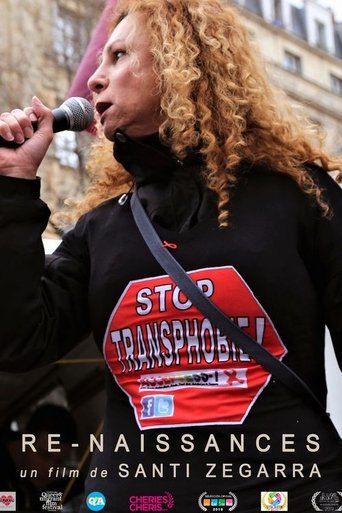
A documentary film depicting five intimate portraits of migrants who fled their country of origin to seek refuge in France and find a space of freedom where they can fully experience their sexuality and their sexual identity: Giovanna, woman transgender of Colombian origin, Roman, Russian transgender man, Cate, Ugandan lesbian mother, Yi Chen, young Chinese gay man…

An inside look at one of the most anticipated movie sequels ever with James Cameron and cast.
Similar titles
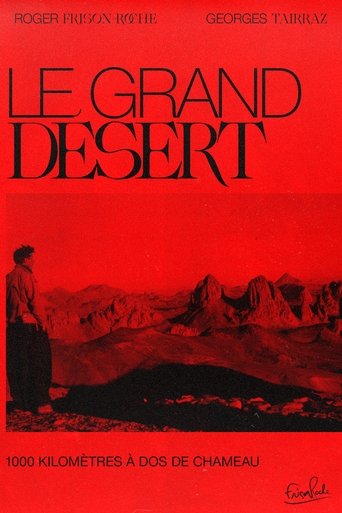
In 1950, the explorer Roger Frison-Roche made a crossing of more than a thousand kilometers on the back of a camel with the photographer Georges Tairraz II, in the heart of the Sahara, from Hoggar then Djanet in Algeria to Ghat in Libya. From their journey they brought back a large number of color films and documents. Among thousands of photos, they selected 47 images which reflect the various aspects of these immense spaces which occupy a third of Africa in the book "The Great Desert". “The Great Desert, 1000 kilometers on camelback” is the eponymous 85-minute documentary of this epic, released in 1950.
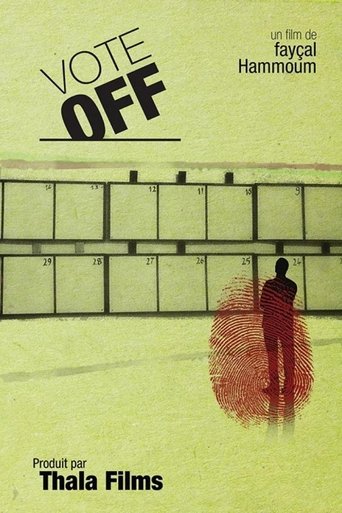
Fayçal Hammoum recounts the 2014 presidential election through non-voting inhabitants of Algiers who, like him, are in their thirties. Be it Bilel, a grocer by default exposed to his customers’ political babbling, or the more politically-charged comments of Younes, a militant FM radio journalist opposed to President Bouteflika’s fourth term, the variety of conversational scenes in no way changes the determination not to vote for an old man who has been invisible for almost two years. The rappers Omar and Brahim are as bereft of hope and voter’s cards as the Tellek webradio DJ, since “the match is fixed”. Moving away from his focus on this subject to film their daily life, the filmmaker draws the portrait of a generation who, as Bilal says with poignant simplicity, “just wants to live
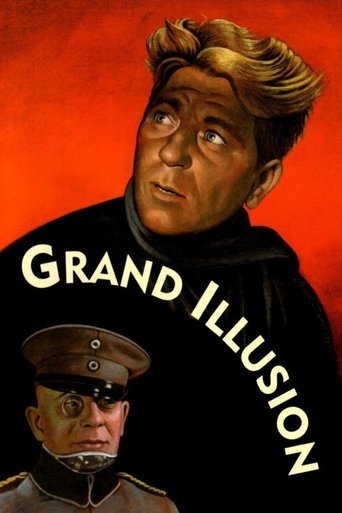
A group of French soldiers, including the patrician Captain de Boeldieu and the working-class Lieutenant Maréchal, grapple with their own class differences after being captured and held in a World War I German prison camp. When the men are transferred to a high-security fortress, they must concoct a plan to escape beneath the watchful eye of aristocratic German officer von Rauffenstein, who has formed an unexpected bond with de Boeldieu.
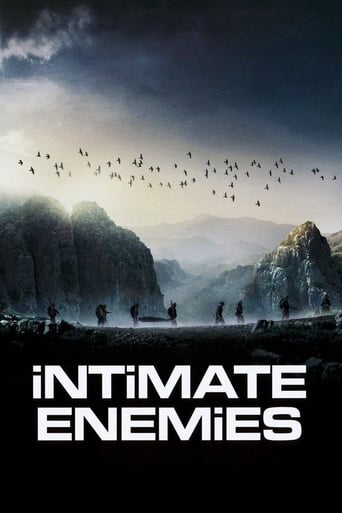
A drama following a French platoon during Algeria's war of independence.
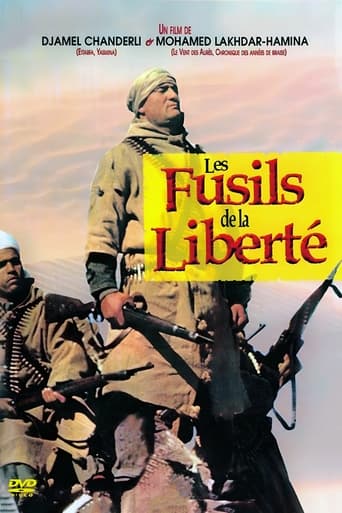
This docu-fiction recounts the difficulties overcome by an ALN detachment whose perilous mission is to transport weapons and ammunition from Tunisia across the Algerian Sahara during the Algerian liberation war (1954-1962) against the French army of occupation.
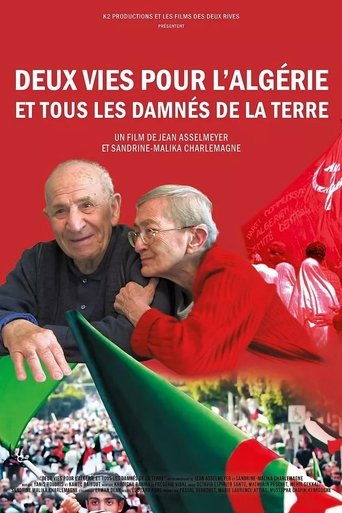
In 1994, at over seventy years old, Gilberte and William Sportisse, threatened by the FIS, arrived from Algeria. Of Jewish faith, he of Arabic mother tongue, they formed a fighting couple, started for the independence of Algeria, always with an unshakeable faith in humanity. They enjoy recounting the participation of Algerian Jews in the Second World War and the struggle for Algerian independence. They provide us with previously unpublished information on the public and clandestine struggles of the Algerian Communist Party before and after independence, and on the repression of activists who, like William and Gilberte Sportisse, were tortured and imprisoned after Colonel Boumédiène came to power. The film is an ode to understanding between people of different origins or cultures and a tribute to a couple whose youthful character and enthusiasm still astonish.

The climbing couple Heinz Mariacher and Luisa Iovane abandon their usual winter training spot to go in search of places more conducive to free climbing in Algeria in the Sahara desert, more precisely in the Hoggar massif, which saw pass the cream of world climbing Lionel Terray, Roger Frison-Roche, Lucien Bérardini, Michel Vaucher, Pierre Mazeaud, Guido Monzino, Patrick Edlinger, Patrick Berhault and many others. Their objective, to climb the east face of Garet El Djenoun, 500 m high, failed because the wall was too smooth and the cracks unstable. The journey continues in the Hoggar massif towards other peaks, where they find the climbing conditions they were hoping for. An overhang in the face of Tizouyag Nord will prove to be a major challenge for Heinz Mariacher.
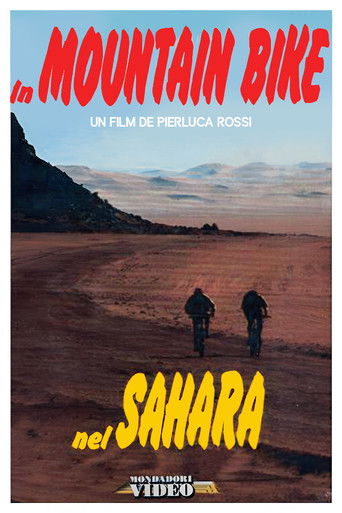
Pierluca Rossi's Lungo La Pista Dei Contrabbandieri (1990) is an adventure documentary about a mountain bike crossing of the 700 km between the towns of Tamarasset and Djanet in the southern Algerian Sahara, from the Hoggar mountain range to the Tassili n'Ajjer. This crossing, supported by a 4x4 truck and a motorcycle, and never before undertaken by bicycle, emphasizes the rediscovered dimension of slowness, similar to the caravans of the Tuareg, in contrast to the unnatural speed of mechanized desert travel in the 1990s, which was considered the norm at the time due to the distorted image provided by the Paris-Dakar Rally and other similar events.
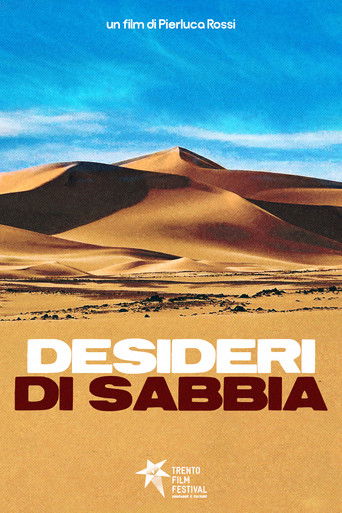
This documentary film by Pierluca Rossi recounts a journey to the southern Algerian Sahara, near Amguid, a small Tuareg village renowned for its unusual nearby crater. In the Tefedest massif, with its mythical summit, Garet el Djenoun, on the slopes of a vast sand dune rising to over 400 meters, one can practice an unusual sport: sandboarding, a new technique to try. Surprising speeds can be reached, and participants can familiarize themselves with the equipment of this new sport, perhaps paving the way for new practices.
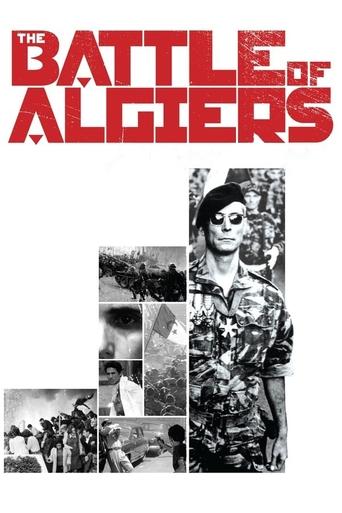
Former petty criminal Ali la Pointe becomes a commander of the Algerian Front de Liberation Nationale, directing a guerilla insurgency against the colonial French occupation. Paratrooper commander Colonel Phillippe Mathieu, a veteran of World War II and the First Indochina War, is sent to Algeria to reinforce efforts to squelch the uprisings.
This video takes a particular viewpoint, with the camera placed behind a zone of blur. Slowly, we experience the perception of an expanded time. An expectation is created and resolved in the observation of the passage of boats that dissolve into the nebulousness, disappearing from our sight like a mirage.
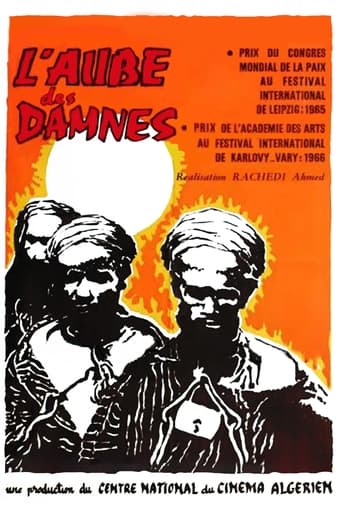
This excellent feature-length documentary - the story of the imperialist colonization of Africa - is a film about death. Its most shocking sequences derive from the captured French film archives in Algeria containing - unbelievably - masses of French-shot documentary footage of their tortures, massacres and executions of Algerians. The real death of children, passers-by, resistance fighters, one after the other, becomes unbearable. Rather than be blatant propaganda, the film convinces entirely by its visual evidence, constituting an object lesson for revolutionary cinema.
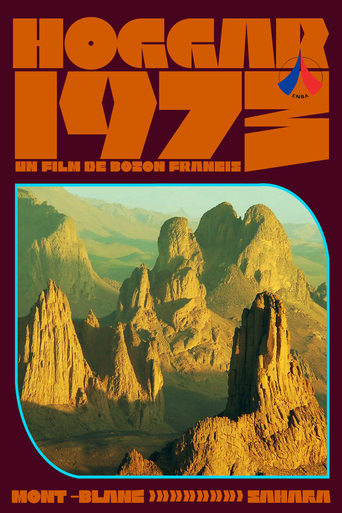
In 1973, 6 guides from the National Ski and Mountaineering School (ENSA), including Charles Daubas and Walter Cecchinel, left by truck from Chamonix to Tamanrasset in the desert in Algeria with the aim of climbing some peaks of the Atakor massif including Adaouda and Tizouyag where they do the first of "La Voie de l'ENSA".
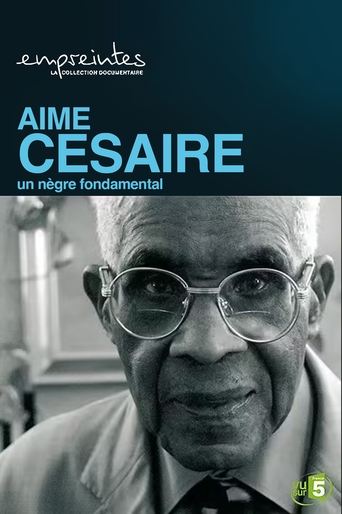
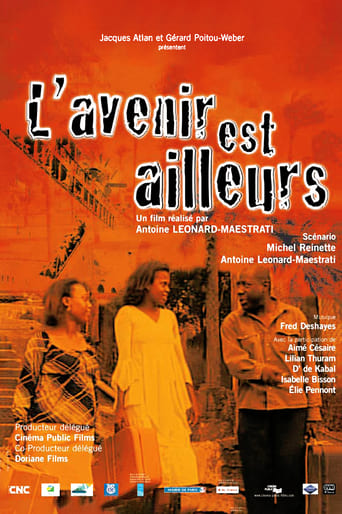
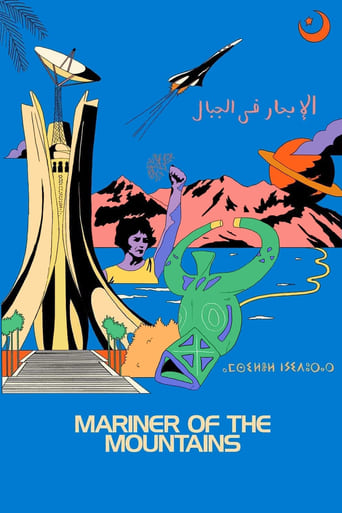
Filmmaker Karim Aïnouz decides to take a boat, cross the Mediterranean, and embark on his first journey to Algeria. Accompanied by the memory of his mother, Iracema, and his camera, Aïnouz gives a detailed account of the journey to his father’s homeland, interweaving present, past, and future.
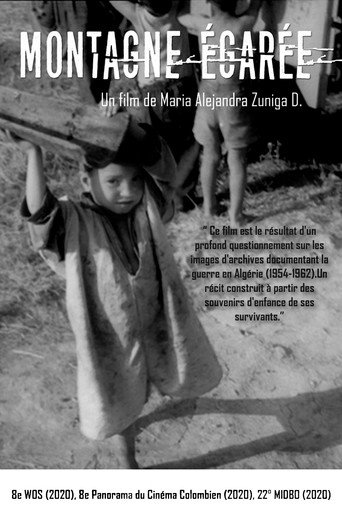
On November 1, 1954, the National Liberation Front of Algeria announced the war for the country's independence. France, colonizer since 1830, hastened to reinforce its military contingent in the four corners of the country and to prevent the advance of the rebels. A little Chaoui, born in a mountainous region of the country, sees his placid childhood collapse in the middle of a crossfire that he does not understand. The story, inspired by real testimonies, is constructed with images from the archives of the French army. From this apparently dissociated dialogue between image and word arises a sensitive homage to the memory that rests in the archives and to the ignored voice of its protagonists.
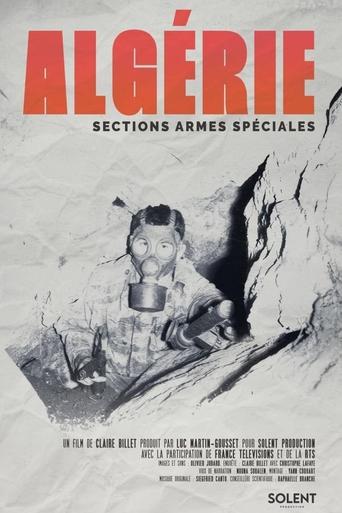
This documentary by director Claire Billet and historian Christophe Lafaye details the massive and systematic use of chemical weapons during the Algerian War. Algerian fighters and civilians, sheltering in caves, were gassed by "special weapons sections" of the French army. The gas identified on military documents is CN2D, whose widespread use forced insurgents to flee "treated" sites, at the risk of dying there. The method is reminiscent of the "enfumades" used by the French expeditionary force during the conquest of Algeria in the 19th century. Between 8,000 and 10,000 such operations are believed to have taken place on Algerian soil between 1956 and 1962. This historical aspect is little known due to the difficulty of accessing archives, many of which are still classified, raising questions about memory, historical truth, and justice.
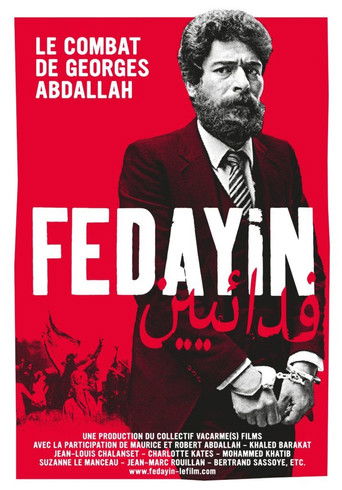
A leading figure in the Palestinian cause and the fight against imperialism, the Lebanese communist activist Georges Ibrahim Abdallah had been languishing in French prisons for thirty-eight years—a unique case in France. Arrested in Lyon in 1984 with false papers, he was sentenced two years later to four years in prison for possession of weapons and explosives, then in 1987 received a life sentence for complicity in the assassinations in Paris five years earlier of an Israeli Mossad agent and an American military attaché—charges he has always denied. Although he has been eligible for release since 1999, French political authorities, under pressure from the United States and Israel, opposed his release. Interventions by Palestinian figures, his relatives, his lawyer and ex-prisoners from the extreme left, retrace the journey of the village schoolteacher who became an anti-colonial activist.