
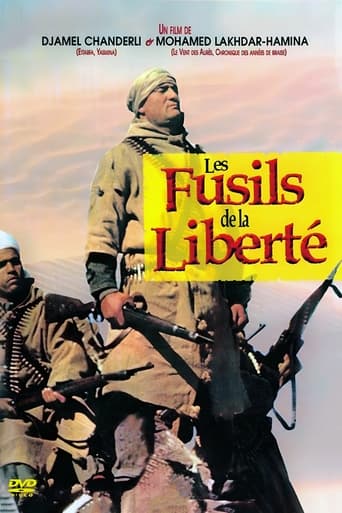
Guns of Freedom
1961-01-01 · 27 min · ★ 10.0
This docu-fiction recounts the difficulties overcome by an ALN detachment whose perilous mission is to transport weapons and ammunition from Tunisia across the Algerian Sahara during the Algerian liberation war (1954-1962) against the French army of occupation.
Trailers are previews, not full movies.
No authorized playback source configured. Use the legal watch options below.
Production details
- Directors
- Mohammed Lakhdar-Hamina, Djamel-Eddine Chanderli
- Production companies
- Gouvernement Provisoire de la République Algérienne (GPRA)
- Countries
- Algeria
- Status
- Released
Top Cast
Cast unavailable.
Title information and images are supplied by TMDb. Explore our discovery guide for advice on comparing metadata and legal viewing options.
Where to watch
Availability provided by JustWatch via TMDb. Offers can change. Provider links are listed on TMDb; full playback requires a separately authorized source.
Availability not listed for this country.
Seasons & episodes
Recommendations

Prelude to War was the first film of Frank Capra's Why We Fight propaganda film series, commissioned by the Pentagon and George C. Marshall. It was made to convince American troops of the necessity of combating the Axis Powers during World War II. This film examines the differences between democratic and fascist states.

When Sgt. First Class Brian Eisch is critically wounded in Afghanistan, it sets him and his sons on a journey of love, loss, redemption and legacy.

Amid the failing counteroffensive, a journalist follows a Ukrainian platoon on their mission to traverse one mile of heavily fortified forest and liberate a strategic village from Russian occupation. But the farther they advance through their destroyed homeland, the more they realize that this war may never end.

When Allied forces liberated the Nazi concentration camps in 1944-45, their terrible discoveries were recorded by army and newsreel cameramen, revealing for the first time the full horror of what had happened. Making use of British, Soviet and American footage, the Ministry of Information’s Sidney Bernstein (later founder of Granada Television) aimed to create a documentary that would provide lasting, undeniable evidence of the Nazis’ unspeakable crimes. He commissioned a wealth of British talent, including editor Stewart McAllister, writer and future cabinet minister Richard Crossman – and, as treatment advisor, his friend Alfred Hitchcock. Yet, despite initial support from the British and US Governments, the film was shelved, and only now, 70 years on, has it been restored and completed by Imperial War Museums under its original title "German Concentration Camps Factual Survey".

“The Soviet Story” is a story of an Allied power, which helped the Nazis to fight Jews and which slaughtered its own people on an industrial scale. Assisted by the West, this power triumphed on May 9th, 1945. Its crimes were made taboo, and the complete story of Europe’s most murderous regime has never been told. Until now...

This documentary movie is about the battle of San Pietro, a small village in Italy. Over 1,100 US soldiers were killed while trying to take this location, that blocked the way for the Allied forces from the Germans. Preserved by the Academy Film Archive in 2005.

A love letter from a young mother to her daughter, the film tells the story of Waad al-Kateab’s life through five years of the uprising in Aleppo, Syria as she falls in love, gets married and gives birth to Sama, all while cataclysmic conflict rises around her. Her camera captures incredible stories of loss, laughter and survival as Waad wrestles with an impossible choice– whether or not to flee the city to protect her daughter’s life, when leaving means abandoning the struggle for freedom for which she has already sacrificed so much.

A documentary about World War I with never-before-seen footage to commemorate the centennial of Armistice Day, and the end of the war.

Marcel Ophuls' riveting film details the heinous legacy of the Gestapo head dubbed "The Butcher of Lyon." Responsible for over 4,000 deaths in occupied France during World War II, Barbie would escape—with U.S. help—to South America in 1951, where he lived until a global manhunt led to his 1983 arrest and subsequent trial.

Stars of "The Walking Dead," Andrew Lincoln and Danai Gurira, walk down memory lane and visit iconic locations where pivotal moments between their characters, Rick and Michonne, were filmed.
With unprecedented access, this documentary follows the extraordinary journey of “Raqqa is Being Slaughtered Silently”—a group of anonymous citizen journalists who banded together after their homeland was overtaken by ISIS—as they risk their lives to stand up against one of the greatest evils in the world today.
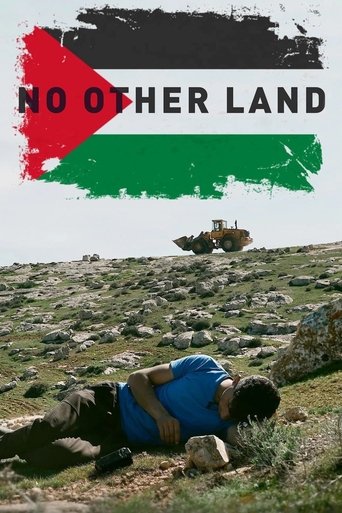
This film made by a Palestinian-Israeli collective shows the destruction of the occupied West Bank's Masafer Yatta by Israeli soldiers and the alliance which develops between the Palestinian activist Basel and Israeli journalist Yuval.
During the chaotic final weeks of the Vietnam War, the North Vietnamese Army closes in on Saigon as the panicked South Vietnamese people desperately attempt to escape. On the ground, American soldiers and diplomats confront a moral quandary: whether to obey White House orders to evacuate only U.S. citizens.
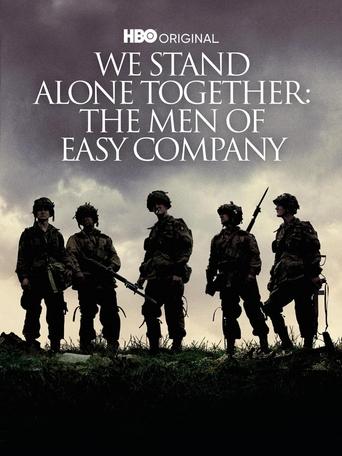
Over a period of two years, Mark Cowen and his crew travelled to thirty U.S. states and ten European cities, to interview the veterans of Easy Company. The stories told by the veterans themselves, create a history of the Second World War from the point of view of this heroic company of men, made famous in the mini-series Band of Brothers.
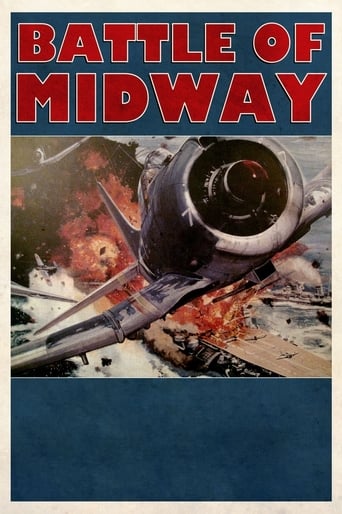
The Japanese attack on Midway in June 1942, filmed as it happened. Preserved by the Academy Film Archive, in partnership with Twentieth Century Fox Film Corporation, in 2006.

Set both in Latin America and the United States, the film explores the historic and current relationship of Washington with countries such as Venezuela, Bolivia and Chile. Pilger says that the film "...tells a universal story... analysing and revealing, through vivid testimony, the story of great power behind its venerable myths. It allows us to understand the true nature of the so-called "war on terror". According to Pilger, the film’s message is that the greed and power of empire is not invincible and that people power is always the "seed beneath the snow".

In an intimate and joyful story of love in the face of loss, celebrated poets Andrea Gibson and Megan Falley find strength—and unexpected hilarity—in what might be their final year together.
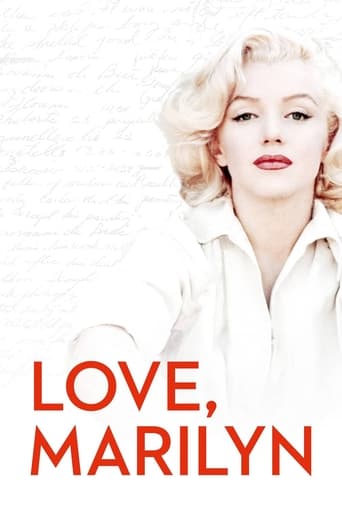
Using the book 'Fragments', which collects Marilyn Monroe's poems, notes and letters, and with participation from the Arthur Miller and Truman Capote estates who have contributed more material, each of the actresses will embody the legend at various stages in her life.

A compilation of over 30 years of private home movie footage shot by Lithuanian-American avant-garde director Jonas Mekas, assembled by Mekas "purely by chance", without concern for chronological order.

In the Realms of the Unreal is a documentary about the reclusive Chicago-based artist Henry Darger. Henry Darger was so reclusive that when he died his neighbors were surprised to find a 15,145-page manuscript along with hundreds of paintings depicting The Story of the Vivian Girls, in What is Known as the Realms of the Unreal, of the Glodeco-Angelinnian War Storm, Cased by the Child Slave Rebellion.
Similar titles
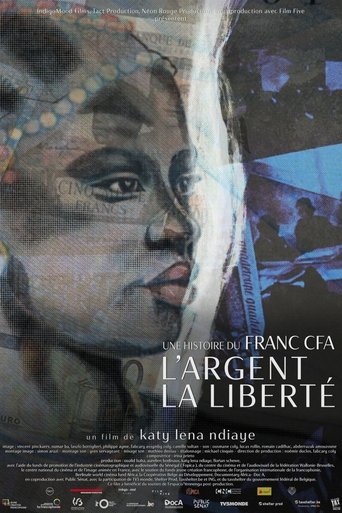
The former French colonies in Central and West Africa have been independent since 1960, but most of these countries still use the currency of the former oppressor: the CFA franc. It was linked to the French franc when it was introduced, so the national bank in Paris controlled monetary policy. Now the currency has a fixed exchange rate with the euro. The link with the European currency strongly influences the monetary policy of CFA countries. And that means the value of the CFA franc is defined by political decisions taken elsewhere, rather than by the domestic economy.
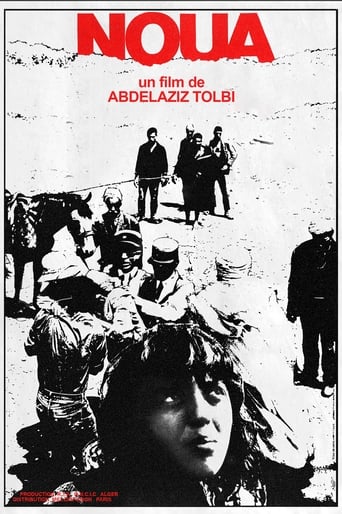
In Algeria in 1954, in a village in the Aurès region, poverty reigns over peasants enslaved by colonial administrators and Algerian landowners. Noua, in love with the son of a peasant dispossessed of his land, must be sold to a wealthy landowner.
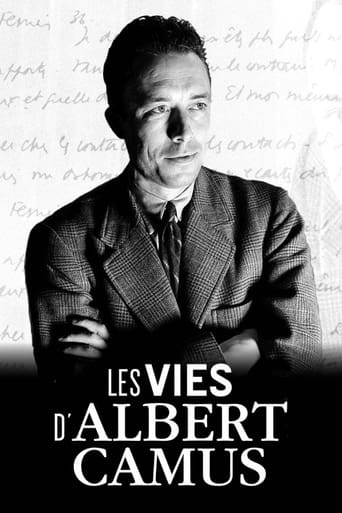
Albert Camus died at 46 years old on January 4, 1960, two years after his Nobel Prize in literature. Author of “L'Etranger”, one of the most widely read novels in the world, philosopher of the absurd and of revolt, resistant, journalist, playwright, Albert Camus had an extraordinary destiny. Child of the poor districts of Algiers, tuberculosis patient, orphan of father, son of an illiterate and deaf mother, he tore himself away from his condition thanks to his teacher. French from Algeria, he never ceased to fight for equality with the Arabs and the Kabyle, while fearing the Independence of the FLN. Founded on restored and colorized archives, and first-hand accounts, this documentary attempts to paint the portrait of Camus as he was.
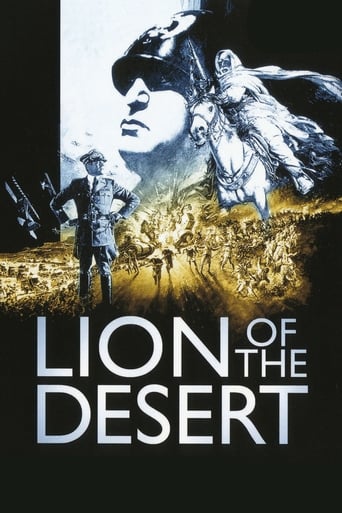
Resistance leader Omar Mukhtar opposes Italian colonization before World War II. The brutal guerrilla war against Italian General Rodolfo Graziani and the Fascist forces of Benito Mussolini highlights the struggle for Libyan independence and the harsh tactics utilised by the colonisers.
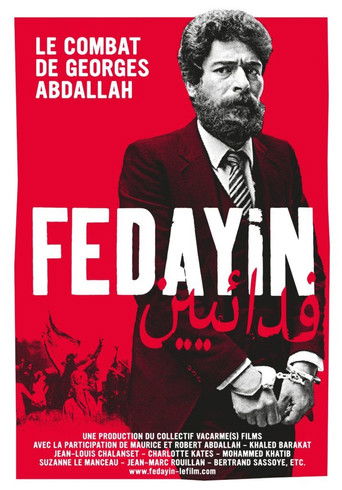
A leading figure in the Palestinian cause and the fight against imperialism, the Lebanese communist activist Georges Ibrahim Abdallah had been languishing in French prisons for thirty-eight years—a unique case in France. Arrested in Lyon in 1984 with false papers, he was sentenced two years later to four years in prison for possession of weapons and explosives, then in 1987 received a life sentence for complicity in the assassinations in Paris five years earlier of an Israeli Mossad agent and an American military attaché—charges he has always denied. Although he has been eligible for release since 1999, French political authorities, under pressure from the United States and Israel, opposed his release. Interventions by Palestinian figures, his relatives, his lawyer and ex-prisoners from the extreme left, retrace the journey of the village schoolteacher who became an anti-colonial activist.
In 1967, Visconti came to Algiers for the filming of The Stranger with Mastroianni and Anna Karina. Camus, during his lifetime, had always refused to allow one of his novels to be brought to the screen. His family made another decision. The filming of the film was experienced in Algiers, like a posthumous return of the writer to Algiers. During filming, a young filmmaker specializing in documentaries Gérard Patris attempts a report on the impact of the filming of The Stranger on the Algerians. Interspersed with sequences from the shooting of Visconti's film, he films Poncet, Maisonseul, Bénisti and Sénac, friends of Camus, in full discussions to situate Camus and his work in a sociological and historical context. “The idea is for us to show people, others, ourselves as if they could all be Meursault, or at least the witnesses concerned to his drama.”
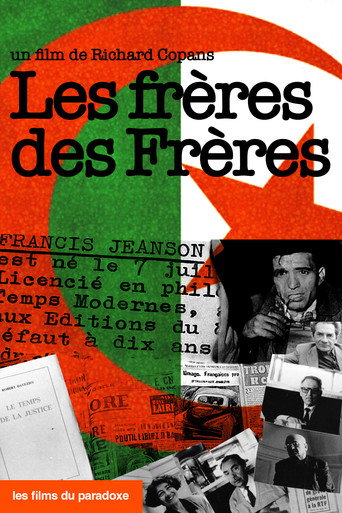
From 1954 to 1962, during the Algerian War, French citizens provided concrete assistance to the FLN in France: sheltering refugees, forging documents, facilitating border crossings, and transporting funds. Whether committed to the ideals of the Republic or driven by Third Worldist revolutionaries, they sought to build a bridge of friendship between nations. They paid for their commitment with imprisonment and exile. Four veterans of the Jeanson network recall this period. Today, they are no longer seen as traitors or heroes, but as witnesses recounting "their" war... Silent for 30 years, the "Jeanson network" now bears witness to this history.
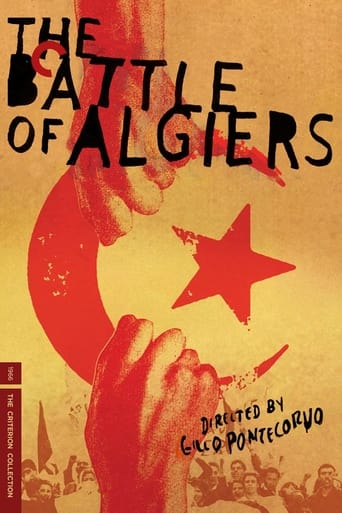
This 17-minute documentary is featured on the 3-Disc Criterion Collection DVD of The Battle of Algiers (1966), released in 2004. An in-depth look at the Battle of Algiers through the eyes of five established and accomplished filmmakers; Spike Lee, Steven Soderbergh, Oliver Stone, Julian Schnabel and Mira Nair. They discuss how the shots, cinematography, set design, sound and editing directly influenced their own work and how the film's sequences look incredibly realistic, despite the claim that everything in the film was staged .
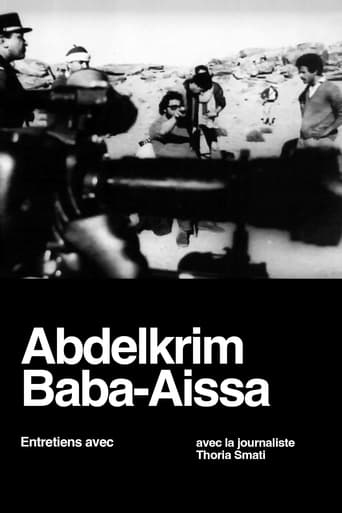
In 2024, Abdelkrim Baba Aissa, aged 75, engages in a series of filmed interviews with Algerian journalist Thoria Smati. They address the chronology of the rich and committed career of this self-taught Algerian actor, director, producer and screenwriter, who made his debut on Algerian television as an assistant director then at ONCIC as a director in the years 70.
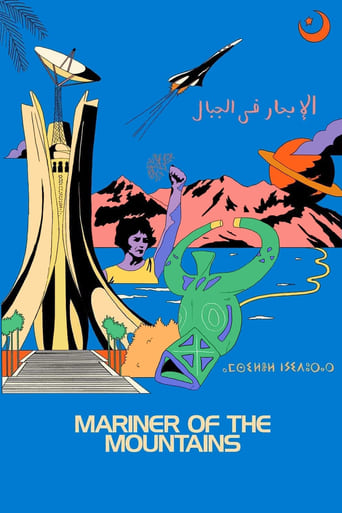
Filmmaker Karim Aïnouz decides to take a boat, cross the Mediterranean, and embark on his first journey to Algeria. Accompanied by the memory of his mother, Iracema, and his camera, Aïnouz gives a detailed account of the journey to his father’s homeland, interweaving present, past, and future.
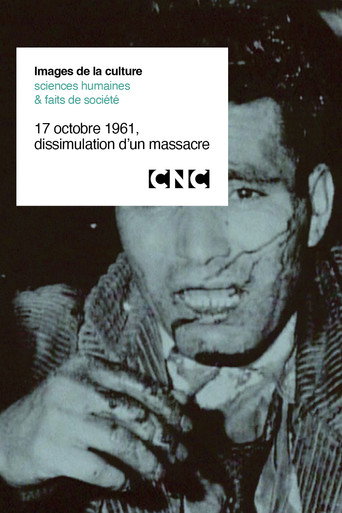
On October 17 and 18, 1961, during a non-violent demonstration against the imposed curfew, dozens of Algerians were murdered in Paris by police officers acting on orders from their superiors. For forty years, this crime has been concealed; yet these events, the deadliest on French soil since the Second World War, resemble, in some respects, the darkest hours of the collaboration. Why has this history been hidden? Under what conditions, and in the name of what reasons, did officials of a democratic state conceal the scale and gravity of such events?
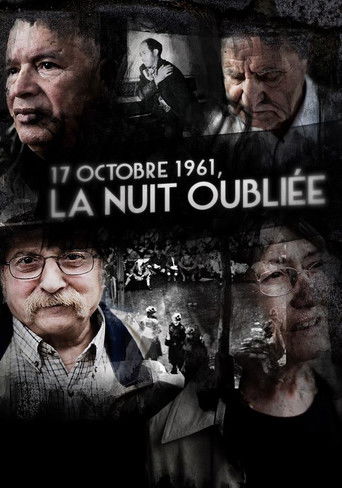
On October 17, 1961, in response to the curfew imposed on Muslim Algerians by Paris police prefect Maurice Papon, the FLN Federation of France organized a peaceful demonstration in the streets of the capital. The demonstration turned into a bloody crackdown: unprecedented violence, thousands of arrests, hundreds missing, and dozens dead. Today, much is known about the violence of that night: at least 200 Algerians were killed, beheaded, beaten, or thrown into the Seine; 11,500 others were arrested and often tortured. Hundreds were deported back to Algeria. Long silenced, the repression has been acknowledged thanks to the work of remembrance and eyewitness accounts.
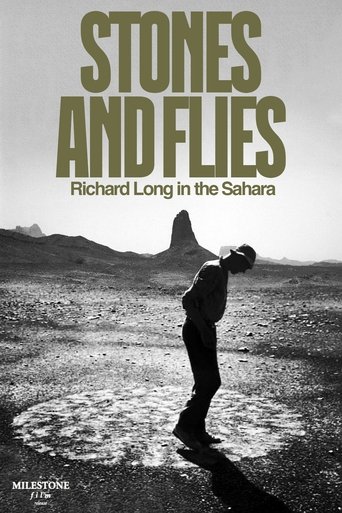
In the fall of 1987, Philippe Haas accompanied the sculptor Richard Long to the Algerian Sahara and filmed him tracing with his feet, or constructing with desert stones, simple geometric figures (straight lines, circles, spirals). In counterpoint to the images, Richard Long explains his approach. Since 1967, Richard Long (1945, Bristol), who belongs to the land art movement, has traveled the world on foot and installed, in places often inaccessible to the public, stones, sticks and driftwood found in situ. His ephemeral works are reproduced through photography. He thus made walking an art, and land art an aspiration of modern man for solitude in nature.
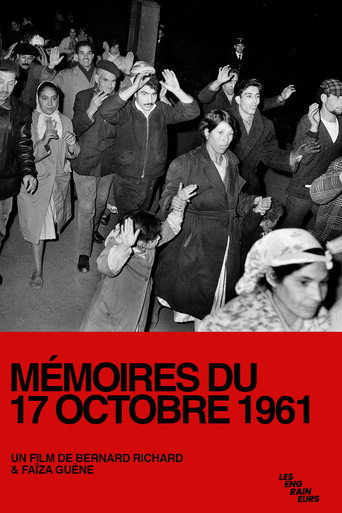
Three demonstrators from October 17, 1961, and a journalist recount the peaceful success of the demonstration and its brutal repression in the streets of Paris. Five months before the end of the Algerian War, the Gaullist government violently suppressed (40 to 300 deaths in a single evening, according to various sources) a peaceful demonstration by the entire Algerian civilian population of the Paris region, protesting the curfew imposed solely on this population (all participants held French citizenship). The government long denied this state crime; the official version: 3 deaths! In 1962, these events were granted amnesty by a simple decree (later enacted into law) issued by the same Gaullist government.
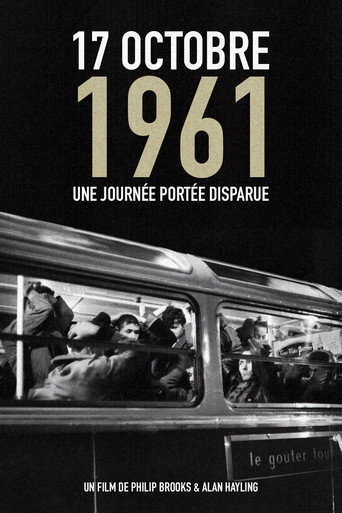
This documentary bears witness to the events that took place more than thirty years before the filming of this movie, on October 17, 1961, in Paris, during the Algerian War. It is a work not only about historical truth but also about memory. Constructed primarily from interviews conducted with those involved in the events, along with archival footage, photographs, and radio broadcasts from the time, our investigation proves that nearly 200 Algerians were killed (drowned, tortured) that night and in the days that followed by the French police. "A Missing Day" seeks to ask two key questions: how could such events have unfolded in the capital of a Western democracy barely thirty years ago? And why have they been silenced ever since?
These are the first images shot in the ALN maquis, camera in hand, at the end of 1956 and in 1957. These war images taken in the Aurès-Nementchas are intended to be the basis of a dialogue between French and Algerians for peace in Algeria, by demonstrating the existence of an armed organization close to the people. Three versions of Algeria in Flames are produced: French, German and Arabic. From the end of the editing, the film circulates without any cuts throughout the world, except in France where the first screening takes place in the occupied Sorbonne in 1968. Certain images of the film have circulated and are found in films, in particular Algerian films. Because of the excitement caused by this film, he was forced to go into hiding for 25 months. After the declaration of independence, he founded the first Algerian Audiovisual Center.
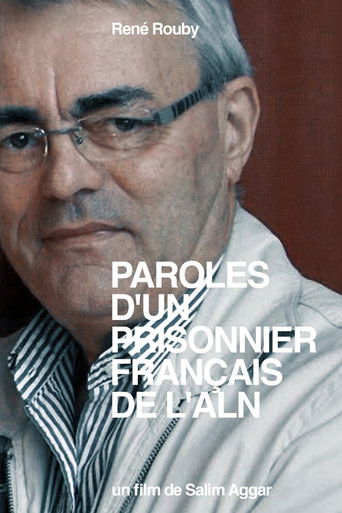
The image of French prisoners was very often evoked in Algerian cinema and literature, but until today, no Algerian or even European report or documentary had given voice to one of these French prisoners of the war of Algeria. In the interest of truth and writing history, we set out in search of one of these French witnesses. This witness is René Rouby, prisoner of Amirouche's group for more than 114 days in 1958 in the Akfadou region in Kabylia. This is the first testimony from a French prisoner of the ALN (the National Liberation Army).
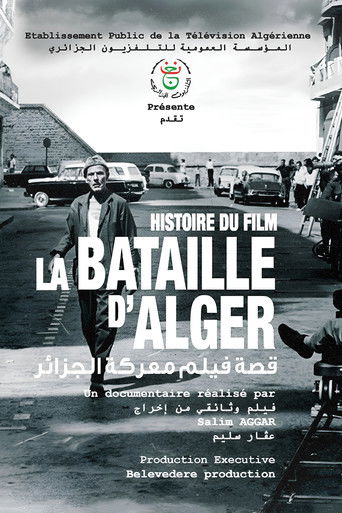
More than fifty years after the release of the film “The Battle of Algiers” in theaters in June 1966, director Salim Aggar found, after a search which lasted more than a year and a half, the actors, extras and technicians who worked on the film directed by Gillo Pentecorvo and produced by Yacef Saadi. In this documentary full of anecdotes and stories about the filming of the film, the director found the actress who played the role of Hassiba Ben Bouali, the young 17-year-old actress who played Bouhamidi's bride but especially certain figures important parts of the film who were barely 10 years old at the time of filming and who no one will recognize today. Beyond the important historical aspect of the film, the documentary focused mainly on the social, cinematographic and cultural aspect of the film and its impact on a generation which had just regained independence.
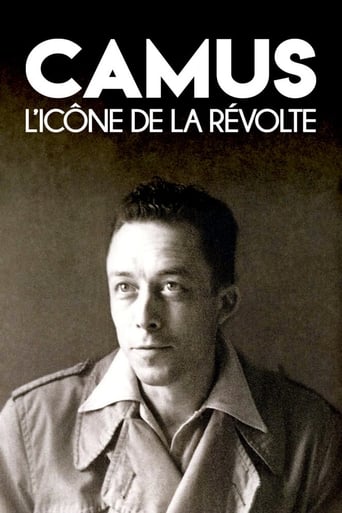
Albert Camus, who died 60 years ago, continues to inspire defenders of freedom and human rights activists around the world today. The Nobel Prize winner for literature is one of the most widely read French-language writers in the world. He continues to embody the rebellious man who opposes all forms of oppression and tyranny while refusing to compromise his human values.