Far from Afghanistan
2012-08-22 · 129 min · ★ 5.8
Taking inspiration from the collaborative 1967 militant anthology film Far from Vietnam, five of the boldest and most prominent American militant filmmakers unite to create this searing (and seething) omnibus work, employing a variety of approaches to reveal the hidden costs of the United States' (and Canada's) most expensive and longest-running war. (TIFF)
Trailers are previews, not full movies.
No authorized playback source configured. Use the legal watch options below.
Production details
- Directors
- Jon Jost, Travis Wilkerson, Minda Martin, John Gianvito, Soon-Mi Yoo
- Production companies
- Unavailable
- Countries
- United States of America
- Status
- Released
Top Cast
Cast unavailable.
Title information and images are supplied by TMDb. Explore our discovery guide for advice on comparing metadata and legal viewing options.
Where to watch
Availability provided by JustWatch via TMDb. Offers can change. Provider links are listed on TMDb; full playback requires a separately authorized source.
Seasons & episodes
Recommendations
During the chaotic final weeks of the Vietnam War, the North Vietnamese Army closes in on Saigon as the panicked South Vietnamese people desperately attempt to escape. On the ground, American soldiers and diplomats confront a moral quandary: whether to obey White House orders to evacuate only U.S. citizens.

A love letter from a young mother to her daughter, the film tells the story of Waad al-Kateab’s life through five years of the uprising in Aleppo, Syria as she falls in love, gets married and gives birth to Sama, all while cataclysmic conflict rises around her. Her camera captures incredible stories of loss, laughter and survival as Waad wrestles with an impossible choice– whether or not to flee the city to protect her daughter’s life, when leaving means abandoning the struggle for freedom for which she has already sacrificed so much.
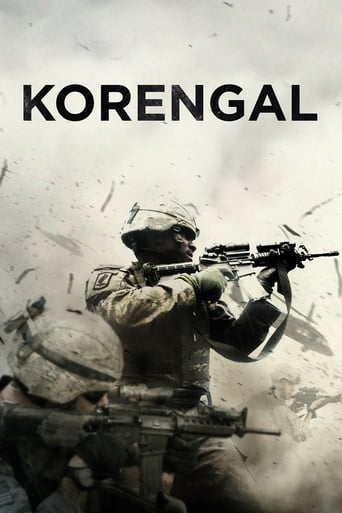
Korengal picks up where Restrepo left off; the same men, the same valley, the same commanders, but a very different look at the experience of war.

When Sgt. First Class Brian Eisch is critically wounded in Afghanistan, it sets him and his sons on a journey of love, loss, redemption and legacy.

Amid the failing counteroffensive, a journalist follows a Ukrainian platoon on their mission to traverse one mile of heavily fortified forest and liberate a strategic village from Russian occupation. But the farther they advance through their destroyed homeland, the more they realize that this war may never end.

Prelude to War was the first film of Frank Capra's Why We Fight propaganda film series, commissioned by the Pentagon and George C. Marshall. It was made to convince American troops of the necessity of combating the Axis Powers during World War II. This film examines the differences between democratic and fascist states.
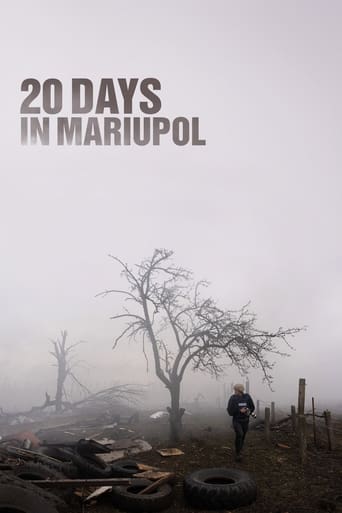
As the Russian invasion begins, a team of Ukrainian journalists trapped in the besieged city of Mariupol struggle to continue their work documenting the war's atrocities.
With unprecedented access, this documentary follows the extraordinary journey of “Raqqa is Being Slaughtered Silently”—a group of anonymous citizen journalists who banded together after their homeland was overtaken by ISIS—as they risk their lives to stand up against one of the greatest evils in the world today.
Directors Hetherington and Junger spend a year with the 2nd Battalion of the United States Army located in one of Afghanistan's most dangerous valleys. The documentary provides insight and empathy on how to win the battle through hard work, deadly gunfights and mutual friendships while the unit must push back the Taliban.

A documentary about World War I with never-before-seen footage to commemorate the centennial of Armistice Day, and the end of the war.

“The Soviet Story” is a story of an Allied power, which helped the Nazis to fight Jews and which slaughtered its own people on an industrial scale. Assisted by the West, this power triumphed on May 9th, 1945. Its crimes were made taboo, and the complete story of Europe’s most murderous regime has never been told. Until now...

Pete Postlethwaite stars as a man living alone in the devastated future world of 2055, looking at old footage from 2008 and asking: why didn’t we stop climate change when we had the chance?
The final entry in a trilogy of films produced for the U.S. government by John Huston. Some returning combat veterans suffer scars that are more psychological than physical. This film follows patients and staff during their treatment. It deals with what would now be called PTSD, but at the time was categorised as psychoneurosis or shell-shock. Government officials deemed this 1946 film counterproductive to postwar efforts; it was not shown publicly until 1981.
Virunga in the Democratic Republic of the Congo is Africa's oldest national park, a UNESCO world heritage site, and a contested ground among insurgencies seeking to topple the government that see untold profits in the land. Among this ongoing power struggle, Virunga also happens to be the last natural habitat for the critically endangered mountain gorilla. The only thing standing in the way of the forces closing in around the gorillas: a handful of passionate park rangers and journalists fighting to secure the park's borders and expose the corruption of its enemies. Filled with shocking footage, and anchored by the surprisingly deep and gentle characters of the gorillas themselves, Virunga is a galvanizing call to action around an ongoing political and environmental crisis in the Congo.

Set both in Latin America and the United States, the film explores the historic and current relationship of Washington with countries such as Venezuela, Bolivia and Chile. Pilger says that the film "...tells a universal story... analysing and revealing, through vivid testimony, the story of great power behind its venerable myths. It allows us to understand the true nature of the so-called "war on terror". According to Pilger, the film’s message is that the greed and power of empire is not invincible and that people power is always the "seed beneath the snow".
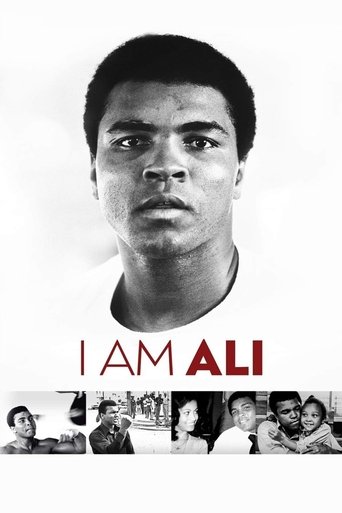
Unprecedented access to Muhammad Ali's personal archive of "audio journals" as well as interviews and testimonials from his inner circle of family and friends are used to tell the legend's life story.
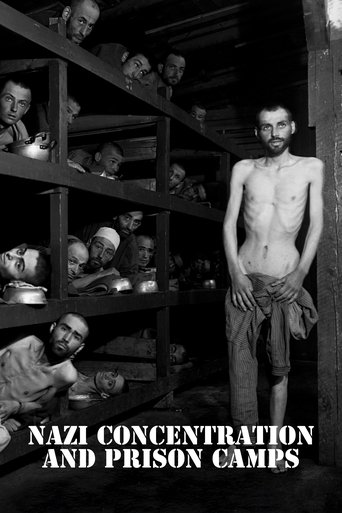
Produced and presented as evidence at the Nuremberg war crimes trial of Hermann Göring and twenty other Nazi leaders, this film consists primarily of dead and surviving prisoners and of facilities used to kill and torture during the World War II.

Documentary filmmaker Amy Berg investigates the life of 30-year pedophile Father Oliver O'Grady and exposes the corruption inside the Catholic Church that allowed him to abuse countless children. Victims' stories and a disturbing interview with O'Grady offer a view into the troubled mind of the spiritual leader who moved from parish to parish gaining trust ... all the while betraying so many.
Meet the real-life airmen who inspired Masters of the Air as they share the harrowing and transformative events of the 100th Bomb Group.

In the Realms of the Unreal is a documentary about the reclusive Chicago-based artist Henry Darger. Henry Darger was so reclusive that when he died his neighbors were surprised to find a 15,145-page manuscript along with hundreds of paintings depicting The Story of the Vivian Girls, in What is Known as the Realms of the Unreal, of the Glodeco-Angelinnian War Storm, Cased by the Child Slave Rebellion.
Similar titles
A chronicle of the production problems — including bad weather, actors' health, war near the filming locations, and more — which plagued the filming of Apocalypse Now, increasing costs and nearly destroying the life and career of Francis Ford Coppola.
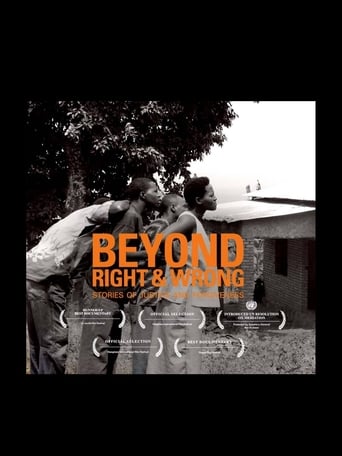
A survivor of the Rwandan Genocide struggles to forgive the man who killed her children. A victim’s daughter strikes up an unusual friendship with the ex-IRA bomber who killed her father. And two men—one Israeli, one Palestinian—form a bond after tragedies claim their daughters.
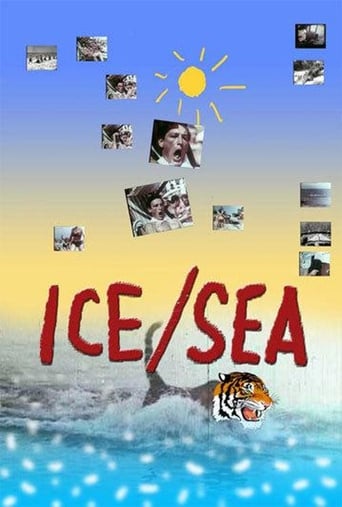
Funny collage of sea, sun and ice. A show from the beach with skiers, tigers, mermaids and much more.
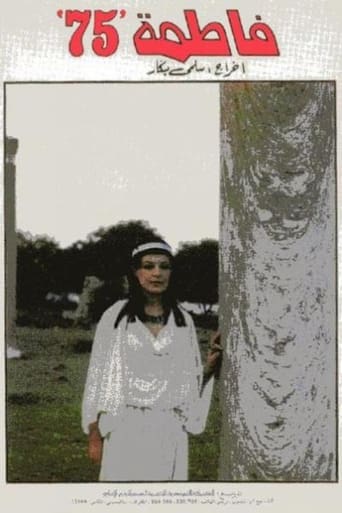
A pioneering film from Tunisia, Fatma 75 is the first non-fiction film by a Tunisian woman, a feminist essay film, and the first in a series of powerful films about strong female figures in the country. The film was made in the UN International Women's Year 1975, and has long been recognised as one of the most important films from North Africa, but has never officially been seen before due to censorship.
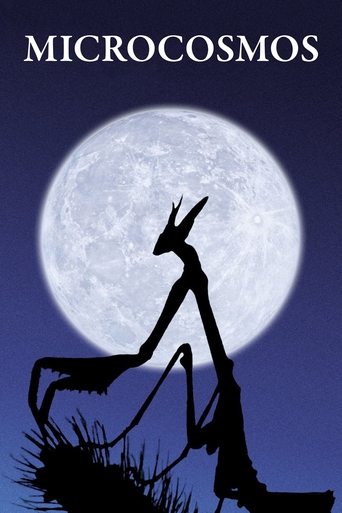
A documentary of insect life in meadows and ponds, using incredible close-ups, slow motion, and time-lapse photography. It includes bees collecting nectar, ladybugs eating mites, snails mating, spiders wrapping their catch, a scarab beetle relentlessly pushing its ball of dung uphill, endless lines of caterpillars, an underwater spider creating an air bubble to live in, and a mosquito hatching.
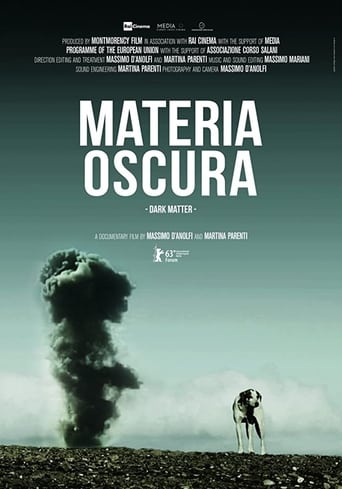
Materia oscura tells the story of a war zone in peacetime. The film location is the Salto di Quirra test range (Sardinia, Italy) where, for over fifty years, governments around the world have tested 'new weapons' and where the Italian government has carried out controlled explosions of old weapon stocks, inexorably endangering the territory.
A man visits the world's smallest fair, where he learns a valuable lesson about life and poison cotton candy.

Helen Hill remembers her grandfather just before his death (in part) by a metaphor involving him as a rapidly diminishing mouse.

Madame Winger wants you to make a film about something you love. She shows you her favorite low budget filmmaking techniques, from cameraless animation to processing your own film in a bathtub. Filmed in 16 mm.

This movie takes us in the daily battle of 12 cartoonists around the world : France, Mexico, Israël, China, Russia, Ivory Coast...
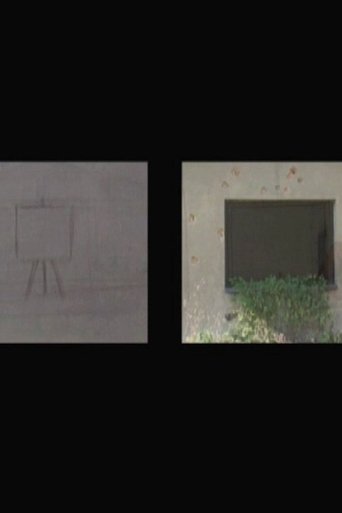
In 1947, two years after the end of the Second World War, Film Journal No. 1 was released in Sarajevo. Fifty years later, after the collapse of the Communist bloc, this newsreel was lost in the confusion of the fighting in Yugoslavia. In Journal No. 1 Hito Steyerl attempts to find out how the footage got lost and what was on this document from the Sutjeska studio. In the simultaneous projection of Journal No. 1 the ‘unattainability of an historical zero hour of the national identity’ takes concrete form: The lost newsreel reports on a literacy campaign as well as Muslim women confidently removing their headscarves. We listen however to eyewitnesses trying to recapture the lost content and we see the artist Arman Kulasic making a number of drawings that resemble the story-boards for the lost film. What appears to be moments of great change remain limited by subjective and uncertain memory. The film was premiered at documenta 12.
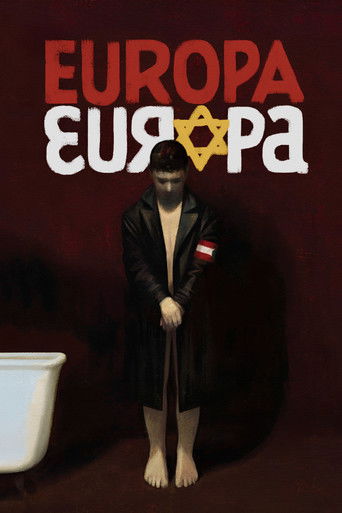
A Jewish boy separated from his family in the early days of WWII poses as a German orphan and is taken into the heart of the Nazi world as a 'war hero' and eventually becomes a Hitler Youth.
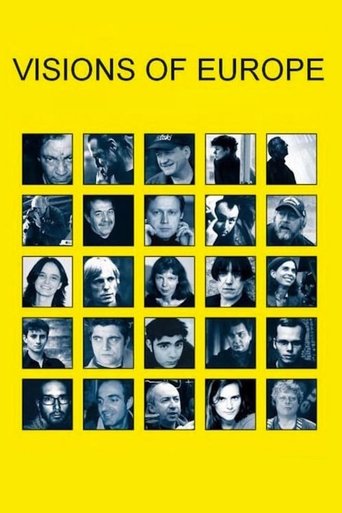
Twenty-five films from twenty-five European countries by twenty-five European directors.
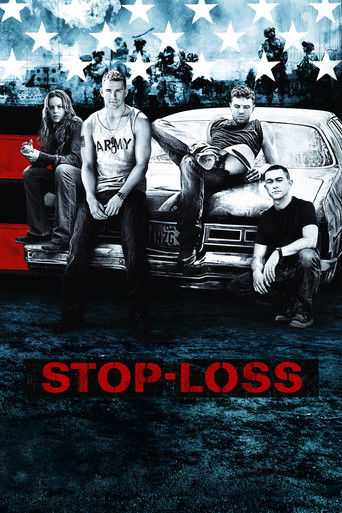
A veteran soldier returns from his completed tour of duty in Iraq, only to find his life turned upside down when he is arbitrarily ordered to return to field duty by the Army.
What if, instead of bombs, we dropped watermelons? Dreamy and hopeful, this animated short sweeps us up into a colourful world where layers of reality and creativity intersect. Our protagonist navigates through it all seamlessly, and in the process shows us the importance of imagination.
Twenty years ago, novelist Salman Rushdie was a wanted man with a million pound bounty on his head. His novel, The Satanic Verses, had sparked riots across the Muslim world. The ailing religious leader of Iran, the Ayatollah Khomeini, had invoked a little-known religious opinion - a fatwa - and effectively sentenced Rushdie to death. This film looks back on the extraordinary events which followed the publication of the book and the ten year campaign to get the fatwa lifted. Interviews with Rushdie's friends and family and testimony from leaders of Britain's Muslim community and the Government reveal the inside story of the affair.
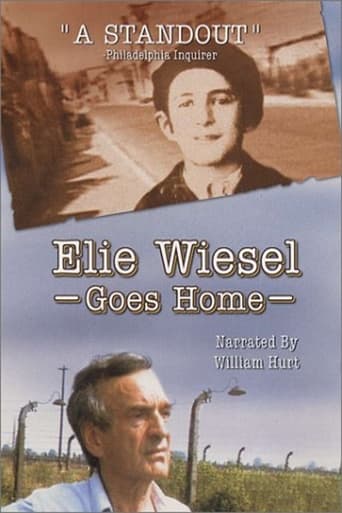
A documentary chronicling the adolescent years of Elie Wiesel and the history of his sufferings. Eliezer was fifteen when Fascism brutally altered his life forever. Fifty years later, he returns to Sighetu Marmatiei, the town where he was born, to walk the painful road of remembrance - but is it possible to speak of the unspeakable? Or does Auschwitz lie beyond the capacity of any human language - the place where words and stories run out?
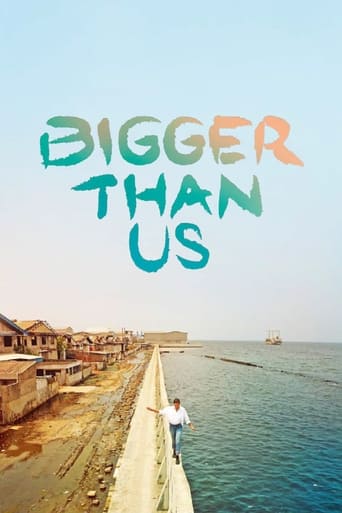
For six years, Melati, 18, has been fighting the plastic pollution that is ravaging her country, Indonesia. Like her, a generation is rising up to fix the world. Everywhere, teenagers and young adults are fighting for human rights, the climate, freedom of expression, social justice, access to education or food. Dignity. Alone against all odds, sometimes risking their lives and safety, they protect, denounce and care for others. The earth. And they change everything. Melati goes to meet them across the globe. At a time when everything seems to be or has been falling apart, these young people show us how to live. And what it means to be in the world today.

Blackout is a short, animated documentary about the 2003 power failure in much of the eastern seaboard of the U.S and Canada for up to 4 days.