
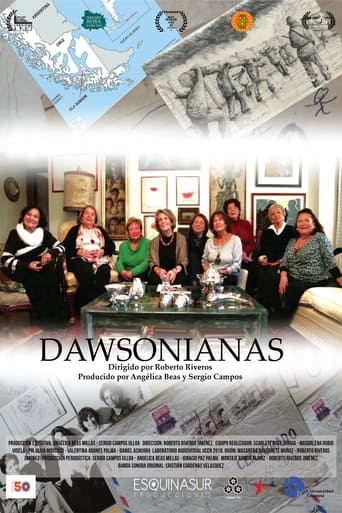
The Dawsonians
· 61 min · Not rated
During the first days after the 1973 Chilean coup d’état, the political leadership of the Popular Unity government was arrested and transferred to Dawson Island, Magallanes Region, extreme south of Chile and the mainland. The wives of the then political prisoners began an incessant effort to find out the whereabouts of their husbands and then try to return them alive. In these circumstances, they meet and spontaneously organize into a group they call the “Dawsonianas.”
Trailers are previews, not full movies.
No authorized playback source configured. Use the legal watch options below.
Production details
- Directors
- Unavailable
- Production companies
- Unavailable
- Countries
- Unavailable
- Status
- Released
Top Cast
Cast unavailable.
Title information and images are supplied by TMDb. Explore our discovery guide for advice on comparing metadata and legal viewing options.
Where to watch
Availability provided by JustWatch via TMDb. Offers can change. Provider links are listed on TMDb; full playback requires a separately authorized source.
Availability not listed for this country.
Seasons & episodes
Recommendations

Prelude to War was the first film of Frank Capra's Why We Fight propaganda film series, commissioned by the Pentagon and George C. Marshall. It was made to convince American troops of the necessity of combating the Axis Powers during World War II. This film examines the differences between democratic and fascist states.
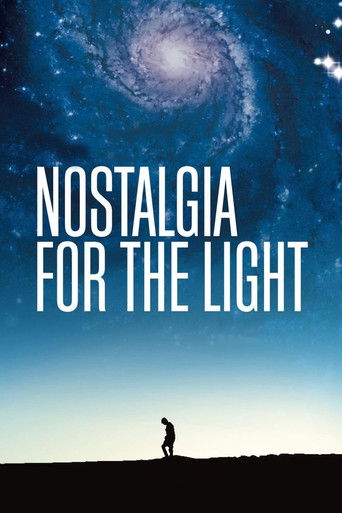
In Chile's Atacama Desert, astronomers peer deep into the cosmos in search for answers concerning the origins of life. Nearby, a group of women sift through the sand searching for body parts of loved ones, dumped unceremoniously by Pinochet's regime.
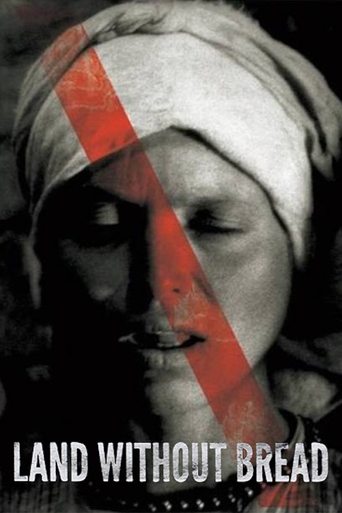
An exploration —manipulated and staged— of life in Las Hurdes, in the province of Cáceres, in Extremadura, Spain, as it was in 1932. Insalubrity, misery and lack of opportunities provoke the emigration of young people and the solitude of those who remain in the desolation of one of the poorest and least developed Spanish regions at that time.

A love letter from a young mother to her daughter, the film tells the story of Waad al-Kateab’s life through five years of the uprising in Aleppo, Syria as she falls in love, gets married and gives birth to Sama, all while cataclysmic conflict rises around her. Her camera captures incredible stories of loss, laughter and survival as Waad wrestles with an impossible choice– whether or not to flee the city to protect her daughter’s life, when leaving means abandoning the struggle for freedom for which she has already sacrificed so much.

When Sgt. First Class Brian Eisch is critically wounded in Afghanistan, it sets him and his sons on a journey of love, loss, redemption and legacy.

Guzmán’s final installment shifts from covering the actions of Allende’s opponents to those who battled to revive & promote their toppled leader’s vision for a new Chile.
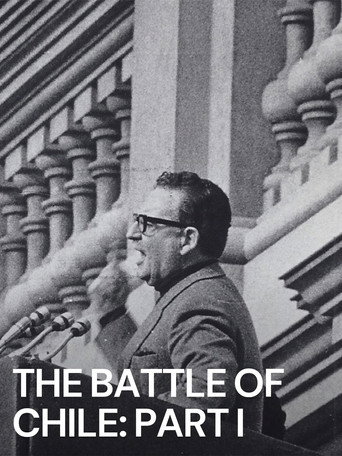
The chronicle of the political tension in Chile in 1973 and of the violent counter revolution against the democratically elected government of Salvador Allende.

“The Soviet Story” is a story of an Allied power, which helped the Nazis to fight Jews and which slaughtered its own people on an industrial scale. Assisted by the West, this power triumphed on May 9th, 1945. Its crimes were made taboo, and the complete story of Europe’s most murderous regime has never been told. Until now...
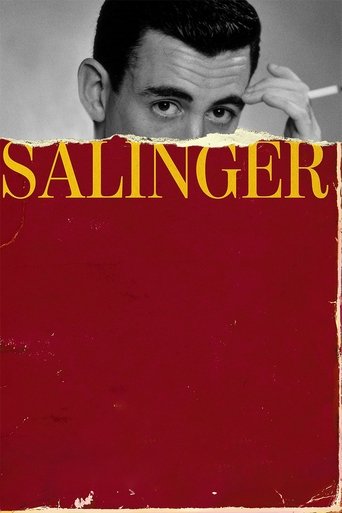
An in-depth investigation into the private world of the American writer J. D. Salinger (1919-2010), who lived most of his life behind the impenetrable wall of a self-imposed seclusion: how his dramatic experiences during World War II influenced his life and work, his relationships with very young women, his obsessive writing methods, his many literary secrets.

When Allied forces liberated the Nazi concentration camps in 1944-45, their terrible discoveries were recorded by army and newsreel cameramen, revealing for the first time the full horror of what had happened. Making use of British, Soviet and American footage, the Ministry of Information’s Sidney Bernstein (later founder of Granada Television) aimed to create a documentary that would provide lasting, undeniable evidence of the Nazis’ unspeakable crimes. He commissioned a wealth of British talent, including editor Stewart McAllister, writer and future cabinet minister Richard Crossman – and, as treatment advisor, his friend Alfred Hitchcock. Yet, despite initial support from the British and US Governments, the film was shelved, and only now, 70 years on, has it been restored and completed by Imperial War Museums under its original title "German Concentration Camps Factual Survey".
During the chaotic final weeks of the Vietnam War, the North Vietnamese Army closes in on Saigon as the panicked South Vietnamese people desperately attempt to escape. On the ground, American soldiers and diplomats confront a moral quandary: whether to obey White House orders to evacuate only U.S. citizens.

Amid the failing counteroffensive, a journalist follows a Ukrainian platoon on their mission to traverse one mile of heavily fortified forest and liberate a strategic village from Russian occupation. But the farther they advance through their destroyed homeland, the more they realize that this war may never end.
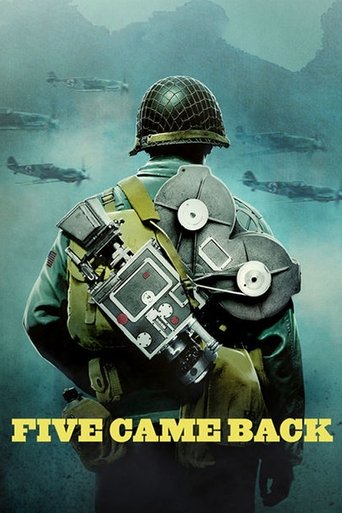
The extraordinary story of how Hollywood changed World War II – and how World War II changed Hollywood, through the interwoven experiences of five legendary filmmakers who went to war to serve their country and bring the truth to the American people: John Ford, William Wyler, John Huston, Frank Capra, and George Stevens. Based on Mark Harris’ best-selling book, “Five Came Back: A Story of Hollywood and the Second World War.”
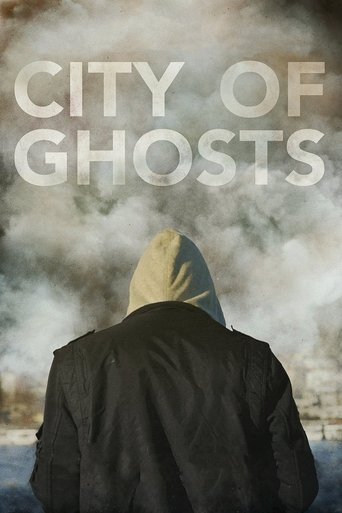
With unprecedented access, this documentary follows the extraordinary journey of “Raqqa is Being Slaughtered Silently”—a group of anonymous citizen journalists who banded together after their homeland was overtaken by ISIS—as they risk their lives to stand up against one of the greatest evils in the world today.

Documentary filmmaker Amy Berg investigates the life of 30-year pedophile Father Oliver O'Grady and exposes the corruption inside the Catholic Church that allowed him to abuse countless children. Victims' stories and a disturbing interview with O'Grady offer a view into the troubled mind of the spiritual leader who moved from parish to parish gaining trust ... all the while betraying so many.
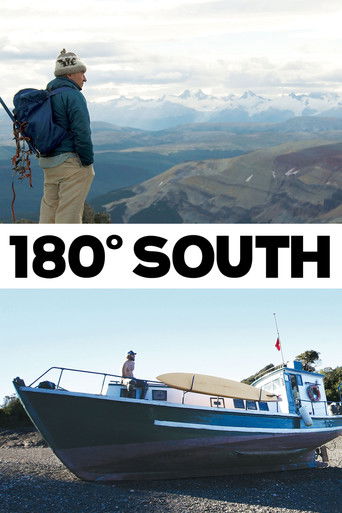
The film follows adventurer Jeff Johnson as he retraces the epic 1968 journey of his heroes Yvon Chouinard and Doug Tompkins to Patagonia.

A documentary about World War I with never-before-seen footage to commemorate the centennial of Armistice Day, and the end of the war.

The final entry in a trilogy of films produced for the U.S. government by John Huston. Some returning combat veterans suffer scars that are more psychological than physical. This film follows patients and staff during their treatment. It deals with what would now be called PTSD, but at the time was categorised as psychoneurosis or shell-shock. Government officials deemed this 1946 film counterproductive to postwar efforts; it was not shown publicly until 1981.

BBC Arena's documentary on the Dames of British Theatre and film featuring Maggie Smith, Eileen Atkins, Judi Dench and Joan Plowright on screen together for the first time as they reminisce over a long summer weekend in a house Joan once shared with Sir Laurence Olivier.
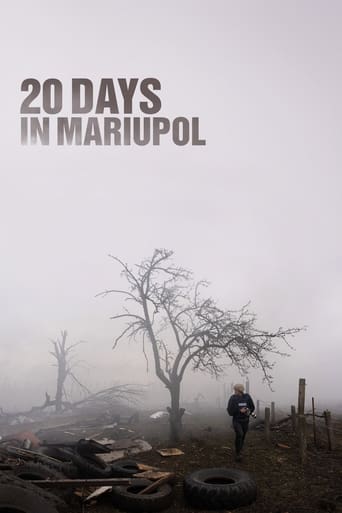
As the Russian invasion begins, a team of Ukrainian journalists trapped in the besieged city of Mariupol struggle to continue their work documenting the war's atrocities.
Similar titles

In this documentary, a group of young women discuss the varying definitions of the word "beautiful" and how these definitions have impacted them.
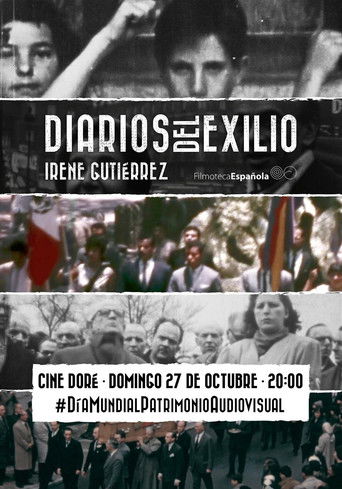
A documentary made with homemade videos of the spanish exiled due to the dictatorship in Spain from 1939 to 1977.
The Falklands War began on April 2, 1982, with the Argentine landing on the islands ordered by Leopoldo Fortunato Galtieri, and culminated with the cessation of hostilities between Argentina and the United Kingdom of Great Britain on June 14, 1982. Through dynamic editing and the use of archival materials, the documentary considers the war as part of our recent past, but also opens up multiple questions and reflections on contemporary society and the future projection of what such a conflict generates for us Argentines.
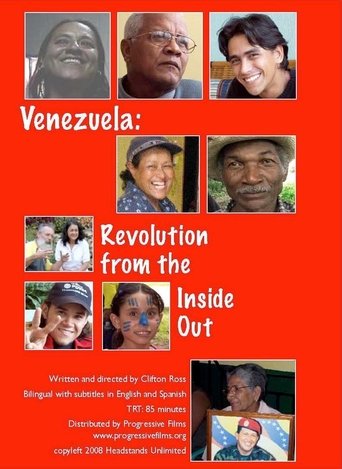
The film gives the history of Venezuela from 1989 to 2004 and then explores some of the projects sponsored by the Bolivarian government, including the financing of cooperatives as a way of building the Socialism of the 21st century.
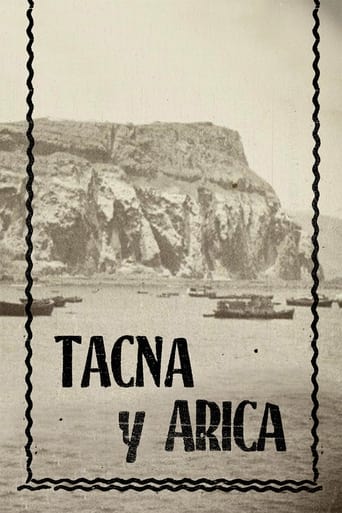
Propagandistic documentary aiming to demonstrate how vigorous and prosperous the provinces of Tacna and Arica were at that time, despite being in dispute, but under predominantly Chilean influence, investment, and administration.
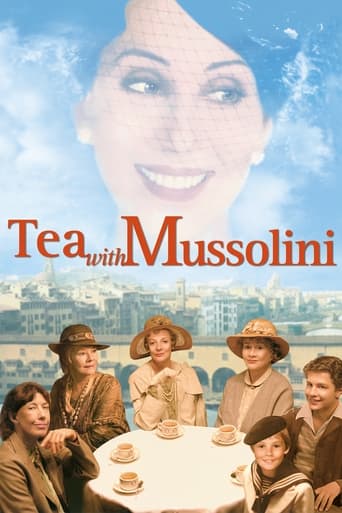
In 1930s fascist Italy, adolescent Luca just lost his mother. His father, a callous businessman, sends him to be taken care of by British expatriate Mary Wallace. Mary and her cultured friends - including artist Arabella, young widow Elsa, and archaeologist Georgie - keep a watchful eye over the boy. But the women's cultivated lives take a dramatic turn when Allied forces declare war on Mussolini.

An innovative and charismatic influencer is suddenly exiled from her community of creative partners and colleagues when she states an opinion that she did not know was “unacceptable” in their eyes.

ALLIES is a landmark documentary from 1983, made at the time of Bob Hawke’s unequivocal embrace of the American alliance.
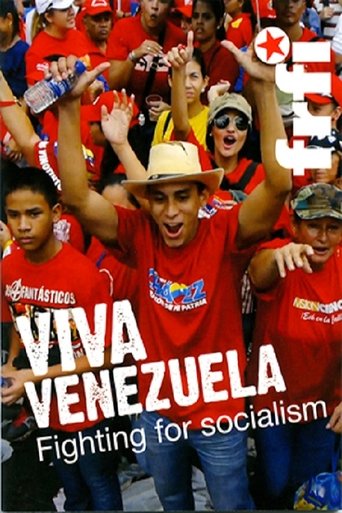
We live in a world dominated by crisis, imperialist war and exploitation. We're told there is no alternative to cuts, privatisation, hunger and homelessness. The Bolivarian Revolution illustrates what can be achieved when governments and people working together, put human need before capitalist profits. Despite Chavez's death in 2013, the process is being built every day by President Maduro and millions of Venezuelans working to create a society built on collective socialist organisation and production. Venezuela provides an inspiring example of how the fight against austerity can develop into a fight for socialism. This film takes you on that journey through the barrios, universities and workplaces to meet the political activists, students and workers who are changing their future. Alongside the achievements of socialist Cuba, Venezuela shows that not only is another world possible, but this world is being built today in Latin America.
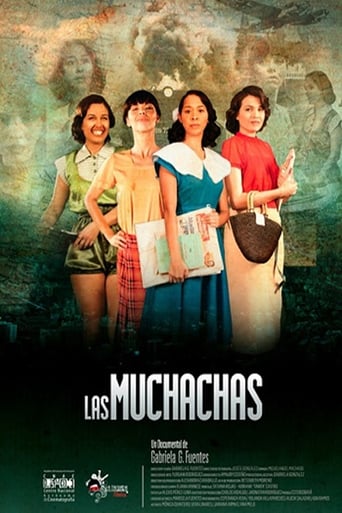
Four lucid grandmothers tell their story forgotten by history: the militancy and resistance of the young women of the leftist youth against the dictatorship of Marcos Pérez Jiménez.
By recounting their experiences with family, friends, lovers and country, a group of strangers examine what it means to be loved as Nigerians and as women. Through these conversations, they unpack cultural biases, shared realities and potential alternatives towards a safer, softer future.
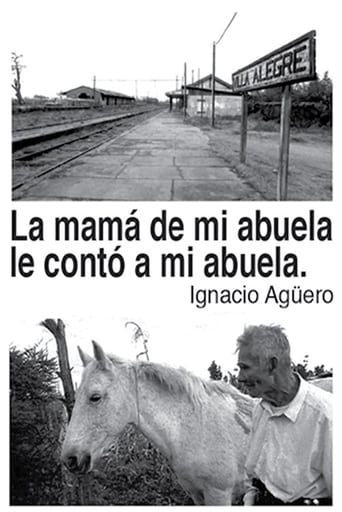
Gathered by a theater company, a small town in Chile called Villa Alegre, looks deep into its origins and myths to tell their own history through a play.
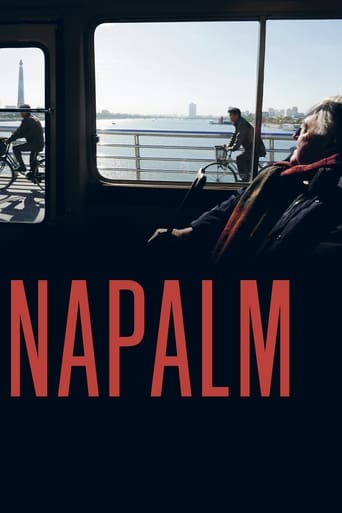
Napalm is the story of the breathtaking and brief encounter, in 1958, between a French member of the first Western European delegation officially invited to North Korea after the devastating Korean war and a nurse working for the Korean Red Cross hospital, in Pyongyang, capital of the Democratic People’s Republic of Korea.
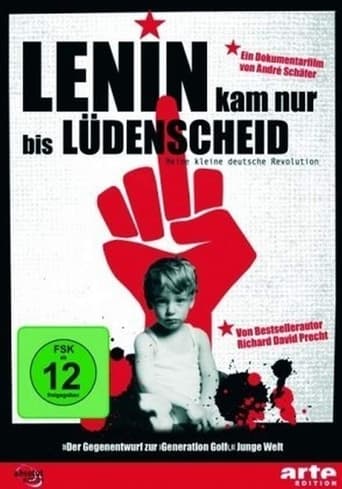
The free, almost naive view from the perspective of a child puts the "68ers" in a new, illuminating light in the anniversary year 2008. The film is a provocative reckoning with the ideological upbringing that seemed so progressive and yet was suffocated by the children's desire to finally grow up. With an ironic eye and a feuilletonistic style, author Richard David Precht and Cologne documentary film director André Schäfer trace a childhood in the West German provinces - and place the major events of those years in completely different, smaller and very private contexts.
Documentary film with play scenes about the rise and fall of the short-lived Bavarian Soviet Republic in 1919 from the perspective of various well-known poets and writers who experienced the events as contemporary witnesses.
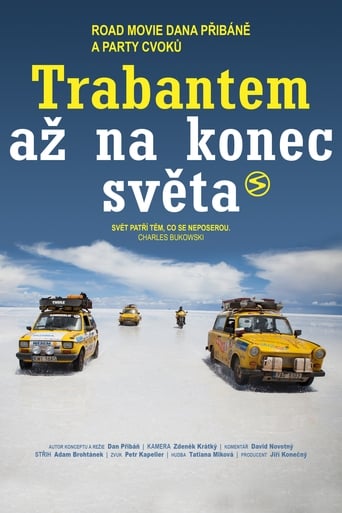
The third installment in Dan Přibáň's series of travel documentaries describes the author's journey with his friends across South America in vehicles that are often notorious but cult in their own way. The charming dynamics of the group on screen are further enhanced by the high-quality craftsmanship.

After the World War I, Mussolini's perspective on life is severely altered; once a willful socialist reformer, now obsessed with the idea of power, he founds the National Fascist Party in 1921 and assumes political power in 1922, becoming the Duce, dictator of Italy. His success encourages Hitler to take power in Germany in 1933, opening the dark road to World War II. (Originally released as a two-part miniseries. Includes colorized archival footage.)
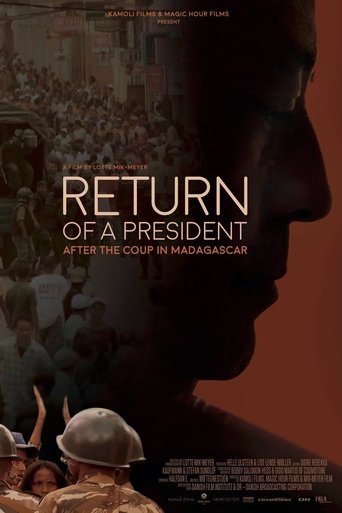
In a fascinating geopolitical drama, Danish filmmaker Mik-Meyer closely follows Ravalomanana as he attempts to return from exile in South Africa to Madagascar, under the threat of arrest and bodily harm.
A homeless man living in a encampment in Minneapolis tells his perspective on the ongoing crisis of homelessness.