
Slot in Memory
2013-03-05 · 3 min · Not rated
In Slot in Memory, a 2013 short from Syrian filmmaker Khaled Abdulwahed, images of war are only visible through a tiny crack in an otherwise dark frame. Abdulwahed cuts between this crack and simple footage of children from Lebanon’s Sabra and Shatila refugee camps playing happily on a swing. Abdulwahed has said he had initially set out to tell a more direct account of war and trauma, but because he was physically unable to reach warzones inside Syria, he felt he couldn’t do such a project justice. Instead, filming the kids, he discovered the swing they were playing on had a crack in it, which inspired him to make the visual connection with the obscured war footage.
Trailers are previews, not full movies.
No authorized playback source configured. Use the legal watch options below.
Production details
- Directors
- Khaled Abdulwahed
- Production companies
- Unavailable
- Countries
- Unavailable
- Status
- Released
Top Cast
Cast unavailable.
Title information and images are supplied by TMDb. Explore our discovery guide for advice on comparing metadata and legal viewing options.
Where to watch
Availability provided by JustWatch via TMDb. Offers can change. Provider links are listed on TMDb; full playback requires a separately authorized source.
Availability not listed for this country.
Seasons & episodes
Recommendations

A love letter from a young mother to her daughter, the film tells the story of Waad al-Kateab’s life through five years of the uprising in Aleppo, Syria as she falls in love, gets married and gives birth to Sama, all while cataclysmic conflict rises around her. Her camera captures incredible stories of loss, laughter and survival as Waad wrestles with an impossible choice– whether or not to flee the city to protect her daughter’s life, when leaving means abandoning the struggle for freedom for which she has already sacrificed so much.

Prelude to War was the first film of Frank Capra's Why We Fight propaganda film series, commissioned by the Pentagon and George C. Marshall. It was made to convince American troops of the necessity of combating the Axis Powers during World War II. This film examines the differences between democratic and fascist states.
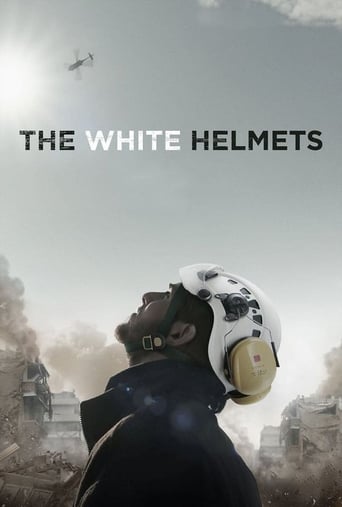
As daily airstrikes pound civilian targets in Syria, a group of indomitable first responders risk their lives to rescue victims from the rubble.

Amid the failing counteroffensive, a journalist follows a Ukrainian platoon on their mission to traverse one mile of heavily fortified forest and liberate a strategic village from Russian occupation. But the farther they advance through their destroyed homeland, the more they realize that this war may never end.
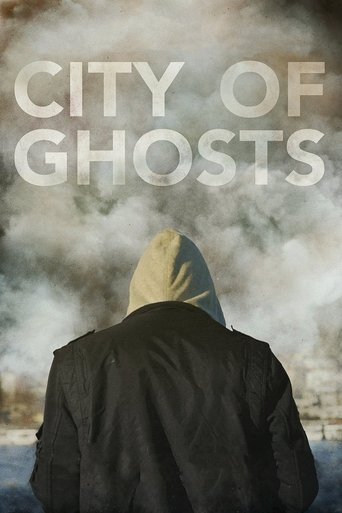
With unprecedented access, this documentary follows the extraordinary journey of “Raqqa is Being Slaughtered Silently”—a group of anonymous citizen journalists who banded together after their homeland was overtaken by ISIS—as they risk their lives to stand up against one of the greatest evils in the world today.

When Sgt. First Class Brian Eisch is critically wounded in Afghanistan, it sets him and his sons on a journey of love, loss, redemption and legacy.

“The Soviet Story” is a story of an Allied power, which helped the Nazis to fight Jews and which slaughtered its own people on an industrial scale. Assisted by the West, this power triumphed on May 9th, 1945. Its crimes were made taboo, and the complete story of Europe’s most murderous regime has never been told. Until now...

Pete Postlethwaite stars as a man living alone in the devastated future world of 2055, looking at old footage from 2008 and asking: why didn’t we stop climate change when we had the chance?
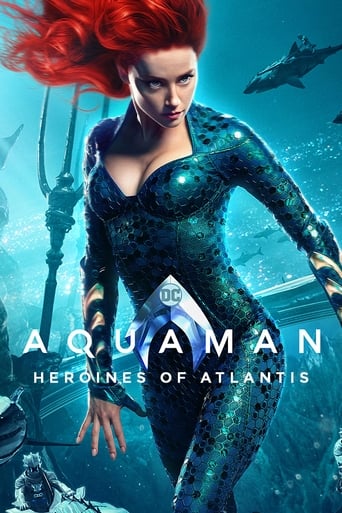
Amber Heard and Nicole Kidman discuss their characters Mera and Atlanna.

Daniel Craig candidly reflects on his 15 year adventure as James Bond. Including never-before-seen archival footage from Casino Royale to the upcoming 25th film No Time To Die, Craig shares his personal memories in conversation with 007 producers, Michael G Wilson and Barbara Broccoli.

The final entry in a trilogy of films produced for the U.S. government by John Huston. Some returning combat veterans suffer scars that are more psychological than physical. This film follows patients and staff during their treatment. It deals with what would now be called PTSD, but at the time was categorised as psychoneurosis or shell-shock. Government officials deemed this 1946 film counterproductive to postwar efforts; it was not shown publicly until 1981.

A purely observational non-fiction film that takes viewers into the ethically murky world of end-of-life decision making in a public hospital.
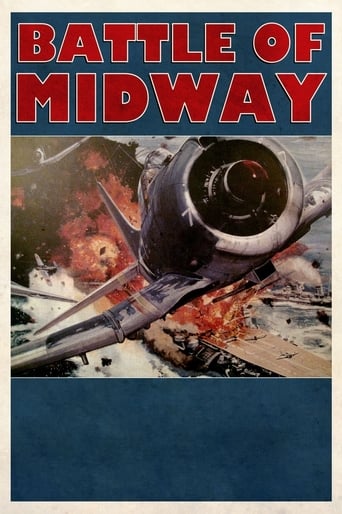
The Japanese attack on Midway in June 1942, filmed as it happened. Preserved by the Academy Film Archive, in partnership with Twentieth Century Fox Film Corporation, in 2006.
When Juan Catalan is arrested for a murder he insists he didn't commit, he builds his case for innocence around unexpected raw footage.
Filmed and edited in intimate vérité style, this movie follows visionary medical practitioners who are working on the cutting edge of life and death and are dedicated to changing our thinking about both.

A compilation of over 30 years of private home movie footage shot by Lithuanian-American avant-garde director Jonas Mekas, assembled by Mekas "purely by chance", without concern for chronological order.

A documentary about World War I with never-before-seen footage to commemorate the centennial of Armistice Day, and the end of the war.

A visual montage portrait of our contemporary world dominated by globalized technology and violence.
As the Russian invasion begins, a team of Ukrainian journalists trapped in the besieged city of Mariupol struggle to continue their work documenting the war's atrocities.
A look behind the lens of Christopher Nolan's space epic.
Similar titles
Experimental mash-up of circus and sideshow footage.
Samba, Popping, and Jazz. Through these dance styles and documentary interviews, Bodies That Tell Stories seeks to discuss the standardization and whitening of dances that had their roots in Black people.
Inspired by Lois Patiño's short movies project called "Paisaje-Duración" (Duration-Landscape) and Hiroshi Sugimoto's photo series "Seascapes", "Duração-Diferença" (Duration-Difference) reveals the difference through duration, through time; this short experimental movie seeks to capture, as Patiño and Sugimoto achived, the immanence as the entrance for something more - or something in between.
Canceled short film.
In 1999, 11-year-old Nisha Platzer lost her older brother, Josh, to suicide. Twenty years later, her search for a specialized medical treatment leads her to the door of someone who was once exceptionally close to Josh. And so it is that she finally has the chance to truly know her brother through his chosen family. Captured over five years in which synchronicities continually manifested, Platzer’s documentation of these encounters gently asserts that both grieving and healing are meant to be communal experiences.
A film about peace, love and war. Dedicated to the 100th anniversary of the end of the Civil War in Russia. The film takes place at the end of the summer of 1917, when Russia and the whole world were at a crossroads between two eras. None of the people could even imagine how much his life would change in the very near future. In a strange way, the atmosphere of the film echoes our current reality and what is happening in Russia today. According to the form of visualization, the film belongs to experimental mockumentary cinema. To give greater authenticity to what is happening on the screen, the shooting was carried out on black-and-white negatives of 16 and 35 mm, hand-operated cameras were used and the material was developed in manual spiral tanks. The documentary chronicle of the Kolchak army of 1919 and the White army in the Far East of 1922 is embedded in the finale of the film.
Pictures taken between France and Mexico running at 8 frames per second.
In early 2020, MUTA - International Festival of Audiovisual Appropriation and Cine Íntimo rescued and digitised a Peruvian archive of orphaned 8mm and Super 8 home movies. With the aim of restoring these lost memories, we sent the images around the world. This omnibus film is the result of the intervention of this material, by 14 experimental filmmakers. Fourteen perspectives and ways of experiencing appropriation. Fourteen variations on the intimate.
Made with virtually no budget during COVID-19 quarantine in 2020, IRANIAN LIVES MATTER abstractly recounts the true story of what occurred in Iran during the November 2019 protests, sparked by a surprise hike in gasoline prices, which quickly spread across the entire nation and was subsequently crushed by the dictator's iron fist, resulting in the death of approximately 1500 protesters, as reported by Reuters. IRANIAN LIVES MATTER is an experimental documentary, an audio-visual endurance test that audibly takes its audience through the chaos in the streets of Iran as the brutal regime cracks down on Iranian protesters, while visually showing the hands of the dictatorship as it crosses out 1500 lives one by one to further emphasize the scale of the massacre and show to a world desensitized to news of mass killings in the Middle East what the term "1500 dead" truly means.
Hercules travels by bicycle from Krefeld on the Lower Rhine to Olympus, the throne of ancient deities. The Hercules myth, as a primal myth of male power, is questioned through biographical reflections and the staging of mythological echoes. The dramaturgical structure of the hero's journey disintegrates in a multi-material perspective into questions about male identity, ideals and remorse.
From a high school art class to a local radio station, the day-to-day lives of several women coalesce into a poetic documentation of women’s presence and physicality across everyday spaces.
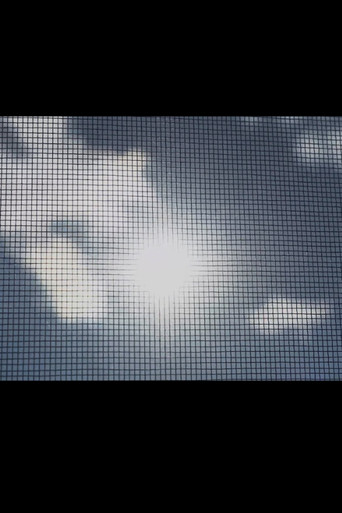
Two layers of mesh overlap on the left. One rotates over the course of a day, its speed shifting gradually. On the right, a single mesh remains still. Digital interference is continuously superimposed onto the physical rotation. Where no rotation occurs, motion persists through digital interference alone. Under different conditions, the two images arrive at similar shimmering forms. The sound drifts with the sky. Tremolo. Pulse.

Memory is a collaboration with musician Noah Lennox (Panda Bear), exploring the relationship between a musician and filmmaker and their personal reflection on memories. From Super 8 home movies and entirely handmade, this film explores familiar memories, the present moment combined with past experiences and how it all seems to evade from our present memory.
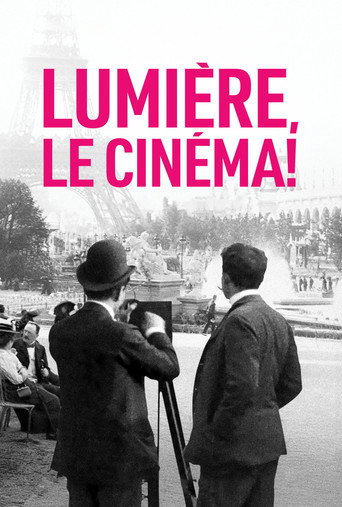
In one of those wonderful coincidences of history, lumière, the French word for “light,” was also the last name of brothers Auguste and Louis, whose brilliant invention, the cinematograph, helped to inaugurate the most beloved art form of the last 130 years. Institute Lumière director Thierry Frémaux uses Lumière, Le Cinema! to guide the viewer through over a hundred shorts—some famous, some forgotten, some never before seen—directed by Lumière and company. In the process, Frémaux illuminates how the brothers employed the camera as a creative instrument as they (and their operators) mastered framing, staging, and subject selection for quotidian and exotic microdocumentaries as well as the first ever fictional motion pictures. The result is not only a glorious re(telling) of the genesis of cinema but a profound meditation on the beautiful world captured—and the mysterious world imagined—by the Lumières.
Then, now, where? how?
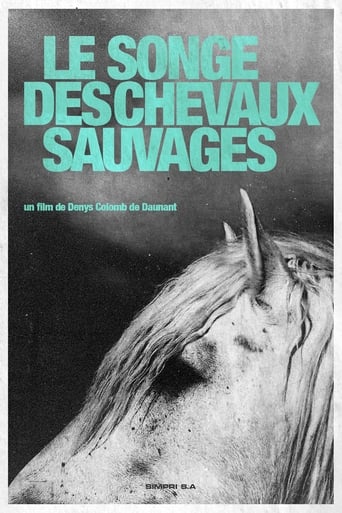
The horses in Denys Colomb Daunant’s dream poem are the white beasts of the marshlands of the Camargue in South West France. Daunant was haunted by these creatures. His obsession was first visualized when he wrote the autobiographical script for Albert Lamorisse’s award-winning 1953 film White Mane. In this short the beauty of the horses is captured with a variety of film techniques and by Jacques Lasry’s beautiful electronic score.

Glittering illusions of vectorized providence struggle to guide the viewer toward a path of re-enchantment.
People leave (and return) from a church after Sunday Mass more than 120 years ago. The creaking of time and the darkness behind the ancient ritual of praying for our existence dance eternally, like a river of souls. Liz Taylor's visualy noisy reinterpretation of the film "Congregation Leaving St. Mary's Pro-Cathedral, Dublin" (1901) by the Edwardian filmmaking duo James Kenyon and Sagar Mitchell.
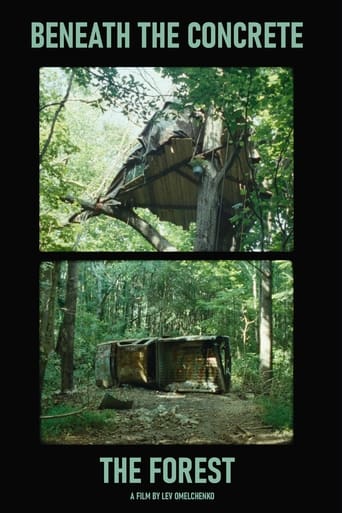
“Beneath the Concrete, The Forest” is a short experimental documentary that takes us inside an ongoing struggle inside the city of Atlanta, GA between two sides to determine the future of Weelaunee, the biggest contiguous urban forest in the country.