Apocalypse: Never-Ending War (1918-1926)
2018-11-07 · 45 min / episode · ★ 7.8
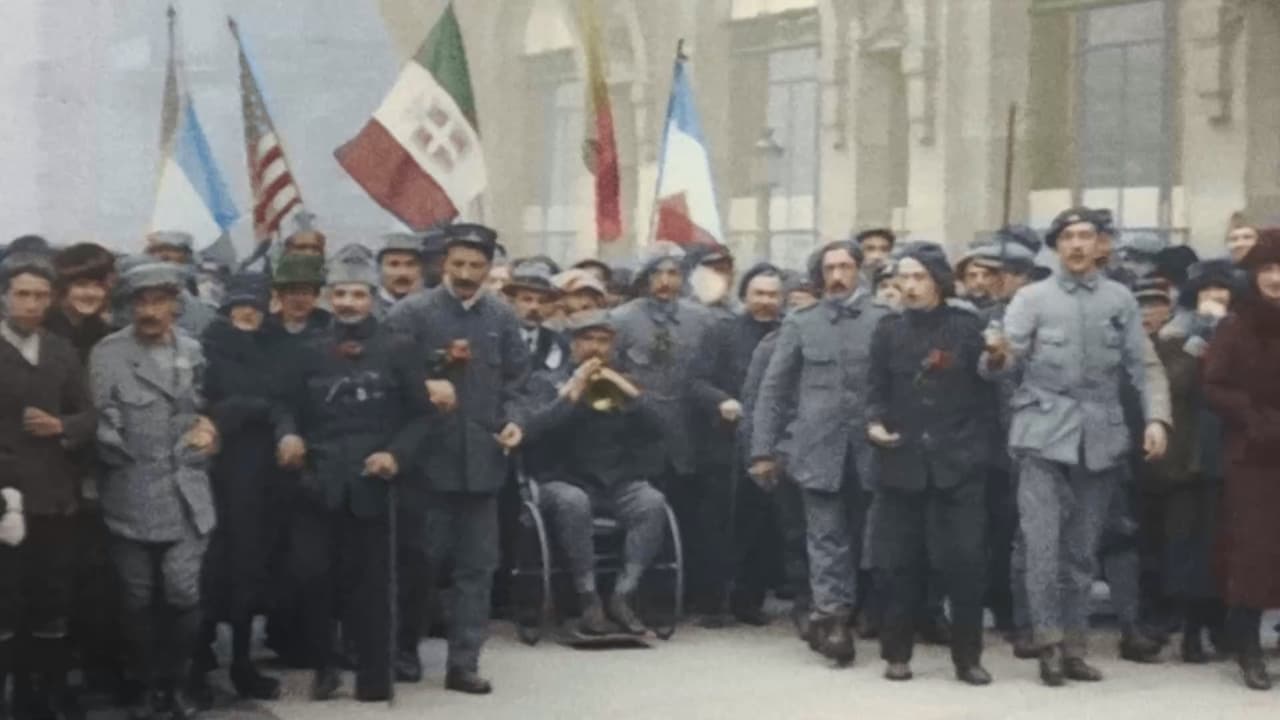
November 11, 1918. The world emerges from the most horrific conflict ever known. While leaders of the victorious countries design a new world order, traumatized societies struggle to find their footing. In the aftermath of war the Russian, German, Austro-Hungarian and Ottoman Empires fall apart, currencies fluctuate wildly, and vast numbers of refugees flee misery. Before long, age-old hatreds, fears, and resentments resurface and drive the world to the brink of a new apocalypse.
Trailers are previews, not full movies.
No authorized playback source configured. Use the legal watch options below.
Production details
- Creators
- Isabelle Clarke, Daniel Costelle, Mickaël Gamrasni
- Production companies
- Idéacom International, CC&C, ICI RDI
- Countries
- France, Canada
- Status
- Ended
Top Cast
 Mathieu KassovitzNarrator (voice)
Title information and images are supplied by TMDb. Explore our discovery guide for advice on comparing metadata and legal viewing options.
Where to watch
Availability provided by JustWatch via TMDb. Offers can change. Provider links are listed on TMDb; full playback requires a separately authorized source.
Availability not listed for this country.
Seasons & episodes
Recommendations
WWII in HD is a 10-part American documentary television miniseries that originally aired from November 15 to November 19, 2009 on the History Channel. The program focuses on the firsthand experiences of twelve American service members during World War II, including an Army nurse, a member of the Tuskegee Airmen, a second generation Japanese American and prisoner of war, and an Austrian Jewish immigrant. The twelve members recorded their time in both theaters and some had later interviews; found footage from the battlefield was paired with the stories of the twelve service members. The episodes premiered on five consecutive days, with two episodes per day. The series is narrated by Gary Sinise and was produced by Lou Reda Productions in Easton, Pennsylvania, United States.
The story of this fantastic period of history between 1945 and 1991, which was defined by the confrontation of two worlds and two systems. The capitalist West, dominated by the ever-powerful United States, is pitted against the Communist East, the Soviet Empire.
World War II In Colour is a 13-episode television documentary miniseries recounting the events of World War II narrated by Robert Powell. The show covers the Western Front, Eastern Front, and the Pacific War. It is on syndication in America on the Military Channel. This series is in full color, combining both original and colorized footage.

Using highly advanced colourisation techniques, critical moments from World War II, from Stalingrad to The Battle of Britain, are shown in a whole new light.
This captivating docuseries examines Winston Churchill's pivotal role in World War II and the formative events that made him an ideal leader for the era.
The story of the Second World War through the personal accounts of a handful of men and women from four American towns. The war touched the lives of every family on every street in every town in America and demonstrated that in extraordinary times, there are no ordinary lives.
Explores WWII from Germany's invasion of Poland through the atomic age, examining pivotal battles, wartime leaders like Churchill and Roosevelt, and the human cost of total war.
Surviving power struggles, betrayals and plots, Hitler's inner circle of Nazi leaders seizes control of Germany and designs its disastrous future.
A documentary series that gives a historical account of the events of World War II, from its roots in the 1920s to the aftermath and the lives it profoundly influenced.
Through vividly enhanced archival footage and voices from all sides of the conflict, this docuseries brings WWII to life like never before.
Colorized historical footage in ascending order of World War 1. Not only the relatively known Flanders and France battles, but also the generally unknown Italian-Austrian, German-Polish-Russian, Japanese-German, Ottoman Empire- Allied and African German Colonies, and other unknown or forgotten fronts and battles.
Five acclaimed contemporary directors tell the story of five legendary Hollywood filmmakers who enlisted in the armed forces to document World War II.
Oliver Stone's re-examination of under-reported events in American history.
A six-part French documentary about the Second World War composed exclusively of actual footage of the war as filmed by war correspondents, soldiers, resistance fighters and private citizens. The series is shown in color, with the black and white footage being fully colorized, save for some original color footage. The only exception to the treatment are most Holocaust scenes, which are presented in the original black and white.

Explore Marvel’s rich legacy of pioneering characters, creators and storytelling to reflect the world outside your window. Each documentary, helmed by a unique filmmaker, showcases the intersections of storytelling, pop culture, and fandom within the Marvel Universe.
The documentary series explores different political figures throughout history.
A worldwide guided tour of the greatest movies ever made and the story of international cinema through the history of cinematic innovation.
An in-depth look at the history and pop cultural significance of horror films.
Don Wildman unearths relics from the world's greatest institutions to reveal secrets from the past. He examines each artifact to illuminate history's most incredible triumphs, sensational crimes and bizarre encounters.
The story of three decades of war told through the eyes of various men who were its key players: Roosevelt, Hitler, Patton, Mussolini, Churchill, Tojo, DeGaulle and MacArthur. The series examines the two wars as one contiguous timeline starting in 1914 and concluding in 1945 with these unique individuals coming of age in World War I before ultimately calling the shots in World War II.
Similar titles
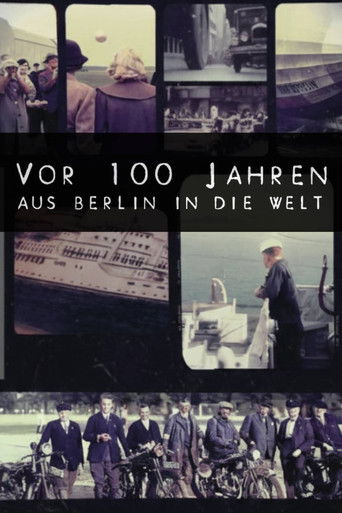
A century ago, the world experienced a revolution in mobility. Cities like Berlin grew rapidly, with the Graf Zeppelin soaring over the city in 1928, sparking excitement for airship travel. These majestic airships made ocean crossings faster and more luxurious, and even enabled polar expeditions. At the same time, automobiles and motorcycles became staples for many, although streets became congested. Women like Amelia Earhart and Elly Beinhorn broke barriers in aviation, inspiring new possibilities for both genders in the field of technology. While air travel grew in popularity, trains remained the main long-distance transport. The era also saw an explosion of new mobility options, with faster, cheaper ways to travel across the globe, making the world seem smaller and more connected. However, this golden age of mobility would be cut short by the outbreak of World War II.
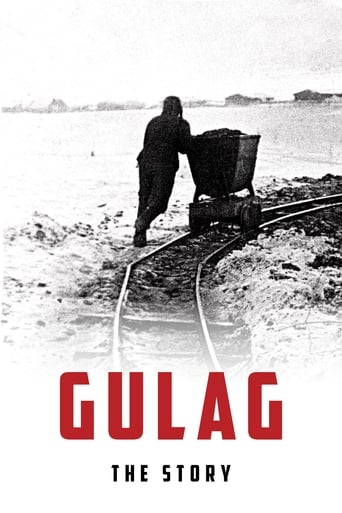
A major political, historical, human and economic fact of the 20th century, the Gulag, the extremely punitive Soviet concentration camp system, remains largely unknown.
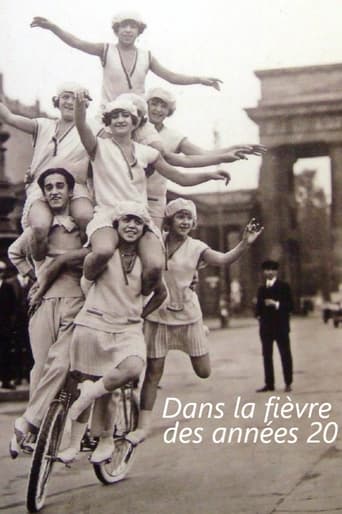
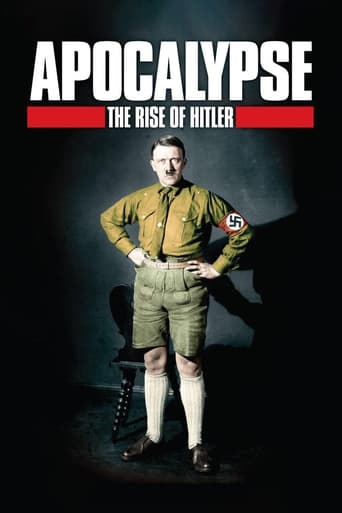
Adolf Hitler (1889-1945) was a mediocre who rose to power because of the blindness and ignorance of the Germans, who believed he was nothing more than an eccentric dreamer. But when the crisis of 1929 devastated the economy, the population, fearful of chaos and communism, voted for him. And no one defended democracy. As the dictatorship extended its relentless shadow, the leader claimed peace, but was preparing the Apocalypse.
From the beginnings of passenger aviation, through militarization during the Second World War, to its development into one of the world’s leading aviation companies: this two-part documentary focuses on the history of Lufthansa and, using previously unpublished archival footage and eyewitness accounts, reveals unknown aspects of the German airline as well as its journey from its founding to the present day.
The history of the rise, rule and fall of the Eighteenth Amendment to the United States Constitution and the entire era it encompassed (1920-33). After nearly a century of activism, Prohibition was intended to improve the lives of all citizens by protecting individuals, families and society at large from the devastating effects of alcohol abuse; but paradoxically it made millions of people rethink their definition of morality.
Three soldiers who met while each was serving a different partition of Poland form a friendship that lasts after their homeland regains independence.
Azize finds herself with her 3 children and mother-in-law in a difficult fight. She raises her children while fighting the difficulties of the war period and her husband's absence whom she loves more than anything. It's about war, love, greed, treason and sacrifice.


The action begins in 1912. The heroes of the painting - neighbors, villagers, Cossacks from the Tatarsky farm of the village of Vyoshenskaya - have lived on this land for centuries, they are connected by kinship, friendship, love, common labor and military service. But this durable and self-sufficient world with its unique way of life, habits and a special system of views and values is collapsing under the onslaught of bloody turmoil and revolution. Don is divided by hatred. The seemingly immutable age-old foundations of Don life - land, farm, family, military duty - are dissolving in the crucible of fratricidal war. The Melekhov, Korshunov, and Astakhov families are involved in the cycle of military and political events.

Winston Churchill: The Wilderness Years is an 8-part 1981 drama serial based on the life of Winston Churchill, and particularly his years in enforced exile from political position during the 1920s and 30s. It was written and directed by Ferdinand Fairfax and Churchill was played by Robert Hardy. Hardy's brilliant performance as Churchill won critical acclaim and a BAFTA award in 1982. He reprised the role in The Sittaford Mystery, Bomber Harris and War and Remembrance and at the 50th anniversary celebrations of the end of World War II in 1995 when he quoted a number of Churchill's wartime speeches in character.
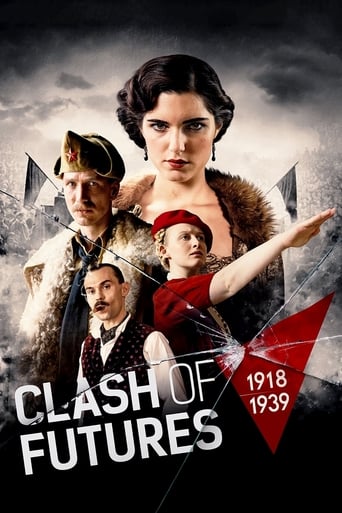
From the armistice of 1918, which marked the end of the First World War, to the declaration of war in September 1939, the beginning of the Second World War: an era during which there was an aspiration to create a new world, prosperous and at peace, but which provoked a new tragedy, seen through the destinies of thirteen people who were both actors and witnesses of the upheavals of the so-called inter-war period.
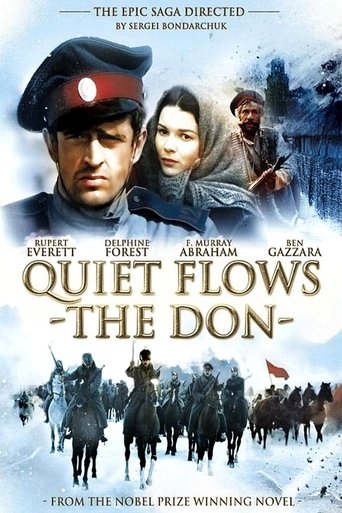
Against the backdrop of World War I and the Bolshevik Revolution, a young Cossack warrior navigates love, loyalty, and survival as his world transforms during the civil war that tears his homeland apart.
A follow up to The Great War, this series covers the years 1918 to 1939. Using archival footage and interviews with veterans, the history series includes narration by Michael Redgrave. The rise of Hitler in the ashes of 1918 through the Great Depression this series offers viewers a chance to learn the cold, hard truth about the advent of World War ll.
Series looking at the 1920s and 30s, which creates a portrait of an age so daring, influential and exciting that it still shapes who we are today.
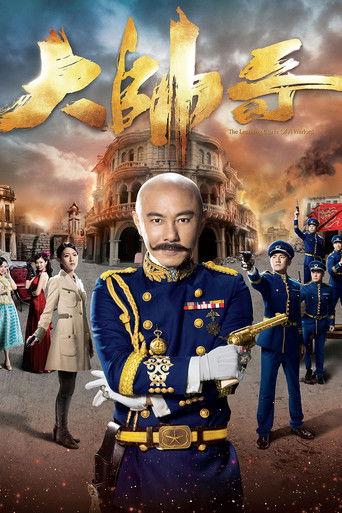
During the chaotic Warlord Era, an eccentric soldier has a sudden stroke of luck and is promoted seven ranks to Marshal. He, along with his three silly friends, do all sorts of bizarre things. Meanwhile, externally, three wild warlords are eyeing him like a tiger. Internally, he doesn't know whether any of his three wives are spies. Ultimately, a battle for hegemony unfolds, with shells flying and dilemmas between friends.
Thirties in Colour: Countdown to War takes black-and-white films from the era and colourises the footage, bringing the past vividly back to life.

The remarkable story of the Irish War of Independence (1919-1922) which resulted in the formation of the Irish Free State and became the model for other British colonies to gain their independence.
