

Everything and Nothing
2011-03-21 · 60 min / episode · ★ 7.5
Two-part documentary which deals with two of the deepest questions there are - what is everything, and what is nothing? Professor Jim Al-Khalili searches for an answer to these questions as he explores the true size and shape of the universe and delves into the amazing science behind apparent nothingness.
Trailers are previews, not full movies.
No authorized playback source configured. Use the legal watch options below.
Production details
- Creators
- Unavailable
- Production companies
- BBC Four, Furnace
- Countries
- United Kingdom
- Status
- Ended
Top Cast
 Jim Al-KhaliliSelf - Presenter
Title information and images are supplied by TMDb. Explore our discovery guide for advice on comparing metadata and legal viewing options.
Where to watch
Availability provided by JustWatch via TMDb. Offers can change. Provider links are listed on TMDb; full playback requires a separately authorized source.
Streaming
Magellan TV, Xive TV Documentaries Amazon Channel
With ads
Tubi TV
View authorized watch options on TMDbSeasons & episodes
Recommendations
Witness the remarkable story of our universe over billions of years and its inextricable link to life on Earth in this sweeping documentary series.
A users' guide to the cosmos, from the Big Bang to galaxies, stars, planets and moons: where did it all come from and how does it all fit together? A primer for anyone who has ever looked up at the night sky and wondered.
Filmed across six continents, this docuseries uses cutting-edge camera technology to capture animals' nocturnal lives, revealing new behaviours filmed in full color like never before.
Will Smith whose curiosity and wonder is positively infectious—is guided by National Geographic Explorers traveling to different corners of the world to get up close and personal with the weirdest, most unusual, dangerous and thrilling spectacles of the planet.
Hosted by Morgan Freeman, Through the Wormhole explores the deepest mysteries of existence - the questions that have puzzled mankind for eternity. What are we made of? What was there before the beginning? Are we really alone? Is there a creator? These questions have been pondered by the most exquisite minds of the human race. Now, science has evolved to the point where hard facts and evidence may be able to provide us with answers instead of philosophical theories. Through the Wormhole brings together the brightest minds and best ideas from the very edges of science - Astrophysics, Astrobiology, Quantum Mechanics, String Theory, and more - to reveal the extraordinary truth of our Universe.
PBS' premier science series helps viewers of all ages explore the science behind the headlines. Along the way, NOVA demystifies science and technology, and highlights the people involved in scientific pursuits.
Utilizing the latest scientific innovations and leading-edge filmmaking technology, this documentary reveals the secret powers and super-senses of the world’s most extraordinary animals, and invites viewers to see and hear beyond normal human perception to experience the natural world as a specific species does — from seeing flowers in bee-vision to eavesdropping on a conversation between elephant seals to soaring the length of a football field with glow-in-the-dark squirrels.
A cinematic experience bringing you the most amazing human stories in the world. Humans and wildlife surviving in the most extreme environments on Earth.
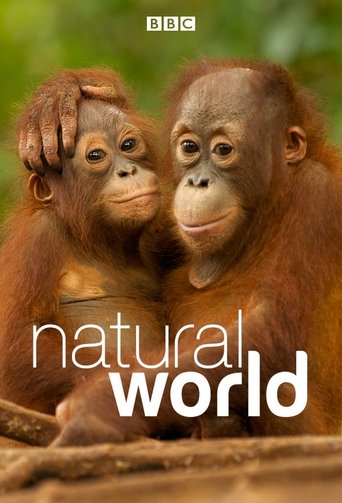
Natural World is a nature documentary television series broadcast annually on BBC Two and regarded by the BBC as its flagship natural history brand. It is currently the longest-running series in its genre on British television, with more than 400 episodes broadcast since its inception in 1983. Natural World is produced by the BBC Natural History Unit in Bristol, but individual programmes can be in-house productions, collaborative productions with other broadcasters or films made and distributed by independent production companies and purchased by the BBC. Natural World programmes are often broadcast as PBS Nature episodes in the USA. Since 2008, most Natural World programmes have been shot and broadcast in high definition.
Consistently stunning documentaries transport viewers to far-flung locations ranging from the torrid African plains to the chilly splendours of icy Antarctica. The show's primary focus is on animals and ecosystems around the world. A comic book based on the show, meant to be used an as educational tool for kids, was briefly distributed to museums and schools at no cost in the mid-2000s.

The documentary takes viewers through Janet Jackson's life and career, contain never-before-seen footage, and feature home videos from the legendary artist. Jackson discusses her controversial 2004 Super Bowl halftime show performance with Justin Timberlake, her father Joe Jackson, the death of her brother Michael Jackson, and more.
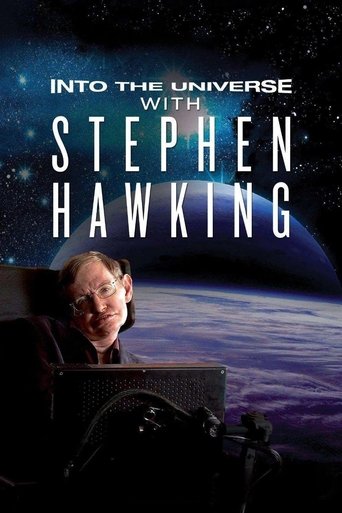
Hawking gives us the ultimate guide to the universe, a ripping yarn based on real science, spanning the whole of space and time -- from the nature of the universe itself, to the chances of alien life, and the real possibility of time travel.
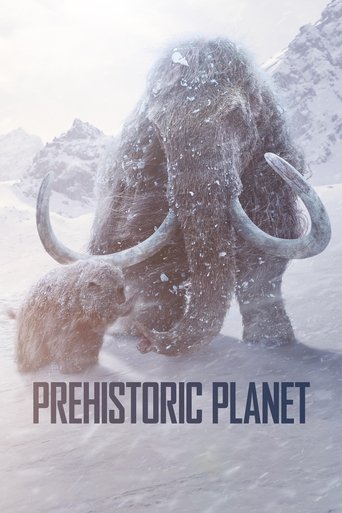
Experience the wonders of our world like never before in this epic series from Jon Favreau and the producers of Planet Earth. Travel back 66 million years to when majestic dinosaurs and extraordinary creatures roamed the lands, seas, and skies.
Experience our planet's natural beauty and examine how climate change impacts all living creatures in this ambitious documentary of spectacular scope.
Professor Brian Cox reveals how the fundamental scientific principles and laws explain not only the story of the universe but also answer mankind's greatest questions.
David Attenborough celebrates the amazing variety of the natural world in this epic documentary series, filmed over four years across 64 different countries.
Shot from land and air, in trees and cliff-blinds, on ice floes and underwater, this documentary tells the powerful stories of many of the planet's species and their movements, while revealing new scientific insights with breathtaking high-definition clarity and emotional impact. The beauty of these stories is underscored by a new focus into these species; fragile existence and their life-and-death quest for survival in an ever-changing world.
Infographics and archival footage deliver bite-size history lessons on scientific breakthroughs, social movements and world-changing discoveries.
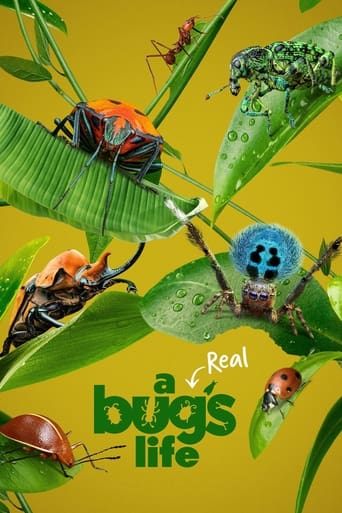
Enter an unseen micro-verse where miniature heroes use amazing superpowers to survive in a series of spellbinding dramas.
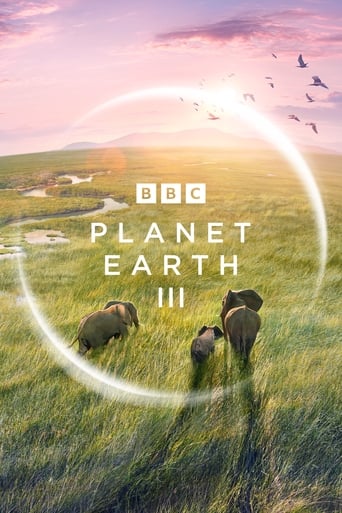
Journeying to the far reaches of our planet, this eight part series follows some of the world's most amazing species, telling extraordinary stories that are dramatic, thrilling, funny and sometimes heart-breaking, but always full of hope.
Similar titles
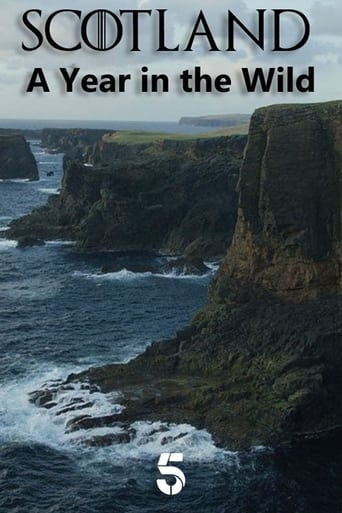
This four-part nature series reveals the extraordinary stories of Scotland’s secret wild places and the unexpected animals that live there. Scotland hosts a spectacular array of wildlife, from highland red deer, white-tailed eagles, red squirrels and pine martens to coastal dwelling puffins, grey seals, otters, and even killer whales. Stretching from the Shetlands to the south of the country, each episode focuses on how animals strive to survive through four very different seasons in one epic year, dominated by a maritime climate that’s both punishing and unpredictable, with their lives always at the mercy of the elements.
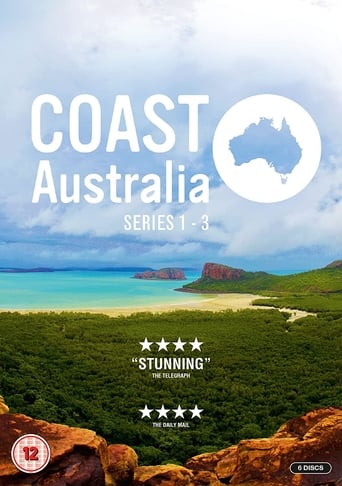
Coast Australia follows renowned Scottish archaeologist and historian Neil Oliver on his very first trip to Australia, as he and a diverse group of co-hosts gather stories about our spectacular coastline: the history, the people, the archaeology, the geography and the marine life, investigating interesting and little known facts along the way. Oliver’s co-hosts, all experts in their field, are journalist and Australian arts and culture specialist Miriam Corowa, environmentalist Professor Tim Flannery, marine scientist Dr Emma Johnston, anthropologist Dr Xanthe Mallett and television presenter and landscape architect Brendan Moar.

Three-part series that looks at a year in Alaska, revealing the stories of pioneering Alaskans, both animal and human, as they battle the elements and reap the benefits of nature's seasonal gold rush.
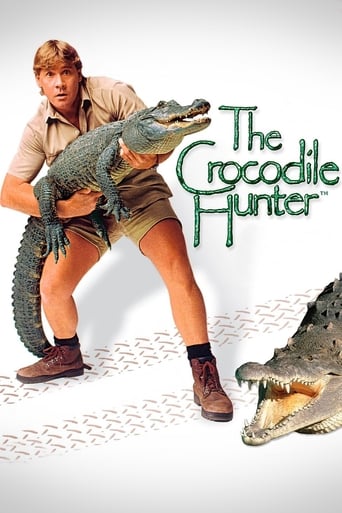
Australian host Steve Irwin and his wife Terri run a wildlife refuge. Their shared passion is educating the world about wildlife, including the much feared crocodile and numerous venomous snakes. Steve's specialty is the capture and relocation of crocodiles. No animal appears too threatening to Steve, his true respect for animals is the foundation for everything he does.
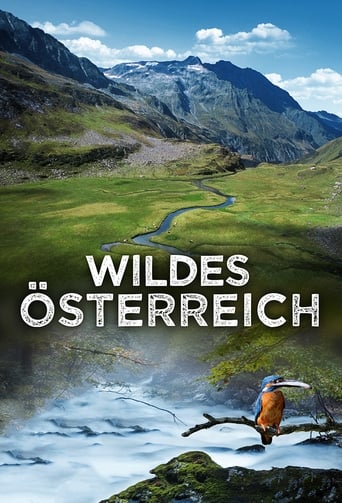
One force determines a country's fate more than any other: Water. Austria's love-affair with water has given her unique and amazing landscapes and biospheres, carved out by Alpine glaciers, ancient seas and mighty rivers, home to iconic animals like eagles, ibex, otters and deer. But this country has wildlife surprises, too. The days are gone when raging oceans brought giant sharks to her primeval shores, but there's an odd little survivor from those times: a three-eyed hermaphrodite, maybe the oldest animal on the planet. The tadpole shrimp lives in pools and puddles, until they dry out. Its eggs can stay dormant for decades or centuries, till water brings them to life. At a pinch, an adult can even fertilize itself - a single survivor guaranteeing future generations. Goldeneye ducks breed in abandoned woodpecker holes high in trees. Once the last sibling has hatched, the ducklings follow their mother in a leap of faith of up to ten meters to the river below. Two months later, they will finally learn to fly! The Bullhead, a fish that will never master the art of swimming, lives in brooks and creeks at up to 2,000 meters. It claws its way upstream, digging its fins into the gravelly riverbed. From ice caves, crystalline mountain springs and spectacular waterfalls, down to Lake Neusiedl, world-famous bird sanctuary on the edge of the endless Eurasian steppe: This epic two-part documentary celebrates Austria's most precious landscapes and her wildlife's unrivaled beauty.
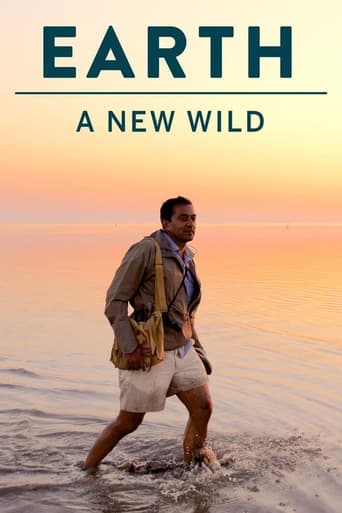
A fresh look at humankind’s relationship to the planet’s wildest places and most fascinating species. Using advanced filming techniques, this series will provide visuals as stunning as the best natural history programs. Distinguishing itself from nearly all other nature films, however, the series turns the cameras around, showing the world as it really is—with humans in the picture.
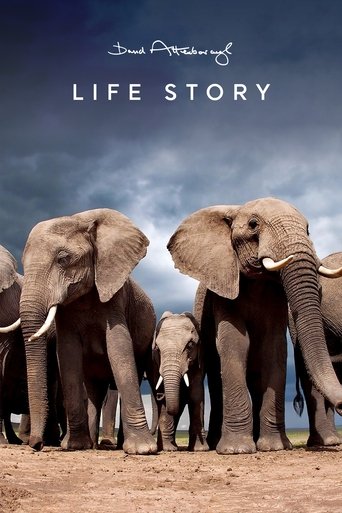
The remarkable and often perilous story of the journey through life. It is a story that unites each of us with every animal on the planet, because we all set out on this journey from the moment we are born. For animals there is just one goal in life – to continue their bloodline in the form of offspring. This series follows that journey through its six crucial stages: first steps, growing up, finding a home, gaining power, winning a mate and succeeding as a parent.
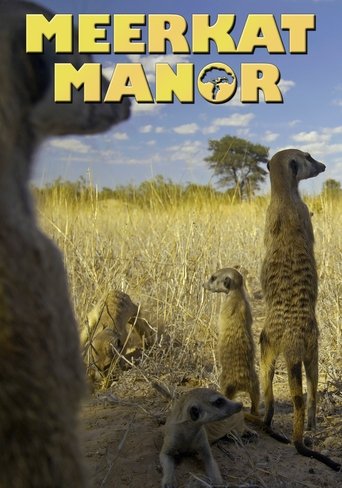
Meerkat Manor is a British television programme produced by Oxford Scientific Films for Animal Planet International that premiered in September 2005 and ran for four series until its cancellation in August 2008. Blending more traditional animal documentary style footage with dramatic narration, the series told the story of the Whiskers, one of more than a dozen families of meerkats in the Kalahari Desert being studied as part of the Kalahari Meerkat Project, a long-term field study into the ecological causes and evolutionary consequences of the cooperative nature of meerkats. The original programme was narrated by Bill Nighy, with the narration redubbed by Mike Goldman for the Australian airings and Sean Astin for the American broadcasts. The fourth series, subtitled The Next Generation, saw Stockard Channing replacing Astin as the narrator in the American dubbing.
Horizon tells amazing science stories, unravels mysteries and reveals worlds you've never seen before.


Bill Pullman introduces and narrates this four-part documentary on the world's first national park, Yellowstone.
Experience the wonders of our world like never before in this epic series from Jon Favreau and the producers of Planet Earth. Travel back 66 million years to when majestic dinosaurs and extraordinary creatures roamed the lands, seas, and skies.
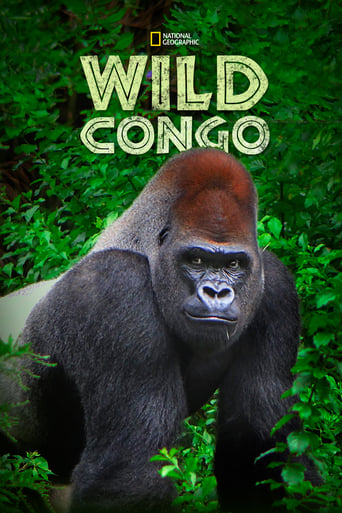
The Congo: more powerful and dangerous than any other river, yet a sanctuary and home for some of the most wonderful creatures on our Earth.
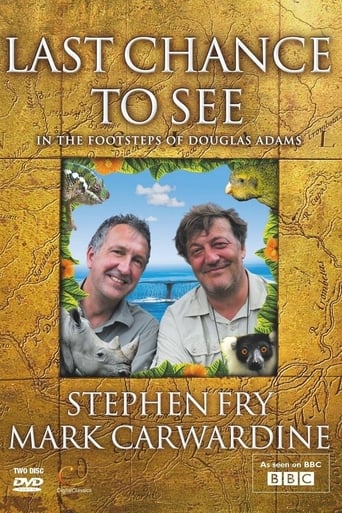
A follow-up to the 1990 Radio 4 series in which the late Douglas Adams and Mark Carwardine travelled around the world in search of endangered species. 20 years later Stephen Fry and Mark Carwardine go back to see what has become of the animals in two decades, and to discover what has affected their fortunes.



Explore six of the last untouched locations on earth. The documentary series presents life as nature intended, following the unique way wildlife has adapted to these environments and continues to rise to new challenges over the course of a year.
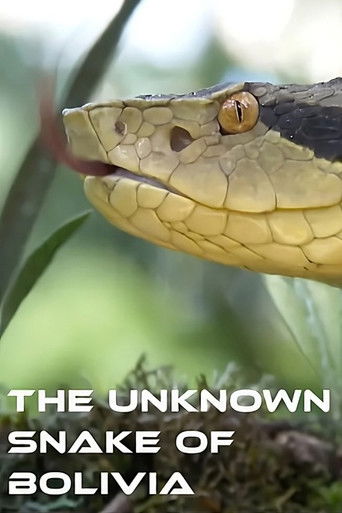
A thrilling expedition across Bolivia in search of the most venomous snakes in this remote country. The main goal is to discover a new species unknown to science: a large pitviper that has not been classified yet. It will be tracked down and filmed alive for the first time. Spanish herpetologists Juan Timms and Jairo Cuevas embark on a perilous expedition across remote Bolivia, determined to capture the country's most venomous snakes. Their ultimate prize? Discovering a new, unclassified species of massive pitviper, known only from a single photograph.