

Diomedes, el Cacique de La Junta
2015-01-13 · 40 min / episode · ★ 7.2
The life and work of vallenato musician Diomedes Díaz, better known as 'The Chief of the Junta'.
Trailers are previews, not full movies.
No authorized playback source configured. Use the legal watch options below.
Production details
- Creators
- Juan Manuel Cáceres Niño, Andrés Salgado
- Production companies
- RCN
- Countries
- Unavailable
- Status
- Ended
Top Cast
 Orlando LiñánDiomedes Díaz
 Juan Bautista EscalonaDiomedes Díaz (Niño)
 Kimberly ReyesLucía Arjona
 Laura RodríguezLucía Arjona (Joven)
 Adriana RicardoElvira Maestre "Mama Vila"
 Emilia CeballosRosa E. Díaz M. "Ocha"
 Salomé CamargoRosa E. Díaz M. "Ocha" (Niña)
 Alejandra AzcárateYurleidis
 Paula CastañoBetsy Liliana
 Luis FuquenChencho
 Laura OsmaMirna "La Chinita"
 Carmenza GómezBeatriz de Arjona
 Mabel MorenoLola
 George SlebiPipe Arango
 Juan Sebastián CaleroGonzalo Rodríguez Gacha
 Marcela BenjumeaMadre de Claudia Viviana
Title information and images are supplied by TMDb. Explore our discovery guide for advice on comparing metadata and legal viewing options.
Where to watch
Availability provided by JustWatch via TMDb. Offers can change. Provider links are listed on TMDb; full playback requires a separately authorized source.
Seasons & episodes
Recommendations

¡Válgame Dios! is a Spanish-language Venezuelan telenovela written by Mónica Montañéz for Venevisión. Sabrina Seara and Eduardo Orozco star as the main protagonists while Ricardo Alamo, Carlota Sosa and Raquel Yanez star as the main antagonists.

Popular telenovela produced in Mexico in 1979, starring Verónica Castro, Rogelio Guerra and Rocío Banquells. Castro also sang the theme Aprendí a Llorar, a song written by Lolita de la Colina. The telenovela was produced by Chilean Valentín Pimstein and Carlos Romero, it was directed by Rafael Banquells. The story was written by Inés Rodena and adapted by Valeria Philips.

María Mercedes, a poor girl who sells lottery tickets, meets a rich man who hates his own family and sees in María Mercedes an opportunity to make their lives miserable.

When business magnate Miguel Ángel dies in a mysterious crash, his daughter Zoé and estranged wife Belén fight for control of his company.
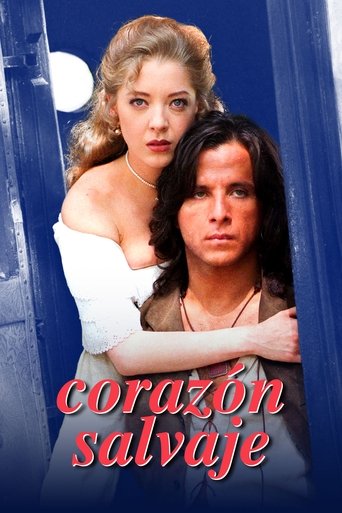
A telenovela that dramatizes the romances and rivalries between two brothers and two sisters in Mexico between the years 1885 and 1900.
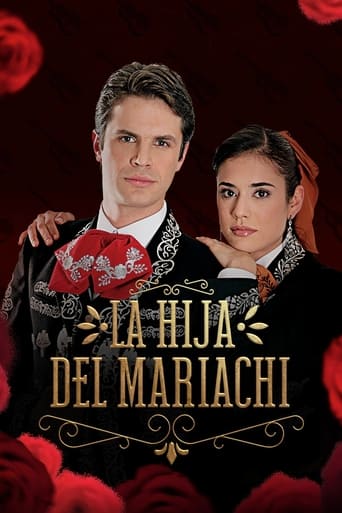
Emiliano, a wealthy Mexican businessman, is ripped off by his friends and partners. Hidden in Bogotá, he receives help from Rosario, a mariachi singer. She does not know Emiliano’s background and that he is wanted by the police of two countries and by a criminal organization. With a new name and personality, he adapts well to his new life as a mariachi band member and finds in Rosario the love of his life. But he is afraid his secret will tear them apart. He needs to clear his name and resolve his case to avoid that fate. Meanwhile, he often finds his love tested and vulnerable to several rivals, but Rosario always trusts that he has been honest with her.

Story of love between Marimar and Sergio. Sergio is from a wealthy family, and Marimar lives with her poor grandparents in a hut in front of the ocean.

Rebeca murders her sister Adriana to end up with the man she loved, and becomes the step mother of her niece Lucía. Nora, Lucía's half sister and daughter of Rebeca, resents Lucía for the same reasons Rebeca hated Adriana, as history repeats itself.

This dramatization depicts the life -- and loves -- of Venezuelan Gen. Simón Bolívar who helped liberate several Latin American countries from Spain.
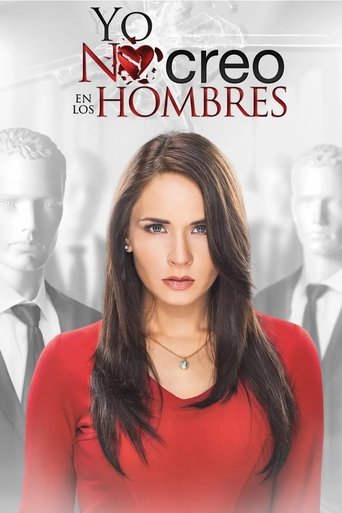
Yo no creo en los hombres (I don't trust men anymore) is a Mexican telenovela produced by Giselle González for Televisa. It is based on Yo no creo en los hombres (1991), produced in México.

Against all odds, young Arelys Henao pursues her dream of becoming a singer in this music-filled drama, based on the beginnings of the iconic Colombian star.

The story of Renata Flores del Angel, a young woman from a wealthy family who falls for Pablo Ramos, the foreman of her father's estate.
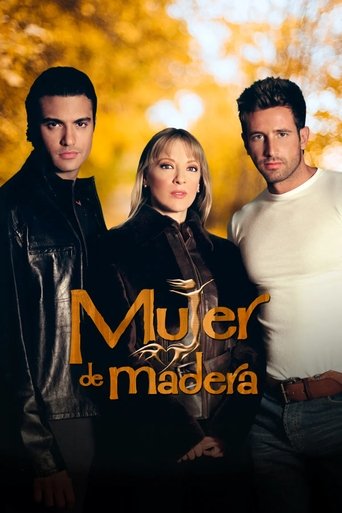
Mujer de Madera is a Mexican telenovela produced by Televisa in 2004. One unusual feature of this telenovela is that the main character is played by different actresses before and after her stay in hospital due to a forest fire.

La Mujer Del Vendaval is a 2012 Mexican telenovela produced by Mapat L. de Zatarain for Televisa. It is a remake of the Venezuelan telenovela Un Esposo para Estela. Ariadne Díaz and José Ron star as the main protagonists, while Chantal Andere, Marco Muñoz, Manuel Flaco Ibañez and Florencia del Saracho as the main antagonists.

Mistreated by the Narváez family, the poor and innocent Maricruz is humiliated, abandoned, and imprisoned, losing everything. Upon discovering her true origins, she transforms into a wealthy and powerful woman. Driven by grief and the loss of her father, she vows revenge against everyone who made her suffer.
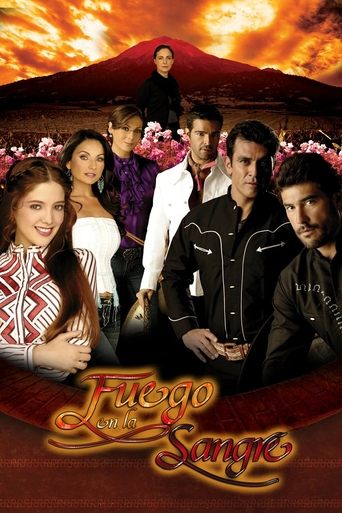
Fuego en la sangre is a telenovela that began transmissions on January 21, 2008, through Mexico's Canal de las Estrellas network. Starring Adela Noriega, Eduardo Yáñez, Diana Bracho, and Guillermo García Cantú. It is the Mexican remake of the Colombian soap operas Las Aguas Mansas and Pasion de Gavilanes. The theme song called "Para Siempre" is sung by Vicente Fernández. The telenovela received TVyNovelas Award for Best Telenovela, in 2009.
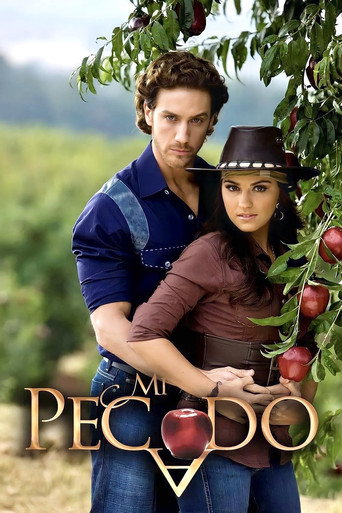
Paulino Córdoba, Gabino Roura, Rodolfo Huerta, and Matías Quiroga have been friends since childhood; however, as adults, their priorities shifted, and a sin now threatens to destroy their friendship. Paulino owns the El Milagro apple hacienda and is married to Rosario; they have two children, César and Lucrecia. Rosario has always favored her son while openly rejecting her daughter. Lucrecia was raised by Delfina, Rosario’s maid and Manuel’s mother.

Esmeralda is a telenovela that was released by Televisa in 1997. It is a remake of a 1970 Venezuelan telenovela of that same name, and was itself remade in Brazil in 2004. Another version is Topacio from Venezuela in 1984. One of the most famous telenovela all the time.

Teresa Chavez is a young woman with an obsession for money and ambition. Despite her beauty and the fact that she was raised in the bosom of a loving family, she is resentful; her one desire is to leave her humble but poor neighbourhood.

After their father's death, Sofía Ripoll, the oldest of three sisters, takes over the family's fictional successful chocolate factory. Though she is engaged to a man who uses her for money, she quickly falls in love with Salvador Cruz, a former racecar driver who takes a job as her chauffeur.
Similar titles


Las Muñecas De La Mafia is a 2009 Colombian telenovela produced by BE-TV and broadcast by Caracol TV. It's based on Juan Camilo Ferrand and Andres Lopez's book "Las Fantásticas". They also wrote the scripts for the television series. The telenovela will debut soon on the Telefutura Network. Series debuted on May 3, 2010 after the Vecinos finale. The show ended July 2010 in the U.S. It talks about the story of Brenda, Olivia, Violeta, Renata and Pamela. They get into trouble throughout the series because they get involved with some mafia guys from "El Carmen" in Colombia.They all have sad endings. Pamela immigrates, at the end of the story, to the United States of America to try to get away from trouble and be close to her father, who was a pilot and end up in jail because he was captured by DEA taking cocaine to U.S in a plain, and ends up as a maid but tells Brenda she is happy and having a great life. Olivia ends up in jail for having a fake wedding with a Braulio Bermudez and getting some of his properties. Violeta dies when the two mafia opposite sides were going to end a war that was going on in between them.Renata also dies because she was force by erick, to pay money she owe him, to carry drugs in her stomach to the United States and no one of her loved ones knew because she had no identification on her. Brenda ends up being pregnant by Braulio, she never saw him again, because he was taken to an US jail. This is a very exiting story to see and it shows how easy life is never a good choice, might be nice and easy at the beginning but some day all ends.
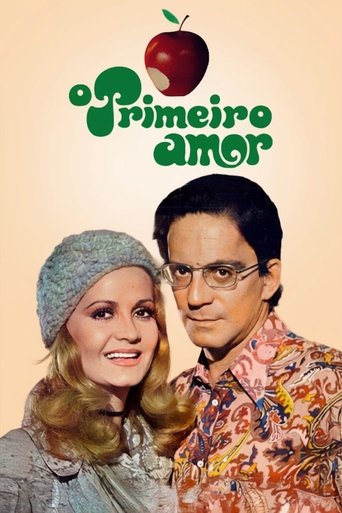
Professor Luciano Lima arrives in the fictional town of Nova Esperança to take over as principal of a school. A widower, he hires a governess to take care of his four children: Júnior, Babi, Zizi, and Rui. The professor and the governess, Paula, fall in love, but the romance faces strong resistance from the children, especially Babi, the most rebellious of the four. Luciano also encounters difficulties at the school. His former girlfriend, English teacher Maria do Carmo, does everything she can to steal his position as principal. Meanwhile, a group of maladjusted and rebellious students, led by the biker Rafa, disrupts the school environment and bothers the other students. In this scenario, Giovana, a young psychologist hired by Luciano to help him deal with the rebellious students, emerges. She ends up forming a love triangle with Paula and the professor.

Twin sisters with contrasting personalities, Ruth and Raquel, rival in the fictional Pontal D'Areia, on the coast of Rio de Janeiro.


Chen Jing, a folk music student, forms a band with her friends to challenge the dominance of Western music after being ridiculed for her lack of knowledge in the genre.

After years of blood, sweat and tears, a woman of humble origin ends up becoming a drug trafficking legend, with all that that means...

Helena and Luciana are two supermodels with completely opposite personalities: the first is stormy and spoiled, while the second - being older - is patient and restrained. Their fate changes when Helena becomes involved with Marcos, Luciana's father, an older man recently divorced from a former model, Tereza, who does not accept the end of the marriage.
The series follows the life and work of Mihajlo Pupin, from his native Idvor, through schooling in Pančevo and Prague, emigration to New York, education at Columbia University, to his inventions without which today's telecommunications and modern lifestyle would not exist.

Acacias 38, the address of a stately apartment building where our stories unfold, is set in 1899 and tells the story of a group of maids and the bourgeois families they serve, in a single block in a distinguished neighborhood of a large Spanish city. Two worlds colliding in a universe of crossed lives.

Eugênio Fontes is a medical student striving for upward social mobility. His impoverished childhood left him with an inferiority complex that hinders him in both his career and his romantic life; consequently, his struggles and dreams are entirely focused on achieving financial security. Deeply conflicted, he feels unable to love his parents, Alzira and Ângelo, to whom he owes his education. While in medical school, Eugênio meets Olívia Miranda, and the two fall in love. However, he ultimately marries Eunice—a beautiful, wealthy young woman and the daughter of the industrialist Cintra. Through his marriage to Eunice, Eugênio secures a good job and gains influential connections, such as a friendship with Felipe Lobo, a respected architect and associate of his father-in-law. Yet, as time goes by, the young doctor begins to question his marriage.

Millionaire Ingrid Von Herbert comes to Brazil to search for her missing son, who was taken from her in Italy by the child's father during World War II. Here, she meets and falls in love with mechanic Fran, but resists this love because she suspects he might be her son. There are other suspicions, but this mystery persists throughout the plot. An unusual event changes the course of the story: Fran's father, Sandro, has his car sabotaged and dies in an accident.