

Goering: Nazi Number One
2006-03-14 · Runtime unavailable · Not rated
This is the story of an incredible rise to power, the most comprehensive documentary on Hermann Goering ever made. He was a man of many faces: vain, ambitious, more brutal than any other of Hitler's minions, yet the most popular Nazi official of all, at times even more popular than Hitler himself. He embodied the jovial side of the Third Reich. Yet the same man who organised dissolute bacchanals also founded the Gestapo, set up the first concentration camps, and had his own comrades murdered in the purge of 1934. These unique personal records form the largest and most important single film find from the Nazi era in past years.
Trailers are previews, not full movies.
No authorized playback source configured. Use the legal watch options below.
Production details
- Creators
- Unavailable
- Production companies
- CMdoc
- Countries
- Germany
- Status
- Returning Series
Top Cast
Cast unavailable.
Title information and images are supplied by TMDb. Explore our discovery guide for advice on comparing metadata and legal viewing options.
Where to watch
Availability provided by JustWatch via TMDb. Offers can change. Provider links are listed on TMDb; full playback requires a separately authorized source.
Availability not listed for this country.
Seasons & episodes
Recommendations
Surviving power struggles, betrayals and plots, Hitler's inner circle of Nazi leaders seizes control of Germany and designs its disastrous future.

Using highly advanced colourisation techniques, critical moments from World War II, from Stalingrad to The Battle of Britain, are shown in a whole new light.
The documentary series explores different political figures throughout history.

Gripping historical footage and expert commentary give detailed insights into the leading figures and decisive turning points of World War II.
Explores WWII from Germany's invasion of Poland through the atomic age, examining pivotal battles, wartime leaders like Churchill and Roosevelt, and the human cost of total war.
World War II In Colour is a 13-episode television documentary miniseries recounting the events of World War II narrated by Robert Powell. The show covers the Western Front, Eastern Front, and the Pacific War. It is on syndication in America on the Military Channel. This series is in full color, combining both original and colorized footage.
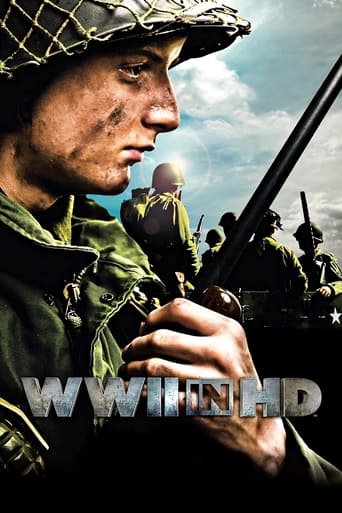
WWII in HD is a 10-part American documentary television miniseries that originally aired from November 15 to November 19, 2009 on the History Channel. The program focuses on the firsthand experiences of twelve American service members during World War II, including an Army nurse, a member of the Tuskegee Airmen, a second generation Japanese American and prisoner of war, and an Austrian Jewish immigrant. The twelve members recorded their time in both theaters and some had later interviews; found footage from the battlefield was paired with the stories of the twelve service members. The episodes premiered on five consecutive days, with two episodes per day. The series is narrated by Gary Sinise and was produced by Lou Reda Productions in Easton, Pennsylvania, United States.
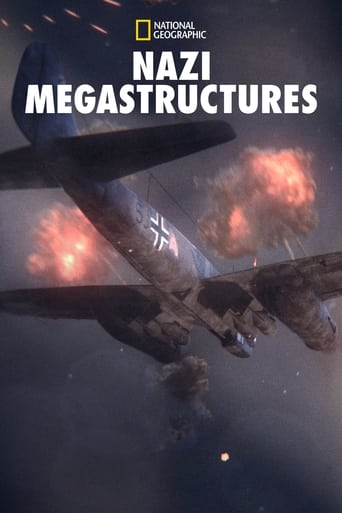
In a quest for world domination, the Nazis built some of the biggest and deadliest pieces of military hardware and malevolent technology in history. This is the stories of the engineers who designed them and how these structures sparked a technological revolution that changed warfare forever.
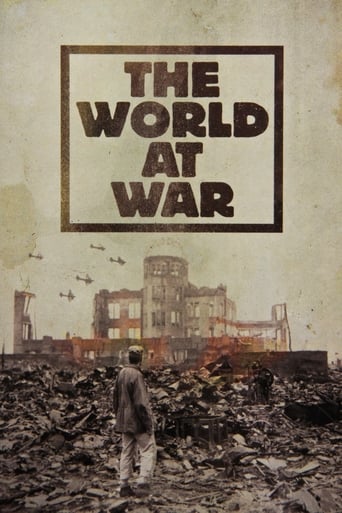
A documentary series that gives a historical account of the events of World War II, from its roots in the 1920s to the aftermath and the lives it profoundly influenced.
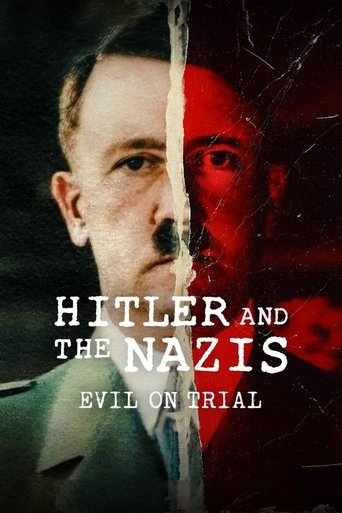
This gripping docuseries examines Adolf Hitler and the Nazis' rise, rule and reckoning from pre-WWII to the Holocaust to the Nuremberg trials.
The story of the Second World War through the personal accounts of a handful of men and women from four American towns. The war touched the lives of every family on every street in every town in America and demonstrated that in extraordinary times, there are no ordinary lives.
Through vividly enhanced archival footage and voices from all sides of the conflict, this docuseries brings WWII to life like never before.
Oliver Stone's re-examination of under-reported events in American history.
The story of three decades of war told through the eyes of various men who were its key players: Roosevelt, Hitler, Patton, Mussolini, Churchill, Tojo, DeGaulle and MacArthur. The series examines the two wars as one contiguous timeline starting in 1914 and concluding in 1945 with these unique individuals coming of age in World War I before ultimately calling the shots in World War II.
Documentary film series that examines Adolf Hitler and the Nazis' rise to power, their zenith, their decline and fall, and the consequences of their reign featuring archive footage and interviews with eyewitnesses.
Infographics and archival footage deliver bite-size history lessons on scientific breakthroughs, social movements and world-changing discoveries.
An immersive 360-degree narrative telling the epic story of the Vietnam War as it has never before been told on film. Featuring testimony from nearly 80 witnesses, including many Americans who fought in the war and others who opposed it, as well as Vietnamese combatants and civilians from both the winning and losing sides.
This captivating docuseries examines Winston Churchill's pivotal role in World War II and the formative events that made him an ideal leader for the era.
A series of standalone documentaries powered by the unparalleled journalism and insight of The New York Times, bringing viewers close to the essential stories of our time.
Five acclaimed contemporary directors tell the story of five legendary Hollywood filmmakers who enlisted in the armed forces to document World War II.
Similar titles
"Löwengrube – Die Grandauers und ihre Zeit" is a German television series first aired between 1989 and 1992, created by Willy Purucker and directed by Rainer Wolffhardt. It is set in Munich and follows the lives of Ludwig Grandauer and his son Karl, both policemen, covering the years from 1897 to 1954. The TV show is based on Purucker's radio play series Die Grandauers und ihre Zeit (‘The Grandauers and their time’). The series’ main title "Löwengrube", meaning ‘Lions’ Den’, refers to the address of the Munich Police Headquarters inaugurated in 1913.
The decline of Hitler’s empire from the inside out by exploring the decline of the Nazis through the perspective of Hitler's bumbling generals and a paranoid Fuhrer.
A candid look at what life was really like for those living in, and under Hitler's Swastika - at home - and abroad, a record not only of what they saw, but of what they knew.


It is customary to give every new government 100 days to draw an initial summary of its work, its successes, its failures, its prospects. A “grace period” that also applied to Chancellor Adolf Hitler. However, he uses them more radically for his goals than anyone before him. This is what this series tells about – as a canon of contemporary voices. Diary entries from all over Germany document different perspectives, perceptions and very private things. How can a civilized country, a democratic state, turn into a brutal dictatorship in just a few weeks?

The Second World War depicted through the eyes of a German platoon on the Eastern Front.

A series of programmes about Albert Speer, Hitler's architect and armaments minister.

Private Schulz is a six-part 1981 television comedy-drama serial written by Jack Pulman and produced for BBC Two. It stars Michael Elphick in the title role, with Ian Richardson, Tony Caunter, Billie Whitelaw, Billy Murray, and Mark Wingett. Set primarily in Germany, during and immediately following World War II, fraudster and petty criminal Gerhard Schulz is forced to serve in the SS. In a story based on the real, though unrealised, plot by the Germans known as Operation Bernhard, Schulz tricks the Nazis into making counterfeit British £5 notes, millions of which will be used to destroy the British economy.
Little-known events that played a large role in determining the outcome of World War II are revealed in this documentary series.

What made him possible? His friends, his classmates, his co-workers, his admirers, his enablers. Many Nazis, several war criminals, few to trust. A series of unique and deeply disturbing interviews with some of Hitler's closest associates.

The War of the Century: When Hitler Fought Stalin, is a BBC documentary film series that examines Adolf Hitler's invasion of the Soviet Union in 1941 and the no-holds-barred war on both sides. It not only examines the war but also the terror inside the Soviet Union at the time due to the paranoia of Joseph Stalin - the revenge atrocities, the Great Purge of army officers, the near-lunacy orders, and the paranoia of being upstaged by others, especially Marshal Zhukov. The historical adviser is Ian Kershaw.

The story takes place during World War II. Vitay Georgina is enrolled by her father, General Vitay, in the completely closed, residential Calvinist Matula Girls' Institute in the town of Árkod, on the outskirts of the country. He does not tell Gina why, as her new classmates would accept her, but after she fights with them over a silly game and betrays them, she is ostracised.

A series that discusses secrets and mysteries during wars in the 20th century.
Documentary film series that examines Adolf Hitler and the Nazis' rise to power, their zenith, their decline and fall, and the consequences of their reign featuring archive footage and interviews with eyewitnesses.
This biopic profiles history's most spectacular madman, tracing his journey from humble roots to complete mastery of Germany.
Hybrid docuseries offering an expansive exploration of the exploitative and genocidal aspects of European colonialism, from America to Africa, and its impact on society today.

After Nazi Germany invades Poland in September 1939, Russia attacks Finland two months later. Finnish reservists leave home and go to war. Brothers Martti and Paavo Hakala, farmers from the municipality of Kauhava in the province of Pohjanmaa/Ostrobothnia, serve in a Finnish platoon. A five-part television miniseries extension of Pekka Parikka's 1989 film of the same name.
A four-part history series examines relations between Nazi Germany and Finland in the 1930s and 1940s. The series explores how the close relationship between Finland and Germany was born and developed, and what was known in Finland about the Holocaust, the mass extermination of the Jews at a time when the countries were at war together. Through archives and expert interviews, it explores how close Finns were to the Nazi German leadership.