宮本武蔵
1984-04-04 · Runtime unavailable · ★ 8.0
Trailers are previews, not full movies.
No authorized playback source configured. Use the legal watch options below.
Production details
- Creators
- Unavailable
- Production companies
- Unavailable
- Countries
- Unavailable
- Status
- Ended
Top Cast
 Koji YakushoMiyamoto Musashi
 Yuko KotegawaOtsu
 Hidekazu Nagae
 Kimiko IkegamiAkemi
 Koji IshizakaKôetsu Honami
Title information and images are supplied by TMDb. Explore our discovery guide for advice on comparing metadata and legal viewing options.
Where to watch
Availability provided by JustWatch via TMDb. Offers can change. Provider links are listed on TMDb; full playback requires a separately authorized source.
Seasons & episodes
Recommendations
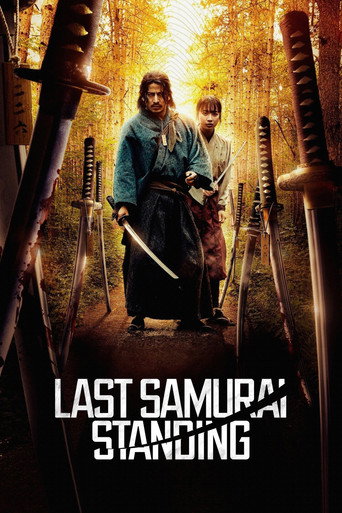
In the early Meiji era, Shujiro, once known as an undefeated samurai, decides to participate in a deadly survival game to save his family and villagers.
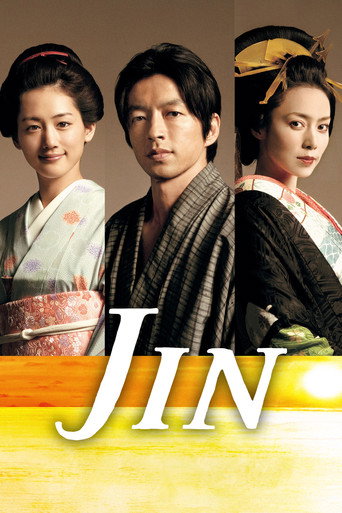
After awakening in the Edo era, a neurosurgeon uses his medical knowledge to help those around him while searching for a way back to the present day.

Freelance programmer Sakagami is paralyzed in the lower half of his body and confined to a wheelchair. He sets up a company called dele.LIFE in partnership with a law firm established by his late father. At the request of clients, Sakagami works together with a freelance jack-of-all-trades Mashiba to delete all unfavorable digital records of their clients left in their computers and smartphones after they die. They are not supposed to see inside the files but when they feel something strange in the client’s death, they cannot help getting involved.

At the beginning of the Edo Era, when people enjoyed a time of peace, Lord Tokugawa Tadanaga holds a fighting tournament. In the past, matches were fought with wooden swords. This time, real swords will be used. One-armed Fujiki Gennosuke and blind Irako Seigen will fight each other in this match. Both are disciples of Iwamoto Kogan, who is known as Japan's greatest swordsman. Each of them are determined to prove himself the successor of Iwamoto's school. However, there can only be one champion. So begins a story of intertwining fates, conflict, and strange destinies.

Through Julia Child’s life and her singular joie de vivre, the series explores a pivotal time in American history – the emergence of public television as a new social institution, feminism and the women's movement, the nature of celebrity and America's cultural evolution.

After causing a major incident, police officer Daigo Agawa takes his wife and daughter to live in the remote mountain village of Kuge. It seems the perfect place to recover from the ordeal, despite the mysterious disappearance of a previous officer posted there. One day, the body of an old woman is found on the mountain. The Goto family says she was attacked by a bear, but Daigo notices a human bite mark. It soon becomes clear that not all is as it seems in the village.
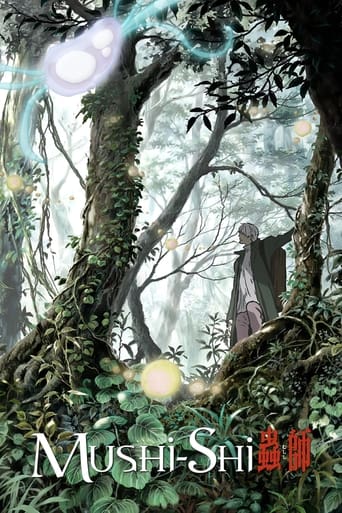
Ginko, a Mushi master, travels from place to place researching the Mushi and helping people who are suffering because of it.

The epic tale of a proud and passionate family, secret loves, and bloody revolution. The Trueba family's passions, struggles, and secrets span a century of violent social change, culminating in a crisis that hurls the proud, tyrannical patriarch and his beloved granddaughter towards opposite sides of the fence.

After moving into the quiet town of Hinamizawa, Maebara Keiichi spends his days blissfully in school often playing games with his local friends. However, appearances can be deceiving. One fateful day, Keiichi stumbles upon news of a murder that had occurred in Hinamizawa. From this point on, horrific events unfold in front of Keiichi, as he soon learns his close friends may not be all that they seem.

Furuhata Ninzaburō is a Japanese television series that ran periodically on Fuji Television from 1994 until its final episodes in 2006. It was written by Japanese playwright Kōki Mitani and is often referred to as the Japanese version of Columbo. The series is a police detective drama starring actor Masakazu Tamura as Furuhata Ninzaburo and Masahiko Nishimura as his stereotypically bumbling sidekick, Shintaro Imaizumi. The program aired weekly and featured a guest villain each time, usually a famous talent in Japan. Pop-stars like SMAP, television hosts like Sanma Akashiya and even sports figures like Ichiro Suzuki have been featured on this program. It was one of the most popular television dramas in the history of Japanese television, having spawned several seasons and TV specials.
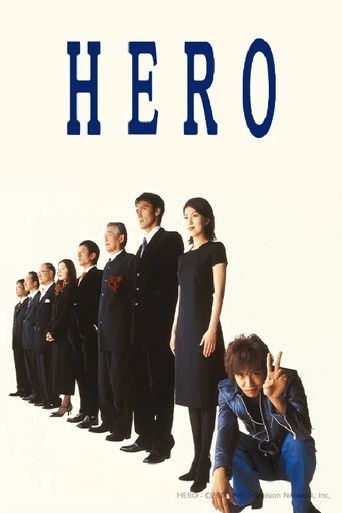
Former delinquent turned unconventional prosecutor Kohei Kuryu shakes up the legal world with his street-smart instincts and unorthodox style, clashing with ambitious colleague Maiko Amamiya while his relentless pursuit of justice gradually transforms those around him.

A basketball prodigy must navigate a maze of pressure if he's going to overcome the odds against him and learn what it truly means to have swagger.

This story is about a girl, Candy, who is a orphan. She is a nice and optimistic girl and she has a warm heart. When she was a child, she lived in an orphanage called Pony's Home. She had a good friend called Ann. And she met the "handsome boy on the hill" who is a important person in her life, on the hill behind the orphanage. She was adopted by the Loka's family. What's awaiting her are the bad-hearted Leo and his sister, Eliza. One day, in the rose garden, she met a boy, who is identical to the "handsome boy on the hill" who she had met in her childhood. The boy is called Antony. Thereafter, a fantastic story that she has never expected begins.

In an alternate history where the male population is nearly decimated, eligible men serve as concubines to the woman shogun inside the walls of the Ooku.
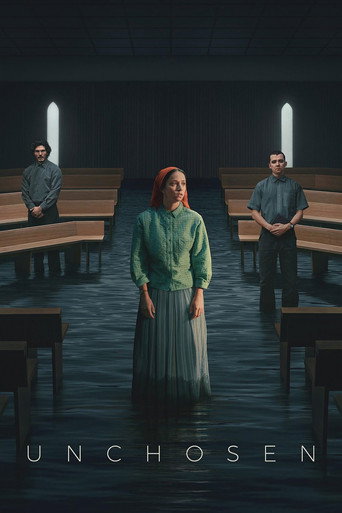
When a young mother from a sheltered cult crosses paths with a mysterious stranger, she embarks on a risky affair that awakens desires and dark secrets.

An exuberant drama set in Melbourne's Fitzroy, centering on Nina Proudman and her struggle to deal with her fabulously messy family, her hunt for a decent love life and her tendency to overthink and fly off into fantasy.

Twins Tal and Janelle relocate from Ohio to Atlanta, where at their new school High Water is always a beat.
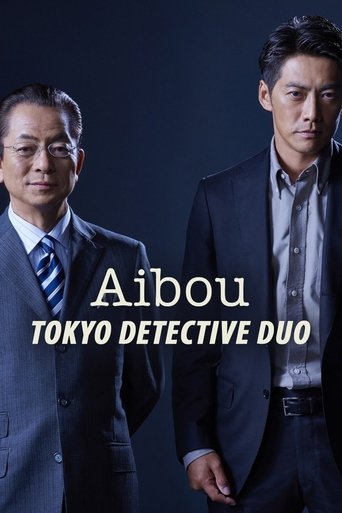
Detective Ukyo Sugishita confronts crime on the basis of his own convictions. He has a partner that works for him in the Special Task Unit. For the first 7 seasons, Ukyo’s first partner is Kaoru Kameyama. He is a good-natured, hot-tempered, straightforward and somewhat scattered detective. Beginning in Season 8, Takeru Kanbe replaces Kameyama. Contrary to his predecessor, Takeru is a lanky, cool, conceited and confident detective. From Season 11 to Season 13, Ukyo’s partner is a young detective Toru Kai. Toru is a son of Deputy Director-General of The National Police Agency. But he became a detective by his own effort. And starting with Season 14, Ukyo’s current partner is Wataru Kaburagi, an elite bureaucrat who came to the Metropolitan Police Department on temporary assignment. As the first partner without any career of a police officer, he will face challenging cases together with Ukyo.

The 19th-century tale of love, murder and revenge as men and women travel across the world to make their fortunes on the wild West Coast of New Zealand's South Island.

Nagao Kanji who comes from Ehime Prefecture joins Heartsports company located in Tokyo, where he met lovely and sunny Akana Rika. The love story begins.
Similar titles

Princess Go was the youngest of the most famous three sisters in Japanese history, who each led a remarkable life in an age of turmoil and civil war. Go loses her parents in the war, marries three times, and feuds with her own sister in competing for power. Go's husband becomes the second Tokugawa Shogun and she ensures her prominence as she gives birth to a son who later becomes the third Shogun and a daughter, a wife of the Emperor. The drama describes the age of the civil war through the eyes of Princess Go, who plays a significant part in establishing the age of peace that lasts over 200 years in Japan.
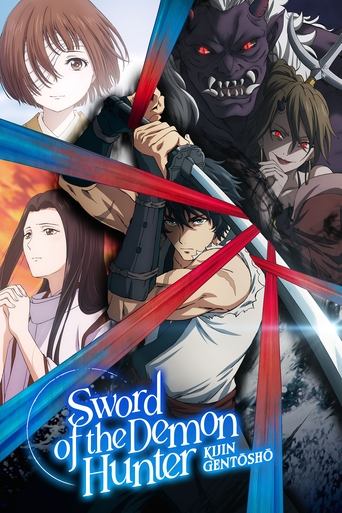
Jinta journeys through a century-spanning epic, all while questioning why he wields a sword.

Gengo Matsunaga, once known as Phoenix, was the greatest samurai fire-slayer in all of Edo. After leaving fire-slaying, Gengo is approached with an offer from the Shinjo Domain. Encouraged by his wife, Miyuki, he sets out to rebuild a fallen firefighting brigade. Gengo gathers a group of misfits, the Ragged Fire-Slayers, as they investigate mysterious fires started by the arsonist Kitsunebi.
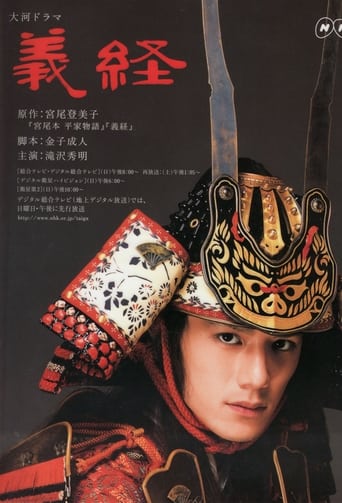
Yoshitsune is a Japanese television drama series originally broadcast between 9 January and 11 December 2005, with a three-part special compilation being aired from 24 December to 25 December 2005. The 44th Taiga Drama, the original work is by Miyao Tomiko, screenplay by Kaneko Narito and starring Hideaki Takizawa.

Mini-drama with a historical character having a smartphone.

The main character, Hanbei Hinata, who plays Mizutani, is a direct hatamoto guardian who guards Edo Castle. While working honestly on that mission, he became disgusted by a colleague who only thought about his career advancement, and soon he abandoned all his desires and began to think about a retired life

In an alternative feudal Japan, a strange disease that only affects males caused a massive population reduction, leaving females to fill the vacant jobs, therefore changing the social structure. Now, 80 years after the initial outbreak with a 1:4 male:female ratio, Japan is a completely matriarchal society. Females hold all important political positions, and males are their consorts. Only the most powerful female—head of Tokugawa shogunate—may keep a harem of handsome and unproductive males, known as "Ōoku".
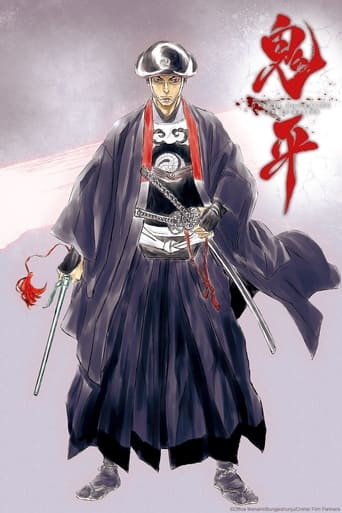
The historical novel series depicts Heizou Hasegawa, who metes justice on wrongdoers and supervises the crackdown on arsonists and robbers in Japan's Edo period (1603-1868).
In the early Meiji era, Shujiro, once known as an undefeated samurai, decides to participate in a deadly survival game to save his family and villagers.
The dynamic achievements of Fuyukirosuke, who, with the help of his wife Nene and his comrades, overcomes the challenges posed by Nobunaga.

Oyuki, the daughter of a master swordsman in the Yaegaki-style, is a skilled practitioner of the secret technique "flying sword". She embarks on a journey alongside the naive samurai Isawa no Fujiyoshi, hailing from a peasant background, and Choshi no Yosaburo, an aspiring chivalrous rogue from a fishing village. Together, they travel and seek to punish the wicked.

Naotora Ii is a woman given a male name, who succeeded as the head of the Ii family during the Warring States period when her father passed away. With her wisdom, courage and affection for loved ones, Naotora lived through turbulent times and paved the way for the future of her clan.

At the end of Edo period, Shoji Rui hands over her birthright to her relatives with the death of her father and begins running an inn "Kawasemi" in Ōkawabata. And she settles the matters in their daily lives with her lover Kamibayashi Tōgo, doshin (a sort of constable) Une Genzaburō, physician Amanō Sotarō, and O-Kichi.
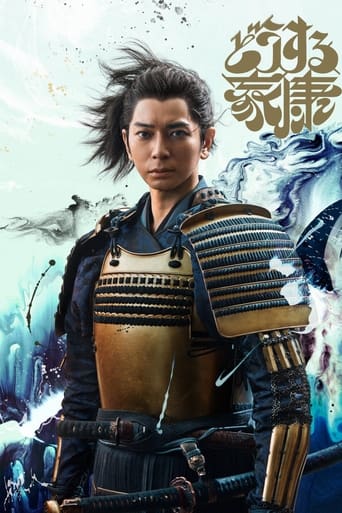
He lost his land, his father, and was torn from his mother. Lonely and wounded, young Takechiyo thought he'd live out his days quietly as a hostage. But fate had other plans. Inspired by Mikawa warriors, he becomes a minor lord and dives into a war-torn world ruled by monsters like Nobunaga and Shingen.Life-or-death moments, miscalculations, and no time to breathe—what will you do, Ieyasu?

Based on Kazuo Koike's extensive manga (over 110 volumes), this Edo-period drama follows an unlikely pair of law enforcement officers. One is a serious, skilled investigator, while the other is a witty, unconventional problem-solver, creating a dynamic partnership. The series also features the charmingly unorthodox detective Suruyoshi in a notable period drama debut. A memorable and catchy soundtrack complements the engaging stories brought to life by a large and talented cast.
In Edo, a determined young swordsman, Chiba Shūsaku, joins a dojo to pursue his dream. He forges strong friendships with fellow students, including one who works for a magistrate. As Shūsaku trains under a respected master, he faces challenges both within the dojo and in the city, growing as a swordsman and navigating the vibrant Edo society.

A young Tokugawa Mitsukuni (Yamamoto Koji) meets a homeless orphan Ryosuke (Kurokawa Souya). Surprised by his deadly skills with a wooden sword, Mitsukuni invites him to the covert organisation known as Juninshu. The members of Juninshu are orphans with outstanding skills. They conduct intelligence work using their special abilities and help to capture criminals. With the help of Juninshu, Mitsukuni discovers that Nishiki Hyonosuke (Kato Shigeaki) is the leader of the gang of arsonists that caused the Great Fire of Meireki. Hyonosuke is the son of Unkei (Ishizaka Koji), a sculptor specialising in Buddha statues whom Mitsukuni admires. Unkei has lived to bring Hyonosuke, who has gone off the right path, to justice with his own hands. Hyonosuke aims to overthrow the Tokugawas and a fierce battle is imminent. Worried for Mitsukuni, his wife Yasu (Matsumoto Honoka) seeks the help of the great swordsman Yagyu Gisen (Tachi Hiroshi).
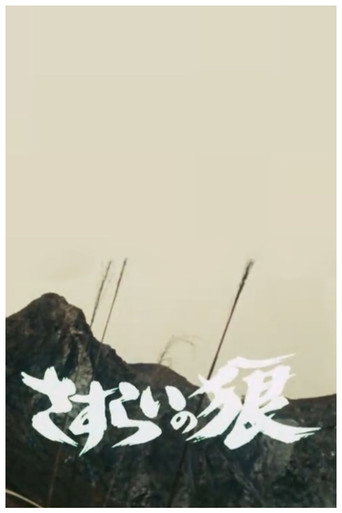
Based on the novel of the same name by Jiro Ikushima, this drama series aired on NET TV (now TV Asahi) in 1972 for a total of 26 episodes. Starring the talented actor Kinnosuke Yorozuya, who had previously shown his skills in various period films such as "Mabuta no Haha," "Seki no Yatappe," and "Kutsukake Tokijiro: Yoyo ichi-hiki," the show follows the tragic hero and is sure to captivate audiences with its compelling storyline. Viewers are sure to be drawn into the drama and root for the protagonist as the story unfolds.
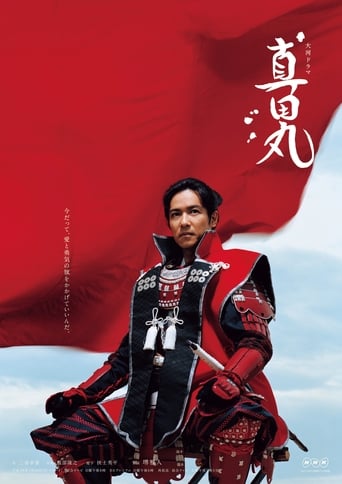
Spanning over 50 episodes, we follow the historical fiction of the Sanada clansmen as they plotted and fought their ways to survive the changing political alliances during the Warring States Period of Japan.
The straightforward samurai of the hatamoto class, Saotome Mondonosuke, who has a crescent-shaped scar on his forehead, is known as the "Boring Samurai" because of his idleness. Whenever any incident occurs, he appears in his flashy attire and punishes the evildoers with his fighting skills....