Survival of Spaceship Earth
1972-01-01 · 60 min · ★ 10.0
Earth's environmental crisis--brought about by uncontrolled technological progress--is endangering life on a global scale. At the core of the threats to the planet - wars, overpopulation, pollution, and the depletion of natural resources - is the inadequacy of the nation state to come to terms with the surmounting problems of twentieth century living. What is urgently needed is the kind of international cooperation where nation states relinquish part of their sovereignty to a world body entrusted with the management of mankind's future.
Trailers are previews, not full movies.
No authorized playback source configured. Use the legal watch options below.
Production details
- Directors
- Dirk Wayne Summers
- Production companies
- Warner Bros. Pictures
- Countries
- United States of America
- Status
- Released
Top Cast
 Raymond BurrSelf - Narrator
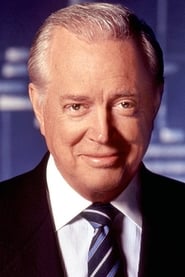 Hugh DownsSelf - Narrator / Host
 Margaret MeadSelf
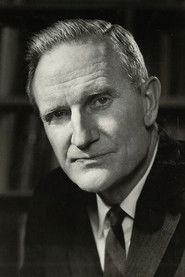 John D. Rockefeller IIISelf
Title information and images are supplied by TMDb. Explore our discovery guide for advice on comparing metadata and legal viewing options.
Where to watch
Availability provided by JustWatch via TMDb. Offers can change. Provider links are listed on TMDb; full playback requires a separately authorized source.
Availability not listed for this country.
Seasons & episodes
Recommendations
David Attenborough and scientist Johan Rockström examine Earth's biodiversity collapse and how this crisis can still be averted.
Humanity’s ascent is often measured by the speed of progress. But what if progress is actually spiraling us downwards, towards collapse? Ronald Wright, whose best-seller, “A Short History Of Progress” inspired “Surviving Progress”, shows how past civilizations were destroyed by “progress traps”—alluring technologies and belief systems that serve immediate needs, but ransom the future. As pressure on the world’s resources accelerates and financial elites bankrupt nations, can our globally-entwined civilization escape a final, catastrophic progress trap? With potent images and illuminating insights from thinkers who have probed our genes, our brains, and our social behaviour, this requiem to progress-as-usual also poses a challenge: to prove that making apes smarter isn’t an evolutionary dead-end.
A look at how climate change affects our environment and what society can do to prevent the demise of endangered species, ecosystems, and native communities across the planet.
A decade after An Inconvenient Truth brought climate change into the heart of popular culture comes the riveting and rousing follow-up that shows just how close we are to a real energy revolution. Vice President Al Gore continues his tireless fight, traveling around the world training an army of climate champions and influencing international climate policy. Cameras follow him behind the scenes—in moments private and public, funny and poignant—as he pursues the empowering notion that while the stakes have never been higher, the perils of climate change can be overcome with human ingenuity and passion.
From his days of testifying at the Watergate hearings to advising recent presidential candidate Donald Trump, Roger Stone has long offended people on both sides of the political fence as a force in conservative America. Outspoken author, pundit, ahead of his time election strategist, this is his story.

A string of threatening emails escalates into a revenge plot involving a newly married US marshal and his ex-girlfriend.

Interviews with leading authors, philosophers and scientists, with an in-depth discussion of the Law of Attraction. The audience is shown how they can learn and use 'The Secret' in their everyday lives.

An inside look at one of the most anticipated movie sequels ever with James Cameron and cast.

Through deeply personal interviews with her siblings and an examination of the photographs, letters, and belongings left behind, Mariska assembles a new portrait of her mother Jayne Mansfield, an extraordinary and complex woman.

In an intimate and joyful story of love in the face of loss, celebrated poets Andrea Gibson and Megan Falley find strength—and unexpected hilarity—in what might be their final year together.
Alex Gibney explores the phenomenon of Stuxnet, a self-replicating computer virus discovered in 2010 by international IT experts. Evidently commissioned by the US and Israeli governments, this malware was designed to specifically sabotage Iran’s nuclear programme. However, the complex computer worm ended up not only infecting its intended target but also spreading uncontrollably.
The life of Mr. Spock, as well as that of Leonard Nimoy, the actor who played him for almost fifty years, written and directed by his son: Adam.

The life and career of one of comedy's most inimitable modern voices, Mr. Gilbert Gottfried.
Takes us to locations all around the US and shows us the heavy toll that modern technology is having on humans and the earth. The visual tone poem contains neither dialogue nor a vocalized narration: its tone is set by the juxtaposition of images and the exceptional music by Philip Glass.
Hollywood veteran Bing Russell creates the only independent baseball team in the country—alarming the baseball establishment and sparking the meteoric rise of the 1970s Portland Mavericks.
A documentary on Al Gore's campaign to make the issue of global warming a recognized problem worldwide.
Documentary of the making of the sequel to the popular Schwarzenegger film, The Terminator.

A documentary about the making of season five of the acclaimed AMC series Breaking Bad.

The life and career of an actor, artist, and icon. His own journey through his own camera.
Fulton and Pepe's 2000 documentary captures Terry Gilliam's attempt to get The Man Who Killed Don Quixote off the ground. Back injuries, freakish storms, and more zoom in to sabotage the project.
Similar titles

In Leven met de belt (Life With A Rubbish Heap), filmmaker Rosemarie Blank portrays with great empathy the residents of the Volgermeerpolder near Broek in Waterland in The Netherlands. They live with the physical and psychological consequences of a toxic waste dump on their doorstep.
Gas flaring has long been known to be both a major polluter and a serious health hazard. In Iraq, it's ruining ordinary people's lives, leaving communities ravaged by abnormally high levels of cancer. With oil giants like BP using a loophole to avoid reporting emissions, and governmental promises to end the practice ringing hollow, what will it take to eradicate toxic pollution from Iraq's skies?
For five days in December 1952, a thick smog suffocated the British capital causing the death of thousands of Londoners. The health catastrophe lead to a realisation, in Britain and around the world, that air pollution was a serious threat to human health. This documentary reveals what happened, hour by hour, in one of the worst peacetime disasters of the 20th century.
Before starting a family, Soozie Eastman, daughter of an industrial chemical distributor, embarks on a journey to find out the levels of toxins in her body and explores if there is anything she or anyone else can do to change them. She has just learned that hundreds of synthetic toxins are now found in every baby born in America and the government and chemical corporations are doing little to protect citizens and consumers. With guidance from world-renowned physicians and environmental leaders, interviews with scientists and politicians, and stories of everyday Americans, Soozie uncovers how we got to be so overloaded with chemicals and if there is anything we can do to take control of our exposure.
A cartoon film about the whole heterogeneous mixture of Canada and Canadians, and the way the invisible adhesive called federalism makes it all cling together. That the dissenting voices are many is made amply evident, in English and French. But this animated message also shows that Canadians can laugh at themselves and work out their problems objectively.
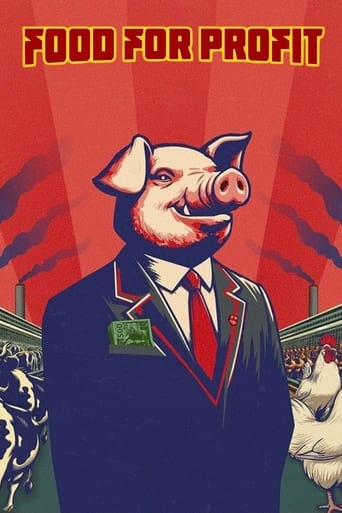
The film exposes the links between Agrifood and politics. With a pool of international experts it analyses the many problems related to factory farming: water pollution, migrants exploitation, biodiversity loss and antibiotic resistance.
A surrealistic look at the future if man does not learn to control pollution.
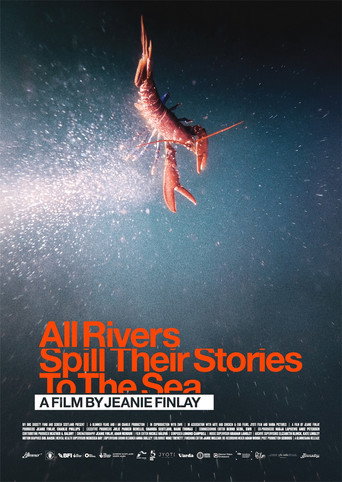
On England’s North East coast, where rivers, heavy industry and the sea have shaped lives for generations, fisherman Stan Rennie is watching the world he knows disappear. His family have worked these waters for generations. Then, almost overnight, thousands of dead crabs and lobsters wash ashore, and a community already living with uncertainty is pushed into crisis. Teesside filmmaker Jeanie Finlay brings warmth, wit and deep local feeling to this David-and-Goliath story of environmental damage, official evasions and working-class resilience. At its centre is Stan: funny, stubborn, vulnerable and increasingly determined to be heard.
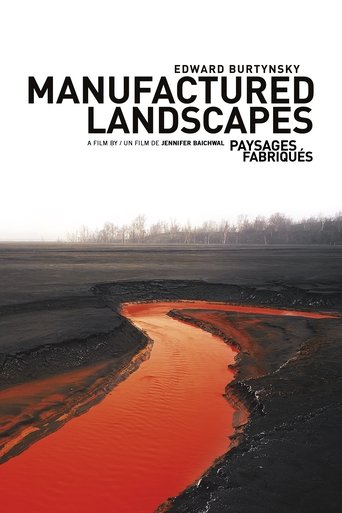
MANUFACTURED LANDSCAPES is the striking new documentary on the world and work of renowned artist Edward Burtynsky. Internationally acclaimed for his large-scale photographs of “manufactured landscapes”—quarries, recycling yards, factories, mines and dams—Burtynsky creates stunningly beautiful art from civilization’s materials and debris.

More than two decades after the Clean Water Act was supposed to make America’s waters clean enough for swimming and fishing again, two iconic waterways — the great coastal estuaries of Puget Sound and the Chesapeake Bay — are in perilous condition. With polluted runoff still flowing in from industry, agriculture and massive suburban development, scientists fear contamination to the food chain and drinking water for millions of people. A growing list of endangered species is also threatened in both estuaries. As a new president, Congress and the states set new agendas and spending priorities, FRONTLINE correspondent Hedrick Smith examines the rising hazards to human health and the ecosystem, and why its so hard to keep our waters clean.


A compilation of conferences/debates between renowned designers, environmental activists, and students on the concept of design. Held in Aspen, Colorado, USA.
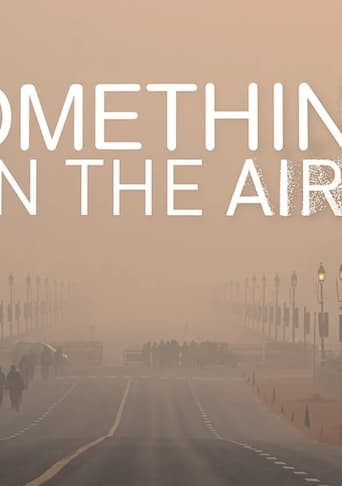
Something in the Air is a one hour documentary that shows new risks in the most essential element for survival – air – that affect our brains, our DNA, and how new technology is changing the equation for the better.

Humanity’s ascent is often measured by the speed of progress. But what if progress is actually spiraling us downwards, towards collapse? Ronald Wright, whose best-seller, “A Short History Of Progress” inspired “Surviving Progress”, shows how past civilizations were destroyed by “progress traps”—alluring technologies and belief systems that serve immediate needs, but ransom the future. As pressure on the world’s resources accelerates and financial elites bankrupt nations, can our globally-entwined civilization escape a final, catastrophic progress trap? With potent images and illuminating insights from thinkers who have probed our genes, our brains, and our social behaviour, this requiem to progress-as-usual also poses a challenge: to prove that making apes smarter isn’t an evolutionary dead-end.
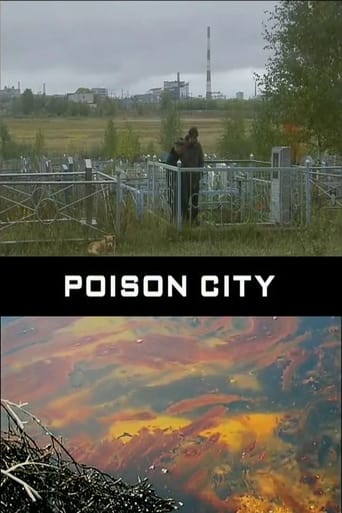
Dzerzhinsk, a Russian city 240 miles east of Moscow, is considered the most chemically polluted town on Earth. Factories producing industrial chemicals (and in Soviet times, chemical weapons) employ a quarter of the 300,000 residents in a city where life expectancy has fallen to 42-47 years, the death rate is 2.6 times higher than the birth rate, and the men are close to impotence. Reporter Tim Samuels recorded a series of in-depth interviews with the inhabitants of Dzerzhinsk for the Correspondent strand, revealing what life is like for the beleaguered populace.