

Deux Femmes
1992-06-01 · Runtime unavailable · ★ 8.5
An Algerian social satire that tells the story of Boujemaa, who marries a second wife in addition to his first wife, who is ill and with whom he has a son and a daughter. Living all under the same roof, the new wife imposes her authority in the house. The lives of the family members are then turned upside down.
Trailers are previews, not full movies.
No authorized playback source configured. Use the legal watch options below.
Production details
- Directors
- Amar Tribeche
- Production companies
- Entreprise Nationale de Production Audiovisuelle (ENPA)
- Countries
- Algeria
- Status
- Released
Top Cast
 Athmane AriouetBoujemaa
 Bahia RachediBahya
 Areski Nebti
Title information and images are supplied by TMDb. Explore our discovery guide for advice on comparing metadata and legal viewing options.
Where to watch
Availability provided by JustWatch via TMDb. Offers can change. Provider links are listed on TMDb; full playback requires a separately authorized source.
Availability not listed for this country.
Seasons & episodes
Recommendations

In the summer of 1978, a teenager and his group of friends face new challenges when their neighborhood roller-skating rink closes, forcing them to visit a different rink.

When a celebrated TV show host returns to his hometown in the South, his family is there to remind him that going home is no vacation!

Chang, a 16-year-old, Asian American, bets the high school basketball star that he can dunk by Homecoming. The bet leads 5' 8" Chang on a quest to learn to dunk—not only to impress his crush, Kristy, but to gain the respect of his high school peers too. But before he can rise up and truly throw one down, he'll have to reexamine everything he knows about himself, his friendships and his family.

A young girl tries to fit in with a clique of popular middle school girls after moving into the guest house of one of their homes.

A group of hip retro teenage outsiders become involved in an interschool bowling rivalry.

A happy and unbelievably lucky young Irish immigrant, John Lawless, lands a job as the butler of an unconventional millionaire, Biddle. His daughter, Cordelia Drexel Biddle, tires of the unusual antics of her father--especially since the nice young men around town all fear him. Wouldn't you fear a father-in-law that keeps alligators for pets and teaches boxing at his daily Bible classes?

The Loud family travel to Scotland and discover they are descendants of Scottish royalty as they move into their giant ancestral castle.

As Bright Fields preps for its Mistletoe Ball, a broken ornament leads Zoe to a family secret, while Gaby finds herself at the mercy of new boss Mia.

A society woman believes her husband is having an affair, a misconception which may have dire personal consequences for all involved.

A childless couple bury a box in their backyard, containing all of their wishes for an infant. Soon, a child is born, though Timothy Green is not all that he appears.
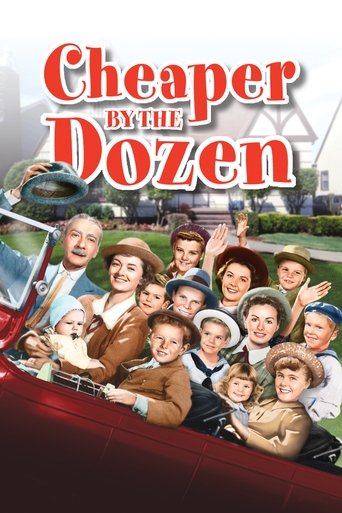
"Cheaper by the Dozen", based on the real-life story of the Gilbreth family, follows them from Providence, Rhode Island, to Montclair, New Jersey, and details the amusing anecdotes found in large families.

When Michael McCann is thrown over by the woman he loves, he becomes something of a misanthrope and a miser, spending all of his spare money on collectible gold coins. Living in the same town is an affluent family with two sons: John and Tanny. Tanny's a wild boy, whom John cannot control, and one night he breaks into McCann's house, and steals the gold and disappears, which nearly confirms McCann's distrust of mankind. But then, a mysterious young woman dies in the snow outside McCann's house, and her small daughter makes her way to McCann's house and into McCann's life and heart.

The comedic adventures of an introverted boy left on the doorstep of a pair of reluctant, eccentric great-uncles, whose exotic remembrances stir the boy's spirit and re-ignite the men's lives.

Looking to adopt a child and unable to conceive a child of their own, the Morrisons' lives are turned upside down when a seven-year-old boy unexpectedly shows up on their doorstep.

The Oscar-winning cat-and-mouse twosome--Tom and Jerry--returns with another adventure. When Tom and Jerry's irrepressible curiosity gets the best of them, the mysterious magic ring that Tom guards with his life ends up stuck over Jerry's head. Now, Jerry must find a way to free himself of the ring while fleeing Tom, who wants to remove the ring any way he can! Find out if the pair can conjure up a solution in this fur-raising, madcap escapade.

Based in a London suburb Mahmud Nasir lives with his wife, Saamiya, and two children, Rashid and Nabi. His son plans to marry Uzma, the step-daughter of Egyptian-born Arshad Al-Masri, a so-called 'Hate Cleric' from Waziristan, Pakistan. Mahmud, who is not exactly a devout Muslim, he drinks alcohol, and does not pray five times, but does agree that he will appease Arshad, without whose approval the marriage cannot take place. Shortly thereafter Mahmud, while going over his recently deceased mother's documents, will find out that he was adopted, his birth parents were Jewish, and his name is actually Solly Shimshillewitz.

A group of suburban teenagers try to support each other through the difficult task of becoming adults.

Against the backdrop of 18th century England, a massive pox outbreak, and Jacobite uprising – Sir Chauncey Savage and Lady Savage blindly pursue a better life. It's not without a tinge of irony that their family name is the Savages, for this is a Savage House indeed, filled with duels, decadence, and bloodshed.

A burned-out paramedic tries to survive his last 24 hours on the job while training a new recruit.

A young filmmaker in 1960s Paris juggles directing a cheesy sci-fi debacle, directing his own personal art film, coping with his crumbling relationship with his girlfriend, and a new-found infatuation with the sci-fi film's starlet.
Similar titles
Directed by Kamal Dehane
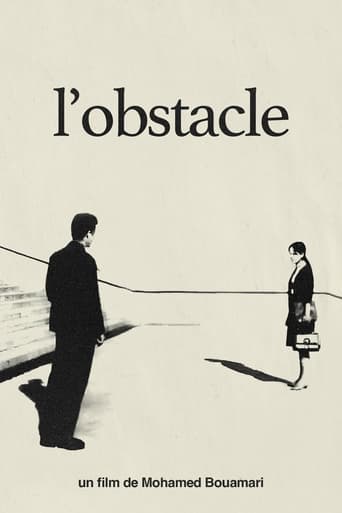
Algerian youth of the 1960s, straddling traditional South Mediterranean and Western culture and the desire for emancipation of younger generations to find true love.
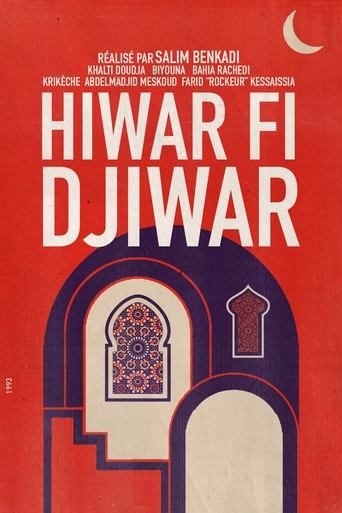
The daily life and tribulations of colorful residents in the millennial popular district of the Casbah of Algiers.
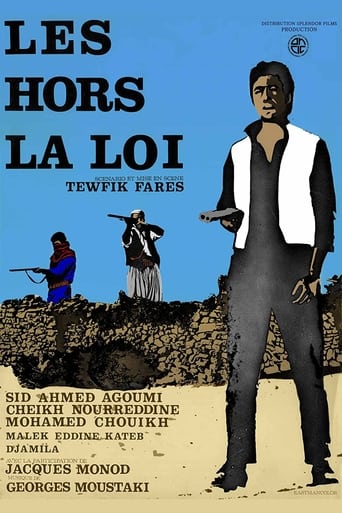
In prison in colonial Algeria, shortly after the end of the Second World War, three indigenous cellmates make out. Once free, they attack the authority represented by the triad of the boss, the gendarme and the administrator. “Living the colonial condition,” confided Tewfik Farès, “is something! It’s not sociologically or historically speaking. It’s life. And I think that’s all there in it. [...] For a hundred and thirty years, we wait. We hold back. We push back. We hope. At the same time, on different occasions, there are skirmishes, unrest.
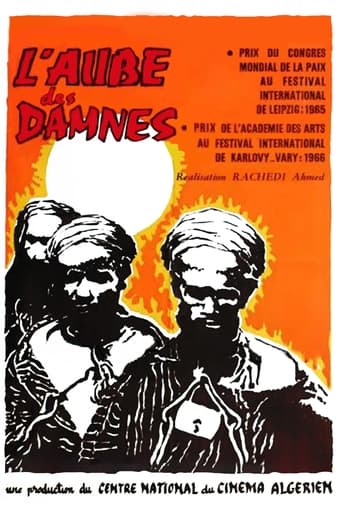
This excellent feature-length documentary - the story of the imperialist colonization of Africa - is a film about death. Its most shocking sequences derive from the captured French film archives in Algeria containing - unbelievably - masses of French-shot documentary footage of their tortures, massacres and executions of Algerians. The real death of children, passers-by, resistance fighters, one after the other, becomes unbearable. Rather than be blatant propaganda, the film convinces entirely by its visual evidence, constituting an object lesson for revolutionary cinema.
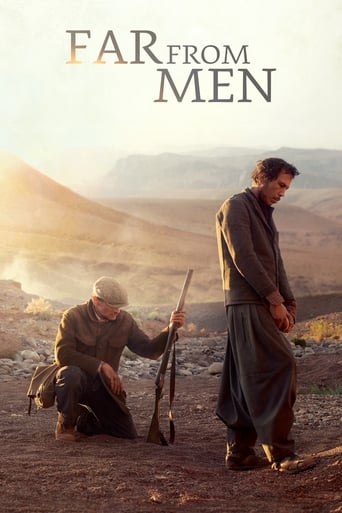
A French teacher in a small Algerian village during the Algerian War forms an unexpected bond with a dissident who is ordered to be turned in to the authorities.

Djamila, a young Algerian woman living with her brother Hadi and her uncle Mustafa in the Casbah district of Algiers under the French occupation of Algeria, sees the full extent of injustice, tyranny and cruelty on his compatriots by French soldiers. Jamila's nationalist spirit will be strengthened when French forces invade her university to arrest her classmate Amina who commits suicide by ingesting poison. Shortly after the prominent Algerian guerrilla leader Youssef takes refuge with her, she realizes that her uncle Mustafa is part of this network of anti-colonial rebel fighters. Her uncle linked her to the National Liberation Front (FLN). A series of events illustrate Jamila's participation in resistance operations against the occupier before she was finally captured and tortured. Finally, despite the efforts of her French lawyer, Jamila is sentenced to death...
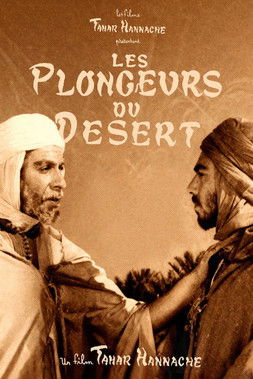
Les Plongeurs Du Désert, directed by Tahar Hannache in 1952, is considered the first entirely Algerian fiction film. It tells the story of the inhabitants of an oasis whose well has dried up. The village elder, Sheikh Messaoud, calls upon the renowned desert divers, artisans specializing in clearing sand- and silt-filled wells, to restore access to the vital water for the community. After their intervention, the water begins to flow again, bringing relief to the oasis and its inhabitants. The film depicts the contrast between the traditional techniques of the divers, embodied by Sheikh Ali and his son Mansour, and the arrival of modernity, represented by the machine that ultimately replaces their craft. This story symbolizes the marginalization of local knowledge in the face of technological progress and the social injustice of the colonial era.

Selim Mechoubine, a young man of 28, is the eldest of a large family. In the cramped accommodation he shares with his parents, brothers and sisters... he occupies the kitchen, the refuge of his dreams and his many fantasies. Selim, the court clerk where divorcing couples parade..., wants to get married. His mother finds him “the rare pearl”. But now, the bride's family demands that the couple have their own home... Selim's misadventure begins; he finds himself confronted with the problems of the housing crisis which forces him to begin a long quest, procedures, requests to find the sine qua non condition for his marriage.
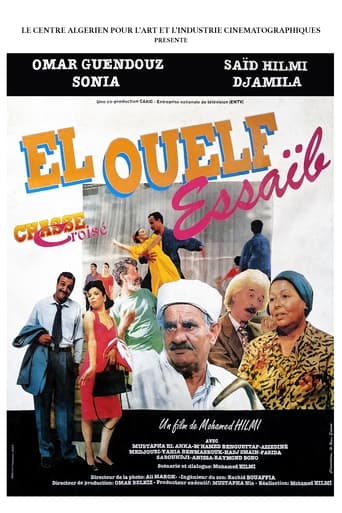
An Algerian music composer and his friends live a thrilling story, full of twists and turns.
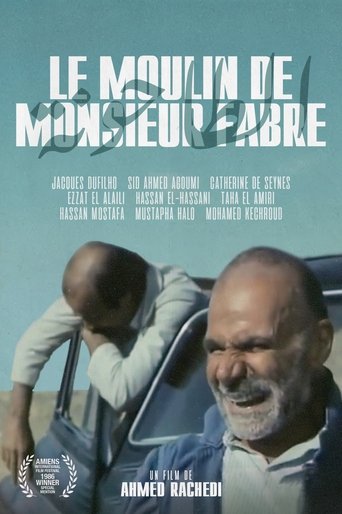
The story of the post-independence nationalization of the mill of Monsieur Fabre, an old man attached to the land of Algeria where he was born. In this small town in eastern Algeria, there was nothing else to nationalize and they were actively preparing for the arrival of high dignitaries who would elevate the mill to the rank of an industrial flour mill even though it was threatened with ruin. The comedy gets worse when the football player from the local team withdraws for love, the officials' visit is canceled and Mr. Fabre returns.
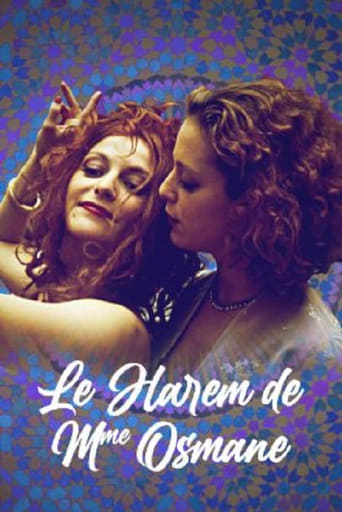
In Algiers in 1993, while the civil war is starting, Mrs Osmane's tenants have to endure her bad temper. Her husband left her and the fear to lose her respectability haunt her. The former member of the Resistance during the Independence War persists in controlling the slightest moves of the households rather than struggle against her own frustrations. Learning her daughter is in love, the possibility of finding herself alone will push her to the limit: The symbolical Mrs Osmane "harem" is about to collapse.
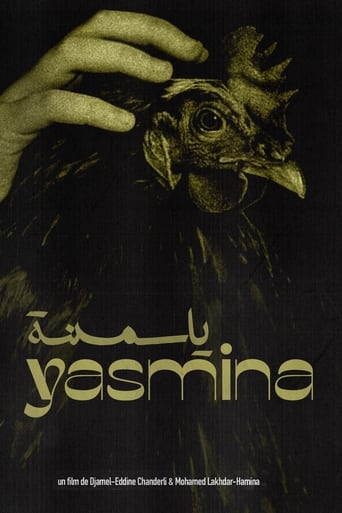
"Yasmina" filmed in 1961 in the middle of the Algerian war tells the story of a little Algerian girl with her hen and her family whose father was killed in a bombing by the French colonial army of occupation. The family, after a long journey, heads towards the refugee camps on the Tunisian border. Produced by the Cinema Service of the Provisional Government of the Algerian Republic (GPRA) in the midst of the war of independence, these films were intended to re-inform the population and international public opinion on the abuses committed by the French colonial army: torture, arrests and arbitrary executions, napalm bombings, fires in douars, entire villages wiped off the map, etc. which the French media described as a "pacification" campaign. The latter censoring or reorienting any images that could harm the colonial narrative.

In Kabylie, rude mountain region in the north of Algeria. Arezki finds the young Larbi exhausted, buried under the snow. He takes him in and nurses him until he's recovered. The host seduces Arezki's daughter. She is pregnant. This is an unsupportable shame to the father of the female sinner. Arezki claims vengeance. He leaves his house and takes the oath not to come back before having killed Larbi who betrayed him under his own roof.
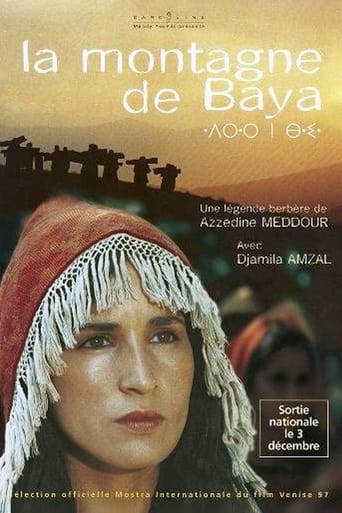
Set in the 1800s among the Berbers of North Africa, this 1997 Algerian feature concerns a noble widow who receives a customary purse of gold coins from the enemy tribe that murdered her husband; the gift puts her in conflict with her kinsmen, who want the money to buy back land taken by the enemy in cahoots with French colonials.
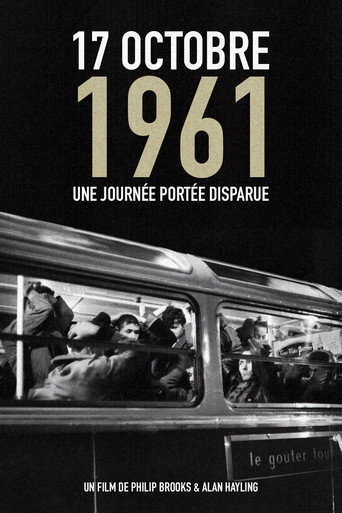
This documentary bears witness to the events that took place more than thirty years before the filming of this movie, on October 17, 1961, in Paris, during the Algerian War. It is a work not only about historical truth but also about memory. Constructed primarily from interviews conducted with those involved in the events, along with archival footage, photographs, and radio broadcasts from the time, our investigation proves that nearly 200 Algerians were killed (drowned, tortured) that night and in the days that followed by the French police. "A Missing Day" seeks to ask two key questions: how could such events have unfolded in the capital of a Western democracy barely thirty years ago? And why have they been silenced ever since?
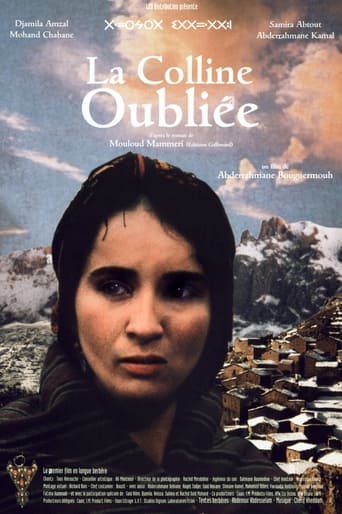
At the outbreak of the Second World War, two friends, Mokrane and Menach, abruptly interrupt their studies and return to their remote native Kabylian village of Tagsa. While waiting to be drafted into the French Army they have time to woo. Mokrane falls for beautiful Aazi and soon marries her only to find out that she can bear no child. Menach, on his part, is stongly attracted to Davda, but the latter is already married to a rich merchant...Happiness does not seem to be in store for the two former students...

27 years after 1962, Antoine returns to Algiers...
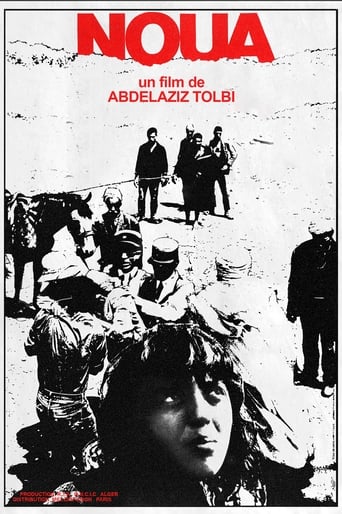
In Algeria in 1954, in a village in the Aurès region, poverty reigns over peasants enslaved by colonial administrators and Algerian landowners. Noua, in love with the son of a peasant dispossessed of his land, must be sold to a wealthy landowner.
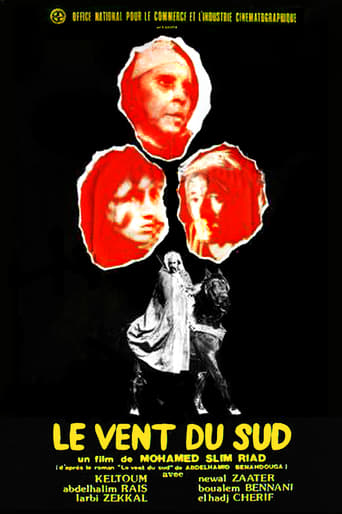
Néfissa, a student in Algiers, returns to her village in the south in the summer. Her father wants her to marry the mayor but she wants to continue her studies. Confronting her father and the opinion of the villagers who do not understand her, she decides to flee to Algiers. The shepherd Rabah discovering her wounded and lost in the mountains, has her treated by her mother. In contact with Nefissa, Rabat becomes aware of his exploited condition and discovers the possibilities offered to him by the cooperatives of the agrarian revolution. The two young people will go through the decisive stage together which will allow them to escape obscurantism and exploitation. Based on the novel "Le vent du sud" by Abdelhamid Benahouga