
Cambodia, After Farewell
2012-12-25 · 100 min · Not rated
Hope and closure are not always words that come to mind when discussing a film about the Khmer Rouge, whose bloody, fanatical rule from 1975 to 1979 resulted in the deaths of more than two million people from starvation, disease, torture and executions. But these two do come together, despite the pain of memories, in Cambodia After Farewell, a well-acclaimed, 100-minute documentary by French Cambodian director Iv Charbonneau-Ching and Jeremy Knittel to mark 4 decades since the Khmer Rouge took control of the Southeast Asian country to put in place the purest form of communism and the ideal agrarian society. The documentary follows the journey back to Cambodia – and into the past – of the family of Iv Charbonneau-Ching, with his mother and aunt, as they reconstruct, piece by piece, what happened to the family members they lost to the Khmer Rouge.
Trailers are previews, not full movies.
No authorized playback source configured. Use the legal watch options below.
Production details
- Directors
- Iv Charbonneau-Ching, Jeremy Knittel
- Production companies
- Ana Film
- Countries
- Unavailable
- Status
- Released
Top Cast
Cast unavailable.
Title information and images are supplied by TMDb. Explore our discovery guide for advice on comparing metadata and legal viewing options.
Where to watch
Availability provided by JustWatch via TMDb. Offers can change. Provider links are listed on TMDb; full playback requires a separately authorized source.
Availability not listed for this country.
Seasons & episodes
Recommendations

A documentary on the expletive's origin, why it offends some people so deeply, and what can be gained from its use.

In an intimate and joyful story of love in the face of loss, celebrated poets Andrea Gibson and Megan Falley find strength—and unexpected hilarity—in what might be their final year together.
Stars of "The Walking Dead," Andrew Lincoln and Danai Gurira, walk down memory lane and visit iconic locations where pivotal moments between their characters, Rick and Michonne, were filmed.

As a visually radical memoir, CAMERAPERSON draws on the remarkable footage that filmmaker Kirsten Johnson has shot and reframes it in ways that illuminate moments and situations that have personally affected her. What emerges is an elegant meditation on the relationship between truth and the camera frame, as Johnson transforms scenes that have been presented on Festival screens as one kind of truth into another kind of story—one about personal journey, craft, and direct human connection.

A compilation of over 30 years of private home movie footage shot by Lithuanian-American avant-garde director Jonas Mekas, assembled by Mekas "purely by chance", without concern for chronological order.

Director Michael Apted revisits the same group of British-born adults after a 7 year wait. The subjects are interviewed as to the changes that have occurred in their lives during the last seven years.
This special explores the return of Obi-Wan Kenobi and Anakin Skywalker to the screen, as well as Ewan McGregor and Hayden Christensen to their classic roles. Director Deborah Chow leads the cast and crew as they create new heroes and villains that live alongside new incarnations of beloved Star Wars characters, and an epic story that dramatically bridges the saga films.

From the heights of her modeling fame to her tragic death, this documentary reveals Anna Nicole Smith through the eyes of the people closest to her.

A documentary about the life and films of director John Ford.

Documentary filmmaker Amy Berg investigates the life of 30-year pedophile Father Oliver O'Grady and exposes the corruption inside the Catholic Church that allowed him to abuse countless children. Victims' stories and a disturbing interview with O'Grady offer a view into the troubled mind of the spiritual leader who moved from parish to parish gaining trust ... all the while betraying so many.

In the Realms of the Unreal is a documentary about the reclusive Chicago-based artist Henry Darger. Henry Darger was so reclusive that when he died his neighbors were surprised to find a 15,145-page manuscript along with hundreds of paintings depicting The Story of the Vivian Girls, in What is Known as the Realms of the Unreal, of the Glodeco-Angelinnian War Storm, Cased by the Child Slave Rebellion.

A 1993 documentary film about Bruce Lee. The film includes interviews from some of his fellow students and opponents who worked alongside him in his movies.

A documentary about how a dominant cultural and demographic institution both sustains their traditional activities and adapts to the digital revolution.
Featuring never-before-seen footage, this documentary delivers a startling new look at the Peoples Temple, headed by preacher Jim Jones who, in 1978, led more than 900 members to Guyana, where he orchestrated a mass suicide via tainted punch.

The story lives forever in this feature-length documentary that charts the making of Star Wars: The Rise of Skywalker.

A subjective documentary that explores various theories about hidden meanings in Stanley Kubrick's classic film The Shining. Five very different points of view are illuminated through voice over, film clips, animation and dramatic reenactments.
An intimate documentary delving into Rian Johnson's process as he comes in as a director new to the Star Wars universe.

Director Michael Apted revisits the same group of British-born adults after a 7 year wait. The subjects are interviewed as to the changes that have occurred in their lives during the last seven years.
An inside look at the years of effort and craft that went into the final installment of the Duffer Brothers' generation-defining series.

BBC Arena's documentary on the Dames of British Theatre and film featuring Maggie Smith, Eileen Atkins, Judi Dench and Joan Plowright on screen together for the first time as they reminisce over a long summer weekend in a house Joan once shared with Sir Laurence Olivier.
Similar titles
Chomsky on the media treatment of the Indonesian invasion of East Timor and Pol Pot's atrocities in Cambodia
A moving psychological portrait of Cambodia decades after a devastating genocide, examining how baksbat (Khmer for "broken courage") continues to impact modern Cambodia.
Through daily routines in a rural village, an indigenous elder couple recall their strange marriage to their grand-daughter, and sometimes to each other, in the changing rhythm of nature around them.
Profile of the Cambodian King Norodom Sihanouk, at the head of a country that has experienced colonization, the wars of the 20th century and the tragic period of the Khmers Rouge.

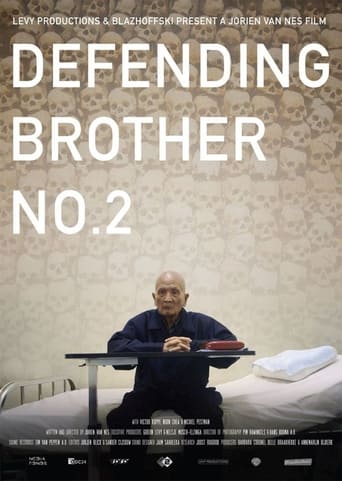
Two Dutch lawyers, Michiel Pestman and Victor Koppe, travel to Cambodia in 2011 to defend Nuon Chea in an international tribunal. Nuon Chea, also known as Brother No. 2, was the second man after Pol Pot in the Khmer Rouge regime. He is being charged with mass murder and crimes against humanity. For four years, the documentary follows the lawyers in their attempt to give this man a fair trial, but the UN tribunal is beset by local interests and a government which consists partly of other former members of the Khmer Rouge who would really like all of the blame to rest solely on the defendant. What should've been the crowning achievement in the careers of the lawyers turns out very different.
In search of the lucrative matsutake mushroom, two former soldiers discover the means to gradually heal their wounds of war. Roger, a self-described 'fall-down drunk' and sniper in Vietnam, and Kouy, a Cambodian refugee who fought the Khmer Rouge, bonded in the bustling tent-city known as Mushroom Camp, which pops up each autumn in the Oregon woods. Their friendship became an adoptive family; according to a Cambodian custom, if you lose your family like Kouy, you must rebuilt it anew. Now, however, this new family could be lost. Roger's health is declining and trauma flashbacks rack his mind; Kouy gently aids his family before the snow falls and the hunting season ends, signaling his time to leave.
The Khmer Rouge slaughtered nearly two million people in the late 1970s. Yet the Killing Fields of Cambodia remain unexplained. Until now. Enter Thet Sambath, an unassuming, yet cunning, investigative journalist who spends a decade of his life gaining the trust of the men and women who perpetrated the massacres. From the foot soldiers who slit throats to Pol Pot's right-hand man, the notorious Brother Number Two, Sambath records shocking testimony never before seen or heard. Having neglected his own family for years, Sambath's work comes at a price. But his is a personal mission. He lost his parents and his siblings in the Killing Fields. Amidst his journey to discover why his family died, we come to understand for the first time the real story of Cambodia's tragedy.
Bomb Hunters is an engrossing examination of the micro-economy that has emerged in Cambodia from untrained civilians harvesting unexploded bombs as scrap metal. The film explores the long-term consequences of war and genocide in an attempt to understand the social, cultural, and historical context and experiences of rural villagers who seek out and dismantle UXO (unexploded ordnance) for profit. Part of a global economy, these individuals clear UXO from their land in order to protect their families from harm and to earn enough money to survive. Bomb Hunters is an eye-opening account investigating the on-going residual, persistent effects of war experienced by post-conflict nations around the globe, and the complex realities of achieving "peace".
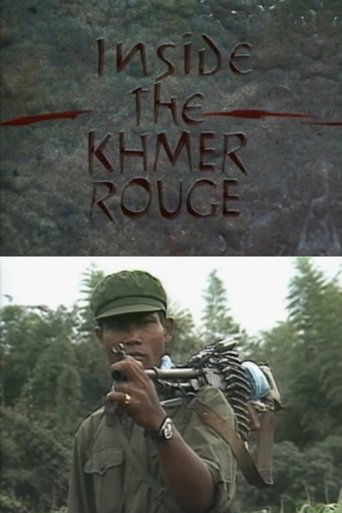
Inside the Khmer Rouge takes an in-depth look at the history, domination, and current status of the Khmer Rouge (a Communist regime) in Cambodia. The film features revealing interviews with soldiers of both the modern Khmer Rouge and those who fight in opposition. A comprehensive timeline of the regime's five-year occupation in Cambodia is dissected and includes a review of key individuals, ideologies, and locations where devastation hit hardest. Following this, the film takes a look at the effects on the Cambodian citizens upon the retraction of Vietnamese forces. Inside the Khmer Rouge continues to investigate the current tactics the modern Khmer Rouge implement and their attempts to persuade followers in order to rebuild and expand their regime. Oppositely, local forces or "jungle soldiers" discuss their devices for assuring the destruction and atrocities once caused by the Khmer Rouge never happen again.
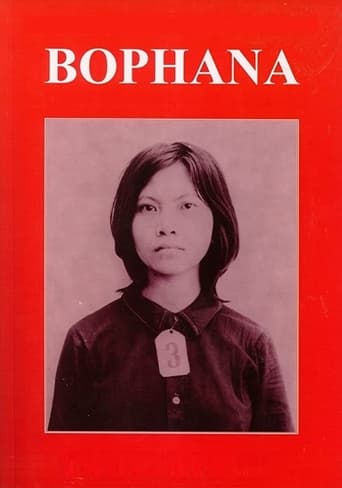
Based upon documentation of forced confessions made during the Khmer Rouge era in Cambodia, this film reconstructs the relationship of a young woman, Hout Bophana, and Ly Sitha before they were tortured in executed in 1977.
What happens to people, ethics, and morality when alcohol and capitalism are unleashed in a poor, corrupt country with few restrictions?
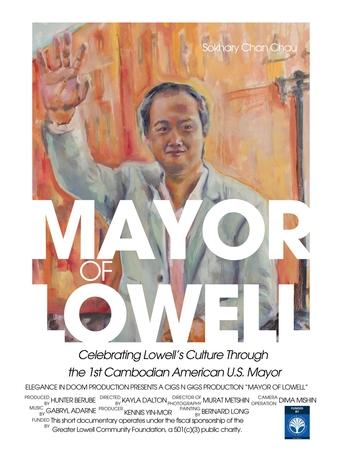
This short documentary chronicles the culture and arts of Cambodian Americans and the Lowell, MA community through the eyes of Sokhary Chau, the first Cambodian American Mayor in the United States. Chau immigrated to the U.S. at seven years old to escape the Khmer Rouge genocide. Through this unique story that showcases the best of Lowell—immigrant success, assimilation, history, and the development of the arts—we see a man born into a war-torn country who comes to America to be a first-in-the-nation leader.
Documentary about Cambodia featuring a long interview with Pol Pot
John Pilger shows how the UN has allowed the Khmer Rouge to grow stronger.
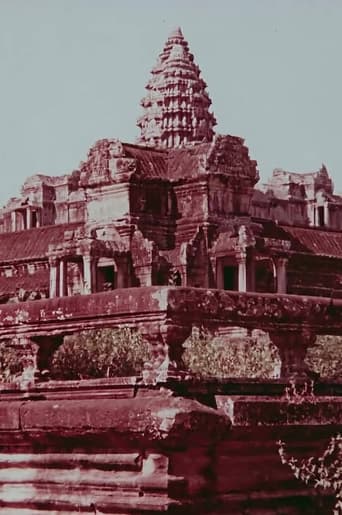
The film directed by V. Starošas tells about Angkor, a huge complex of temples, palaces, water reservoirs and canals in Cambodia, built in the jungle in the 9th-13th centuries.
1989. An examination of how the UN protected and revitalised the Khmer Rouge.
In 1972, during Cambodia's civil war, a sandstone statue was torn from the age-old Koh Ker temple. Measuring 1.58m high and weighing 110 kilos, it depicts a prince and belongs to a collection that retraces the epic of the Mahabharata. The sculpture was first sold at auction in London in 1975, via a strange British art dealer based in Bangkok, and reappeared in 2011 at Sotheby's in New York with a bid of $2.5 million. A sale that was ultimately prohibited. In the meantime, experts from the École française d'Extrême-Orient, an American lawyer commissioned by Phnom Penh and UNESCO mobilized the Heritage Police across the Atlantic to denounce the theft of a cultural asset. In 2013, the work was returned to Cambodia. A captivating investigation into the international mafia of antiquities trafficking.
The face of Cambodia is a documentary about the city Angkor Wat. Angkor Wat was lost for 700 years and is one of the Seven wonders of the World. The population of Angkor was around a million and the city covers more than a 400 square kilometer area.

It's Seattle 2006: A refugee teenager from Cambodia begins recording a video diary early in the summer to explain the meaning of "thug life." But ultimately his summer is defined by tragedy. Awarded Best Documentary at the DC Asian Pacific American Film Festival 2019