
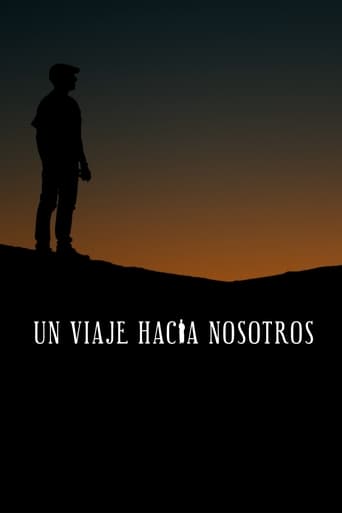
Un viaje hacia nosotros
2021-12-19 · 67 min · Not rated
Spanish actor Pepe Viyuela embarks on a personal journey on the trail of his grandfather Gervasio, a soldier in the Republican Army during the Spanish Civil War.
Trailers are previews, not full movies.
No authorized playback source configured. Use the legal watch options below.
Production details
- Directors
- Luis Cintora
- Production companies
- AV2media, El Vodevil, Queplanay, Proyectos Sociales Ahoraonunca
- Countries
- Peru, Spain
- Status
- Released
Top Cast
 Pepe ViyuelaSelf
Title information and images are supplied by TMDb. Explore our discovery guide for advice on comparing metadata and legal viewing options.
Where to watch
Availability provided by JustWatch via TMDb. Offers can change. Provider links are listed on TMDb; full playback requires a separately authorized source.
Availability not listed for this country.
Seasons & episodes
Recommendations
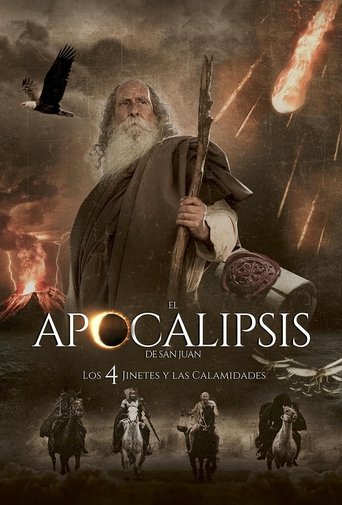
Embark on an epic journey through time and faith with 'The Apocalypse of Saint John.' Join the Apostle John in a stunning visual narrative that unravels the visions of the End Times. Experience each vision like never before, with striking visual effects and epic scenes that immerse you in the apocalyptic narrative.

Ranjit, a farmer in India, takes on the fight of his life when he demands justice for his 13-year-old daughter, the victim of a brutal gang rape. His decision to support his daughter is virtually unheard of, and his journey unprecedented.

An unprecedented and intimate look at the life, work and enduring legacy of British actress Audrey Hepburn (1929-1993).

This revealing documentary honors the legendary Sidney Poitier—iconic actor, filmmaker, and civil rights activist. Featuring interviews with Denzel Washington, Spike Lee, Halle Berry, and more.

Former United States Secretary of Defense Donald Rumsfeld discusses his career in Washington D.C. from his days as a congressman in the early 1960s to planning the invasion of Iraq in 2003.

A documentary on the expletive's origin, why it offends some people so deeply, and what can be gained from its use.

He's devoted his career to uncovering stories the powerful want buried. From My Lai to Abu Ghraib, dig into the life's work of journalist Seymour Hersh.

Through deeply personal interviews with her siblings and an examination of the photographs, letters, and belongings left behind, Mariska assembles a new portrait of her mother Jayne Mansfield, an extraordinary and complex woman.

When Allied forces liberated the Nazi concentration camps in 1944-45, their terrible discoveries were recorded by army and newsreel cameramen, revealing for the first time the full horror of what had happened. Making use of British, Soviet and American footage, the Ministry of Information’s Sidney Bernstein (later founder of Granada Television) aimed to create a documentary that would provide lasting, undeniable evidence of the Nazis’ unspeakable crimes. He commissioned a wealth of British talent, including editor Stewart McAllister, writer and future cabinet minister Richard Crossman – and, as treatment advisor, his friend Alfred Hitchcock. Yet, despite initial support from the British and US Governments, the film was shelved, and only now, 70 years on, has it been restored and completed by Imperial War Museums under its original title "German Concentration Camps Factual Survey".

The history of cinematic sound, told by legendary sound designers and visionary filmmakers.
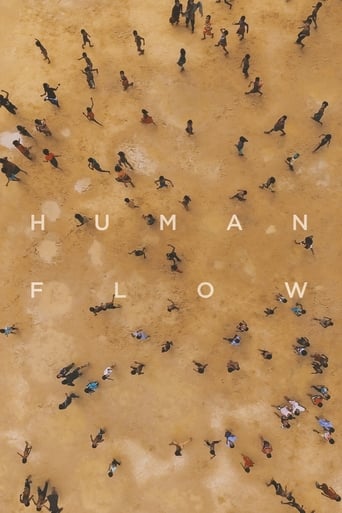
More than 65 million people around the world have been forced from their homes to escape famine, climate change and war, the greatest displacement since World War II. Filmmaker Ai Weiwei examines the staggering scale of the refugee crisis and its profoundly personal human impact. Over the course of one year in 23 countries, Weiwei follows a chain of urgent human stories that stretch across the globe, including Afghanistan, France, Greece, Germany and Iraq.
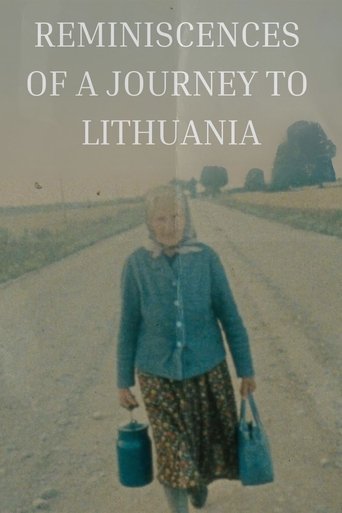
Jonas Mekas weaves an elegiac diary film from his 1971–72 return to Lithuania, chronicling a visit to his birthplace of Semeniškiai after decades in exile. Blending personal memory with documentary observation, the film becomes both a portrait of homecoming and a meditation on displacement, family, and the passage of time.
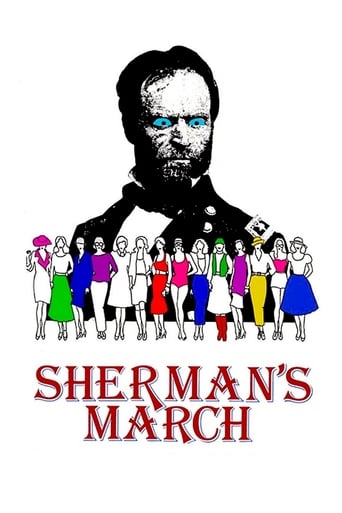
Documentarian Ross McElwee originally set out to make a travelogue of sorts tracing General William T. Sherman's infamous scorched-earth march through the Confederacy in the latter stages of the Civil War. Instead, haunted by a recent breakup with a girlfriend, McElwee ends up documenting his progress -- or lack thereof -- in starting a new relationship. His journey then becomes one of self-reflection and self-discovery rather than a historical/sociological exploration.

The life and career of an actor, artist, and icon. His own journey through his own camera.

In an intimate and joyful story of love in the face of loss, celebrated poets Andrea Gibson and Megan Falley find strength—and unexpected hilarity—in what might be their final year together.

A compilation of over 30 years of private home movie footage shot by Lithuanian-American avant-garde director Jonas Mekas, assembled by Mekas "purely by chance", without concern for chronological order.

Oliver Stone charts the history of the United States from the Second World War to the present.
The chronicle of the political tension in Chile in 1973 and of the violent counter revolution against the democratically elected government of Salvador Allende.

A detailing of the rise to prominence and global sporting superstardom of six supremely talented young Manchester United football players (David Beckham, Nicky Butt, Ryan Giggs, Paul Scholes, Phil and Gary Neville). The film covers the period 1992-1999, culminating in Manchester United's European Cup triumph.
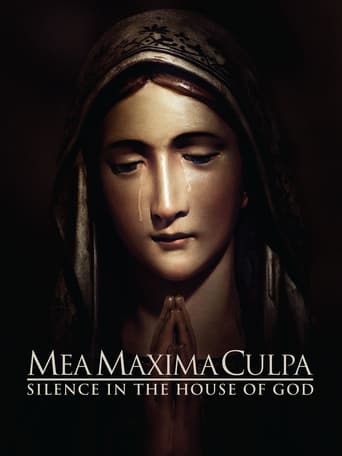
Alex Gibney explores the charged issue of pedophilia in the Catholic Church, following a trail from the first known protest against clerical sexual abuse in the United States and all way to the Vatican.
Similar titles

In a contemplative coming of age portrait, PINBALL follows Yosef, a spirited athlete, in Louisville, Kentucky as he dives into the memories of his journey from Iraq to America and what it means to chase his dreams in the shadow of a war that displaced his family from their Iraqi homeland.
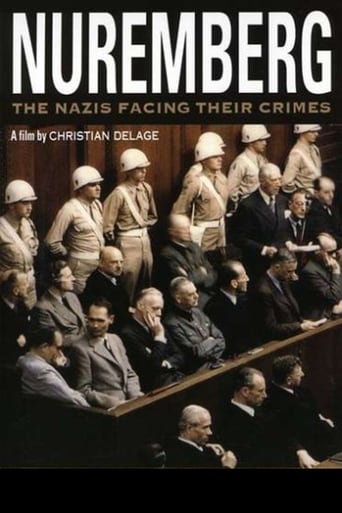
The documentary of the Nuremberg War Trials of 21 Nazi dignitaries held after World War II.
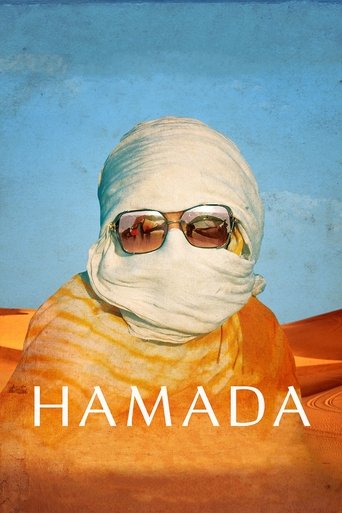
Filled with vitality, humor and unexpected situations, Hamada paints an unusual portrait of a group of young friends living in a refugee camp in the middle of nowhere. Western Sahara is known as “the last colony in Africa” and this conflict is the longest and one of the least known ongoing disputes in the continent, but the Sahrawi people refuse to become invisible.
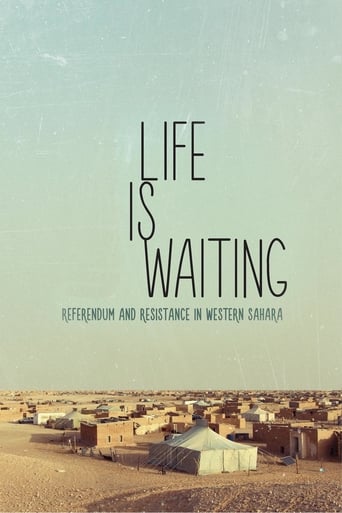
Forty years after its people were promised freedom by departing Spanish rulers, Western Sahara remains Africa's last colony. This film chronicles the everyday violence experienced by Sahrawis living under Moroccan occupation and voices the aspirations of a desert people for whom the era of colonialist never ended.
In this exclusive broadcast, Democracy Now! breaks the media blockade and goes to occupied Western Sahara in the northwest of Africa to document the decades-long Sahrawi struggle for freedom and Morocco's violent crackdown. Morocco has occupied the territory since 1975 in defiance of the United Nations and the international community. Thousands have been tortured, imprisoned, killed and disappeared while resisting the Moroccan occupation. A 1,700-mile wall divides Sahrawis who remain under occupation from those who fled into exile. The international media has largely ignored the occupation—in part because Morocco has routinely blocked journalists from entering Western Sahara. But in late 2016 Democracy Now! managed to get into the Western Saharan city of Laayoune, becoming the first international news team to report from the occupied territory in years.

After the Taliban takeover in 2021, LineOut follows Afghan refugees in a poetic dreamscape where a metaphoric voice reflects grief, healing, and the fragile balance between holding on and letting go.
Documentary about the arduous early years of the Sahrawi cause (1977)

The Sahrawi women relate their exil, the tortures, their memories and the difficulties of life as refugees. They are beautiful, touching... Educated by the Polisario Front and attached to the values of islam, they are widows, divorcede or married to fighting men. Owing to the force of circumstances, they have built a society of independant muslim women...

Dadah, a Sahrawi boy living in the Dakhla refugee camp, knows nothing beyond life in the desert, the sand-filled air, the ever-present dunes on the horizon, school, games, the sullen world of the conversations that adults have while they make tea… Through film, he will discover very different worlds.
Documentary about Aminatou Haidar and her fight for the Sahrawi rights

Filmed in the camps of Sahrawi refugees living in West-Algeria and Tifaritti (the liberated territory). The narrator, in his multiple interviews, examines the reality of these people who have been condemned to silence in exile. This is a direct and concise documentary that gives the refugees the opportunity to express themselves, as well as hearing from other people implicated in the conflict.
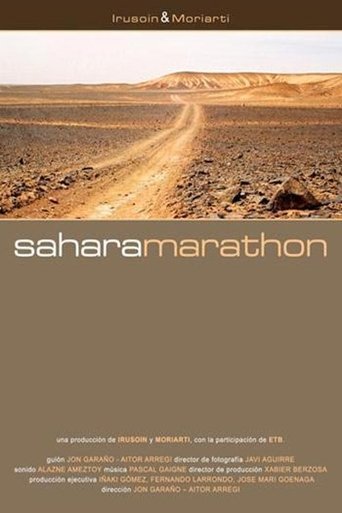
This film offers a picture of the tense situation in which the Sahrawi people have lived for more than 30 years. The yearly celebration of a marathon in the Sahrawi refugee camps serves as the central focus of the story.

The documentary gives as overview of the history of the Sahrawi people and their current situation in the refugee camps and in the liberated territories of Western Sahara. It describes how water, education, land etc. are managed.

In April of 2006 a total of 150 disposable cameras were distributed in two of the Sahrawi refugee camps with the objective of producing a self-portait of refugee families who have lived in the desert for 30 years.
This film presents, through the eyes four students - Gemma, Colo, Cristian and Mireia - their experience of the trip, the feelings that moved them, the work carried out in the camps and, above all, their contribution to raising awareness of the unresolved difficulties the Sahrawi people face.
An approach to Sahrawi culture, different aspects of daily life, culture and the struggle of the Sahrawi people in the Sahrawi refugee camps in Tindouf, Algeria, and in the area of the liberated territories of Tifariti.
In April 2007, during the celebration of FiSahara, three friends embarked on the adventure of teaching a photography course in the Dajla refugee camp in Algeria.

Ali Salem Hamudi Mohamed - Yahdih, was born in 1955 in El Aaiún (Western Sahara). He completed his secondary schooling in the "Spanish" Sahara. A scholarship allowed him to enrol at the Universidad de la Peninsula in 1975, but Morocco's invasion of the Sahara led him to return to the city of his birth and go into exile with his people, participating in the resistance and helping to organise the Tindouf Refugee Camps (Algeria). In 1980, the Polisario Front and the Government of Cuba offered him the opportunity to study Architecture at the University of Havana. On his return to the Camps in 1985 he worked for the SADR's Department of Construction. He designed more than twenty public buildings, including town halls, schools and nursery schools, and also collaborated with international aid organisations to build hospitals and training colleges. All of these buildings were built collectively by the Saharan people. ;In 1999 he emigrated to Spain. His family joined him five years later.
Tebraa is the song of the women of the Sahara desert. Songs of love or lamentation that they sing when they are alone. This collective documentary made by a group of Andalusian women tells the life and injustices that Sahrawi women experience in the adverse conditions of exile and in the occupied territories of Western Sahara.

On Our Doorstep delves deep into an aspect of the refugee crisis that rarely reached the press. With NGOs being blocked by red tape and the absence of any positive action by French or British authorities, the film is a behind-the-scenes look at the unprecedented grassroots movement that rose to aid the refugees in Calais, and the community that sprang up there, before it was forcefully demolished. This is the story of what happens when young and inexperienced citizens are forced to devise systems and structures to support 10,000 refugees; and are left unguided to face the moral and emotional conflicts, blurred lines and frequent grey areas of giving aid to vulnerable people. People who do not want to be there. It questions whether the aims of the volunteers were met, and whether these aims ultimately served the refugees' needs.