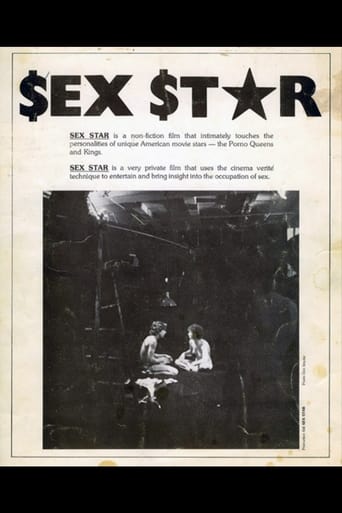
Sex Stars
1976-04-21 · Runtime unavailable · Not rated
Sex star gives an explosive behind the scenes view of the people who make sexual fantasies come true on the silver screen. Sex Stars is the first feature documentary made by Lech Kowalski.
Trailers are previews, not full movies.
No authorized playback source configured. Use the legal watch options below.
Production details
- Directors
- Lech Kowalski
- Production companies
- Arapaho Films
- Countries
- United States of America
- Status
- Released
Top Cast
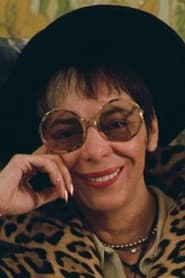 Shirley ClarkeSelf
 Georgina SpelvinSelf
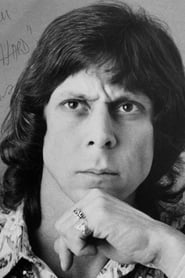 Marc StevensSelf
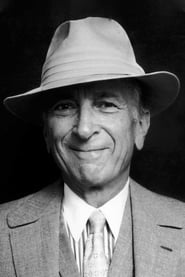 Gay TaleseSelf
 Andrea TrueSelf
Title information and images are supplied by TMDb. Explore our discovery guide for advice on comparing metadata and legal viewing options.
Where to watch
Availability provided by JustWatch via TMDb. Offers can change. Provider links are listed on TMDb; full playback requires a separately authorized source.
Availability not listed for this country.
Seasons & episodes
Recommendations
Documentary about legendary Paramount producer Robert Evans, based on his famous 1994 autobiography.

When Allied forces liberated the Nazi concentration camps in 1944-45, their terrible discoveries were recorded by army and newsreel cameramen, revealing for the first time the full horror of what had happened. Making use of British, Soviet and American footage, the Ministry of Information’s Sidney Bernstein (later founder of Granada Television) aimed to create a documentary that would provide lasting, undeniable evidence of the Nazis’ unspeakable crimes. He commissioned a wealth of British talent, including editor Stewart McAllister, writer and future cabinet minister Richard Crossman – and, as treatment advisor, his friend Alfred Hitchcock. Yet, despite initial support from the British and US Governments, the film was shelved, and only now, 70 years on, has it been restored and completed by Imperial War Museums under its original title "German Concentration Camps Factual Survey".
A subjective documentary that explores various theories about hidden meanings in Stanley Kubrick's classic film The Shining. Five very different points of view are illuminated through voice over, film clips, animation and dramatic reenactments.

A love letter from a young mother to her daughter, the film tells the story of Waad al-Kateab’s life through five years of the uprising in Aleppo, Syria as she falls in love, gets married and gives birth to Sama, all while cataclysmic conflict rises around her. Her camera captures incredible stories of loss, laughter and survival as Waad wrestles with an impossible choice– whether or not to flee the city to protect her daughter’s life, when leaving means abandoning the struggle for freedom for which she has already sacrificed so much.
Part jazz history, part true-crime tale, Kasper Collin’s new documentary employs extensive archival footage and new interviews to tell the tragic story of the magnificently talented trumpeter Lee Morgan and his common-law wife Helen, who murdered him in a New York bar in 1972.

The story of Robert Pilatus and Fabrice Morvan, who became fast friends during their youth in Germany. With Rob coming from a broken home and Fabrice having left an abusive household, they shared a similar upbringing, as well as a future goal: to become famous superstars. In a few short years, their dreams came true. Rob and Fab, better known as Milli Vanilli, became the world's most popular pop duo in 1990 and won the GRAMMY for Best New Artist. However, their ascension to success came with a devastating price that ultimately led to their infamous undoing.
An investigation of how Hollywood's fabled stories have deeply influenced how Americans feel about transgender people, and how transgender people have been taught to feel about themselves.
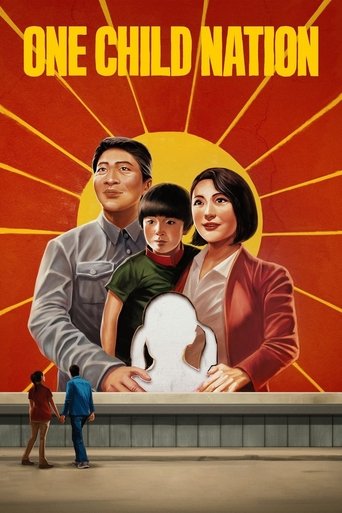
Through interviews with both victims and instigators, Nanfu Wang, a first-time mother, breaks open decades of silence on a vast, unprecedented social experiment that shaped — and destroyed — countless lives in China.
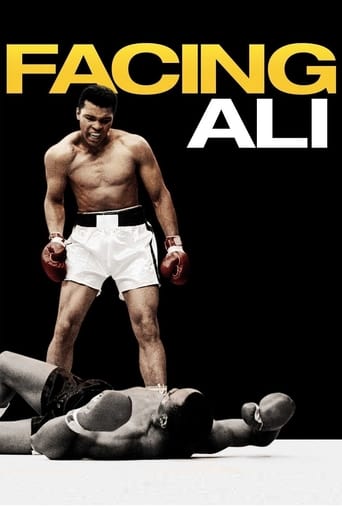
Ten of Muhammad Ali's former rivals pay tribute to the three-time world heavyweight champion.
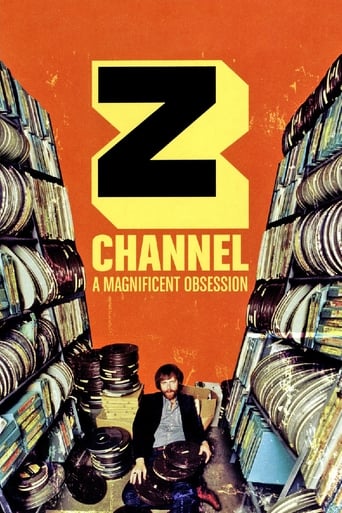
A documentary on the Z Channel, one of the first pay cable stations in the US, and its programming chief, Jerry Harvey. Debuting in 1974, the LA-based channel's eclectic slate of movies became a prime example of the untapped power of cable television.
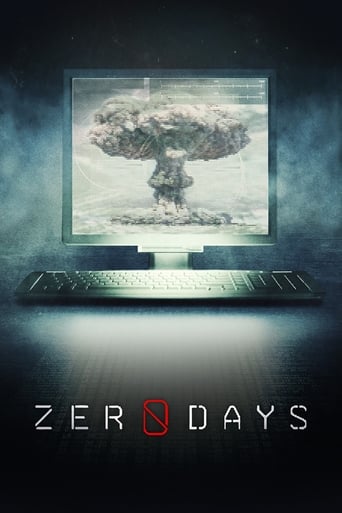
Alex Gibney explores the phenomenon of Stuxnet, a self-replicating computer virus discovered in 2010 by international IT experts. Evidently commissioned by the US and Israeli governments, this malware was designed to specifically sabotage Iran’s nuclear programme. However, the complex computer worm ended up not only infecting its intended target but also spreading uncontrollably.
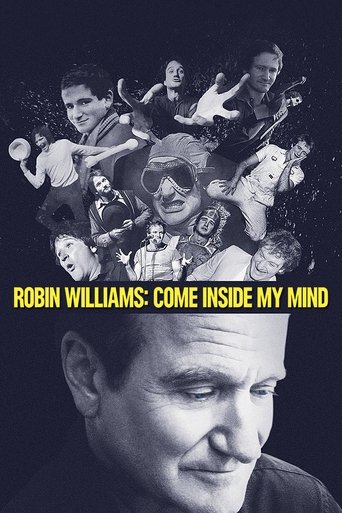
A funny, intimate and heartbreaking portrait of one of the world’s most beloved and inventive comedians, Robin Williams, told largely through his own words. Celebrates what he brought to comedy and to the culture at large, from the wild days of late-1970s L.A. to his death in 2014.
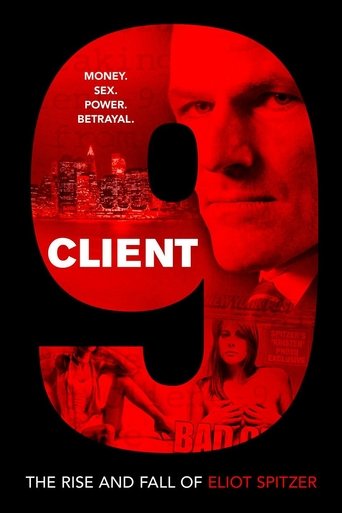
An in-depth look at the rapid rise and dramatic fall of New York Governor Eliot Spitzer.
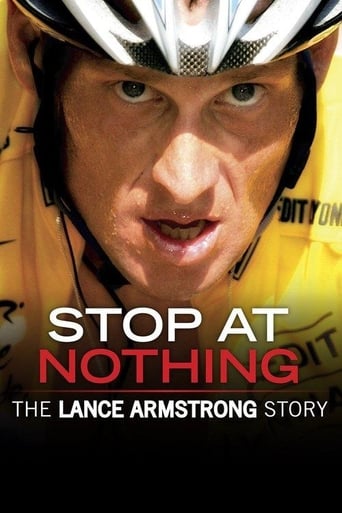
A portrait of the man behind the greatest fraud in sporting history. Lance Armstrong enriched himself by cheating his fans, his sport and the truth. But the former friends whose lives and careers he destroyed would finally bring him down.
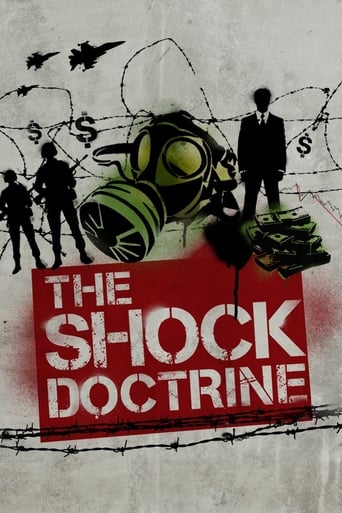
An investigation of "disaster capitalism", based on Naomi Klein's proposition that neo-liberal capitalism feeds on natural disasters, war and terror to establish its dominance.

This movie chronicles the life and times of R. Crumb. Robert Crumb is the cartoonist/artist who drew Keep On Truckin', Fritz the Cat, and played a major pioneering role in the genesis of underground comix. Through interviews with his mother, two brothers, wife, ex-wife and ex-girlfriends, as well as selections from his vast quantity of graphic art, we are treated to a darkly comic ride through one man's subconscious mind.
Deep beneath the surface in the Syrian province of Ghouta, a group of female doctors have established an underground field hospital. Under the supervision of paediatrician Dr. Amani and her staff of doctors and nurses, hope is restored for some of the thousands of children and civilian victims of the ruthless Syrian civil war.
50 years after the legendary fest, Barak Goodman’s electric retelling of Woodstock, from the point of view of those who were on the ground, evokes the freedom, passion, community, and joy the three-day music festival created.
Using previously unheard audiotapes recorded shortly after John Belushi’s death, director R.J. Cutler’s documentary feature examines the too-short life of the once-in-a-generation talent who captured the hearts and funny bones of devoted audiences.

Controversy erupts when an unassuming young man floods the American wine market with fake vintages valued in the millions, bamboozling the wine world elite, in this humorous and suspenseful tale of an ingenious con on the eve of the 2008 stock market crash.
Similar titles
Captain Kleinschmidt leads an expedition sponsored by the Carnegie Museum to the arctic regions of Alaska and Siberia to study the natives and the animal life.

During the COVID-19 pandemic, two college students set out to make a revolutionary television show. The pilot episode was uncovered and presented alongside exclusive interviews with the cast and crew.

In 1985, Star Trek's George Takei joined a group of dedicated fans to make a student film deep in the California forest—only for the footage to mysteriously vanish. Nearly 40 years later, Beam Me Up, Sulu unearths this lost film, revealing not just a piece of fan history but a broader story of representation, resilience, and the ongoing fight for inclusion in media and society. The film was released as Yorktown: A Time to Heal (2022)
Marilyn Monroe's final project, "Something's Got to Give", has become one of the most talked about unfinished films in history. The story of the film and Marilyn's last days were seemingly lost… until now. Through interviews, never-before-seen footage and an edited reconstruction of "Something's Got to Give", Marilyn Monroe: The Final Days provides a definitive and fascinating look at the last act in the life of the world's most famous and tragic superstar.
A Football Match at Newcastle-on-Tyne refers to a one-minute film recorded in October 1896 by English film pioneer Robert William Paul. According to several film and sports historians, it was the first known recording of a football match.
Vitagraph’s Battle of Santiago Bay (1898) blended real Spanish–American War footage with tabletop trickery. Albert E. Smith’s authentic San Juan material looked underwhelming, so he and partner J. Stuart Blackton staged the naval clash on a miniature set: cardboard ships afloat in shallow water, firecracker “explosions,” and clouds of smoke from cigars and cigarettes. Spliced together, the hybrid film was embraced as genuine by audiences and became one of the most popular war films of its day.

Jirón is the story of “Jirón de niebla” (Shred of Fog), the last film made by Mexico’s duque of horror, Carlos Enrique Taboada, which, for several reasons, was never shown or premiered. The mistery behind the disappearance of this film will be revealed in a series of interviews with the people who worked on it.
"Scenes from their (Guilherme and Lia Torá's) tests in Brazil, others taken at Paulo Benedetti's studio and garden, some excerpts from footage in which they are not present, excerpts from the 'formidable' reception in New York and natural scenes: of trains and Fifth Avenue." (Cinearte, 07.03.1929)

Documentary that captures Tom Petty and the band in 1982-1983 as they finish, promote, and tour around the “Long After Dark” album (their final with legendary producer Jimmy Iovine). It aired only once on MTV in 1983. After the long lost 16mm reels were finally found, a restored version with 19 minutes of extra footage was released in 2024.
A line is shot to the man clinging to the overturned boat. He fastens it to his body using all his fast failing strength. The crew pull him through the surf to the shore, where he is rolled and patted and worked over until resuscitated.
A showcase of trapeze artist Alciede Capitaine, billed as “The Perfect Woman,” whose daring feats on the flying bar combined grace with breathtaking athleticism. Produced by Edison in 1898, this title should not be confused with Dickson’s earlier 1894 short Mlle. Capitaine, which also featured the performer.
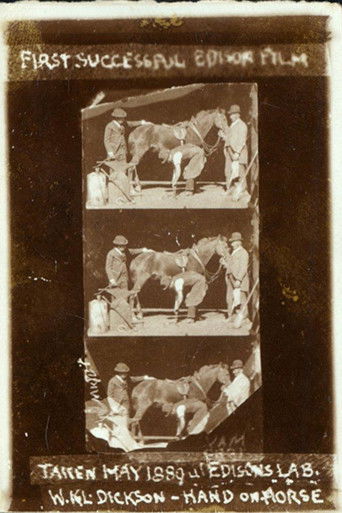
One of the pictures to be seen in the machine, for example, was that of a blacksmith shop in which two men were working, one shoeing a horse, the other heating iron at the forge. One would be seen to drive the nail into the shoe of the horse's hoof, to change his position and every movement needed in the work was clearly shown as if the object was in real (life). In fact, the whole routine of the two men's labor and their movements for the day was presented to the view of the observer.

LeGrande, an old trapper, refuses to vacate his favorite hunting grounds when ordered to do so by Sampson and other settlers, and his life is only saved through the intervention of his daughter, Joan. The rascals soon learn to fear the girl's keen wit and daring, and Sampson, already pledged to marry Sanchezza, a Mexican girl, falls in love with Joan.
At the opening of the film Pennsylvania Avenue is shown, nearly blocked by a motley mob of sightseers looking at the marching Suffragettes. The big banner demanding a Constitutional amendment guaranteeing equal rights to American women makes a pathway along which the Suffragettes are seen marching steadily and persistently, although still hemmed in by the mob.
A promotional one-reel film promoting the stars of Universal Pictures.

Silas Croft was a kindly old Englishman who had a farm in South Africa. With him resided his two nieces, whom he had taken from their drunken, worthless father when they were of a tender age. Jess, the elder, was brilliant and educated; Bess, the younger was beautiful, but frankly admitted that she did not possess the mental attainments of Jess. The two were great friends, and Jess, although the senior by only three years, had almost a motherly affection for her pretty little sister. Croft, finding old age stealing upon him, advertised for a partner, stipulating that he must be a gentleman. Probably it was his secret idea that the right man might come along, and fall in love with his favorite, beautiful Bessie.
Scene from a Trilby-themed stage play. Lost.
Lost film from 1888, directed by William Friese-Greene.

A documentary of explorer Richard Halliburton's travels on the Indian sub-continent, featuring a mix of real and staged footage.

In 1975 French Oscar-winning documentary filmmaker Pierre Dominique Gaisseau traveled to Panama to make a film on the indigenous island-dwelling Kuna people. Accompanied by his wife and their daughter, Gaisseau lived with the Kuna for a year, gaining their trust and filming their most intimate ceremonies. He promised to share the resulting film with the community, but that never happened. Fifty years later, the Kunas are still waiting to discover “their” film, now a legend passed down from the elders to the new generation. One day, a hidden copy is found in Paris…While uncovering this fascinating story with humility and warmth, Swiss-Panamanian filmmaker Andrés Peyrot succeeds in capturing a true sense of culture and place. The result is simultaneously a cautionary tale raising questions around how and why documentaries are made and for whom, and a testament to the power of what it means to see yourself on the big screen.