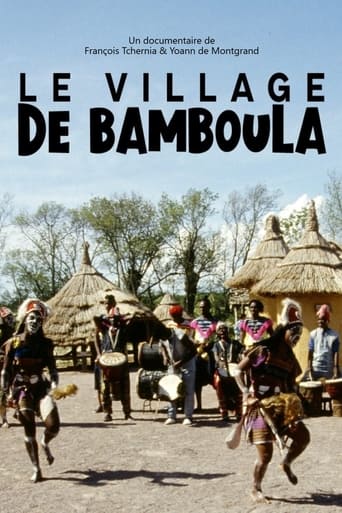
Le Village De Bamboula
2022-01-06 · 52 min · ★ 8.0
"Bamboula": this word was chosen in the 1980s for a chocolate cookie well known to children at the time. In 1994, he sponsored an Ivorian village set up in the Port-Saint-Père zoological park south of Nantes, where children and adults lived in a zoo to offer their folklore as a show to visitors. This documentary film, narrated by Jean-Pascal Zadi, gives a voice to those who lived in this African safari and to those who fought for their dignity
Trailers are previews, not full movies.
No authorized playback source configured. Use the legal watch options below.
Production details
- Directors
- Yoann de Montgrand, François Tchernia
- Production companies
- Hauteville Productions, France Télévisions
- Countries
- France
- Status
- Released
Top Cast
 Jean-Pascal ZadiNarrateur
Title information and images are supplied by TMDb. Explore our discovery guide for advice on comparing metadata and legal viewing options.
Where to watch
Availability provided by JustWatch via TMDb. Offers can change. Provider links are listed on TMDb; full playback requires a separately authorized source.
Availability not listed for this country.
Seasons & episodes
Recommendations
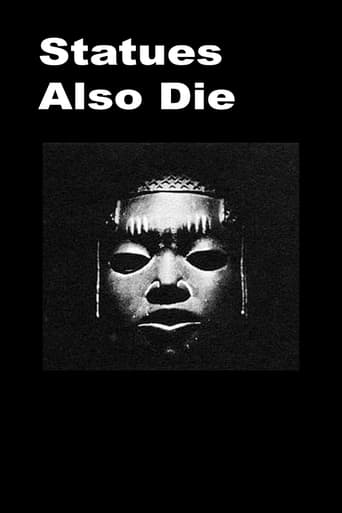
Commissioned by the journal Présence Africaine, this short documentary examines how African art is devalued and alienated through colonial and museum contexts. Beginning with the question of why African works are confined to ethnographic displays while Greek or Egyptian art is celebrated, the film became a landmark of anti-colonial cinema and was banned in France for eight years.

Against the darkening backdrop of New Delhi's apocalyptic air and escalating violence, two brothers devote their lives to protecting one casualty of the turbulent times: the bird known as the black kite.
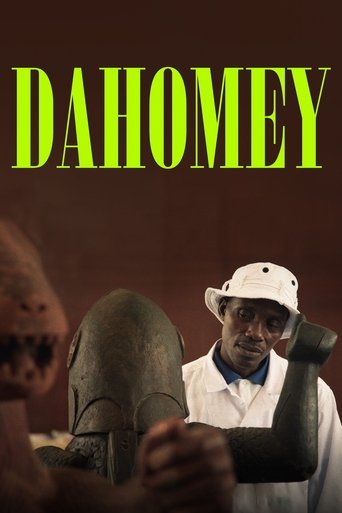
Thousands of royal artifacts of Dahomey, a West African kingdom, were taken by French colonists in the 19th century for collection and display in Paris. Centuries later, a fraction returned to their home in modern-day Benin. This dramatized documentary follows the journey of 26 of the treasures as told by cultural art historians, embattled university students, and one of the repatriated statues himself.
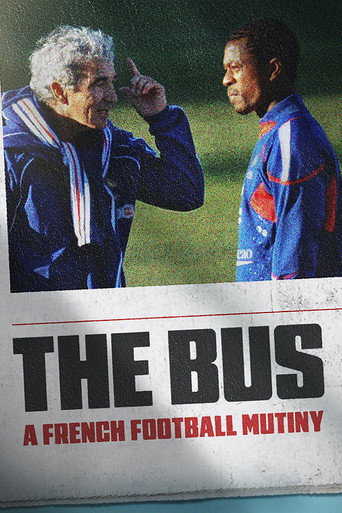
This documentary revisits the French football team's controversial 2010 World Cup and the bus strike that sparked global headlines and national outrage.
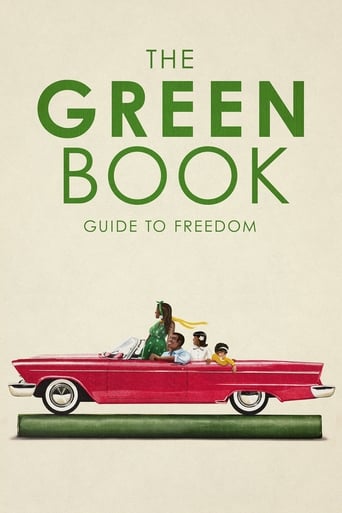
In 1936, Victor H. Green (1892-1960) published The Negro Motorist Green Book, a book that was both a travel guide and a survival manual, to help African-Americans navigate safe those regions of the United States where segregation and Jim Crow laws were disgracefully applied.
Working from the text of James Baldwin’s unfinished final novel, director Raoul Peck creates a meditation on what it means to be Black in the United States.
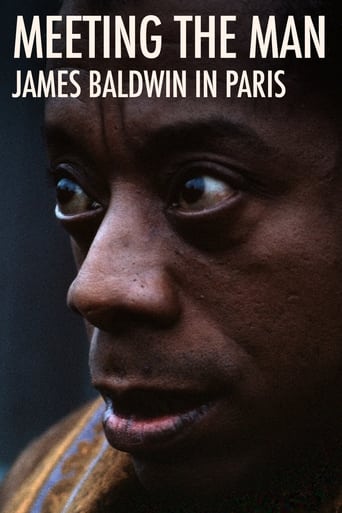
In 1970, a British film crew set out to make a straightforward literary portrait of James Baldwin set in Paris, insisting on setting aside his political activism. Baldwin bristled at their questions, and the result is a fascinating, confrontational, often uncomfortable butting of heads between the filmmakers and their subject, in which the author visits the Bastille and other Parisian landmarks and reflects on revolution, colonialism, and what it means to be a Black expatriate in Europe.
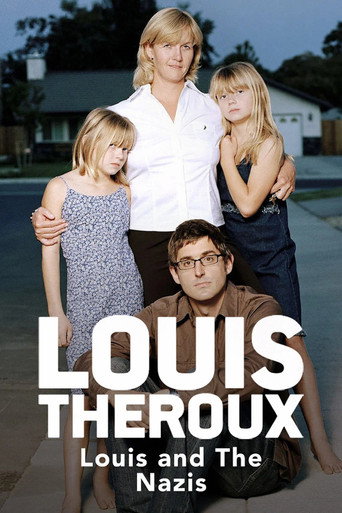
Louis Theroux travels to California to meet the man dubbed "the most dangerous racist in America"; Tom Metzger. Louis meets him, his family and his publicity manager as well as following him to skinhead rallies and on a visit to Mexico.

When Allied forces liberated the Nazi concentration camps in 1944-45, their terrible discoveries were recorded by army and newsreel cameramen, revealing for the first time the full horror of what had happened. Making use of British, Soviet and American footage, the Ministry of Information’s Sidney Bernstein (later founder of Granada Television) aimed to create a documentary that would provide lasting, undeniable evidence of the Nazis’ unspeakable crimes. He commissioned a wealth of British talent, including editor Stewart McAllister, writer and future cabinet minister Richard Crossman – and, as treatment advisor, his friend Alfred Hitchcock. Yet, despite initial support from the British and US Governments, the film was shelved, and only now, 70 years on, has it been restored and completed by Imperial War Museums under its original title "German Concentration Camps Factual Survey".

A documentary on the expletive's origin, why it offends some people so deeply, and what can be gained from its use.

This revealing documentary honors the legendary Sidney Poitier—iconic actor, filmmaker, and civil rights activist. Featuring interviews with Denzel Washington, Spike Lee, Halle Berry, and more.

A detailing of the rise to prominence and global sporting superstardom of six supremely talented young Manchester United football players (David Beckham, Nicky Butt, Ryan Giggs, Paul Scholes, Phil and Gary Neville). The film covers the period 1992-1999, culminating in Manchester United's European Cup triumph.
Ten Minutes Older is a 2002 film project consisting of two compilation feature films entitled The Trumpet and The Cello. The project was conceived by the producer Nicolas McClintock as a reflection on the theme of time at the turn of the Millennium. Fifteen celebrated film-makers were invited to create their own vision of what time means in ten minutes of film.
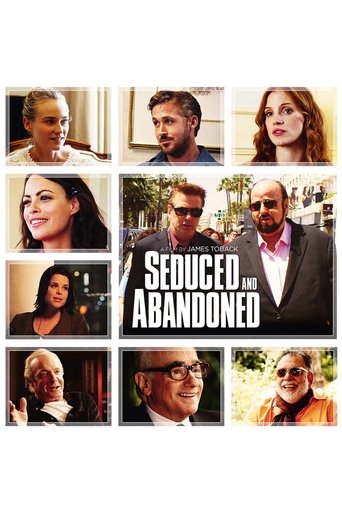
SEDUCED AND ABANDONED combines acting legend Alec Baldwin with director James Toback as they lead us on a troublesome and often hilarious journey of raising financing for their next feature film. Moving from director to financier to star actor, the two players provide us with a unique look behind the curtain at the world's biggest and most glamourous film festival, shining a light on the bitter-sweet relationship filmmakers have with Cannes and the film business. Featuring insights from directors Martin Scorsese, 'Bernando Bertolucci' and Roman Polanski; actors Ryan Gosling and Jessica Chastain and a host of film distribution luminaries.

Bastien is twenty years old and has been an activist for five years in the main extreme right party. When the presidential campaign begins, he's invited by his superior to commit even further. Initiated into the art of decking himself out like a politician, he starts to dream of a career, but old demons surge forth...
In Le Livre d’Image, Jean-Luc Godard recycles existing images (films, documentaries, paintings, television archives, etc.), quotes excerpts from books, uses fragments of music. The driving force is poetic rhyme, the association or opposition of ideas, the aesthetic spark through editing, the keystone. The author performs the work of a sculptor. The hand, for this, is essential. He praises it at the start. “There are the five fingers. The five senses. The five parts of the world (…). The true condition of man is to think with his hands. Jean-Luc Godard composes a dazzling syncopation of sequences, the surge of which evokes the violence of the flows of our contemporary screens, taken to a level of incandescence rarely achieved. Crowned at Cannes, the last Godard is a shock film, with twilight beauty.
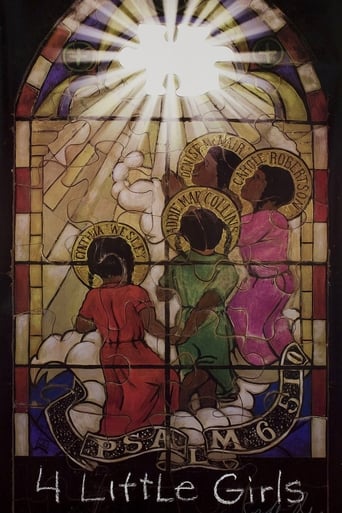
On September 15, 1963, a bomb destroyed a black church in Birmingham, Alabama, killing four young girls who were there for Sunday school. It was a crime that shocked the nation--and a defining moment in the history of the civil-rights movement. Spike Lee re-examines the full story of the bombing, including a revealing interview with former Alabama Governor George Wallace.

A night of drunken chaos rocks a quiet Dutch town in this shocking documentary about a teen's birthday invite that accidentally went viral on Facebook.
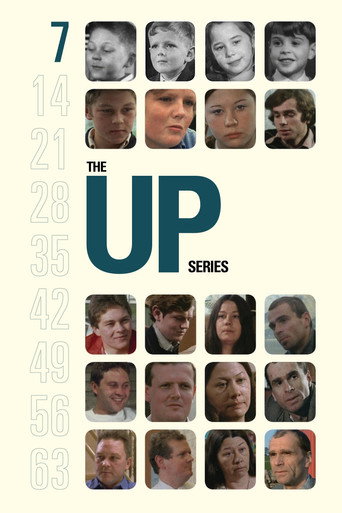
A group of British children aged 7 from widely ranging backgrounds are interviewed about a range of subjects. The filmmakers plan to re-interview them at 7 year intervals to track how their lives and attitudes change as they age.

Martin Scorsese, Robert De Niro, Joe Pesci, and Al Pacino in conversation about The Irishman.
Similar titles
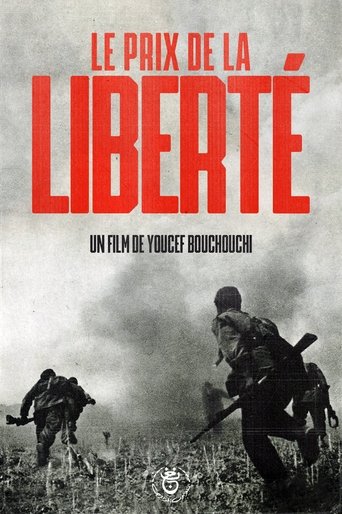
In the midst of the Algerian liberation war, two characters, a meddah (traditional storyteller) and a guerrab (water distributor), having become aware of their subhuman condition in their own country, join the National Liberation Army (ALN) to fight against inhumane colonialism. They will climb the ranks to become political commissioners before falling on the field of honor, the first in a skirmish and the other in Barberousse prison (Serkadji) where he will be guillotined.

An ex-mercenary turned smuggler. A Mende fisherman. Amid the explosive civil war overtaking 1999 Sierra Leone, these men join for two desperate missions: recovering a rare pink diamond of immense value and rescuing the fisherman's son, conscripted as a child soldier into the brutal rebel forces ripping a swath of torture and bloodshed countrywide.
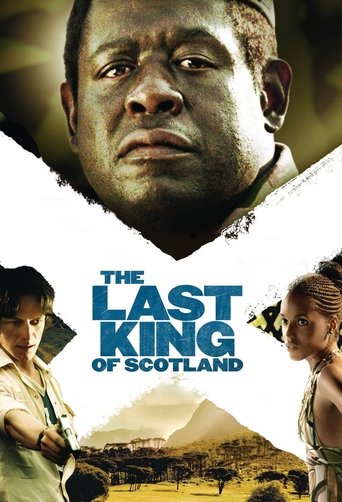
Young Scottish doctor, Nicholas Garrigan decides it's time for an adventure after he finishes his formal education, so he decides to try his luck in Uganda, and arrives during the downfall of President Obote. General Idi Amin comes to power and asks Garrigan to become his personal doctor.
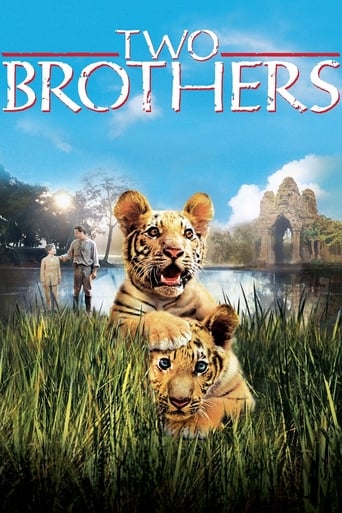
Two tigers are separated as cubs and taken into captivity, only to be reunited years later as enemies by an explorer (Pearce) who inadvertently forces them to fight each other.
It tells the story of a boy Kumasenu who moves to the city of Accra from a small fishing village, encouraged by his cousin Agboh's exaggerated tales of the wonders of city life. Hungry, he steals bread and is caught by police, but is rescued by a doctor and his wife who find him work. Agboh attempts to get Kumasenu to rob the doctor, but Kumasenu foils his cousin's plans.
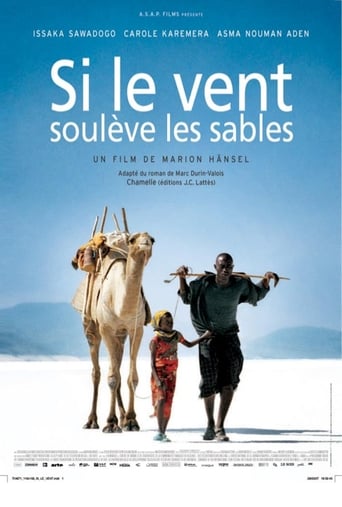
On the one hand, there’s the desert eating away at the land. The endless dry season, the lack of water. On the other there’s the threat of war. The village well has run dry. The livestock is dying. Trusting their instinct, most of the villagers leave and head south. Rahne, the only literate one, decides to head east with his three children and Mouna, his wife. A few sheep, some goats, and Chamelle, a dromedary, are their only riches. A tale of exodus, quest, hope and fatality.
Pas De Blanc À La Une, by Youcef Bouchouchi, treatises the brutality of the conflict during the war of independence in Algeria from 1854 to 1962, and the systematic use of torture which pushes even the most hesitant to make up their minds.
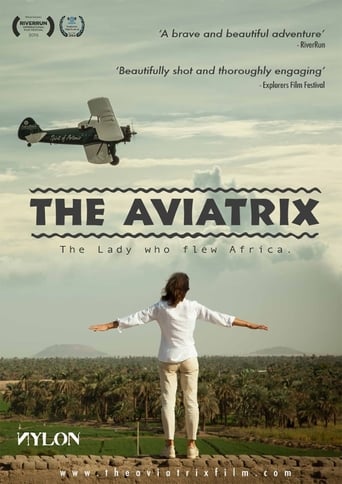
In 1928, Lady Heath became the first person to fly solo from Cape Town to London. Eighty-five years later, Tracey Curtis-Taylor set out in a vintage biplane to fly that adventure again. Following Tracey as she retraces the journey, The Aviatrix is more than just a film about the rapture of flying – it’s a story about living life on your own terms and having the courage and determination to realise your greatest dreams.
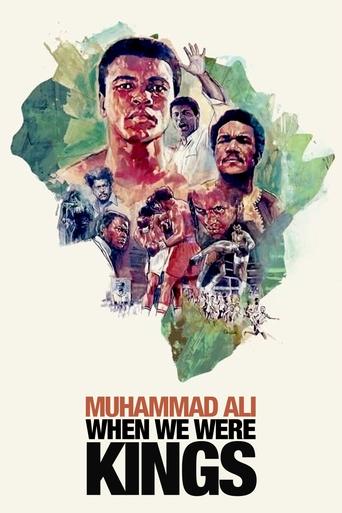
It's 1974. Muhammad Ali is 32 and thought by many to be past his prime. George Foreman is ten years younger and the heavyweight champion of the world. Promoter Don King wants to make a name for himself and offers both fighters five million dollars apiece to fight one another, and when they accept, King has only to come up with the money. He finds a willing backer in Mobutu Sese Suko, the dictator of Zaire, and the "Rumble in the Jungle" is set, including a musical festival featuring some of America's top black performers, like James Brown and B.B. King.

This film follows the fortunes of an old Peugeot off loaded in Cotonou, Benin. As it changes hands we get a glimpse into the lives of its successive owners.
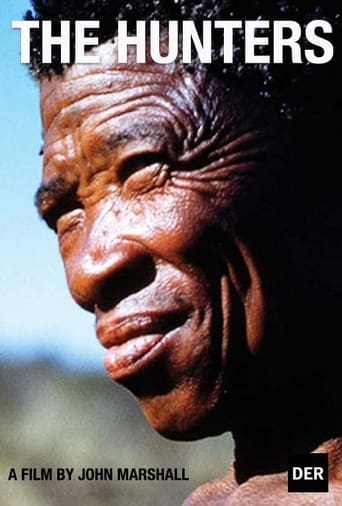
An ethnographic documentary following four Ju/’hoansi (!Kung) men during a multi-day giraffe hunt in the Kalahari Desert, filmed during the Smithsonian–Harvard Peabody expedition of 1952–53.

Juju Stories tackles juju in contemporary Lagos through three stories. In Love Potion, by Omonua, an unmarried woman agrees to use juju to find herself an ideal mate. In Yam, by Makama, consequences arise when a street urchin picks up seemingly random money from the roadside. In Suffer the Witch, by Obasi, love and friendship turns into obsession, when a young college woman attracts her crush's interest.
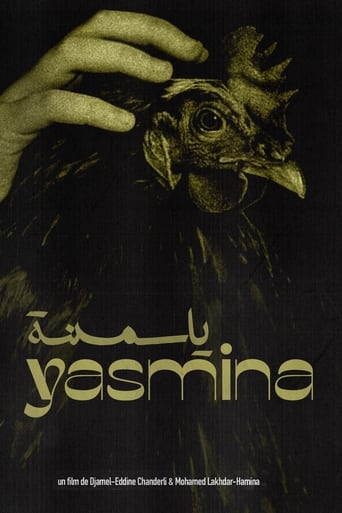
"Yasmina" filmed in 1961 in the middle of the Algerian war tells the story of a little Algerian girl with her hen and her family whose father was killed in a bombing by the French colonial army of occupation. The family, after a long journey, heads towards the refugee camps on the Tunisian border. Produced by the Cinema Service of the Provisional Government of the Algerian Republic (GPRA) in the midst of the war of independence, these films were intended to re-inform the population and international public opinion on the abuses committed by the French colonial army: torture, arrests and arbitrary executions, napalm bombings, fires in douars, entire villages wiped off the map, etc. which the French media described as a "pacification" campaign. The latter censoring or reorienting any images that could harm the colonial narrative.
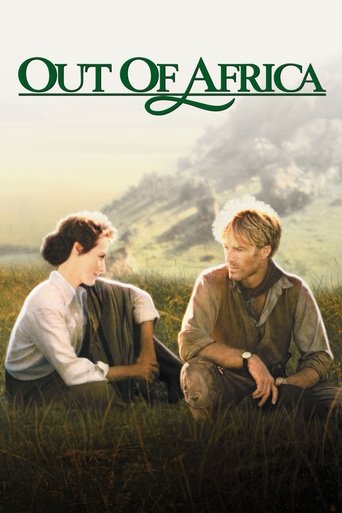
Tells the life story of Danish author Karen Blixen, who at the beginning of the 20th century moved to Africa to build a new life for herself. The film is based on her 1937 autobiographical novel.
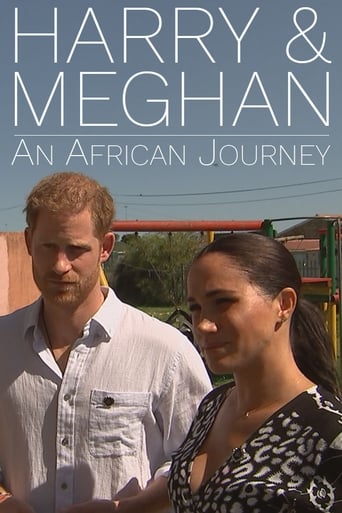
“Harry & Meghan: An African Journey" features unprecedented access and exclusive interview with The Duke and Duchess of Sussex about the challenges they face living in the public eye.
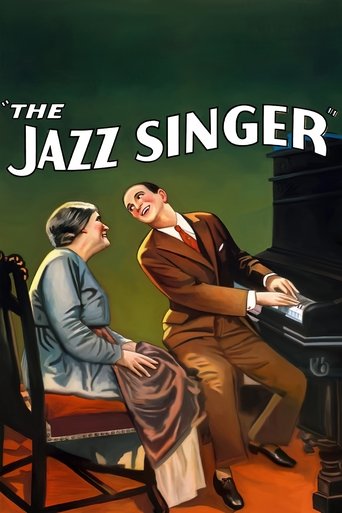
A young Jewish man is torn between tradition and individuality when his old-fashioned family objects to his career as a jazz singer. This is the first full length feature film to use synchronized sound, and is the original film musical.

An epic tale spanning forty years in the life of Celie, an African-American woman living in the South who survives incredible abuse and bigotry. After Celie's abusive father marries her off to the equally debasing 'Mister' Albert Johnson, things go from bad to worse, leaving Celie to find companionship anywhere she can. She perseveres, holding on to her dream of one day being reunited with her sister in Africa.

Between 1983 and 1987, Ouagadougou, the capital of Burkina Faso and the home city of FESPACO, one of the most important Pan-African film festivals in the world, was the scene of an exciting cinema utopia. With the support of the young president Thomas Sankara, the festival became a symbol of the cultural renaissance of a whole continent. The assassination of Sankara stifled the hopes of millions of young Africans, but the dynamism of FESPACO and African cinema did not stop.