Afghan Nomads (The Maldar)
1974-01-01 · 21 min · ★ 8.0
At dawn a nomad caravan descends on Aq Kupruk from the foothills of the Hindu Kush. In their camp, and in commerce with the townspeople, the Maldar reveal the mixture of faith and distrust that has kept nomads and sedentary people separate and interdependent over the centuries. The theme of the film focuses on political and religious beliefs. The film and accompanying instructor notes in this series embrace five different and complex units of analysis concerning how political change occurs; individual attitudes, ethnic identity, national loyalties, institutional affiliations, and ideological beliefs.
Trailers are previews, not full movies.
No authorized playback source configured. Use the legal watch options below.
Production details
- Directors
- Norman Miller
- Production companies
- Unavailable
- Countries
- Afghanistan, United States of America
- Status
- Released
Top Cast
Cast unavailable.
Title information and images are supplied by TMDb. Explore our discovery guide for advice on comparing metadata and legal viewing options.
Where to watch
Availability provided by JustWatch via TMDb. Offers can change. Provider links are listed on TMDb; full playback requires a separately authorized source.
Seasons & episodes
Recommendations

Alexander McQueen's rags-to-riches story is a modern-day fairy tale, laced with the gothic. Mirroring the savage beauty, boldness and vivacity of his design, this documentary is an intimate revelation of McQueen's own world, both tortured and inspired, which celebrates a radical and mesmerizing genius of profound influence.

The film follows adventurer Jeff Johnson as he retraces the epic 1968 journey of his heroes Yvon Chouinard and Doug Tompkins to Patagonia.

In an intimate and joyful story of love in the face of loss, celebrated poets Andrea Gibson and Megan Falley find strength—and unexpected hilarity—in what might be their final year together.

Just two years away from turning 30, participants in Michael Apted's documentary series are facing serious questions of identity and purpose, wondering whether they've found their place in the world.

A documentary about the life and films of director John Ford.

A documentary about how a dominant cultural and demographic institution both sustains their traditional activities and adapts to the digital revolution.

In the Realms of the Unreal is a documentary about the reclusive Chicago-based artist Henry Darger. Henry Darger was so reclusive that when he died his neighbors were surprised to find a 15,145-page manuscript along with hundreds of paintings depicting The Story of the Vivian Girls, in What is Known as the Realms of the Unreal, of the Glodeco-Angelinnian War Storm, Cased by the Child Slave Rebellion.

A string of threatening emails escalates into a revenge plot involving a newly married US marshal and his ex-girlfriend.

A compilation of over 30 years of private home movie footage shot by Lithuanian-American avant-garde director Jonas Mekas, assembled by Mekas "purely by chance", without concern for chronological order.

Ranjit, a farmer in India, takes on the fight of his life when he demands justice for his 13-year-old daughter, the victim of a brutal gang rape. His decision to support his daughter is virtually unheard of, and his journey unprecedented.

A documentary on the expletive's origin, why it offends some people so deeply, and what can be gained from its use.

Unravel the case of Utah therapist Jodi Hildebrandt, whose child abuse arrest with parenting YouTuber Ruby Franke exposed a twisted tale of manipulation.
After the high-profile killing of Damilola Taylor, Cornelius' family move out of London. But when they discover their new town is run by racists, Cornelius takes a drastic step to survive.

Director Michael Apted revisits the same group of British-born adults after a 7 year wait. The subjects are interviewed as to the changes that have occurred in their lives during the last seven years.

A documentary about ten very different lives connected by having appeared onscreen wearing masks or helmets in Star Wars.
Takes us to locations all around the US and shows us the heavy toll that modern technology is having on humans and the earth. The visual tone poem contains neither dialogue nor a vocalized narration: its tone is set by the juxtaposition of images and the exceptional music by Philip Glass.

Daniel Craig candidly reflects on his 15 year adventure as James Bond. Including never-before-seen archival footage from Casino Royale to the upcoming 25th film No Time To Die, Craig shares his personal memories in conversation with 007 producers, Michael G Wilson and Barbara Broccoli.

Director Michael Apted revisits the same group of British-born adults after a 7 year wait. The subjects are interviewed as to the changes that have occurred in their lives during the last seven years.

Stars of "The Walking Dead," Andrew Lincoln and Danai Gurira, walk down memory lane and visit iconic locations where pivotal moments between their characters, Rick and Michonne, were filmed.

An inside look at one of the most anticipated movie sequels ever with James Cameron and cast.
Similar titles
This documentary started as part of a photography project about the indigenous Ainu population in northern Japan, portraying people from tightly knit communities. They feel deeply connected by their culture and tradition. With gorgeous pictures, the directors explore how different generations of Ainu reflect on their identity after centuries of oppression.
An ethnographic documentary about the Mangbetu tribe of the Belgian Congo (now the Democratic Republic of the Congo). The film features a discussion of various rites including the Mangbetu practice of head binding, as well as various examples of traditional music and dance.

A young woman achieves cone consciousness.
A collage of daily life in Aq Kupruk builds from the single voice that calls the townspeople to prayer, the brisk exchange of the baazar, communal labor in the fields, and the uninhibited sports and entertainment of rural Afghans. The theme of the film focuses on rural society. The film and accompaning instructor notes explore concepts of development, modernization, environmental equilibrium, and especially change, identifying change agents, and analyzing barries and stimulants to change.
The people of Unamenshipu (La Romaine), an Innu community in the Côte-Nord region of Quebec, are seen but not heard in this richly detailed documentary about the rituals surrounding an Innu caribou hunt. Released in 1960, it’s one of 13 titles in Au Pays de Neufve-France, a series of poetic documentary shorts about life along the St. Lawrence River. Off-camera narration, written by Pierre Perrault, frames the Innu participants through an ethnographic lens. Co-directed by René Bonnière and Perrault, a founding figure of Quebec’s direct cinema movement.
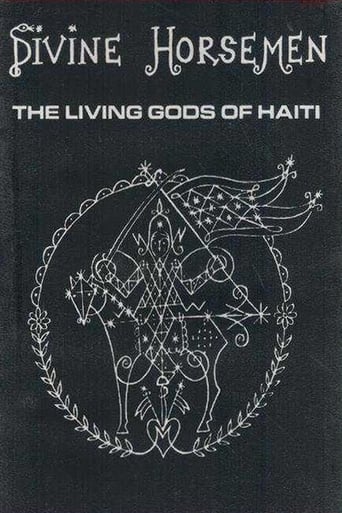
This intimate ethnographic study of Voudoun dances and rituals was shot by Maya Deren during her years in Haiti (1947-1954); she never edited the footage, so this “finished” version was made by Teiji Ito and Cherel Ito after Deren’s death.
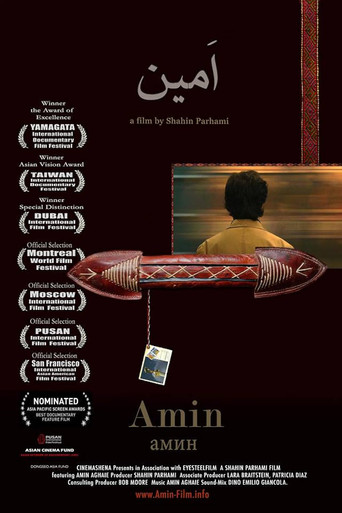
AMIN portrays Qashqai musician Amin Aghaie, a young modern nomad and his family who despite facing steep financial, cultural and political obstacles are dedicated to their art and culture. Amin travels to remote towns and villages to record the music of the surviving masters whose numbers decline each year. His nomadic family are selling their meager belongings to help support their son's education in performance and ethnomusicology at Tchaikovsky's Conservatory in Kyiv, Ukraine, but it is not enough. Amin, desperate to finish his academic education, sells his violins one at a time just to pay for his tuition.
Report on an expedition through South and Southeast Africa.
A ritual vase, the hampi, is placed in the center of the Musée de plein air de la République du Niger in Niamey, during a ritual ceremony featuring possession dances. With this film, Jean Rouch continues his ethnological and cinematographic study of Songhay ritual objects. He demonstrates that, in a particular context, the transfer of a hampi vase to a museum requires the organization of a ritual ceremony to obtain the gods' approval. At the time, however, reservations about filming a possession dance for the opening of a shrine in a museum made the move "questionable from a museological point of view".
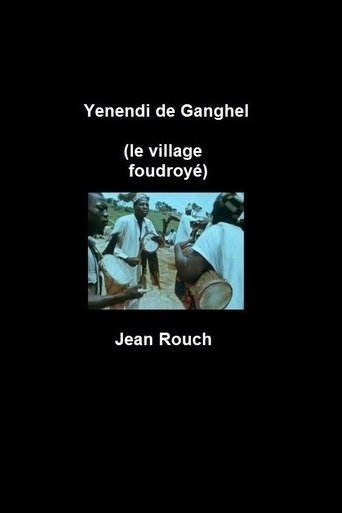
Lightning struck the hut of a Fulani shepherd near a village of settled fishermen, Ganghel, in Niger. A yenendi, a purification ceremony to obtain "water from the sky but not fire from the sky", is organized, with Sorko priests, ritual musicians and dancers, and the faithful from Niamey. The musicians call on Dongo, god of storms, and his brother Kirey, god of lightning. To the rhythm of the orchestra, a man goes into a trance, becoming Dongo's horse and at the same time the riding genie. Then a woman is possessed by Kirey. When the riding gods have mastered their horses, the gods visit the men. Dongo purifies the lightning-struck land and the oldest fisherman prepares the purification vessel, addressing Dongo.

A musical documentary woven around the endangered musical culture of the Rangdani Rabhas from Manikganj, Meghalaya, North East India.
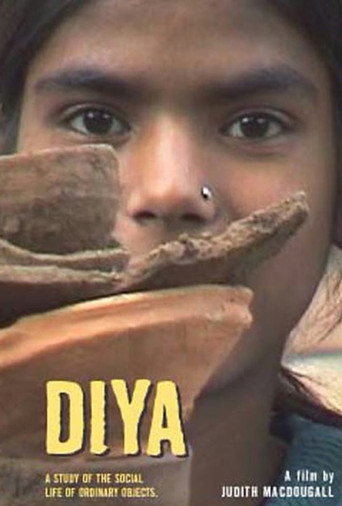
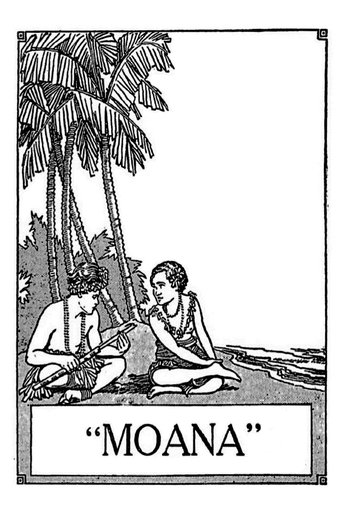
In the South Seas, Samoan village life is portrayed with a painterly eye. Blending ethnographic detail with a romanticized 'Gauguin idyll', the film celebrates daily rituals, communal traditions, and the passage into adulthood, suffused pride of beauty and pride of strength.

In front of Jean Rouch's camera, Germaine Dieterlen recalls her ethnographic itinerary, at the Musée de l'Homme, in Mali and in the Paris of the 1930s.
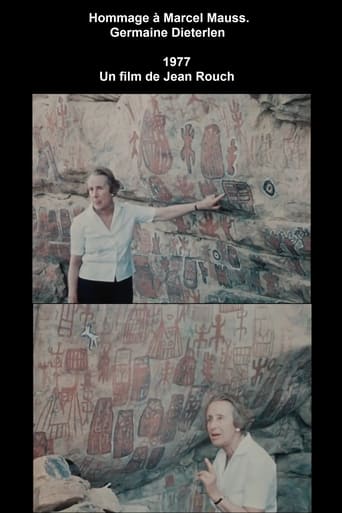
Germaine Dierterlen talks about Dogon mythology at a conference on the Bandiagara cliffs. The Songo canopy is a sacred site in Bandiagara. Its walls are covered with paintings depicting the different phases of creation. A little further on, in a cave near the village of Bongo, symposium participants are discussing the Tellem, the people who lived in the houses built into the cliffs before the arrival of the Dogon. The archaeological remains and migratory movements of these two peoples are discussed.

In Sangha, through the window of her house, Germaine greets Djamgouno, her main informant. He then translates for her a conversation she has with a half-blind old man. She recounts her memories of a past party at which Amadigné worked with her as an informant. Later, in front of the cliff, Germaine, Djamgouno and Pangalé are sitting on rocks, and Germaine talks about the many caves that can be visited by climbing small spelunking ladders. Rouch intervenes during the interview, asking the protagonists about the settlement of the cliff by the Dogon, who learned from the Tellem how to climb the cliff. Rouch then asks about the Tellem's predecessors who lived there 2,400 years ago. Germaine admits the ignorance of researchers on the subject, and Rouch concludes by joking about the new task that now falls to Germaine Dieterlen.
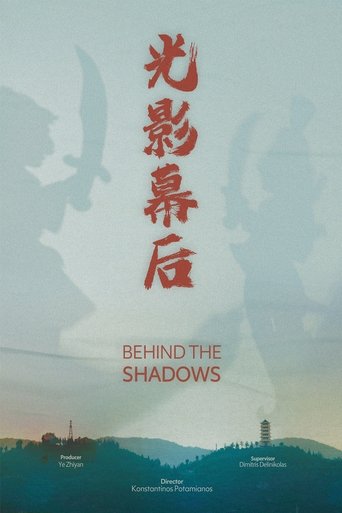
The Greek shadow puppetry began 130 years ago. A student of Greek shadow puppetry travels to China, where shadow puppetry began over 2000 years ago. There he follows Chinese shadow puppeteer master He Shihong in Wushan of China. Watching his performances and listening to him talk about his art and his career in it, many parallels are drawn and he expresses them by including his Greek shadow puppetry teacher in the film. This documentary is a cultural bridge between Greece and China through the art of shadow puppetry.
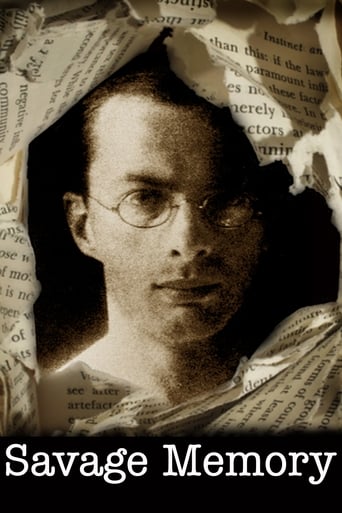
Founding father of Anthropology, Bronislaw Malinowski's work raises powerful and disturbing questions today. This is a look at his legacy and the imprints it has made on the generations that followed.