
Manet: The Man Who Invented Modern Art
2009-06-13 · 90 min · ★ 5.3
Manet is one of the main candidates for the title of the most important artist there has been. As the reluctant father of Impressionism, and the painter of Dejeuner sur l'herbe, he can probably be accused of inventing modern art. But his story is fascinating on many other levels. As a piece of compelling biography, Manet's is the unlikely tale of the stubborn son of the most highly placed judge in France who decides to become an artist and embarrass his father. The resulting family tensions are the stuff of legend. Then there was Manet's dramatic private life, including exotic romantic affairs and a particularly horrible death. Always cited as the father of the Impressionists, Manet stubbornly refused to show with them, and was careful to maintain an aesthetic distance from Monet, Renoir and the others. While they worshipped him, he looked down on them.
Trailers are previews, not full movies.
No authorized playback source configured. Use the legal watch options below.
Production details
- Directors
- Waldemar Januszczak
- Production companies
- BBC, ZCZ Films
- Countries
- United Kingdom
- Status
- Released
- Budget
- USD 255
Top Cast
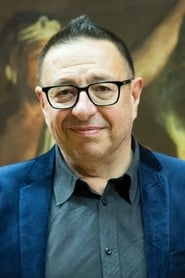 Waldemar JanuszczakNarrator
Title information and images are supplied by TMDb. Explore our discovery guide for advice on comparing metadata and legal viewing options.
Where to watch
Availability provided by JustWatch via TMDb. Offers can change. Provider links are listed on TMDb; full playback requires a separately authorized source.
Availability not listed for this country.
Seasons & episodes
Recommendations
A gripping tale of intrigue and mystery in the art world, this film traces the history of a collection of Post-Impressionist paintings - worth billions - which became the subject of a power struggle after the death of its owner. Dr. Albert Barnes.
Artists in LA discover the work of forgotten Polish sculptor Stanislav Szukalski, a mad genius whose true story unfolds chapter by astounding chapter.

An inside look at one of the most anticipated movie sequels ever with James Cameron and cast.

In an intimate and joyful story of love in the face of loss, celebrated poets Andrea Gibson and Megan Falley find strength—and unexpected hilarity—in what might be their final year together.

Al Pacino's deeply-felt rumination on Shakespeare's significance and relevance to the modern world through interviews and an in-depth analysis of "Richard III."

Through deeply personal interviews with her siblings and an examination of the photographs, letters, and belongings left behind, Mariska assembles a new portrait of her mother Jayne Mansfield, an extraordinary and complex woman.

The life and career of an actor, artist, and icon. His own journey through his own camera.
Musician and performance artist Laurie Anderson reflects on the deaths of her husband Lou Reed, her mother and her beloved dog.

In 2001 Jack Cardiff (1914-2009) became the first director of photography in the history of the Academy Awards to win an Honorary Oscar. But the first time he clasped the famous statuette in his hand was a half-century earlier when his Technicolor camerawork was awarded for Powell and Pressburger's Black Narcissus. Beyond John Huston's The African Queen and King Vidor's War and Peace, the films of the British-Hungarian creative duo (The Red Shoes and A Matter of Life and Death too) guaranteed immortality for the renowned cameraman whose career spanned seventy years.
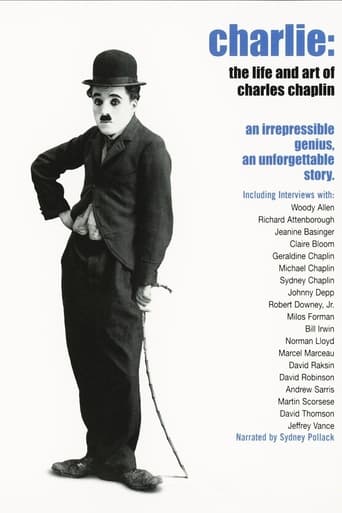
Brilliant, long in-the-works story of the life and art of the world's greatest comedian and the cinema's first genius, Charlie Chaplin. Produced, written and directed by renowned film critic Richard Schickel.
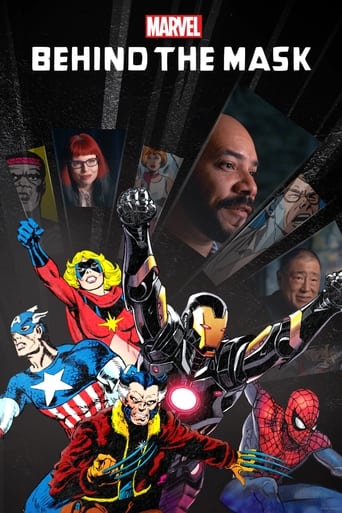
A documentary special that explores the power of identity behind the iconic superheroes we know and love today. These legendary Marvel creations and stories have not only reflected the world outside our window – they have become a reflection of our own identities and who we truly are.
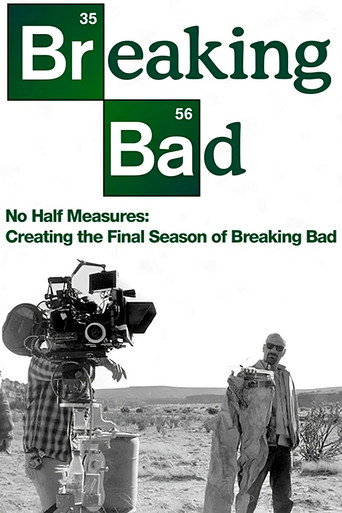
A documentary about the making of season five of the acclaimed AMC series Breaking Bad.
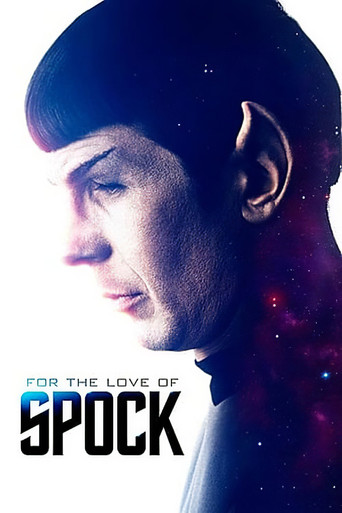
The life of Mr. Spock, as well as that of Leonard Nimoy, the actor who played him for almost fifty years, written and directed by his son: Adam.

A compilation of over 30 years of private home movie footage shot by Lithuanian-American avant-garde director Jonas Mekas, assembled by Mekas "purely by chance", without concern for chronological order.
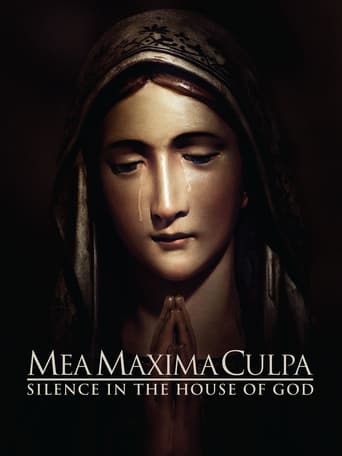
Alex Gibney explores the charged issue of pedophilia in the Catholic Church, following a trail from the first known protest against clerical sexual abuse in the United States and all way to the Vatican.
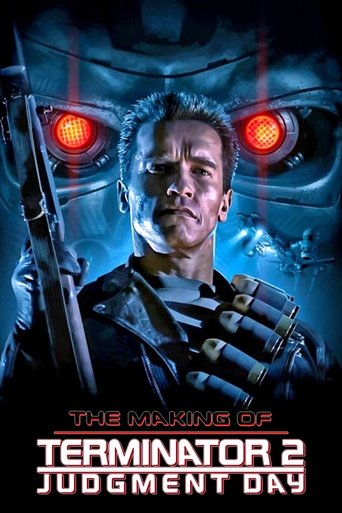
Documentary of the making of the sequel to the popular Schwarzenegger film, The Terminator.

A 1993 documentary film about Bruce Lee. The film includes interviews from some of his fellow students and opponents who worked alongside him in his movies.

A string of threatening emails escalates into a revenge plot involving a newly married US marshal and his ex-girlfriend.

Alexander McQueen's rags-to-riches story is a modern-day fairy tale, laced with the gothic. Mirroring the savage beauty, boldness and vivacity of his design, this documentary is an intimate revelation of McQueen's own world, both tortured and inspired, which celebrates a radical and mesmerizing genius of profound influence.
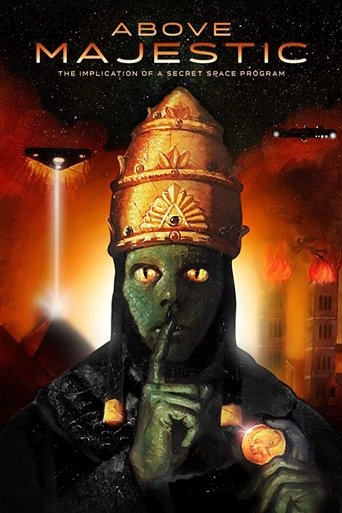
A look at the origins, history and conspiracies behind the "Majestic 12", a clandestine group of military and corporate figureheads charged with reverse-engineering extraterrestrial technology.
Similar titles
A manufactured memory.
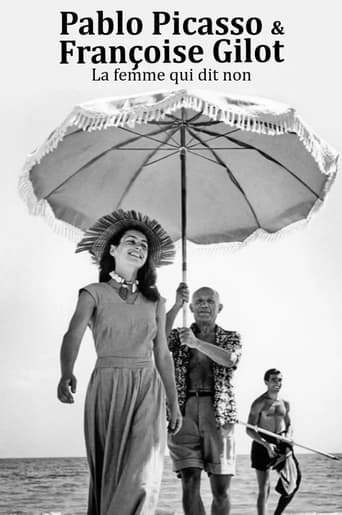
Painter Françoise Gilot shared Pablo Picasso's life from 1943 to 1953. This union nourished their respective artistic creations.
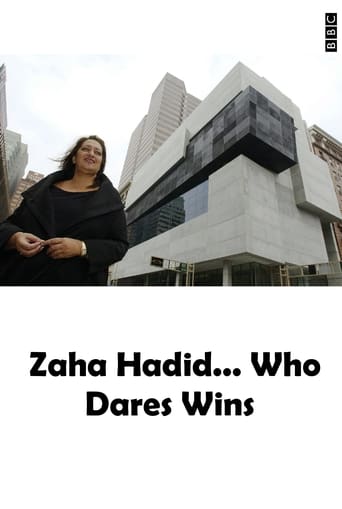
Alan Yentob profiles the most successful female architect there has ever been, the late Zaha Hadid, who designed buildings around the globe from Austria to Azerbaijan.
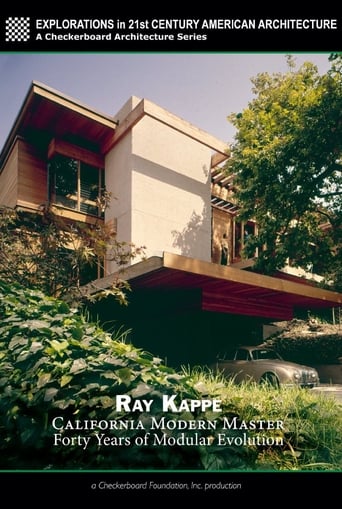
Explorations in 21st Century American Architecture Series: Ray Kappe has long been a cult figure in the architectural scene in and around Los Angeles. In 1972, he founded the influential, avant garde Southern California Institute of Architecture (SCI-ARC), where many of the younger-generation architects have studied or taught.
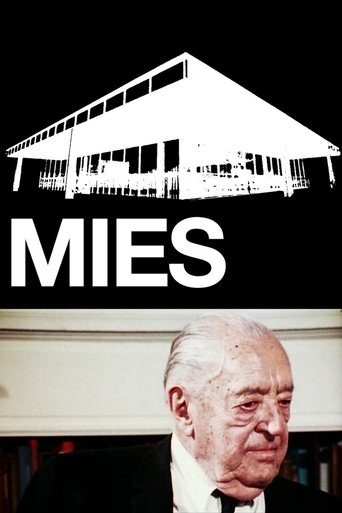
No understanding of the modern movement in architecture is possible without knowledge of its master builder, Mies van der Rohe. Together with documentation of his life, this film shows all his major buildings, as well as rare film footage of Mies explaining his philosophy. Phyllis Lambert relates her choice of Mies as the architect for the Seagram building. Mies's achievements and continuing influence are debated by architects Robert A.M. Stern, Robert Venturi, and Philip Johnson, by former students and by architectural historians. Mies is seen in rare documentary footage.
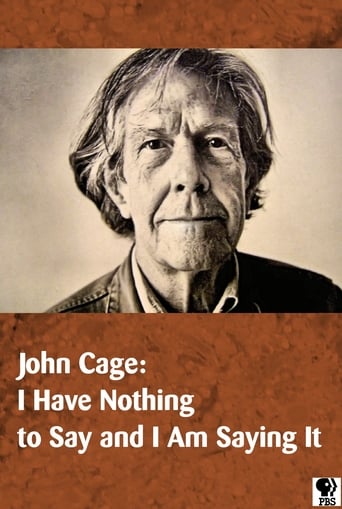
This 56-minute documentary on America's most controversial and unique composer manages to cover a great many aspects of Cage's work and thought. His love for mushrooms, his Zen beliefs and use of the I Ching, and basic bio details are all explained intelligently and dynamically. Black Mountain, Buckminster Fuller, Rauschenberg, Duchamp are mentioned. Yoko Ono, John Rockwell, Laurie Anderson, Richard Kostelanetz make appearances. Fascinating performance sequences include Margaret Leng-Tan performing on prepared piano, Merce Cunningham and company, and performances of Credo In Us, Water Music, and Third Construction. Demystifies the man who made music from silence, from all sounds, from life.
Departing from peripheral details of some paintings of the Bilbao Fine Arts Museum, a female narrator unravels several stories related to the economic, social and psychological conditions of past and current artists.
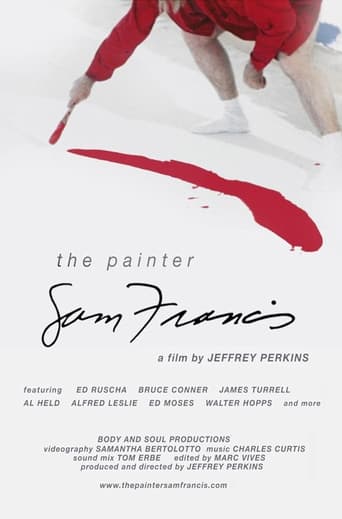
Forty years in the making, 'The Painter Sam Francis' is artist Jeffrey Perkins' intimate portrait of abstract expressionist painter Sam Francis. The film retraces Francis' life and career from his childhood in California to his artistic maturation in post-war Paris, his time spent in Japan, and his prominence in the United States. It reveals a man in constant struggle with physical maladies and his own demons, but for whom creativity was a powerful life-sustaining force.
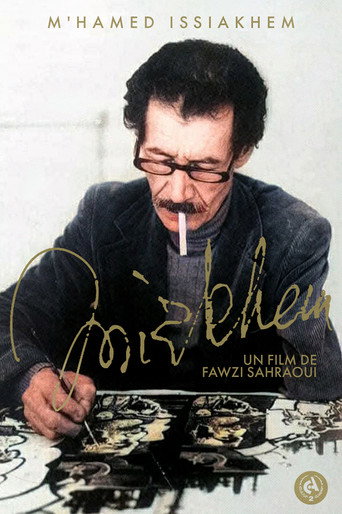
M'hamed Issiakhem (Kabyle: Mḥemmed Isyaxem; Arabic: محمد إسياخم)—born on June 17, 1928, in Taboudoucht (Aghribs), then part of the Tizi Ouzou Department in Algeria, and who died on December 1, 1985, in Algiers—was an Algerian painter and a leading figure of modern painting in Algeria. In 1943, he handled a grenade stolen from a US military camp, and it exploded; two of his sisters and a nephew were killed. Hospitalized for two years, he underwent the amputation of his left arm. From 1947 to 1951, he studied in Algiers, first at the Société des Beaux-Arts and later at the École des Beaux-Arts. "A country without artists is a dead country... I hope we are alive..." These words were spoken in a film by Fawzi Sahraoui—produced by the RTA in 1985 and shot just months before the painter M'hamed Issiakhem passed away. It is a fascinating docudrama in which Issiakhem opens up with subtlety, passion, and generosity.
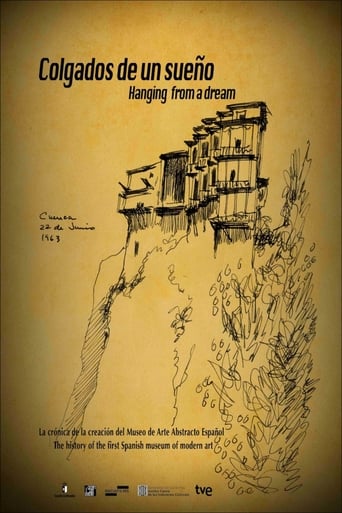
The history of how the Museum of Spanish Abstract Art of Cuenca was created. In the mid-1950s, the Spanish collector and painter Fernando Zóbel de Ayala (1924-84) becomes fascinated by the young generation of Spanish abstract artists, so he begins to collect their works to show them to the public in Toledo. Until Gustavo Torner, a young forest engineer interested in art, proposes him to visit his city, Cuenca.
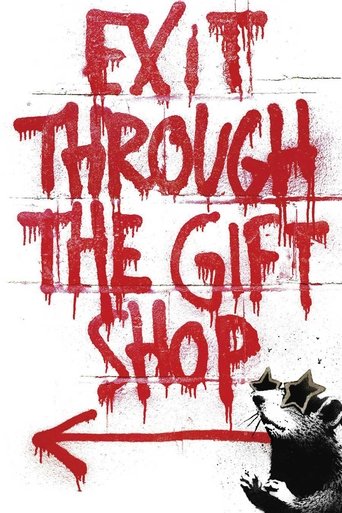
Banksy is a graffiti artist with a global reputation whose work can be seen on walls from post-hurricane New Orleans to the separation barrier on the Palestinian West Bank. Fiercely guarding his anonymity to avoid prosecution, Banksy has so far resisted all attempts to be captured on film. Exit Through the Gift Shop tells the incredible true story of how an eccentric French shop keeper turned documentary maker attempted to locate and befriend Banksy, only to have the artist turn the camera back on its owner.


In this hybrid political thriller and verité portrait documentary, Sara Nodjoumi, working with co-director and husband, Till Schauder, makes her directorial debut with this personal film, diving into the mystery surrounding the disappearance of more than 100 “treasonous” paintings by her father, seminal Iranian modern artist Nickzad Nodjoumi.

In the late 1980s, an era of great hopes and great disasters for Russia, art proved to be a social barometer, predicting the imminent political upheavals. This film's screenplay was written overnight in February 1991, soon after the World Economic Forum, where Olga Sviblova was asked the question, "What will happen to Russia?", and answered: "A putsch."
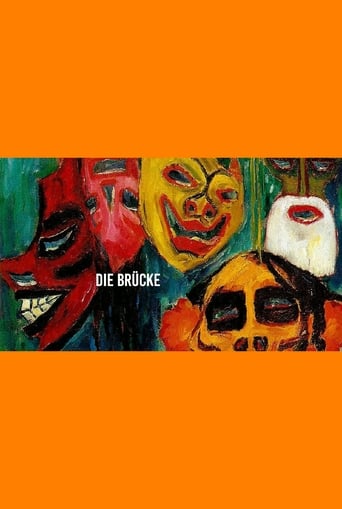
This movement marks the beginning of modern art in Germany. It is the German equivalent of French Fauvism, from which it draws its main inspiration, but it carries an Expressionist and social emphasis that is characteristic of Nordic 'angst.' The artists of Die Brucke were restless creatures, over-sensitive, haunted by religious, sexual, political or moral obsessions. Dramatic landscapes and nudes, mystical and visionary compositions, scenes of the countryside, the streets, the circus, the cafe-dansants and the demi-monde were their principal subjects. Their pure colours blaze in acid stridency, encompassed by rough, dry contours which show the influence of African art and primitive woodcuts. The work of the following is shown: Kirchner, Fritz Bleyl, Erich Heckel, Schmidt-Rottluff, Otto Muller, Emil Nolde and Max Pechstein.

J Fever, China’s greatest “rap poet”, reinvents the origin myth of fire, in an exquisite performance with Shanghai Philharmonic in Shanghai Concert Hall, featuring composer Soulspeak and Yehaiyahan.

Narrated by David McCullough, this program examines the infamous Entartete Kunst (degenerate art) exhibition mounted by the Nazis in Munich in 1937 and their far-reaching attacks on avant-garde art in Germany. Witness compelling footage of Nazi book burnings, and of the exhibition itself. Includes interviews with historians, art critics, and eyewitnesses to the events that dramatize this powerful story of the Nazis' assault on modern culture.

Art critic Waldemar Januzczak explores Beijing's controversial and challenging modern art scene.
Many twentieth century European artists, such as Paul Gauguin or Pablo Picasso, were influenced by art brought to Europe from African and Asian colonies. How to frame these Modernist works today when the idea of the primitive in art is problematic?