

The Age of Kommunalki
2013-11-23 · 65 min · Not rated
A unique documentary about an inheritance of communism. An hidden world: the world of Kommunalki. In Saint Petersburg a lot of different people of different ages, culture and background live together in rooms inside big flats where they share common areas as the kitchen and the bathroom. This happens for 100 years... Since the October Revolution.
Trailers are previews, not full movies.
No authorized playback source configured. Use the legal watch options below.
Production details
- Directors
- Francesco Crivaro, Elena Aleksandrova
- Production companies
- Underdog Film
- Countries
- Unavailable
- Status
- Released
Top Cast
Cast unavailable.
Title information and images are supplied by TMDb. Explore our discovery guide for advice on comparing metadata and legal viewing options.
Where to watch
Availability provided by JustWatch via TMDb. Offers can change. Provider links are listed on TMDb; full playback requires a separately authorized source.
Availability not listed for this country.
Seasons & episodes
Recommendations

In an intimate and joyful story of love in the face of loss, celebrated poets Andrea Gibson and Megan Falley find strength—and unexpected hilarity—in what might be their final year together.

A documentary on the expletive's origin, why it offends some people so deeply, and what can be gained from its use.

Over 35 years after Bob Lazar's revelations, this documentary exposes secrets of a facility the government still denies. Featuring Lazar's testimony, recreations, and new evidence, it reopens a case that continues to spark global curiosity

“The Soviet Story” is a story of an Allied power, which helped the Nazis to fight Jews and which slaughtered its own people on an industrial scale. Assisted by the West, this power triumphed on May 9th, 1945. Its crimes were made taboo, and the complete story of Europe’s most murderous regime has never been told. Until now...
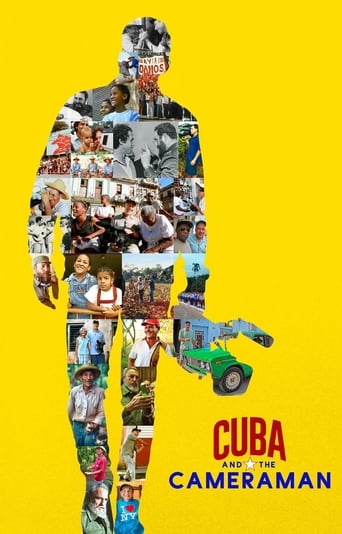
This revealing portrait of Cuba follows the lives of Fidel Castro and three Cuban families affected by his policies over the last four decades.
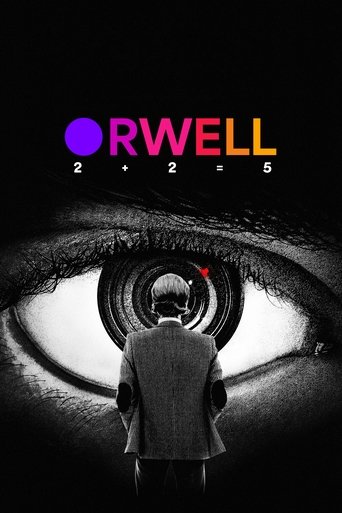
George Orwell was one of the most visionary authors of the 20th century, whose novels 1984 and Animal Farm foretold a chilling, authoritarian future. Acclaimed director Raoul Peck interweaves clips, readings from Orwell's diary, cinematic references, and modern-day footage to craft not only a portrait of the writer, but a fresh take on how prophetic his work has become.

A detailing of the rise to prominence and global sporting superstardom of six supremely talented young Manchester United football players (David Beckham, Nicky Butt, Ryan Giggs, Paul Scholes, Phil and Gary Neville). The film covers the period 1992-1999, culminating in Manchester United's European Cup triumph.
A presentation of a case for a needed transition out of the current socioeconomic monetary paradigm which governs the entire world society. This subject matter will transcend the issues of cultural relativism and traditional ideology and move to relate the core, empirical 'life ground' attributes of human and social survival, extrapolating those immutable natural laws into a new sustainable social paradigm called a 'Resource-Based Economy'.

Through deeply personal interviews with her siblings and an examination of the photographs, letters, and belongings left behind, Mariska assembles a new portrait of her mother Jayne Mansfield, an extraordinary and complex woman.

Alexander McQueen's rags-to-riches story is a modern-day fairy tale, laced with the gothic. Mirroring the savage beauty, boldness and vivacity of his design, this documentary is an intimate revelation of McQueen's own world, both tortured and inspired, which celebrates a radical and mesmerizing genius of profound influence.
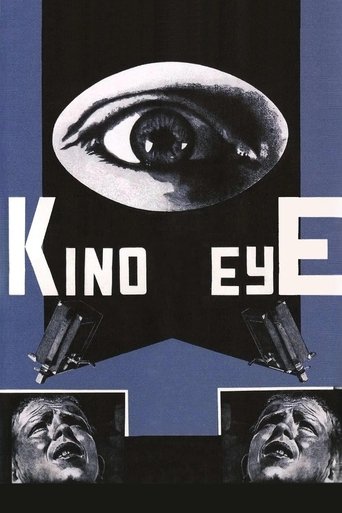
Promoting the joys of life in a Soviet village centering on the activities of the Young Pioneers. These children are constantly busy, pasting propaganda posters on walls, distributing hand bills, exhorting all to 'buy from the cooperative' as opposed to the Public Sector, promoting temperance, and helping poor widows. Experimental portions, projected in reverse, feature the un-slaughtering of a bull and the un-baking of bread.
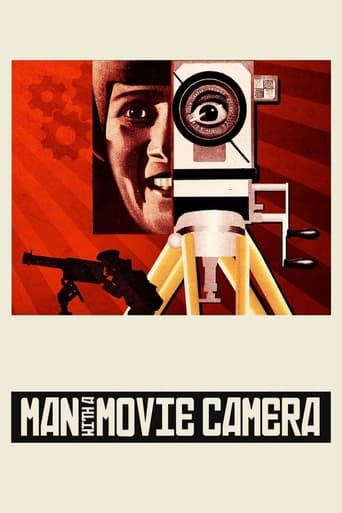
A cameraman wanders around with a camera slung over his shoulder, documenting urban life with dazzling inventiveness.

A visual montage portrait of our contemporary world dominated by globalized technology and violence.
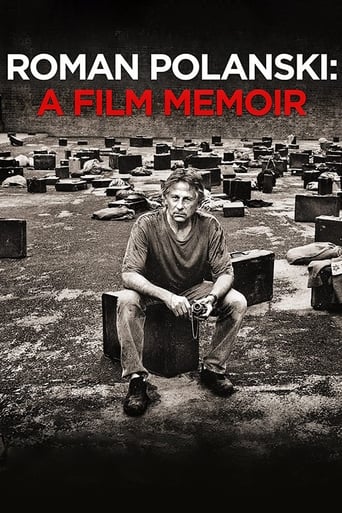
An interview with film director Roman Polanski conducted during his period of house arrest, discussing his life and work.
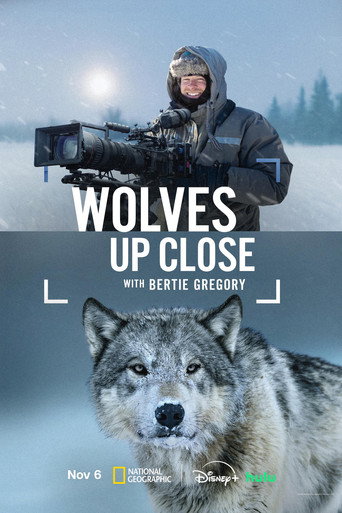
Reconnecting with a pack of wolves he has followed for seven years, Bertie sets out to capture one of the Arctic's most dangerous and rarely filmed hunts: wolves taking on a bull moose, prey roughly ten times their size. Led by Kona, a striking white breeding male, the pack faces a critical winter as dwindling food supplies, an encroaching rival wolf and an aging leader threaten its survival.

Thirty-six years after the Chernobyl nuclear reactor exploded in Soviet Ukraine, newly uncovered archival footage and recorded interviews with those who were present paint an emotional and gripping portrait of the extent and gravity of the disaster and the lengths to which the Soviet government went to cover up the incident, including the soldiers sent in to “liquidate” the damage. Chernobyl: The Lost Tapes is the full, unvarnished true story of what happened in one of the least understood tragedies of the twentieth century.
The making of Matrix Revolutions, The (2003) is briefly touched on here in this documentary. Interviews with various cast and crew members inform us how they were affected by the deaths of Gloria Foster and Aaliyah, and also delve into the making of the visual effects that takes up a lot of screen time. Written by Rhyl Donnelly
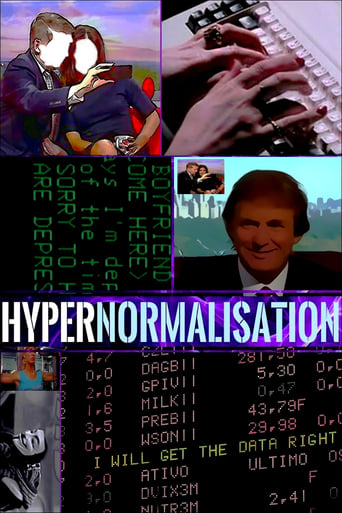
We live in a world where the powerful deceive us. We know they lie. They know we know they lie. They do not care. We say we care, but we do nothing, and nothing ever changes. It is normal. Welcome to the post-truth world. How we got to where we are now…
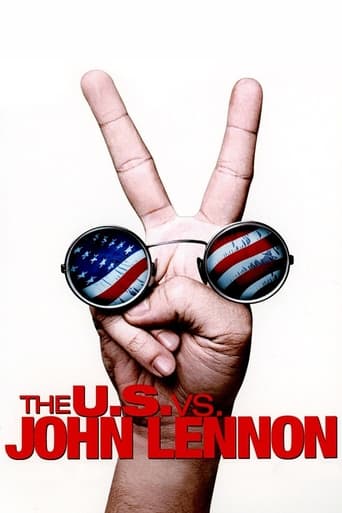
A documentary on the life of John Lennon, with a focus on the time in his life when he transformed from a musician into an antiwar activist.

In the Realms of the Unreal is a documentary about the reclusive Chicago-based artist Henry Darger. Henry Darger was so reclusive that when he died his neighbors were surprised to find a 15,145-page manuscript along with hundreds of paintings depicting The Story of the Vivian Girls, in What is Known as the Realms of the Unreal, of the Glodeco-Angelinnian War Storm, Cased by the Child Slave Rebellion.
Similar titles
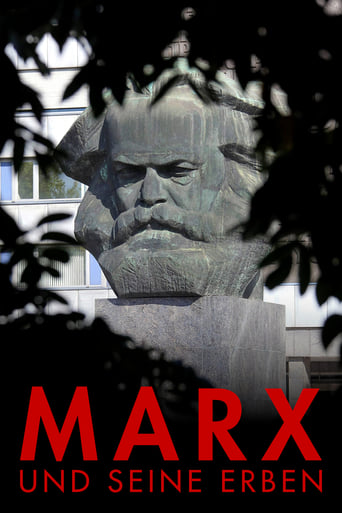
Over the past hundred years, dramatic social upheavals have taken place in the name of Karl Marx's theories. In Western Europe, the student movement of 1968 and the Eurocommunists were inspired. And in recent times, the thinker has experienced a renaissance.

In 1976 with the Cold War raging, the Philadelphia Flyers took to the ice to play the unbeaten Russian Red Army team. What happened that day went down in sports history.

The story of the Udege tribe, lost for centuries and on the verge of extinction, the most dangerous footage of hunting for bears and wild boars, as well as local rituals.
A documentary charting the rigors of the Russian space program, where the symbol of national pride would justify the most demanding training conditions.

Between 1930 and 1945, Eastern Europe experienced mass violence on an unprecedented scale. Hitler and Stalin exploited the vast region for their respective expansionist plans. It is estimated that around 14 million civilians were murdered—primarily Jews, Poles, Balts, Belarusians, and Ukrainians.
The end of the Cold War did not bring about a definitive thaw in the former republics of the Soviet Union, so that today there are several frozen conflicts, unresolved for decades, in that vast territory. As in Transnistria, an unrecognized state, seceded from Moldova since 1990. Kolja is a silent witness of how borders and bureaucracy shape the lives of citizens, finally forced to lose their identity.

A documentary film about the Karelo-Finnish SSR.

A brief overview of the work of the great Russian architect Konstantin Melnikov, with a focus on the famous Melnikov House in Moscow’s Krivoarbatsky Lane and the problems faced by modern architects, echoing Melnikov’s troubles in the era of Stalinist architecture.
Documentary movie about testing of the largest nuclear weapon in history, the Tsar Bomba. Declassified and made available to the public in 2020.
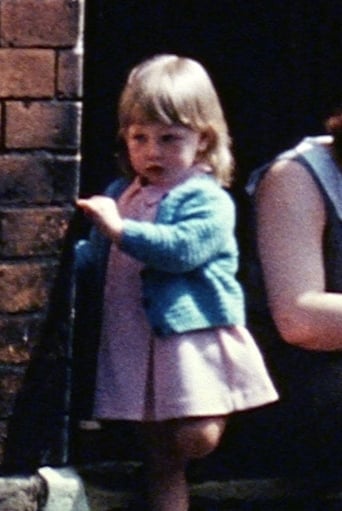
Between 1968 and 1970, J M Goodger, a lecturer at the University of Salford, made a film record of the living conditions in the slums of Ordsall, Salford, which were then in the process of being demolished. Under the title 'The Changing face of Salford', the film was in two parts: 'Life in the slums' and 'Bloody slums'.
On January 15, 1972, Leonid Pliouchtch, a Ukrainian mathematician who was unknown at the time, was locked up in a Soviet psychiatric institution and accused of dissidence. His wife, Tatiana, fought for his defense and contacted a committee of French mathematicians to help him. Led by Laurent Schwartz, they launched a three-year campaign to secure his release and succeeded in getting the USSR to back down on the issue.
About the coach of the Moscow football team Spartak, Konstantin Ivanovich Beskov. The film shows the difficult path of the Spartak team to the title of the 1987 USSR Football Championship.
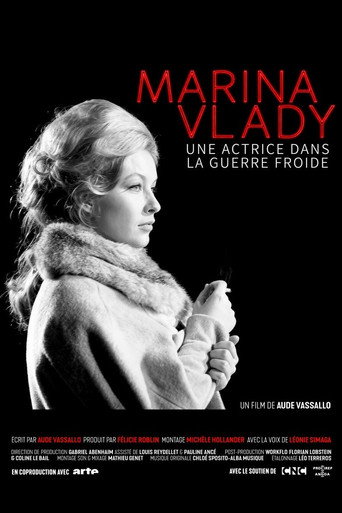
With stars of the screen, it is often only the Edgar Morin-like myth that remains; but viewed close up, an actress’s lifetime has more to do with destiny, and in Marina Vlady’s case, that destiny is unclassifiable, with over eighty classic films and more that were never released. It is across France, Italy, and chiefly Russia that this documentary, chock-full of rare archive material, takes us as it traces the journey of a free woman, making this not simply a documentary but a political film.

On the same day that Stalin was buried, Sergei Prokofiev's funeral took place completely unnoticed. And if the farewell to the composer quietly went against the backdrop of the farewell to the dictator that swept the whole country, then in the play everything is the opposite - Prokofiev's music is in the center, and it is interrupted by the stories of those people who would probably ignore Stalin's funeral and went to say goodbye to the great composer.

Between 1944 and 1953, 170,000 Estonians, Latvians, and Lithuanians put up fierce resistance to the Soviet invasion, hiding deep in the vast Baltic forests. Driven by a dream of freedom, they defied a ruthless empire with few resources but unwavering determination. Through previously unseen archives and the poignant accounts of the last survivors, this documentary reveals their clandestine struggle, their heroic sacrifices, and their legacy, timeless symbols of a desperate fight to escape the Soviet stranglehold and preserve the flame of independence.
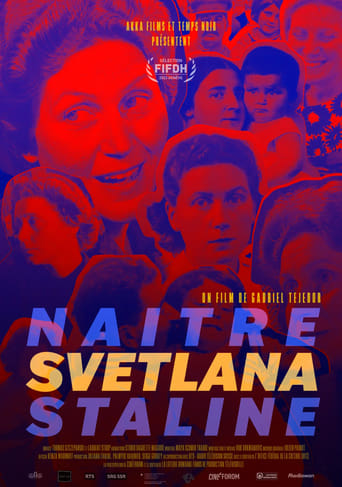
In 1967, in the middle of the Cold War, Joseph Stalin's only daughter goes to the American embassy in New Delhi and asks for asylum. Svetlana leaves behind her country and her two children. Hunted by the press, the KGB, and many admirers, the woman, nicknamed the Kremlin princess, will never cease to flee. From the summit of the Soviet empire to the solitude and poverty of her last years in a Wisconsin home, Gabriel Tejedor traces the destiny of a resolutely free woman, at the very heart of the century and its geopolitical challenges.

Luz Marina leaves Chocó, her homeland, at the age of 15, pursuing a better future in Bogotá. Times go by and looking after her seven children, she finds in social housing what at first sight might seem the accomplishment of her dream. A suspicious contract for the sale of real property will make her seek her dream even farther away.

A critical look at the human-nature relationship in the tundra.

What happened when we built Utopia? New Town Utopia is feature documentary about the power of art, architecture, the state of the nation – and some rather angry puppets.
In buildings where foreign workers lived in Germany, there were strict rules of conduct, defined by the house rules and supervised by the building superintendents. Many rights regarding the freedom of movement, communication and behavior were abused. Interviews with the tenants and with the "orderlies" which point out absurd situations and clashes caused by these restrictions.