Aktion K
1994-01-01 · 60 min · ★ 8.0
A documentary about the greatest mass exodus from a nazi concentration camp, which took place at the upper Austrian hills, in 1945. The following hunting is still known there under the cynical title "Mühlviertler Hasenjagd" - "The Mühlviertel's hare hunting".
Trailers are previews, not full movies.
No authorized playback source configured. Use the legal watch options below.
Production details
- Directors
- Bernhard Bamberger
- Production companies
- ProvinzFilm
- Countries
- Austria
- Status
- Released
Top Cast
Cast unavailable.
Title information and images are supplied by TMDb. Explore our discovery guide for advice on comparing metadata and legal viewing options.
Where to watch
Availability provided by JustWatch via TMDb. Offers can change. Provider links are listed on TMDb; full playback requires a separately authorized source.
Availability not listed for this country.
Seasons & episodes
Recommendations

A documentary on the expletive's origin, why it offends some people so deeply, and what can be gained from its use.

A detailing of the rise to prominence and global sporting superstardom of six supremely talented young Manchester United football players (David Beckham, Nicky Butt, Ryan Giggs, Paul Scholes, Phil and Gary Neville). The film covers the period 1992-1999, culminating in Manchester United's European Cup triumph.

Over 35 years after Bob Lazar's revelations, this documentary exposes secrets of a facility the government still denies. Featuring Lazar's testimony, recreations, and new evidence, it reopens a case that continues to spark global curiosity

From the heights of her modeling fame to her tragic death, this documentary reveals Anna Nicole Smith through the eyes of the people closest to her.
A documentary about the making of season five of the acclaimed AMC series Breaking Bad.
An in-depth look at the prison system in the United States and how it reveals the nation's history of racial inequality.

When Allied forces liberated the Nazi concentration camps in 1944-45, their terrible discoveries were recorded by army and newsreel cameramen, revealing for the first time the full horror of what had happened. Making use of British, Soviet and American footage, the Ministry of Information’s Sidney Bernstein (later founder of Granada Television) aimed to create a documentary that would provide lasting, undeniable evidence of the Nazis’ unspeakable crimes. He commissioned a wealth of British talent, including editor Stewart McAllister, writer and future cabinet minister Richard Crossman – and, as treatment advisor, his friend Alfred Hitchcock. Yet, despite initial support from the British and US Governments, the film was shelved, and only now, 70 years on, has it been restored and completed by Imperial War Museums under its original title "German Concentration Camps Factual Survey".

Musician and performance artist Laurie Anderson reflects on the deaths of her husband Lou Reed, her mother and her beloved dog.

Through deeply personal interviews with her siblings and an examination of the photographs, letters, and belongings left behind, Mariska assembles a new portrait of her mother Jayne Mansfield, an extraordinary and complex woman.

In an intimate and joyful story of love in the face of loss, celebrated poets Andrea Gibson and Megan Falley find strength—and unexpected hilarity—in what might be their final year together.

“The Soviet Story” is a story of an Allied power, which helped the Nazis to fight Jews and which slaughtered its own people on an industrial scale. Assisted by the West, this power triumphed on May 9th, 1945. Its crimes were made taboo, and the complete story of Europe’s most murderous regime has never been told. Until now...
Fourteen years after his first visit, Louis Theroux meets some of the growing community of religious-nationalist Israelis who have settled in the occupied West Bank.

Alexander McQueen's rags-to-riches story is a modern-day fairy tale, laced with the gothic. Mirroring the savage beauty, boldness and vivacity of his design, this documentary is an intimate revelation of McQueen's own world, both tortured and inspired, which celebrates a radical and mesmerizing genius of profound influence.
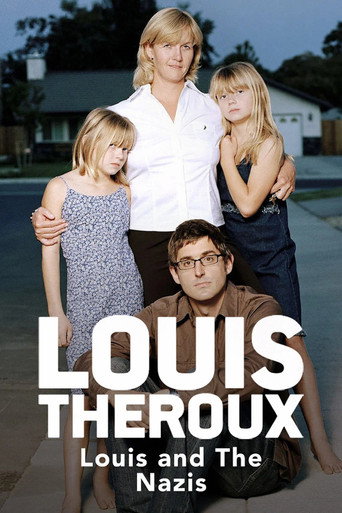
Louis Theroux travels to California to meet the man dubbed "the most dangerous racist in America"; Tom Metzger. Louis meets him, his family and his publicity manager as well as following him to skinhead rallies and on a visit to Mexico.

A visual montage portrait of our contemporary world dominated by globalized technology and violence.

Documentary filmmaker Amy Berg investigates the life of 30-year pedophile Father Oliver O'Grady and exposes the corruption inside the Catholic Church that allowed him to abuse countless children. Victims' stories and a disturbing interview with O'Grady offer a view into the troubled mind of the spiritual leader who moved from parish to parish gaining trust ... all the while betraying so many.

An unprecedented and intimate look at the life, work and enduring legacy of British actress Audrey Hepburn (1929-1993).

Marcel Ophuls' riveting film details the heinous legacy of the Gestapo head dubbed "The Butcher of Lyon." Responsible for over 4,000 deaths in occupied France during World War II, Barbie would escape—with U.S. help—to South America in 1951, where he lived until a global manhunt led to his 1983 arrest and subsequent trial.
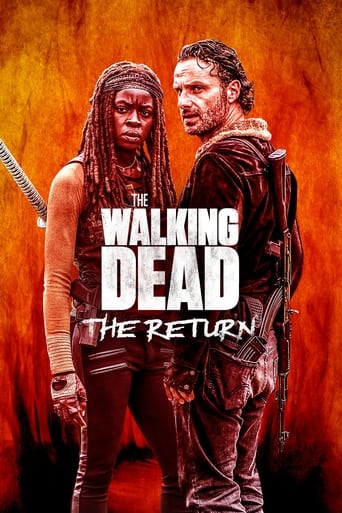
Stars of "The Walking Dead," Andrew Lincoln and Danai Gurira, walk down memory lane and visit iconic locations where pivotal moments between their characters, Rick and Michonne, were filmed.
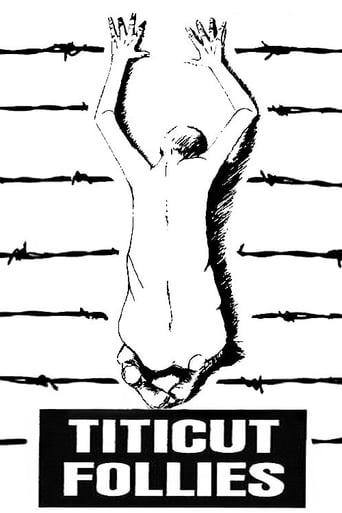
Employing methods of direct cinema–observation, limited stylization, and non-intervention–this stark look into the State Prison for the Criminally Insane in Bridgewater, Massachusetts shows its denizens, who were often kept in barren cells and infrequently bathed, forced to strip naked publicly, force feeding, and the indifference and bullying by many of the hospital's staff.
Similar titles
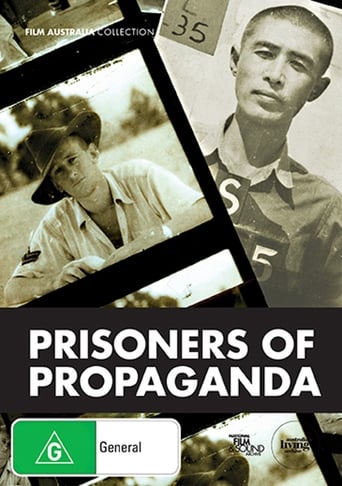
In 1943, the Imperial Japanese Secret Service made a film called Calling Australia! to show the "exemplary conditions" under which prisoners of war were kept, and to "soften up" the Australian public for the anticipated occupation of their country by Japanese forces. Prisoners of Propaganda tells why the film was made, and how it came to be forgotten.
During World War II there were nearly 2,500 Allied prisoners held in Sandakan POW camp in British North Borneo. Along with the ravages of war and the struggle to survive abject conditions, only six of these POW's were found alive when the war finally ended. In the years that followed, the horror stories of human depravity and the atrocities committed by the Japanese at Sandakan POW camp would come to light, considered by many as one of the most devastating chapters of the Pacific War.
This short-form documentary focuses on the true story of Alfons Heck, who as an impressionable 10-year-old boy became a high-ranking member of the Hitler youth movement during World War II. The story is told in his own words. This film originally aired as part of the "America Undercover" series on HBO.
In 1939, just finished the Spanish Civil War, Spanish republican photographer Francesc Boix escapes from Spain; but is captured by the Nazis in 1940 and imprisoned in the Mauthausen concentration camp, in Austria, a year later. There, he works as a prisoner in the SS Photographic Service, hiding, between 1943 and 1945, around 20,000 negatives that later will be presented as evidence during several trials conducted against Nazi war criminals after World War II.
An epic documentary of rise and fall of Ustasha regime in Croatia.
Most 72 is the very first film essay directed and produced by The Markerists and the inaugural installment in the series 'Most'. The footage and the audio were recorded in a single day on June 17th, 2013 on location in Auschwitz-Birkenau with post-production being completed within 72 hours. Surbhi Goel, a professor of cultural studies from India on her first trip outside of her homeland, recorded extemporaneous impressions as she walked the grounds of the death camp with the filmmakers. These were later used as the voice-over narration. The project serves as the template in which future Markerists film essays will be produced--shot and recorded on location and completed immediately afterwards, staying relevant in this age of instant global communication.
The secret Nazi death camp at Sobibor was created solely for the mass extermination of Jews. But on the 14th October 1943, in one of the biggest and most successful prison revolts of WWII, the inmates fought back.

Warsaw, September 19, 1940: a Polish officer is captured during a raid by the German army. In reality, the SS have just fallen into a trap. This man has organized everything to be arrested. His name: Witold Pilecki. His mission: to be interned in Auschwitz, to infiltrate the death camp. This film traces the story of one of the greatest resistance fighters of WWII, through the compilation of reports that the infiltrator smuggled to London from the concentration camp where he was detained.
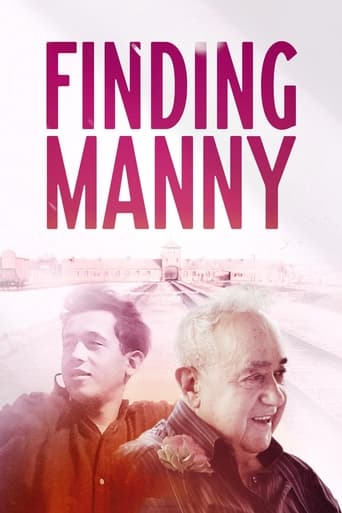
Narrated by Stephen Baldwin, Finding Manny shares a powerful theme of optimism and makes "never again" have meaning for the next generation. auschwitzsurvivorholocaustorphanagegenocide8 more. Taglines. 70 years after escaping from a Nazi death train-an empowering story of optimism through the darkest of moments.
Newsreel footage from both sides of World War II make a case for convicting Nazi war criminals.

On the eve of Operation Desert Storm in the first Gulf War, the Italian government deployed eight Tornado Fighter-bombers. Gianmarco Bellini was one of these pilots. He was shot down, captured, and abused, but returned and was able to rise to the rank of General.

A year ago, on 29 December 2019, prisoners were exchanged with the self-proclaimed ‘LPR’ and ‘DPR’. Among the Ukrainians who returned home were journalist Stanislav Aseyev, tanker Bohdan Pantiushenko, and human rights activist Andriy Yarovoi. Four months earlier, on 7 September, Crimeans Oleg Sentsov and Oleksandr Kolchenko were released from Russian colonies. We spoke to the former prisoners about their first year of freedom.


Over the past 18 months, journalist Thilo Mischke has conducted research for ProSieben within right-wing networks and met supporters of various right-wing and right-wing extremist groups. In the "ProSieben Special: Right. German. Radical." he pursues the question: "Is our liberal democratic basic order in danger?

After the impressive Gulistan, Land of Roses (VdR 2016), the Kurdish filmmaker Zaynê Akyol returns with these conversations with imprisoned members of the Islamic State, alternating their words with aerial views of the countryside. An unexpected look at a far-reaching current political issue and a film whose subject matter and rhythm create an impressive cinematic object.
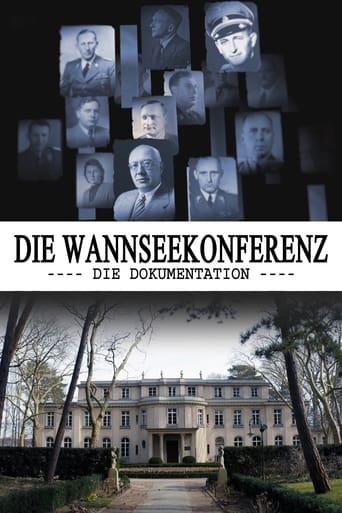
It was arguably the deadliest conference in human history. The topic: plans to murder 11 million Jews in Europe. The participants were not psychopaths, but educated men from the SS, police, administration and ministries. The invitation to the meeting at Wannsee came from Reinhard Heydrich, head of the Reich Security Main Office. The Wehrmacht's campaigns of conquest in Eastern Europe marked the beginning of the systematic murder of Jews in Poland and the Soviet Union. In mid-September 1941, Hitler made the decision to deport all Jews from Germany to the East. Although there had been transports before, Hitler's order represented a further escalation in the murderous decision-making process. Persecution and discrimination had been part of everyday life since 1933. But as a result, the living conditions for the Jews in the Third Reich became even more difficult, among them the Berlin Jew Margot Friedländer, born in 1921, and the Chotzen family.

Faced with the relentless and unstoppable advance of the Soviet Red Army, from the spring of 1944 until the capitulation of the Third Reich in May 1945, the Nazis evacuated the labor, concentration and extermination camps, factories of pain and death which, during years of nightmare, they had established in the occupied eastern territories. Forced to travel enormous distances, thousands of people died along the way from hunger, thirst and exhaustion.
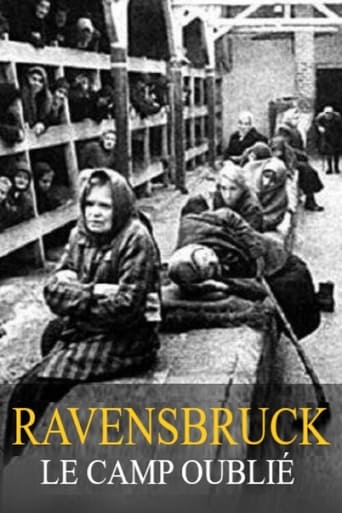
Located nearly 80 kilometres north of Berlin, Germany, the former municipality of Ravensbrück was home to a prison between 1939 and 1945 that became a concentration camp designed specifically for women. It was built by order of Heinreich Himmler, a high dignitary of the Third Reich and head of the SS. Of the more than 130,000 people who were deported there, almost 90,000 never returned. Based on witnesses, international experts and computer-generated images, the document reveals the atrocities committed in Ravensbrück.