

Hitler's Children
2017-06-05 · 51 min · ★ 7.0
This exclusive documentary recounts the crazy project of Nazi Germany which secretly gave birth to Aryan children as far as France. In these maternities for the rich called the ‘Lebensborn’, the Nazis raised ‘perfect’ children born of progenitors from the SS and women with well defined racial grounds. This plan gave birth to thousands of children who were called ‘Hitler's Children’. They were supposed to lead the world one day. It wasn’t until 30 years later that the existence of one of these centers in France was discovered. For the very first time, the children born in the ‘Lesenborn’ in Lamorlaye find out about their existence and disclose one the most frightening plans of History, as well as the dark secret of their origins.
Trailers are previews, not full movies.
No authorized playback source configured. Use the legal watch options below.
Production details
- Directors
- Françoise-Renée Jamet, Laurent Marocco
- Production companies
- Gedeon Programmes, RMC Découverte, France•3
- Countries
- France
- Status
- Released
Top Cast
Cast unavailable.
Title information and images are supplied by TMDb. Explore our discovery guide for advice on comparing metadata and legal viewing options.
Where to watch
Availability provided by JustWatch via TMDb. Offers can change. Provider links are listed on TMDb; full playback requires a separately authorized source.
Seasons & episodes
Recommendations

“The Soviet Story” is a story of an Allied power, which helped the Nazis to fight Jews and which slaughtered its own people on an industrial scale. Assisted by the West, this power triumphed on May 9th, 1945. Its crimes were made taboo, and the complete story of Europe’s most murderous regime has never been told. Until now...
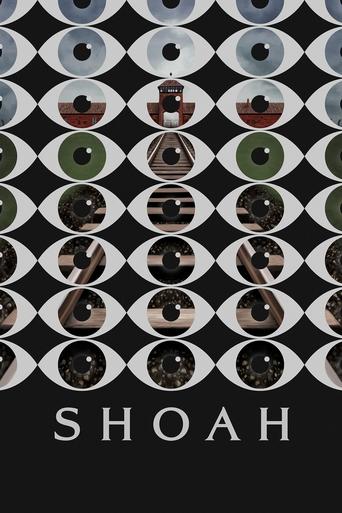
Director Claude Lanzmann spent 11 years on this sprawling documentary about the Holocaust, conducting his own interviews and refusing to use a single frame of archival footage. Dividing Holocaust witnesses into three categories – survivors, bystanders, and perpetrators – Lanzmann presents testimonies from survivors of the Chelmno concentration camp, an Auschwitz escapee, and witnesses of the Warsaw Ghetto Uprising, as well as a chilling report of gas chambers from an SS officer at Treblinka.
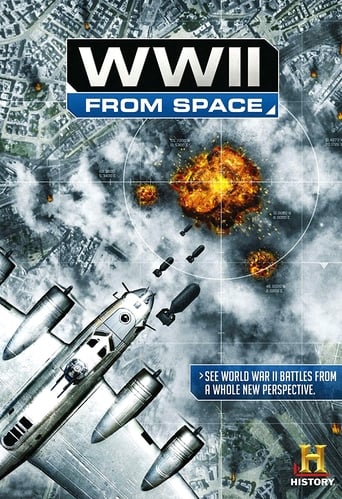
WWII from Space delivers World War II in a way you've never experienced it before. This HISTORY special uses an all-seeing CGI eye that offers a satellite view of the conflict, allowing you to experience it in a way that puts key events and tipping points in a global perspective. By re-creating groundbreaking moments that could never have been captured on camera, and by illustrating the importance of simultaneity and the hidden effects of crucial incidents, HISTORY presents the war's monumental moments in a never-before-seen context. And with new information brought to the forefront, you'll better understand how a nation ranked 19th in the world's militaries in 1939 emerged six years later as the planet's only atomic superpower.

When Sgt. First Class Brian Eisch is critically wounded in Afghanistan, it sets him and his sons on a journey of love, loss, redemption and legacy.

Filmmaker Alain Resnais documents the atrocities behind the walls of Hitler's concentration camps.
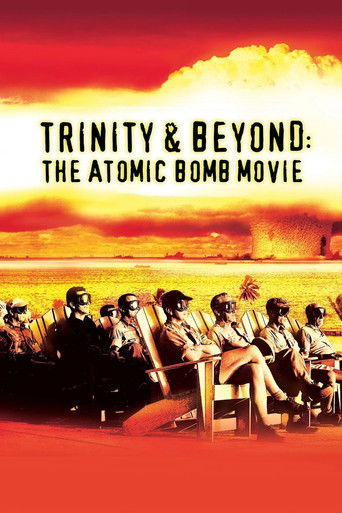
"Trinity and Beyond" is an unsettling yet visually fascinating documentary presenting the history of nuclear weapons development and testing between 1945-1963. Narrated by William Shatner and featuring an original score performed by the Moscow Symphony Orchestra, this award-winning documentary reveals previously unreleased and classified government footage from several countries.

Prelude to War was the first film of Frank Capra's Why We Fight propaganda film series, commissioned by the Pentagon and George C. Marshall. It was made to convince American troops of the necessity of combating the Axis Powers during World War II. This film examines the differences between democratic and fascist states.

This documentary movie is about the battle of San Pietro, a small village in Italy. Over 1,100 US soldiers were killed while trying to take this location, that blocked the way for the Allied forces from the Germans. Preserved by the Academy Film Archive in 2005.

Amid the failing counteroffensive, a journalist follows a Ukrainian platoon on their mission to traverse one mile of heavily fortified forest and liberate a strategic village from Russian occupation. But the farther they advance through their destroyed homeland, the more they realize that this war may never end.
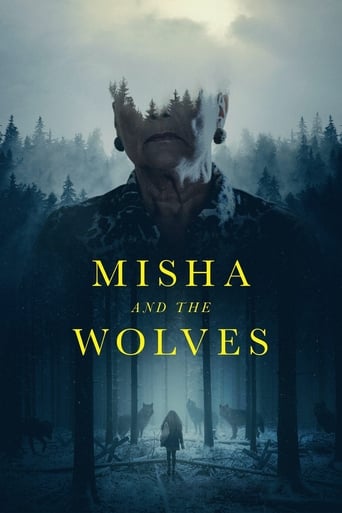
A woman’s Holocaust memoir takes the world by storm, but a fallout with her publisher-turned-detective reveals her story as an audacious deception created to hide a darker truth.

A documentary on the expletive's origin, why it offends some people so deeply, and what can be gained from its use.

A love letter from a young mother to her daughter, the film tells the story of Waad al-Kateab’s life through five years of the uprising in Aleppo, Syria as she falls in love, gets married and gives birth to Sama, all while cataclysmic conflict rises around her. Her camera captures incredible stories of loss, laughter and survival as Waad wrestles with an impossible choice– whether or not to flee the city to protect her daughter’s life, when leaving means abandoning the struggle for freedom for which she has already sacrificed so much.

Through deeply personal interviews with her siblings and an examination of the photographs, letters, and belongings left behind, Mariska assembles a new portrait of her mother Jayne Mansfield, an extraordinary and complex woman.
An experimental documentary that explores Saudi Arabia's relationship with the U.S. and the role this has played in the war in Afghanistan.
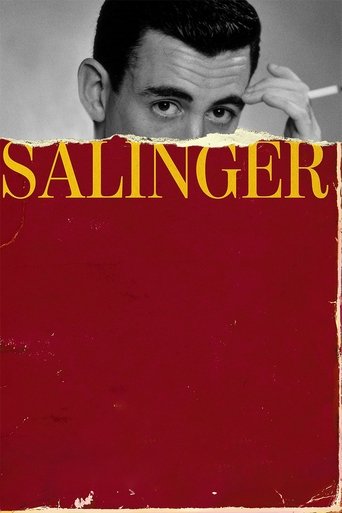
An in-depth investigation into the private world of the American writer J. D. Salinger (1919-2010), who lived most of his life behind the impenetrable wall of a self-imposed seclusion: how his dramatic experiences during World War II influenced his life and work, his relationships with very young women, his obsessive writing methods, his many literary secrets.

Set both in Latin America and the United States, the film explores the historic and current relationship of Washington with countries such as Venezuela, Bolivia and Chile. Pilger says that the film "...tells a universal story... analysing and revealing, through vivid testimony, the story of great power behind its venerable myths. It allows us to understand the true nature of the so-called "war on terror". According to Pilger, the film’s message is that the greed and power of empire is not invincible and that people power is always the "seed beneath the snow".

A documentary examining possible historical and modern conspiracies surrounding Christianity, the 9/11 terrorist attacks, and the Federal Reserve bank.
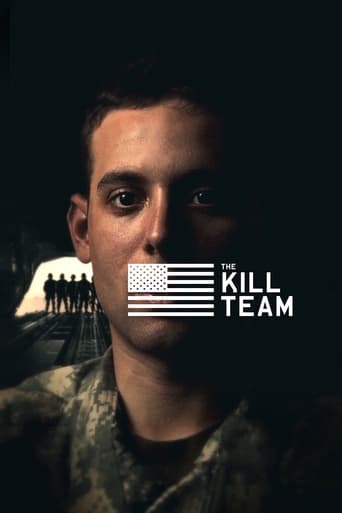
In 2010, the media branded a platoon of U.S. Army infantry soldiers “The Kill Team” following reports of its killing for sport in Afghanistan. Now, one of the accused must fight the government he defended on the battlefield, while grappling with his own role in the alleged murders. Dan Krauss’s absorbing documentary examines the stories of four men implicated in heinous war crimes in a stark reminder that, in war, innocence may be relative to the insanity around you.

Pete Postlethwaite stars as a man living alone in the devastated future world of 2055, looking at old footage from 2008 and asking: why didn’t we stop climate change when we had the chance?
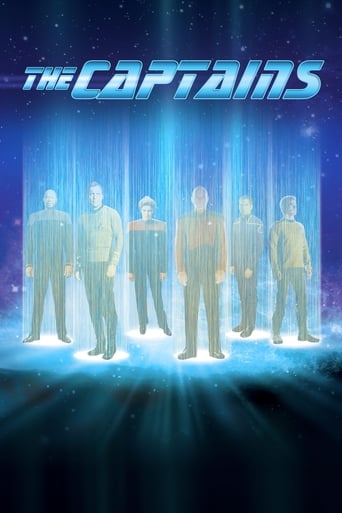
The Captains is a feature-length documentary film written and directed by William Shatner. The film follows Shatner as he interviews the other actors who have portrayed starship captains in the Star Trek franchise.
Similar titles

Special care has been taken by International Historic Films to assemble this monumental documentary, which tells the story of what is left for a people after its land has been ravaged by war. Situated between the powerful antagonists Germany and the Soviet Union, the Baltic nations of Latvia, Lithuania, and Estonia bore witness to some of the most ferocious land battles of the Second World War.

"Himmlers Kantele Player" - about Finnish student, who decides to leave University of Sorbonne and walk from Paris to Helsinki in the spring of 1935. On his way, in Germany, he meets Heinrich Himmler, who is attracted by a traditional Finnish instrument, kantele. Himmler employs Yrjö as researcher to the Ahnenerbe institute to find the Aryan roots from the runic singing culture of Finnish Carelia.
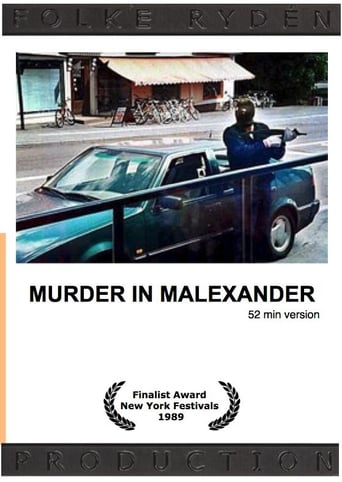
Depicts the controversial double police murder, involving neo-nazism and a theatre project by one of Scandinavia's most celebrated playwrights. The film traces a complex and fascinating chain of events leading up to the fatal climax in the picturesque small town of Malexander, Sweden.
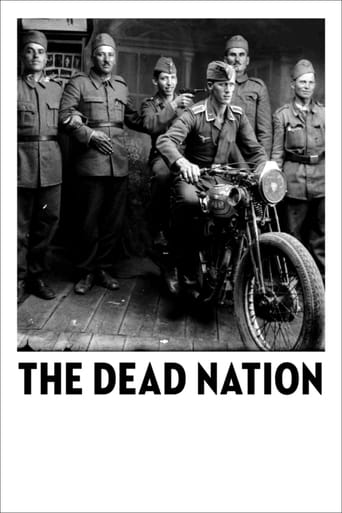
A documentary-essay which shows Costică Axinte's stunning collection of pictures depicting a Romanian small town in the thirties and forties. The narration, composed mostly from excerpts taken from the diary of a Jewish doctor from the same era, tells the rising of the antisemitism and eventually a harrowing depiction of the Romanian Holocaust.
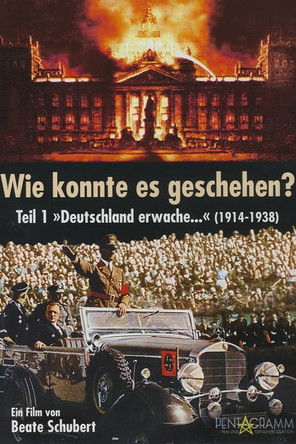
In 1945, 160 German cities lay in ruins and the loss of millions of lives, billions in material assets and countless cultural treasures was mourned throughout Europe... With the question “How could it happen?”, the film goes back to the year 1914, when the “primal catastrophe of the 20th century” took its course with the First World War.

The greatest secret of the Second World War has remained a mystery for the last 80 years: a Jewish Communist, Sandor Rado, led a spy network that proved essential to the victory of Allied Forces. Rado received details of strictly confidential strategies from the highest echelons of the Nazi State through Rudolf Roessler, a dedicated anti-Nazi he'd only known as code name "Lucy." Aided by key German industry leaders, Roessler transmitted timely information from high-ranking collaborators within the German army headquarters. Despite their achievement, Rado, Roessler and their sources remained unacknowledged heroes until today. Thanks to the recent declassification of secret archives, we are now able to step behind the scenes of this incredible story.

After the World War I, Mussolini's perspective on life is severely altered; once a willful socialist reformer, now obsessed with the idea of power, he founds the National Fascist Party in 1921 and assumes political power in 1922, becoming the Duce, dictator of Italy. His success encourages Hitler to take power in Germany in 1933, opening the dark road to World War II. (Originally released as a two-part miniseries. Includes colorized archival footage.)
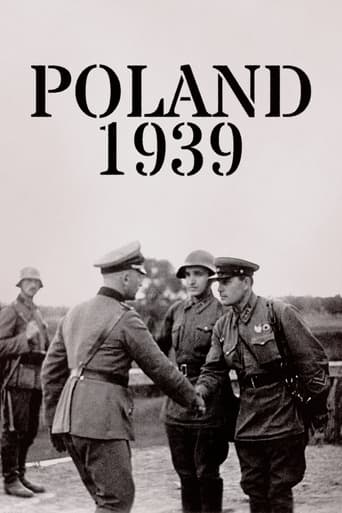
September 1st, 1939. Nazi Germany invades Poland. The campaign is fast, cruel and ruthless. In these circumstances, how is it that ordinary German soldiers suddenly became vicious killers, terrorizing the local population? Did everyone turn into something worse than wild animals? The true story of the first World War II offensive that marks in the history of infamy the beginning of a carnage and a historical tragedy.
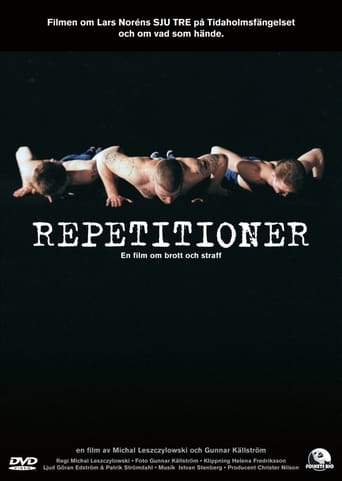
The theatre 7:3 project was conducted at the Tidaholm prison 1998-1999. What started as an artistic experiment, ended up in police killings at Malexander. The process in the prison were filmed during 6 months.
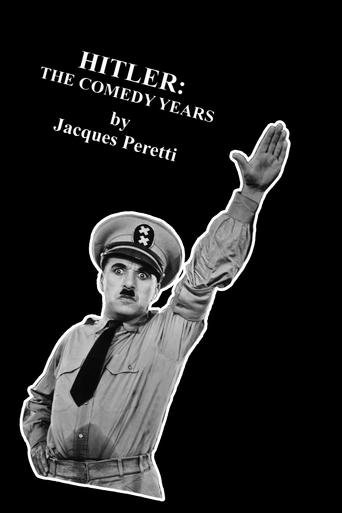
A documentary about the portrayal of Adolf Hitler in popular culture.
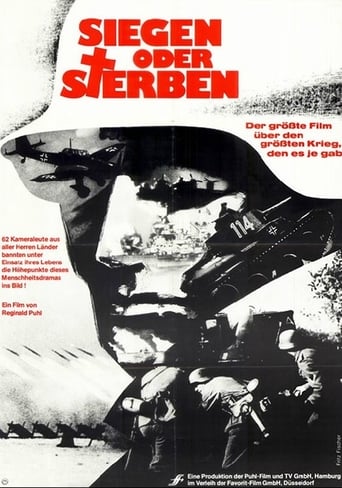
The impact of new documents from the international conflict that shook the world is enormous. Never-before-seen footage has emerged for the first time from previously secret archives. The murderous encirclement battles in Russia, the Battle of Britain, and the heroic deeds of countless lone fighters in Potsdam complete the circle of horror, from the Polish campaign to the harrowing images of refugee treks in the winter of 1944/45.
Documentary film about the official view of art in the Third Reich and state funding of artistic practice.
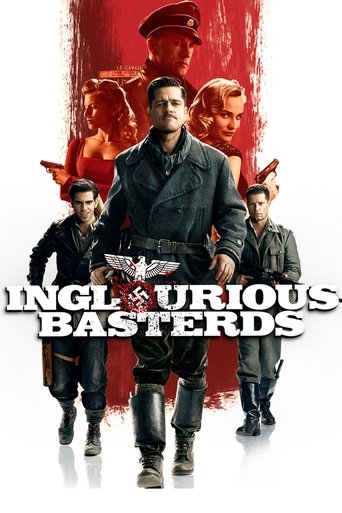
In Nazi-occupied France during World War II, a group of Jewish-American soldiers known as "The Basterds" are chosen specifically to spread fear throughout the Third Reich by scalping and brutally killing Nazis. The Basterds, lead by Lt. Aldo Raine soon cross paths with a French-Jewish teenage girl who runs a movie theater in Paris which is targeted by the soldiers.
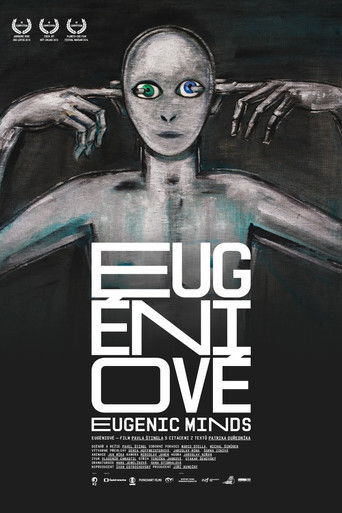
The history of one idea with monstrous consequences, presented in the style of old newsreels and interspersed with quotes from Patrik Ouředník’s Europeana. Archival footage is combined with animation as a kindly narrator takes us on a journey from the idea of cultivating a “better human race” all the way to the gas chambers.
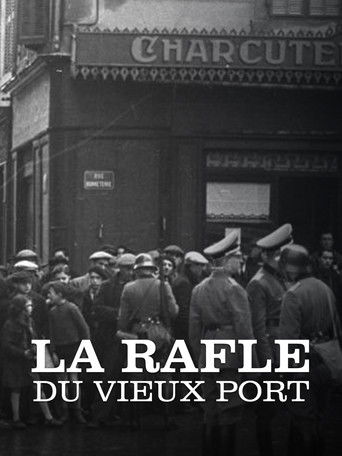
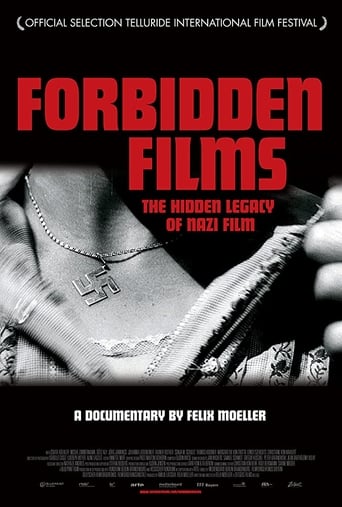
Between 1933 and 1945 roughly 1200 films were made in Germany, of which 300 were banned by the Allied forces. Today, around 40 films, called "Vorbehaltsfilme", are locked away from the public with an uncertain future. Should they be re-released, destroyed, or continue to be neglected? Verbotene Filme takes a closer look at some of these forbidden films.
Victor Klemperer (1881-1960), a professor of literature in Dresden, was Jewish; through the efforts of his wife, he survived the war. From 1933 when Hitler came to power to the war's end, he kept a journal paying attention to the Nazis' use of words. This film takes the end of 1945 as its vantage point, with a narrator looking back as if Klemperer reads from his journal. He examines the use of simple words like "folk," "eternal," and "to live." Interspersed are personal photographs, newsreel footage of Reich leaders and of life in Germany then, and a few other narrative devices. Although he's dispassionate, Klemperer's fear and dread resonate
Hitler's biography told like never before. Besides brief historical localizations by a narrator, only contemporaries and Hitler himself speak: no interviews, no reenactment, no illustrative graphics and no technical gadgets. The testimonies from diaries, letters, speeches and autobiographies are assembled with new, often unpublished archive material. Hitler's life and work are thus reflected in a unique way in interaction with the image of the society in the years 1889 to 1945.
Based on a true story of inmates at KZ Buchenwald that risked their lives to hide a small Jewish boy shortly before the liberation of the camp.