
The White House
2006-01-01 · 808 min · Not rated
Lasting over thirteen hours, Claerbout's film shows two men engaged in a discussion against the back-drop of a neoclassical house in southern France. An act of violence is repeated and re-enacted more than seventy times over the course of the film. Dissolving the boundaries between photography and film, Claerbout’s work puts into question the reassuring stillness of photography and the inevitable narrative progress of the cinematic image.
Trailers are previews, not full movies.
No authorized playback source configured. Use the legal watch options below.
Production details
- Directors
- David Claerbout
- Production companies
- Unavailable
- Countries
- Belgium, Germany
- Status
- Released
Top Cast
Cast unavailable.
Title information and images are supplied by TMDb. Explore our discovery guide for advice on comparing metadata and legal viewing options.
Where to watch
Availability provided by JustWatch via TMDb. Offers can change. Provider links are listed on TMDb; full playback requires a separately authorized source.
Availability not listed for this country.
Seasons & episodes
Recommendations

A compilation of over 30 years of private home movie footage shot by Lithuanian-American avant-garde director Jonas Mekas, assembled by Mekas "purely by chance", without concern for chronological order.

Taking inspiration from Peter M. Bracke's definitive book of the same name, this seven-hour documentary dives into the making of all twelve Friday the 13th films, with all-new interviews from the cast and the crew.
Live Aid was held on 13 July 1985, simultaneously in Wembley Stadium in London, England, and the John F. Kennedy Stadium in Philadelphia, United States. It was one of the largest scale satellite link-ups and television broadcasts of all time: watched live by an estimated global audience of 1.9 billion, across 150 nations. "It's twelve noon in London, seven AM in Philadelphia, and around the world it's time for Live Aid...!"
A chronicle of the rise and fall of O.J. Simpson, whose high-profile murder trial exposed the extent of American racial tensions, revealing a fractured and divided nation.
A live concert in tribute to Freddie Mercury, former lead singer of Queen. Mercury died of AIDS and so some of the proceeds of this concert went to AIDS research. Features performers such as Metallica, Def Leppard, Elton John, Axl Rose, Extreme, George Michael, and many others. Performers alternate between doing their own hits, covering Queen songs, or jamming with the surviving members of Queen.

Oliver Stone charts the history of the United States from the Second World War to the present.
Similar titles
After concluding the now-legendary public access TV series, The Pain Factory, Michael Nine embarked on a new and more subversive public access endeavor: a collaboration with Scott Arford called Fuck TV. Whereas The Pain Factory predominantly revolved around experimental music performances, Fuck TV was a comprehensive and experiential audio-visual presentation. Aired to a passive and unsuspecting audience on San Francisco’s public access channel from 1997 to 1998, each episode of Fuck TV was dedicated to a specific topic, combining video collage and cut-up techniques set to a harsh electronic soundtrack. The resultant overload of processed imagery and visceral sound was unlike anything presented on television before or since. EPISODES: Yule Bible, Cults, Riots, Animals, Executions, Static, Media, Haterella (edited version), Self Annihilation Live, Electricity.

The life and times of artist Richard Ellis

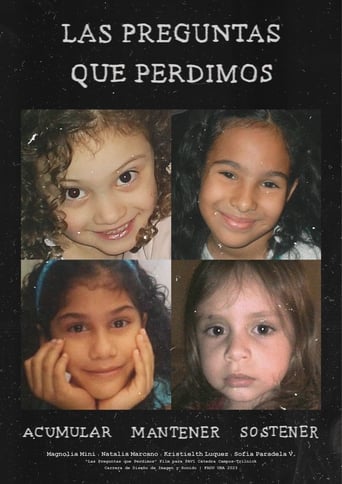
A fragmented look into the memories of two strangers from the same hometown, brought together through a university project.
Dangling from a high window, a young non-binary person is on the cusp of life and death. Flashes of film, literature, art (paintings) and cultural history pass them by, as if to tell a message. A postmodern treatise on connection to culture and the past.
A viral video shows a mysterious figure walking along the edge of the woods each day, and filmmaker Bill Howard sets out to spend a night there to find out exactly what it is.
A personal and experimental home video filmed in 2003, documenting a family trip to Calella from the filmmaker’s point of view. The footage captures everyday moments, later transitioning into scenes of family life and ending with a striking contrast between children’s innocence and a troubling news event on television.
A stop motion/collaged based independent short film plays with the recontextualisation of memories and how time distorts them.
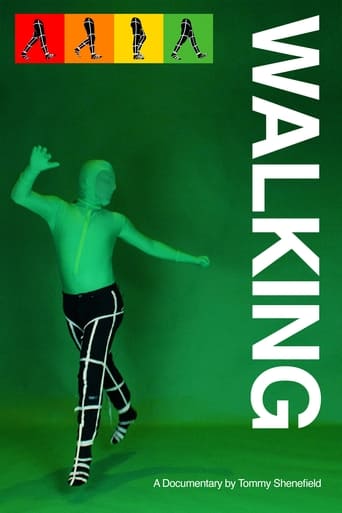
Tommy sets out to document walking. He meets a colorful cast of characters, attaches microphones to his feet, and contends with what it means to capture movement on film.

HSP 100 is a portrait of experimental filmmaker Maximilian Le Cain. As Le Cain discusses his life, work and relationship with cinema, Rashidi envelops him in a hallucinatory audio-visual ambiance that ultimately results in a poetic dialogue with the ideas and feelings he expresses.
Human hands can be both destructive and healing, Jeffrie Po suggests in his experimental film with spiritual outreach. He portrays a human being as a faun who roams the jungle dauntlessly, yet is destructive. The forest with vanishing cattle becomes a battlefield between dark powers and the power of salvation.
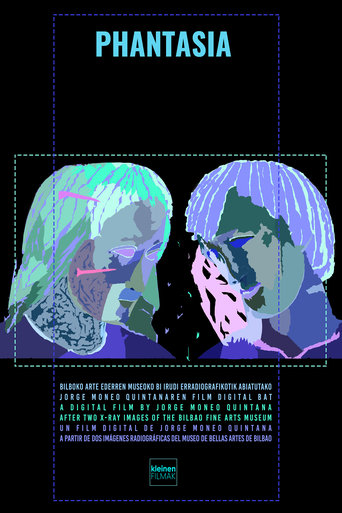
X-ray images were invented in 1895, the same year in which the Lumière brothers presented their respective invention in what today is considered to be the first cinema screening. Thus, both cinema and radiography fall within the scopic regime inaugurated by modernity. The use of X-rays on two sculptures from the Bilbao Fine Arts Museum generates images that reveal certain elements of them that would otherwise be invisible to our eyes. These images, despite being generally created for technical or scientific purposes, seem to produce a certain form of 'photogénie': they lend the radiographed objects a new appearance that lies somewhere between the material and the ethereal, endowing them with a vaporous and spectral quality. It is not by chance that physics and phantasmagoria share the term 'spectrum' in their vocabulary.

Phantom Islands is an experimental film that exists at the boundary of documentary and fiction. It follows a couple adrift and disoriented in the stunning landscape of Ireland’s islands. Yet this deliberately melodramatic romance is constantly questioned by a provocative cinematic approach that ultimately results in a hypnotic and visceral inquiry into the very possibility of documentary objectivity.

Machines can only function with a human who operates. It is an inseparable relationship where the two often overlap—machines malfunction, humans malfunction. Machines are machines; humans can be machines.
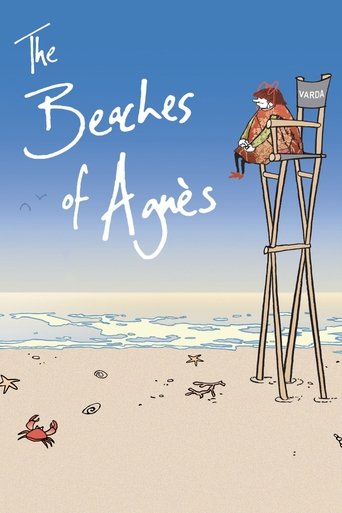
Filmmaking icon Agnès Varda, the award-winning director regarded by many as the grandmother of the French new wave, turns the camera on herself with this unique autobiographical documentary. Composed of film excerpts and elaborate dramatic re-creations, Varda's self-portrait recounts the highs and lows of her professional career, the many friendships that affected her life and her longtime marriage to cinematic giant Jacques Demy.

a 32-minute color film by Gwen Brown, featuring precious footage of Living Theatre productions “Mysteries” and smaller pieces, “Paradise Now” and “Frankenstein.” “The fusion of Brown’s freewheeling direct cinema and the Living Theatre’s performance for revolutionary change (amidst the heydays of both) unite as a dynamic concoction of the era, yielding for the viewer a shifting terrain of both critical insight and ecstatic zeal, not as a vacant nostalgia for a pre-commodified radicality, but as tactical inspiration for future days.” – Andrew Wilson (Artist’s Access Television)
The film poem about pesticides reflects on the return to the natural food chain, in which insect pest serve as food for the higher order. The harmonic cycle of life and death, the temple that is the wildflower field resounding with the inebriating sound of crickets chirping and wheat spikes rustling in the wind, is invaded by the human, the ultimate consumer with no natural predator.
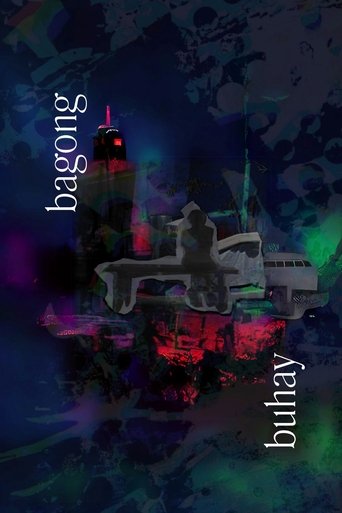
"Bagong Buhay" is a short experimental film that dispels the common belief that packing up and moving to a new place will magically improve one's quality of life. The film challenges this presumption by portraying two contrasting ways of life through objects and locations, encouraging viewers to think critically about the complexities of what makes a better life. In the Philippines, it's believed that relocating to a new area will bring about positive changes in one's existence. True satisfaction is a complex and multifaceted notion, and "Bagong Buhay" encourages us to ponder that relocating to a new place is not a surefire way to attain it.
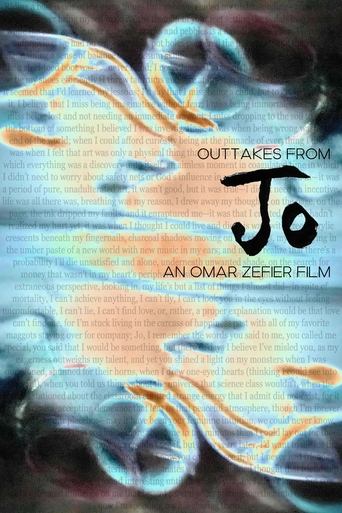
Outtakes, commentary from Zefier's third film: Jo; or The Act of Riding a Bike.

In the middle of the night, a sleepless subject rediscovers the ability to use their hands to produce and play with shadows on the ceiling.