
When Glaciers Go
2020-05-15 · 17 min · Not rated
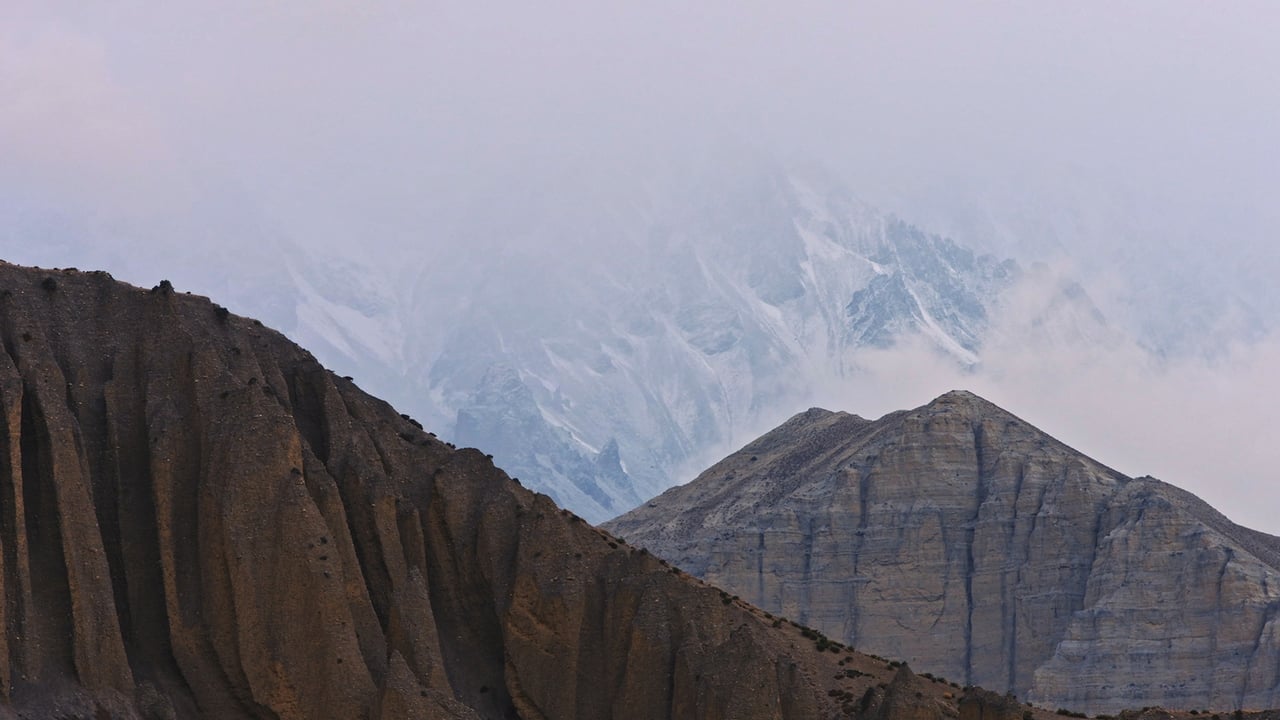
A diminishing water supply is driving people from their land in a remote region of Nepal. The younger generation of the Gurung family adapts by commuting from their ancestral home, where subsistence depends on grazing goats and cows, to a village that has a commercial apple orchard, fed by irrigation. “We cannot give up cultivating our fields,” a elderly man explains. “The apple farm is not going to be able to feed us easily.” The older generation believes that water shortages stem from road building and bulldozing, upsetting the natural order, a young man explains. Both generations fly prayer flags, beseeching water.
Trailers are previews, not full movies.
No authorized playback source configured. Use the legal watch options below.
Production details
- Directors
- Corey Robinson
- Production companies
- Unavailable
- Countries
- Nepal
- Status
- Released
Top Cast
Title information and images are supplied by TMDb. Explore our discovery guide for advice on comparing metadata and legal viewing options.
Where to watch
Availability provided by JustWatch via TMDb. Offers can change. Provider links are listed on TMDb; full playback requires a separately authorized source.
Availability not listed for this country.
Seasons & episodes
Recommendations

Follow the shocking, yet humorous, journey of an aspiring environmentalist, as he daringly seeks to find the real solution to the most pressing environmental issues and true path to sustainability.

A documentary about how a dominant cultural and demographic institution both sustains their traditional activities and adapts to the digital revolution.
A look at how climate change affects our environment and what society can do to prevent the demise of endangered species, ecosystems, and native communities across the planet.
Sheds light on an alternative approach to farming called “regenerative agriculture” that could balance our climate, replenish our vast water supplies, and feed the world.

A portrait of the day-to-day operations of the National Gallery of London, that reveals the role of the employees and the experiences of the Gallery's visitors. The film portrays the role of the curators and conservators; the education, scientific, and conservation departments; and the audience of all kinds of people who come to experience it.

Al Pacino's deeply-felt rumination on Shakespeare's significance and relevance to the modern world through interviews and an in-depth analysis of "Richard III."

A visual montage portrait of our contemporary world dominated by globalized technology and violence.
Takes us to locations all around the US and shows us the heavy toll that modern technology is having on humans and the earth. The visual tone poem contains neither dialogue nor a vocalized narration: its tone is set by the juxtaposition of images and the exceptional music by Philip Glass.
A decade after An Inconvenient Truth brought climate change into the heart of popular culture comes the riveting and rousing follow-up that shows just how close we are to a real energy revolution. Vice President Al Gore continues his tireless fight, traveling around the world training an army of climate champions and influencing international climate policy. Cameras follow him behind the scenes—in moments private and public, funny and poignant—as he pursues the empowering notion that while the stakes have never been higher, the perils of climate change can be overcome with human ingenuity and passion.

Through deeply personal interviews with her siblings and an examination of the photographs, letters, and belongings left behind, Mariska assembles a new portrait of her mother Jayne Mansfield, an extraordinary and complex woman.
Film adaptation of French economist Thomas Piketty's ground-breaking global bestseller of the same name: an eye-opening journey through wealth and power.
An astonishing journey revealing the awesome power of the natural world. Over the course of one single day, we track the sun from the highest mountains to the remotest islands to exotic jungles.

A newborn monkey and its mother struggle to survive within the competitive social hierarchy of the Temple Troop, a dynamic group of monkeys who live in ancient ruins found deep in the storied jungles of South Asia.
A nature documentary centered on a family of chimps living in the Ivory Coast and Ugandan rain forests. Through Oscar, a little chimpanzee, we discover learning about life in the heart of the African tropical forest and follow his first steps in this world with humor, emotion and anguish. Following a tragedy, he finds himself separated from his mother and left alone to face the hostility of the jungle. Until he is picked up by an older chimpanzee, who will take him under her protection.

The film follows adventurer Jeff Johnson as he retraces the epic 1968 journey of his heroes Yvon Chouinard and Doug Tompkins to Patagonia.

Retrospective documentary about the making of the horror cult classic "The Return of the Living Dead."
In Angola's mist-shrouded highlands, three KhoiSan master trackers embark on a spiritual quest to rediscover the legendary "ghost elephants" of Lisima, creatures presumed lost but remembered in ancestral trance, ritual, and memory.

The life of Mr. Spock, as well as that of Leonard Nimoy, the actor who played him for almost fifty years, written and directed by his son: Adam.
Live Aid was held on 13 July 1985, simultaneously in Wembley Stadium in London, England, and the John F. Kennedy Stadium in Philadelphia, United States. It was one of the largest scale satellite link-ups and television broadcasts of all time: watched live by an estimated global audience of 1.9 billion, across 150 nations. "It's twelve noon in London, seven AM in Philadelphia, and around the world it's time for Live Aid...!"
Featuring never-before-seen footage, this documentary delivers a startling new look at the Peoples Temple, headed by preacher Jim Jones who, in 1978, led more than 900 members to Guyana, where he orchestrated a mass suicide via tainted punch.
Similar titles
This film tries to blow the whistle on what it calls the biggest swindle in modern history: 'Man Made Global Warming'. Watch this film and make up your own mind.

When the water in her small Mexican town proves to be radioactive, a young mom suddenly finds herself leading a local resistance movement. Her life is upended when she has to face a powerful and corrupt government hellbent on burying the truth.
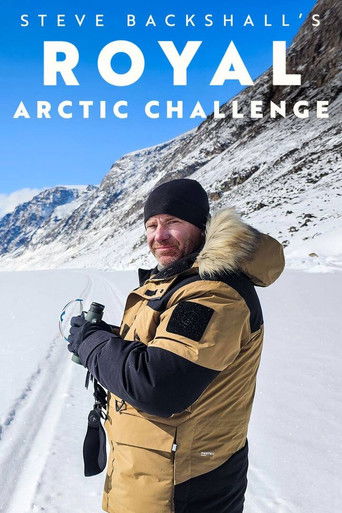
50 years on from the event, environmentalist Steve Backshall retraces a young Prince Charles' Arctic adventure and uncovers dramatic changes to our planet alongside an urgent need for action.
A documentary following the sharp decline of the cod fishing industry in New England. Included is an in-depth look at the potential causes and the resounding effects upon the lives of the fishermen themselves.
A huge new global protest movement is changing public attitudes to climate change. Reporter Ben Zand gains access to the most high-profile activist group, Extinction Rebellion.
Award-winning war photographer Rita Leistner goes back to her roots as a tree planter in the wilderness of British Columbia, offering an inside take on the grueling, sometimes fun and always life-changing experience of restoring Canada’s forests. Leistner, who has photographed some of the world’s most dangerous places, credits the challenge of tree-planting for her physical and mental endurance. In Forest for the Trees, her first feature film, she revisits her past to share the lessons she learned. The film introduces us to everyday life on the “cut-block” and the brave souls who fight through rough terrains and work endless hours to bring our forests to life. The rugged BC landscape comes to life magically in Leistner’s photography, while the quirky characters and nuggets of wisdom shared around the campfire tell a sincere story of community.
Antarctica is the most extreme continent on our planet—higher, colder, and even drier than any other on Earth, and although it is thousands of miles away, what happens here affects every single one of us.
An award-winning short exploring man-made impacts on New Zealand’s water cycle.

Kids and bikes; wherever you are in the world, they go together. The chaotic streets of Kathmandu may not seem like a typical breeding ground for world-class mountain bikers, but then again nothing is typical about Rajesh (RJ) Magar. Since learning to ride on a beat-up clunker, to becoming the four-time National Champion at age 21, RJ’s story is one of boundless childhood dreaming and unstoppable determination, forged from junkyard scraps and tested on the rugged trails of the mighty Himalaya.

Filmed in France, Italy, Tunisia, and Morocco, Sh'hili addresses the multiple dimensions of climate change from a politically engaged perspective, advocating for climate justice, the protection of the most vulnerable populations, the preservation of life, and resistance against all forms of domination, including those linked to colonial and neo-colonial policies. Sh'hili aims to be a modest contribution to the collective resistance against climate change and its ecological, social, and political consequences.
A post in the debate on Swedish forestry highlighting the difficulties and consequences of a hard deforestation with fast-growing forest plantations and a devastating short-sightedness. The documentary shows the vulnerability in the transition to a fossil-free society where we become increasingly dependent on the forest as a natural resource.
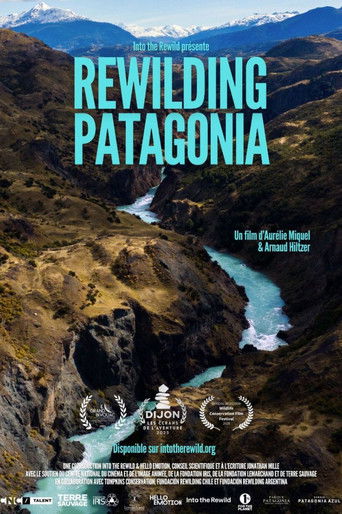
This is one of the most beautiful rewilding stories of our time, that of Douglas and Kristine Tompkins, a couple of successful entrepreneurs – The North Face and Esprit – who decided to dedicate themselves to protecting vast territories in Patagonia. The results of their actions are astounding: in 30 years they enabled the creation and expansion of 18 national parks between Chile and Argentina, covering a total area of 7 million hectares, equivalent to the size of a country like Ireland. By transforming these spaces and reconstructing natural ecosystems, the development of these parks has also enabled the creation of social bonds, developed a new form of economic activity, brought forth a political space, and contributed to strengthening the population’s sense of belonging to their territories.
A documentary on Al Gore's campaign to make the issue of global warming a recognized problem worldwide.
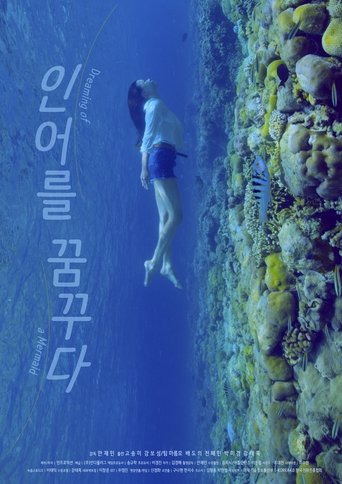
Working as a designer for a clothing company, Song-mi, feeling skeptical about her heavy workload and repetitive daily life, decides to quit her job and become a freediving underwater performer. As she went deeper into her sea, Songmi felt that her body and mind, which had been weary of her, were healed. In order to return this 'gift of healing' she received from her sea, she challenges a special underwater performance with installation artist Boseong and aqua aerobics instructor Doui. Youth campaigns in Jeju, Palau and Cebu. The silent cry of a mermaid trapped in a plastic forest in the middle of the Pacific Ocean now throws a strong warning to our oceans.
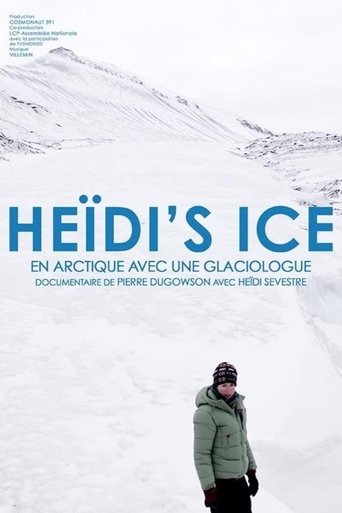
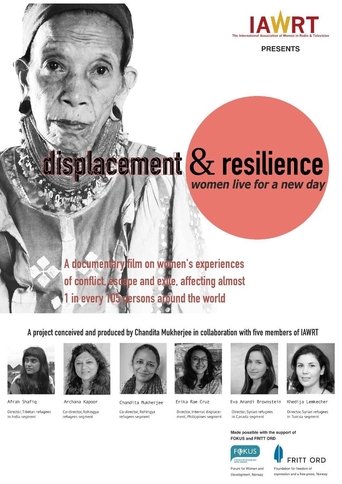
The documentary is a five country-based sequences featuring stories about conflict, migration and the experience of exile; Tibetan women refugees in Dharamshala, India, Syrian refugee family in Tunisia, evicted indigenous women in the Phlippines; Rohingya women in Haryana and Delhi, and Syrian women refugees in Canada.

Lignes chronicles the sublime interplay between alpine literature and an expedition seeking the true meaning of mountaineering. Four high-mountain guides—Matthieu Maynadier, Pierre Labbre, Matthieu Détrie, and Julien Dusserre—embark on a project: to summit Nangpai-Gosum, an unclimbed 7,000-meter peak in Nepal, using the "alpine style" adapted to the Himalayas—the toughest and purest approach of all. Through this expedition, Lignes attempts to answer the question: "Why do we climb mountains?" Why, despite the harsh conditions and exhaustion, do these four Alpine guides pursue a perilous dream in a realm that belongs to no one? Lignes finds some answers in the past, drawing on 150 years of alpine literature. Serving as both narrator and seasoned guide, Raymond Renaud takes us on a tour of his books and speaks of the "conquerors of the useless"—from the turn of the century to the present day.
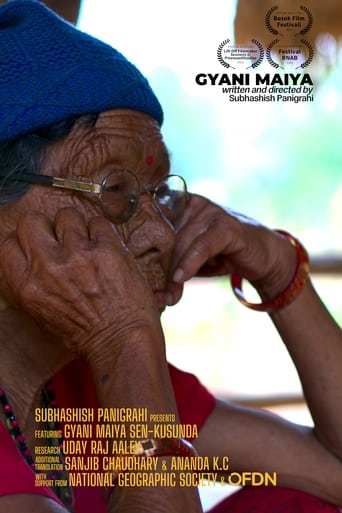
“We left our language and started speaking others’. The girls have got married and have left for the villages. Boys are getting married in villages. It should be taught to children”. — Gyani Maiya Sen-Kusunda The Gi Mihaq (also known as Kusunda) was a semi-nomadic hunter and gatherer community that settled in villages around the mid-western Nepalese district of Dang. They have long lost their native language Mihaq (Kusunda), to acculturation and other barriers to active use. The community also lost their 83-year-old elder Gyani Maiya Sen-Kusunda in 2020, the most and the only known fluent Kusunda speaker then. Filmed in Kulmor in the Dang District in 2018, this openly-licensed documentary is a memoir of Sen-Kusunda in her own words and a biography of her people who were forced to leave their language and cultural identity. Kusunda is being revived by Kamala Sen Khatri, Sen-Kusunda’s younger sister, and Uday Raj Aaley, a local researcher who is the key interviewer for this film.

The foreshore as you've never seen it before! War, survival, and marine ballet: in a Microscomos-style odyssey with sumptuous images, this documentary takes a close-up look at the aquatic world at low tide and its colorful creatures.