
Eye Witness Interviews: Jürgen Böttcher
2015-01-01 · Runtime unavailable · Not rated
In this interview with contemporary witnesses, painter and director Jürgen Böttcher talks about some stages of his professional career. This also includes his path to film art and his work at Deutsche Film AG (DEFA) in Potsdam-Babelsberg. He also tells of his experiences during the shooting of films such as "Barfuß und ohne Hut", "Rangierer" and the documentary film "Jahrgang 45", once banned but finally re-released at the Berlinale 2015. During the conversation, questions about the difference and similarities between painting and film, the significance of music in film, Böttcher's preference for black and white, and his criteria for choosing topics for documentary film projects will be discussed.
Trailers are previews, not full movies.
No authorized playback source configured. Use the legal watch options below.
Production details
- Directors
- Ferdinand Teubner, Katrin Teubner
- Production companies
- FTV Fischer-Teubner Film- & Fernsehproduktion
- Countries
- Germany
- Status
- Released
Top Cast
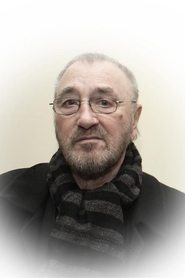 Jürgen Böttcherhimself
Title information and images are supplied by TMDb. Explore our discovery guide for advice on comparing metadata and legal viewing options.
Where to watch
Availability provided by JustWatch via TMDb. Offers can change. Provider links are listed on TMDb; full playback requires a separately authorized source.
Availability not listed for this country.
Seasons & episodes
Recommendations
A gripping tale of intrigue and mystery in the art world, this film traces the history of a collection of Post-Impressionist paintings - worth billions - which became the subject of a power struggle after the death of its owner. Dr. Albert Barnes.
This unique cinematic experience dives deep into an artist’s work and reveals his life path, inspiration, and creative process. It explores his fascination with myth and history. Past and present are interwoven to diffuse the line between film and painting, allowing the audience to be completely immersed in the remarkable world of one of the greatest contemporary artists, Anselm Kiefer. Wim Wenders shot this unique portrait over the course of two years in stunning 3D.

In an intimate and joyful story of love in the face of loss, celebrated poets Andrea Gibson and Megan Falley find strength—and unexpected hilarity—in what might be their final year together.

An inside look at one of the most anticipated movie sequels ever with James Cameron and cast.
Documentary of the making of the sequel to the popular Schwarzenegger film, The Terminator.
A documentary about the making of season five of the acclaimed AMC series Breaking Bad.

A compilation of over 30 years of private home movie footage shot by Lithuanian-American avant-garde director Jonas Mekas, assembled by Mekas "purely by chance", without concern for chronological order.

Artists in LA discover the work of forgotten Polish sculptor Stanislav Szukalski, a mad genius whose true story unfolds chapter by astounding chapter.

Through deeply personal interviews with her siblings and an examination of the photographs, letters, and belongings left behind, Mariska assembles a new portrait of her mother Jayne Mansfield, an extraordinary and complex woman.

Musician and performance artist Laurie Anderson reflects on the deaths of her husband Lou Reed, her mother and her beloved dog.

This revealing documentary honors the legendary Sidney Poitier—iconic actor, filmmaker, and civil rights activist. Featuring interviews with Denzel Washington, Spike Lee, Halle Berry, and more.
The Making-of James Cameron's Avatar. It shows interesting parts of the work on the set.
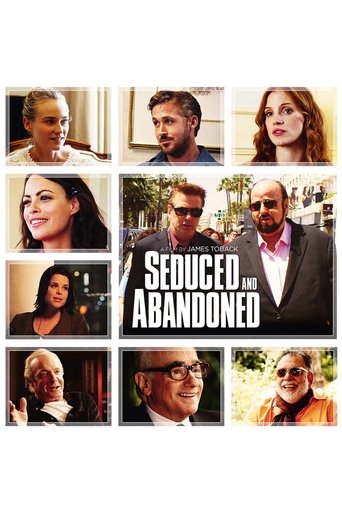
SEDUCED AND ABANDONED combines acting legend Alec Baldwin with director James Toback as they lead us on a troublesome and often hilarious journey of raising financing for their next feature film. Moving from director to financier to star actor, the two players provide us with a unique look behind the curtain at the world's biggest and most glamourous film festival, shining a light on the bitter-sweet relationship filmmakers have with Cannes and the film business. Featuring insights from directors Martin Scorsese, 'Bernando Bertolucci' and Roman Polanski; actors Ryan Gosling and Jessica Chastain and a host of film distribution luminaries.

Featuring interviews with filmmakers and industry legends, discover the origins and evolution of The Joker, and learn why The Clown Prince of Crime is universally hailed as the greatest comic-book supervillain of all time.

The life and career of an actor, artist, and icon. His own journey through his own camera.

Documentary filmmaker Amy Berg investigates the life of 30-year pedophile Father Oliver O'Grady and exposes the corruption inside the Catholic Church that allowed him to abuse countless children. Victims' stories and a disturbing interview with O'Grady offer a view into the troubled mind of the spiritual leader who moved from parish to parish gaining trust ... all the while betraying so many.
Alex Gibney explores the charged issue of pedophilia in the Catholic Church, following a trail from the first known protest against clerical sexual abuse in the United States and all way to the Vatican.

A detailing of the rise to prominence and global sporting superstardom of six supremely talented young Manchester United football players (David Beckham, Nicky Butt, Ryan Giggs, Paul Scholes, Phil and Gary Neville). The film covers the period 1992-1999, culminating in Manchester United's European Cup triumph.
As his life comes to its end, famous Hollywood director Orson Welles puts it all on the line at the chance for renewed success with the film The Other Side of the Wind.

Cameramen and women discuss the craft and art of cinematography and of the "DP" (the director of photography), illustrating their points with clips from 100 films, from Birth of a Nation to Do the Right Thing. Themes: the DP tells people where to look; changes in movies (the arrival of sound, color, and wide screens) required creative responses from DPs; and, these artisans constantly invent new equipment and try new things, with wonderful results. The narration takes us through the identifiable studio styles of the 30s, the emergence of noir, the New York look, and the impact of Europeans. Citizen Kane, The Conformist, and Gordon Willis get special attention.
Similar titles
Challenging all notions of genre, Semi Colin is a living, breathing art installation. Part performance, part art, part social comment, Colin philosophizes on his life's obsessive work as an erotic artist.
Rare documentary chronicling Keith Haring's visit to Australia in 1984, including working and painting at the National Gallery of Victoria and the New South Wales Art Gallery.

Facing one of humanity’s biggest questions, ‘what is left of us after our death?’, this haunting documentary covers the author’s thought process on the idea of what might remains of us after we die, supported by the vision of an artist who decided to come back in Italy after spending forty-seven years in New York and turn his little apartment into a mausoleom where his death-filled artworks will lay along with his ashes. Raising questions like ‘are the things we create in our lifetime the mark of our existance?’ and ‘can the artist escape death trough the art objects?’ the documentary touches a vast variety of themes and ideas as well as paying a visit to one of the oldest mausoleums in ancient mythology, the Acheron River.
The Piccirilli family settled in New York City and started the largest and most prolific marble carving studio in America. For nearly 50 years, Piccirilli sculptors helped shape the architectural landscapes of Washington and New York through hundreds of monuments, memorials, and artworks, many of which are preserved in museums and private collections.
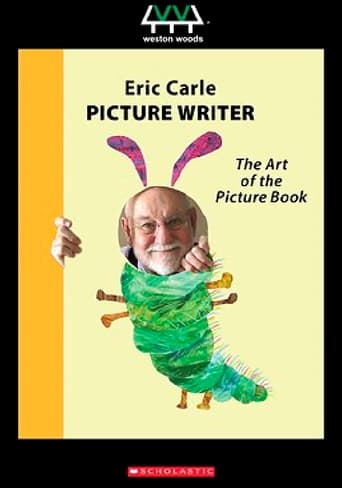
An intimate portrait of Eric Carle, creator of more than 70 books for children including the best-selling "The Very Hungry Caterpillar". At 82, Eric is still at work in his studio making books and creating art. As he methodically layers a tissue paper collage of the caterpillar, he describes the feeling he achieves working in his studio, the sense of being at peace, all alone, when everything grows quiet and it is just himself and his work. The film taps into that deep creative need in each of us, a spirit that started in Eric as a very young child and is unceasing today.

The inner world of the great painter Max Ernst is the subject of this film. One of the principal founders of Surrealism, Max Ernst explores the nature of materials and the emotional significance of shapes to combine with his collages and netherworld canvases. The director and Ernst together use the film creatively as a medium to explain the artist's own development.
The Faraway Nearby follows the tragic life of pioneer physicist Joseph Weber, whose pursuit of gravitational waves takes him on a dizzying journey from the height of acclaim to the depths of despair and disdain when he breaks the cardinal rule of science and clings to his ideas though his results can't be duplicated. Physicists, artists, and other creatives explore the emotional side of discovery and question whether the risk is worth the journey.
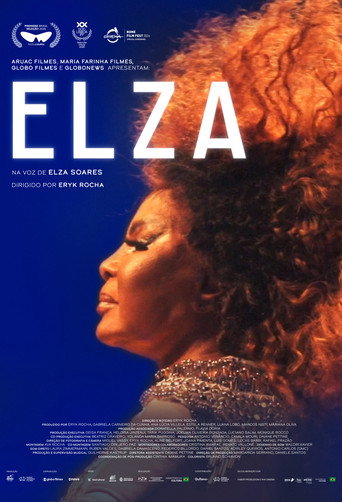
With her radical voice, visceral improvisation, and unmistakable rasp, Elza Soares created a language all her own and crossed generations, continually reinventing herself as one of Brazil’s greatest artists. In the documentary that bears her name, Elza narrates her own story, weaving together a diary of memories, desires, and reflections through music, in dialogue with historic Brazilian films. Through Elza and her nearly century-long life, the film offers an X-ray of a country in turmoil.

Contemporary artist Koki Tanaka sets up a booth at a Los Angeles flea market to sell palm fronds. "I tried to bring something very extreme into the flea-market context. I picked the palm fronds because they are the most useless things in California – they’re what we have to sweep away after a windy day. It was an experiment in registering people’s reaction to a fundamental question about the value of objects. And I was referencing two historical pieces: David Hammons’s Bliz-aard Ball Sale [1983], where he sold snowballs during winter in New York; and a Japanese manga called Munou no Hito [A Worthless Person, 1985], in which the protagonist sells stones by the riverside – stones being sold alongside stones. So both shared quite similar ideas." - Koki Tanaka
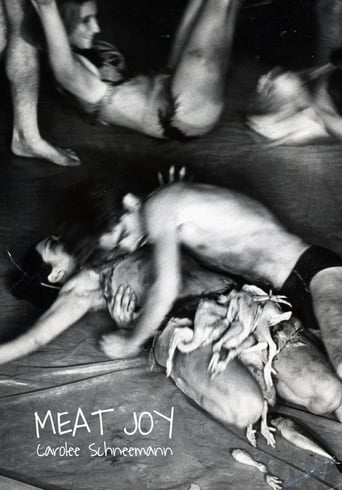
"Meat Joy is an erotic rite — excessive, indulgent, a celebration of flesh as material: raw fish, chicken, sausages, wet paint, transparent plastic, ropes, brushes, paper scrap. Its propulsion is towards the ecstatic — shifting and turning among tenderness, wildness, precision, abandon; qualities that could at any moment be sensual, comic, joyous, repellent. Physical equivalences are enacted as a psychic imagistic stream, in which the layered elements mesh and gain intensity by the energy complement of the audience. The original performances became notorious and introduced a vision of the 'sacred erotic.' This video was converted from original film footage of three 1964 performances of Meat Joy at its first staged performance at the Festival de la Libre Expression, Paris, Dennison Hall, London, and Judson Church, New York City."
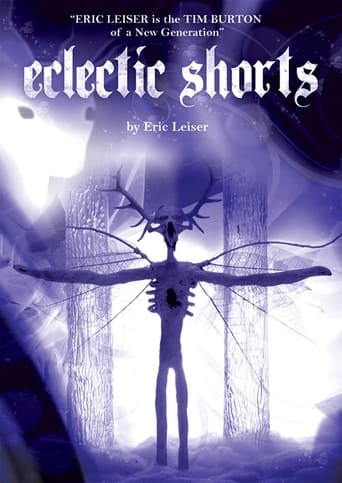
Eric Leiser displays his boundless creativity in this short collection; A stunning compilation of works presented with a mixture of live action, stop motion animation, puppetry and pixilation techniques, produced between 2001 and 2006.
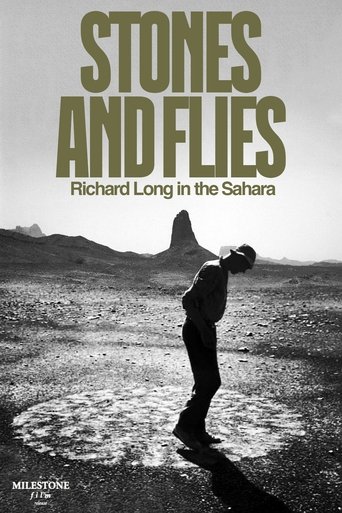
In the fall of 1987, Philippe Haas accompanied the sculptor Richard Long to the Algerian Sahara and filmed him tracing with his feet, or constructing with desert stones, simple geometric figures (straight lines, circles, spirals). In counterpoint to the images, Richard Long explains his approach. Since 1967, Richard Long (1945, Bristol), who belongs to the land art movement, has traveled the world on foot and installed, in places often inaccessible to the public, stones, sticks and driftwood found in situ. His ephemeral works are reproduced through photography. He thus made walking an art, and land art an aspiration of modern man for solitude in nature.
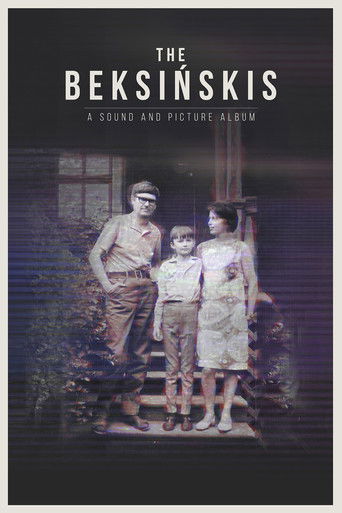
Painter Zdzisław Beksiński, his wife Zofia and their son Tomasz, a well-known radio journalist and translator, were a typical and unconventional family, both at the same time. One of the father’s obsessions was filming himself and his family members. Using archival footage only, shot primarily by Zdzisław, as well many other materials, which have not been presented anywhere so far, the film tells a tragic story of the Beksińskis that has never ceased to fascinate Polish filmmakers.

Destroying your own artwork. For many artists it is unmentionable, but Loes Heebink from Kolderveen irreparably destroyed her artwork "Fluisteraars" herself and came up with the idea for a documentary of the same name, directed by Saskia Jeulink.

A documentary about an Iowa artist who made his career from two antique photo albums that he found in the trash. It has been four years since he originally found the two photo albums and since then he has had featured exhibits around the country. This is the first film in the MADE IN IOWA documentary series.
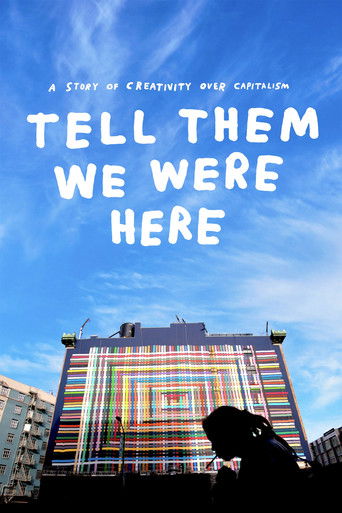
Tell Them We Were Here is an inspirational feature-length documentary about eight artists who show us why art is vital to a healthy society and reminds us that we are stronger together.
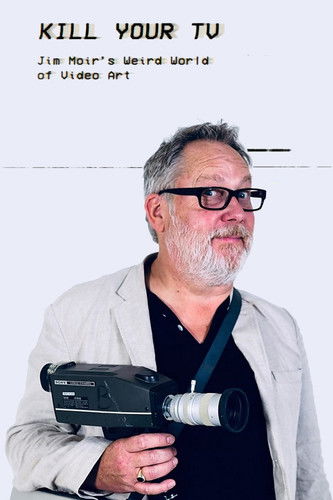
Jim Moir (aka Vic Reeves) explores Video Art, revealing how different generations ‘hacked’ the tools of television to pioneer new ways of creating art that can be beautiful, bewildering and wildly experimental.

Celebrating Billy Connolly's 75th birthday and 50 years in the business, three Scottish artists - John Byrne, Jack Vettriano and Rachel MacLean - each create a new portrait of the Big Yin. As he sits with each artist, Billy talks about his remarkable life and career which has taken him from musician and pioneering stand-up to Hollywood star and national treasure.
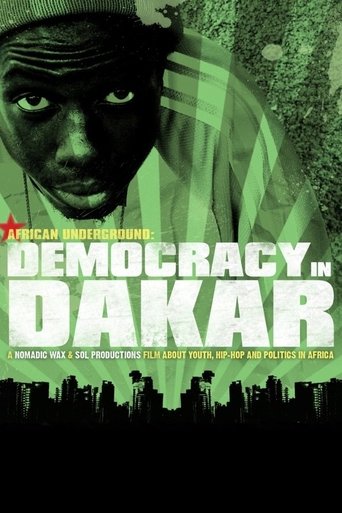
African Underground: Democracy in Dakar is a groundbreaking documentary film about hip-hop youth and politics in Dakar Senegal. The film follows rappers, DJs, journalists, professors and people on the street at the time before, during and after the controversial 2007 presidential election in Senegal and examines hip-hop’s role on the political process. Originally shot as a seven part documentary mini-series released via the internet – the documentary bridges the gap between hip-hop activism, video journalism and documentary film and explores the role of youth and musical activism on the political process.
This MGM Passing Parade series short takes a look at changing definitions of art in the United States.