The Snowball Rolled South
2018-01-01 · 52 min · Not rated
Almost all Jews in South Africa originally came from Lithuania. As early as the 19th century, a handful of them reached the shores of South Africa. Those who made the trip became successful artists, entrepreneurs and activists, while those who stayed behind were massacred by Nazis and Lithuanian collaborators. The film explores how these bittersweet circumstances have constructed the identities of South African Litvaks. Personal recounts and anecdotes paint the tragedy of the Holocaust, hopes of a new life in South Africa, as well as unique bonds for the future. (Lithuanian Film Center)
Trailers are previews, not full movies.
No authorized playback source configured. Use the legal watch options below.
Production details
- Directors
- Ieva Balsiūnaitė
- Production companies
- Unavailable
- Countries
- Lithuania
- Status
- Released
Top Cast
Cast unavailable.
Title information and images are supplied by TMDb. Explore our discovery guide for advice on comparing metadata and legal viewing options.
Where to watch
Availability provided by JustWatch via TMDb. Offers can change. Provider links are listed on TMDb; full playback requires a separately authorized source.
Availability not listed for this country.
Seasons & episodes
Recommendations

In an intimate and joyful story of love in the face of loss, celebrated poets Andrea Gibson and Megan Falley find strength—and unexpected hilarity—in what might be their final year together.

A documentary on the expletive's origin, why it offends some people so deeply, and what can be gained from its use.

Through deeply personal interviews with her siblings and an examination of the photographs, letters, and belongings left behind, Mariska assembles a new portrait of her mother Jayne Mansfield, an extraordinary and complex woman.

A compilation of over 30 years of private home movie footage shot by Lithuanian-American avant-garde director Jonas Mekas, assembled by Mekas "purely by chance", without concern for chronological order.

Just two years away from turning 30, participants in Michael Apted's documentary series are facing serious questions of identity and purpose, wondering whether they've found their place in the world.

A documentary about how a dominant cultural and demographic institution both sustains their traditional activities and adapts to the digital revolution.

Director Michael Apted revisits the same group of British-born adults after a 7 year wait. The subjects are interviewed as to the changes that have occurred in their lives during the last seven years.
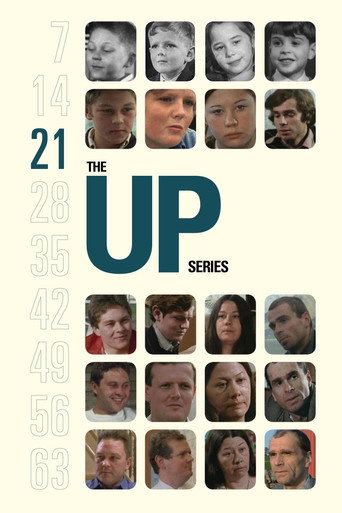
After another 7 year wait, director Michael Apted revisits the same group of British-born children from Seven Up! and 7 Plus Seven. The subjects are interviewed as to the changes that have occurred in their lives during the last seven years.

Director Michael Apted revisits the same group of British-born adults after a 7 year wait. The subjects are interviewed as to the changes that have occurred in their lives during the last seven years.
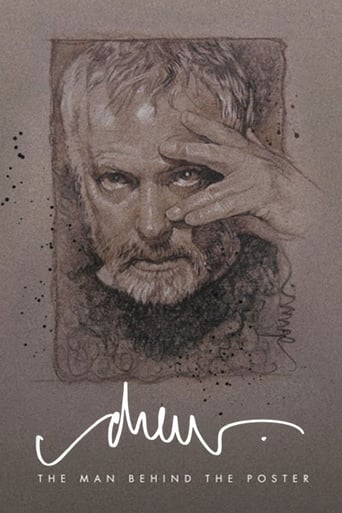
A documentary on legendary movie-poster artist Drew Struzan.
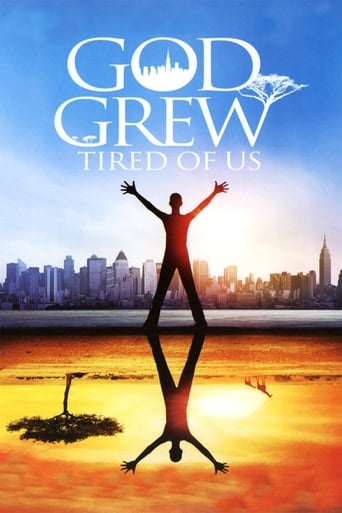
Filmmaker Christopher Quinn observes the ordeal of three Sudanese refugees -- Jon Bul Dau, Daniel Abul Pach and Panther Bior -- as they try to come to terms with the horrors they experienced in their homeland, while adjusting to their new lives in the United States.

This revealing documentary honors the legendary Sidney Poitier—iconic actor, filmmaker, and civil rights activist. Featuring interviews with Denzel Washington, Spike Lee, Halle Berry, and more.
Follow the evolution of the 'Halloween' movies over the past twenty-five years. It examines why the films are so popular and revisits many of the original locations used in the films - seeing the effects on the local community. For the first time, cast, crew, critics and fans join together in the ultimate 'Halloween' retrospective.
A night of drunken chaos rocks a quiet Dutch town in this shocking documentary about a teen's birthday invite that accidentally went viral on Facebook.
Stars of "The Walking Dead," Andrew Lincoln and Danai Gurira, walk down memory lane and visit iconic locations where pivotal moments between their characters, Rick and Michonne, were filmed.

Over 35 years after Bob Lazar's revelations, this documentary exposes secrets of a facility the government still denies. Featuring Lazar's testimony, recreations, and new evidence, it reopens a case that continues to spark global curiosity
After the high-profile killing of Damilola Taylor, Cornelius' family move out of London. But when they discover their new town is run by racists, Cornelius takes a drastic step to survive.

Ranjit, a farmer in India, takes on the fight of his life when he demands justice for his 13-year-old daughter, the victim of a brutal gang rape. His decision to support his daughter is virtually unheard of, and his journey unprecedented.

A 1993 documentary film about Bruce Lee. The film includes interviews from some of his fellow students and opponents who worked alongside him in his movies.
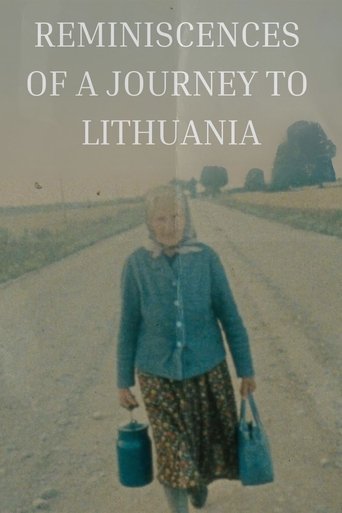
Jonas Mekas weaves an elegiac diary film from his 1971–72 return to Lithuania, chronicling a visit to his birthplace of Semeniškiai after decades in exile. Blending personal memory with documentary observation, the film becomes both a portrait of homecoming and a meditation on displacement, family, and the passage of time.
Similar titles
In Jaan the filmmaker uses her mother’s forbidden cassettes and dance to tell the stories and show the spirit of Afghan women across generations.
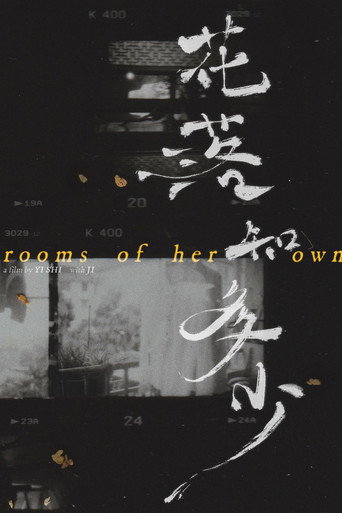
Returning home, a queer filmmaker finds their mother awakened to a new understanding beyond patriarchy, as the two reconcile amidst a past shaped by unspoken pain.

Where you are born is called “hometown”. What do you call where you are buried? A story about 8 North Koreans who went to Moscow Film School in 1952, and sought political asylum in 1958 after denouncing KIM Ilsung. Their lives as Koreans and as filmmakers are captured through images from Moscow to Kazakhstan.
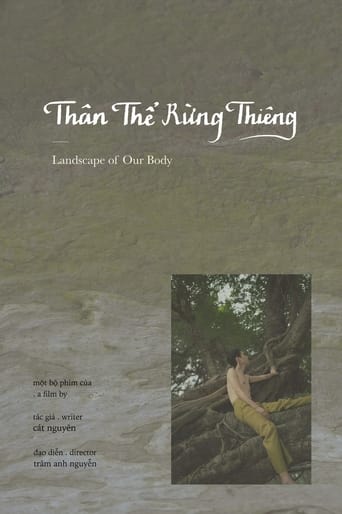
As queer trans and gender non-conforming children of the Vietnamese diaspora, we are fragmented at the crossroads of being displaced from not only a sense of belonging to our ancestral land, but also our own bodies which are conditioned by society to stray away from our most authentic existence. Yet these bodies of ours are the vessels we sail to embark on a lifetime voyage of return to our original selves. It is our bodies that navigate the treacherous tides of normative systems that impose themselves on our very being. And it is our bodies that act as community lighthouses for collective liberation. Ultimately, the landscape of our bodies is our blueprint to remembering, to healing, to blooming.
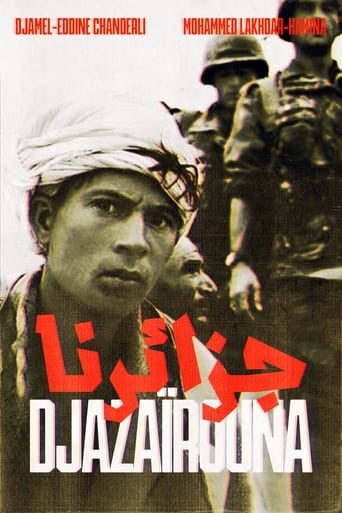
"Djazaïrouna", produced by the cinema service of the Provisional Government of the Algerian Republic (GPRA), is a montage film intended to inform the international community at the UN in 1959 on the objectives pursued by the Algerian resistance during the war of 'Algeria. Independence in Algeria (1954-1962). In 1959, Djamel-Eddine Chanderli and Mohammed Lakdar-Hamina produced Djazaïrouna (Our Algeria) from images taken by René Vautier and Doctor Pierre Chaulet. This film, completed a little later and will result in the film “The Voice of the People”. This documentary on the history of Algeria through a montage of current events, traces the political and military actions of the A.L.N, the demonstrations of December 1960, and the attack on a fortified French base on the border between Algeria and Tunisia.
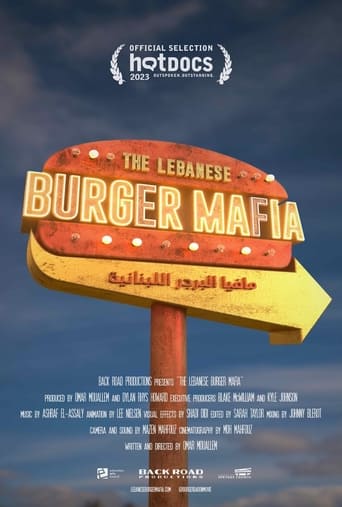
The heir to a Burger Baron franchise, the filmmaker chases clues through rural Alberta, capturing the trials and tribulations of Arab immigrants while uncovering the saga of a rogue fast-food chain with mysterious origins and a cult following.
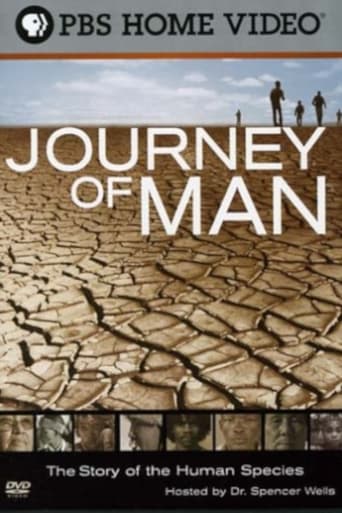
Many geneticists and archaeologists have long surmised that human life began in Africa. Dr. Spencer Wells, one of a group of scientists studying the origin of human life, offers evidence and theories to support such a thesis in this PBS special. He claims that Africa was populated by only a few thousand people that some deserted their homeland in a conquest that has resulted in global domination.
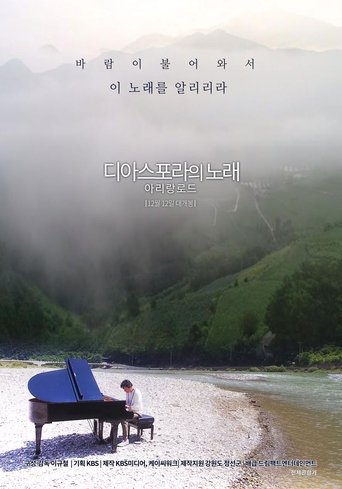
During the Japanese occupation period, Koreans were forced to deport or drafted to work in other countries. Now 150 years passed, it appears around 7million of those people and their families are spread in 170 countries. There, a world-famous Korean-Japanese musician Yang Bang Ean follows the pathways of Korean diasporas as an inspiration, and performs his cross over music concert called ‘ARIRANG ROAD’.

Tales of the Diaspora is the debut film from xxiivanu productions, and was conceived as a love letter to Pasifika youth around the world, as they navigate the sometimes tumultuous waves of finding and retaining cultural identity whilst growing up away from their homelands.

Tales from Arab Detroit is a video documentary offering a fascinating glimpse into the lives and struggles of the Arab American community in the Detroit tri-county area.
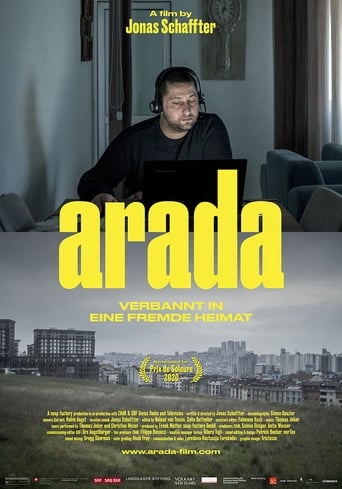
The story of three Turkish men. They all grew up in Switzerland and all got deported after various criminal offenses.
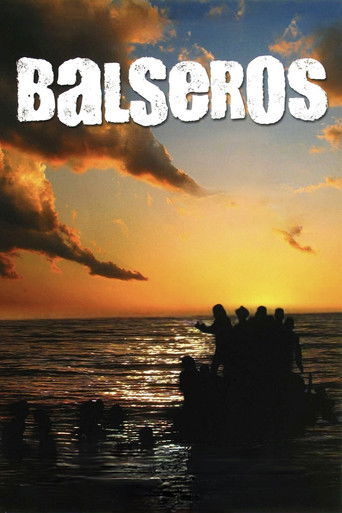
In the summer of 1994, a team of public television reporters filmed and interviewed seven Cubans a few days before their risky venture of setting out to sea in homemade rafts to reach the coast of the United States. Six made it far enough to be picked up at sea by the U.S. Coast Guard. When these balseros (rafters) were finally allowed to go to the United States, the film crew went with them to a string of several cities. Seven years later, the film crew visits them again, to discover that their destiny has been in the United States. Theirs is a true story about some of the authentic survivors of our times, the human adventure of people who are shipwrecked between two worlds.
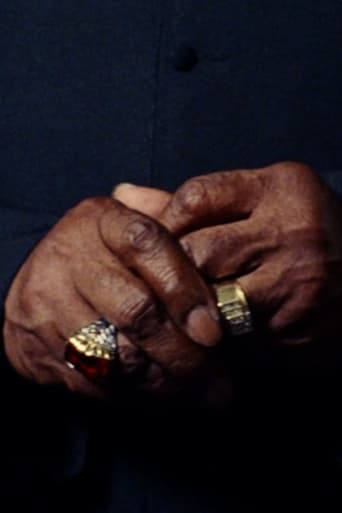
Is My Living in Vain is a meditation on the continuing history and emancipatory potential of the Black church as a space of belonging, affirmation and community organising. Combining shot footage, oral histories and archive material from both sides of the Atlantic, the film follows a tangled thread of personal and collective memories to interrogate the church’s contribution to a Black radical tradition.
Between Pictures: The Lens of Tamio Wakayama tells the epic journey of the late Japanese Canadian photographer Tamio Wakayama who decides to join the Student Nonviolent Coordinating Committee (SNCC) in the deep south during the 1960’s American civil rights movement. Learning the art of dark room photography along the way, this transformative moment in time allows him to confront his own identity and return ‘home’ to the west coast of Canada to begin a body of photographic work that continues to celebrate, re-present and document the spirit of Japanese Canadians who resided in the former Paueru Gai/Powell Street neighborhoods.

Language of Mules is a poignant exploration of the haunting legacy of the Holocaust through the eyes and words of poet and author John Guzlowski. Born to Polish parents who survived the unimaginable horrors of Nazi concentration camps, Guzlowski's poems give voice to the stories passed down from his parents, stories of suffering, resilience, and survival. The film interweaves interviews with Guzlowski in his home in Virginia, with vivid poetic depictions of his parents' harrowing experiences: the brutality of the German soldiers, the daily horrors of camp life, physical torture, and enslavement in conditions that dehumanized those who endured them. With profound sensitivity and depth, Language of Mules becomes not just a retelling of history, but a meditation on the enduring impact of war on the human psyche.
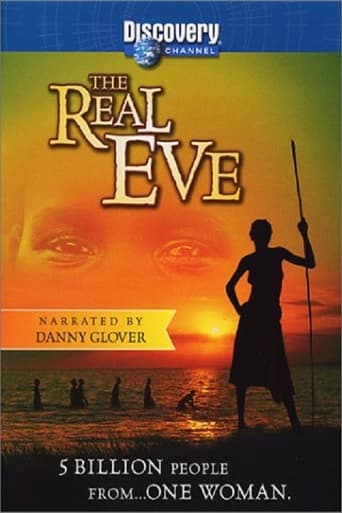
The made-for-cable documentary film The Real Eve is predicated on the theory that the human race can be traced to a common ancestor. The mitochondrial DNA of one prehistoric woman, who lived in Africa, has according to this theory been passed down from generation to generation over a span of 150,000 years, supplying the "chemical energy" to all humankind.

This film travels over open books, looted objects and postcards to look for the imperial foundations of the world in which we live. Within this wide landscape the film focuses on the destruction of the Jewish Muslim world that existed in North Africa, making it imaginable and inhabitable again. Narrated in the first person, by an Algerian Jew and a Palestinian Jew, the film refuses imperial histories of those places. Objects held captive in museums and archives outside of the places from where they were looted are only the visible tip of the iceberg of the mass colonial plunder of Africa. The film explores the substantial wealth accumulated through the extraction of raw materials, labour, knowledge and skills, including the “visual wealth” attained by putting people in front of the colonisers’ cameras.