DDR - die entsorgte Republik
2019-10-02 · Runtime unavailable · ★ 6.0
Trailers are previews, not full movies.
No authorized playback source configured. Use the legal watch options below.
Production details
- Directors
- Frank Diederichs
- Production companies
- probono Fernsehproduktion
- Countries
- Germany
- Status
- Released
Top Cast
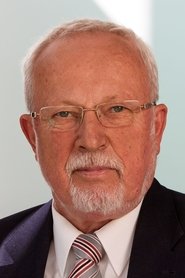 Lothar de Maizièrehimself
 Gregor Gysihimself
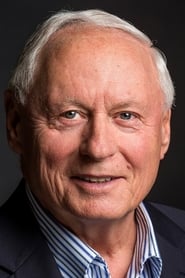 Oskar Lafontainehimself
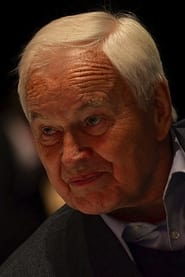 Hans Modrowhimself
Title information and images are supplied by TMDb. Explore our discovery guide for advice on comparing metadata and legal viewing options.
Where to watch
Availability provided by JustWatch via TMDb. Offers can change. Provider links are listed on TMDb; full playback requires a separately authorized source.
Availability not listed for this country.
Seasons & episodes
Recommendations

Through deeply personal interviews with her siblings and an examination of the photographs, letters, and belongings left behind, Mariska assembles a new portrait of her mother Jayne Mansfield, an extraordinary and complex woman.

In an intimate and joyful story of love in the face of loss, celebrated poets Andrea Gibson and Megan Falley find strength—and unexpected hilarity—in what might be their final year together.

A 1993 documentary film about Bruce Lee. The film includes interviews from some of his fellow students and opponents who worked alongside him in his movies.

This revealing documentary honors the legendary Sidney Poitier—iconic actor, filmmaker, and civil rights activist. Featuring interviews with Denzel Washington, Spike Lee, Halle Berry, and more.

Using the book 'Fragments', which collects Marilyn Monroe's poems, notes and letters, and with participation from the Arthur Miller and Truman Capote estates who have contributed more material, each of the actresses will embody the legend at various stages in her life.
Brilliant, long in-the-works story of the life and art of the world's greatest comedian and the cinema's first genius, Charlie Chaplin. Produced, written and directed by renowned film critic Richard Schickel.
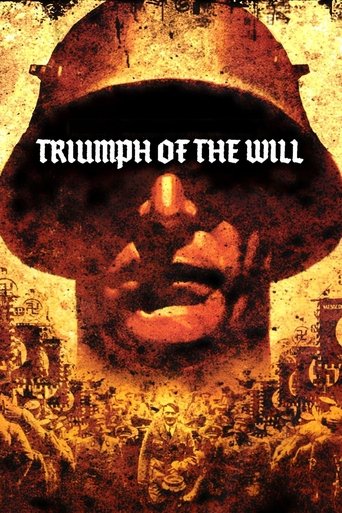
A showcase of German chancellor and Nazi Party leader Adolf Hitler at the 1934 Nuremberg Rally.

In the Realms of the Unreal is a documentary about the reclusive Chicago-based artist Henry Darger. Henry Darger was so reclusive that when he died his neighbors were surprised to find a 15,145-page manuscript along with hundreds of paintings depicting The Story of the Vivian Girls, in What is Known as the Realms of the Unreal, of the Glodeco-Angelinnian War Storm, Cased by the Child Slave Rebellion.

A documentary on the expletive's origin, why it offends some people so deeply, and what can be gained from its use.
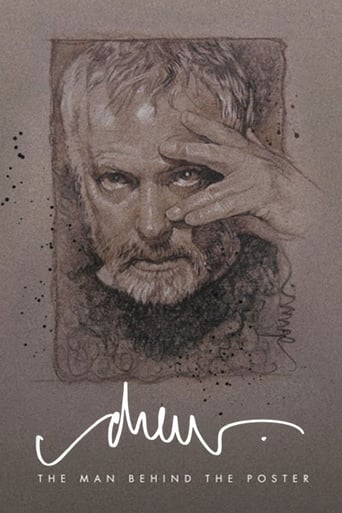
A documentary on legendary movie-poster artist Drew Struzan.
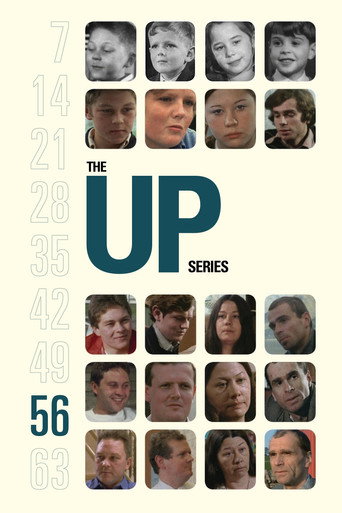
When a cross-section of seven-year-olds were interviewed for 7 Up in 1964 it was immediately evident that their social backgrounds influenced their attitudes towards life. While the upper class children were confident and self-assured, those from middle and working class backgrounds were resigned to a challenging life of hard work. This premise was put to the test every seven years when the same group were interviewed about the progression of their lives. 49 years in the making, the changes that occurred to the original 14 make for fascinating television and are in many ways the stories of all our lives. From success and disappointment, marriage and childbirth, to poverty and illness, nearly every facet of life has been captured on film. Now, at the age of 56, the group are once more brought together and, with the benefit of hindsight, assess whether their lives have been ruled by circumstance or self-determination.
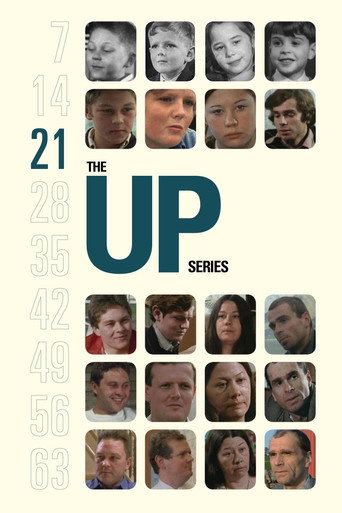
After another 7 year wait, director Michael Apted revisits the same group of British-born children from Seven Up! and 7 Plus Seven. The subjects are interviewed as to the changes that have occurred in their lives during the last seven years.

The life and career of one of comedy's most inimitable modern voices, Mr. Gilbert Gottfried.
A glittery nightclub in 1920s Berlin becomes a haven for the queer community in this documentary exploring the freedoms lost amid Hitler’s rise to power.

Journey into the extraordinary world of "The Witcher" — from casting the roles to Jaskier's catchy song — in this behind-the-scenes look at the series.

Director Michael Apted revisits the same group of British-born adults after a 7 year wait. The subjects are interviewed as to the changes that have occurred in their lives during the last seven years.

Al Pacino's deeply-felt rumination on Shakespeare's significance and relevance to the modern world through interviews and an in-depth analysis of "Richard III."

The history of cinematic sound, told by legendary sound designers and visionary filmmakers.

When Allied forces liberated the Nazi concentration camps in 1944-45, their terrible discoveries were recorded by army and newsreel cameramen, revealing for the first time the full horror of what had happened. Making use of British, Soviet and American footage, the Ministry of Information’s Sidney Bernstein (later founder of Granada Television) aimed to create a documentary that would provide lasting, undeniable evidence of the Nazis’ unspeakable crimes. He commissioned a wealth of British talent, including editor Stewart McAllister, writer and future cabinet minister Richard Crossman – and, as treatment advisor, his friend Alfred Hitchcock. Yet, despite initial support from the British and US Governments, the film was shelved, and only now, 70 years on, has it been restored and completed by Imperial War Museums under its original title "German Concentration Camps Factual Survey".
A keen chronicle of the unlikely rise to power of Adolf Hitler (1889-1945) and a dissection of the Third Reich (1933-1945), but also an analysis of mass psychology and how the desperate crowd can be deceived and shepherded to the slaughterhouse.
Similar titles
In the documentary Last To Know political prisoners, sent to jail for openly opposing the East German regime that existed until the German reunification in 1990, talk about their times of trial and their lives today. Neither they, nor their families have come to terms with what happened.
The Stammheim trial against the leadership of the first generation of the RAF was one of the most elaborate in the Federal Republic of Germany. Through this trial, Stammheim also became a place of identity for the RAF. The docudrama uses the perspective of Horst Bubeck, who as a prison officer in the cell wing had the most intensive contact with the prisoners, to shed new light on the history.
Emma Freese is desperate when her husband Alfred falls ill at the Howaldtswerke in Kiel. How is the family supposed to get by without their wages? The war has scarred this generation, but now things are supposed to be looking up. The workers want their fair share and are fighting for an income that also gives them room to live. In October 1956, 34,000 metalworkers in the shipyards and factories of Schleswig-Holstein walk off the job to fight for justice and their dignity. This strike is still regarded as the toughest and longest in Germany. Employers and politicians stand in the strikers' way.
This color documentary tells the story of the "Mamais." In 1960, a group of workers at the Bitterfeld chemical plant set themselves the task of becoming the first "socialist brigade" in the German Democratic Republic (GDR) to act in accordance with the slogan "Work, learn, and live socialist."

Prejudices, ignorance, and racism still leave their mark on the everyday life of black Germans, respectively Europeans, until today. How do Afro-Germans deal with their history? Which colonial-racist patterns still shape our society today? With insights into various historic epochs, it is made clear that THE history of the Black people does not exist. And neither exists THE history of white people.
It was a foundational myth of the GDR that it was anti-fascist and free of Nazis. But was that really the case? The film takes a critical look on the actual way the brown heritage was dealt with in the GDR.

The “Bowlingtreff” is a bowling alley situated right in the centre of Leipzig opened in July 1987. At that time the quality of life in Leipzig and the whole GDR got worse. Houses collapsed because of poor conditions, public life and amusement was on a very low level. The “Bowlingtreff” was not merely an urban entertainment centre but a revolution in those days. Built with the help of hundreds of volunteers without permission of the state authorities in Berlin the building expresses a free and international architecture known as postmodernism. It is an architecture that was never seen before in Leipzig. Marble and parquet on the floor, a glass roof and beautiful pink pillars. The atmosphere was western as time witnesses remember it.
Documentary about the end of the regency of Kaiser Wilhelm II., Germany's last emperor.
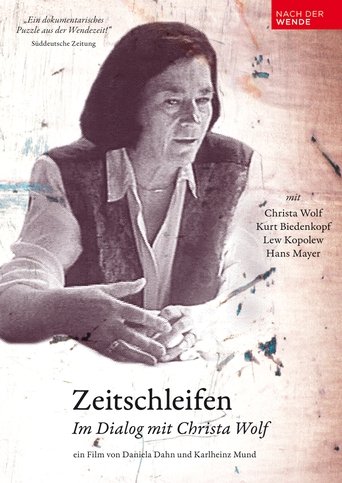
Journalist Daniela Dahn interviews the East-German author Christa Wolf during the German reunification: reflections on history, changing politics, life and work.
It is an unknown chapter of the German post-war history: On April 23rd, 1949, the kingdom of the Netherlands occupied German soil as a pledge for demanded war reparations. Part of the annexed territories was also the small municipality of Elten. While the people of Elten were initially afraid of the occupation, the time “with Holland” actually became a miracle of prosperity and economy about which many people from Elten still rave today. The occupation period ended with the largest organized smuggling in the history of the federal republic of Germany. The Documentary shows this in never before released 8 mm footage!
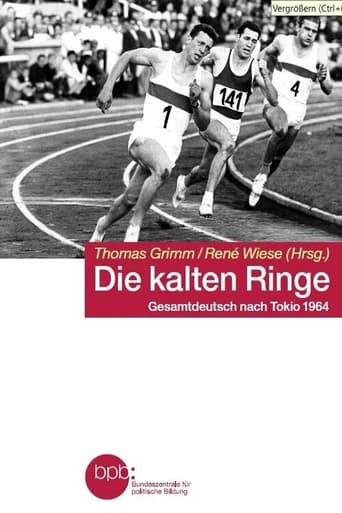
19 years after the dropping of atomic bombs in Japan, the Olympic Games of 1964 took place in Tokyo. In the midst of the cold war, the games are supposed to become a symbol for a peaceful world. Especially the divided Germany is expected to prove this: By order of the IOC, both German states must participate in Tokyo with a joint team despite deep ideological rifts. The fact that athletes from both German states still had to compete against each other in order to form a joint team for the 1964 Olympic Games in Innsbruck and in Tokyo is all but forgotten. The film tells the story of the East-West German team of 1964 for the first time and is simultaneously a current document about the relation of sports and politics in international relations.
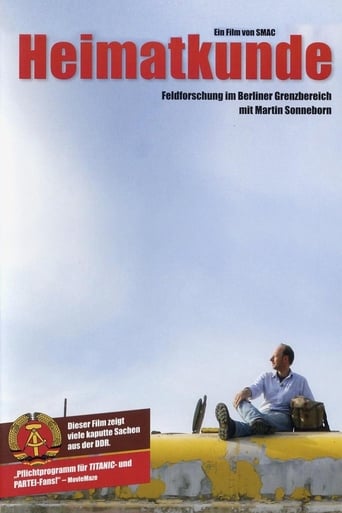
Former "Titanic" satire magazine editor Martin Sonneborn takes an undercover trip around Berlin and discovers the East-German mentality and what is left of the socialist German Democratic Republic.
It was the biggest escape in the history of the Berlin Wall: in one historic night of October 1964, 57 East-Berliners try their luck through a tunnel into West Berlin. Just before the last few reach the other side, the East German border guards notice the escape and open fire. Remarkably, all the refugees and their escape agents make it out of the tunnel unscathed, but one border guard is dead: 21-year-old officer Egon Schultz.
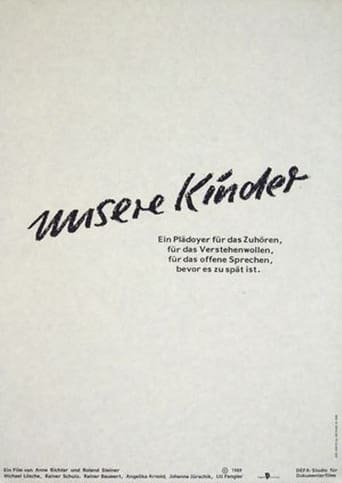
From an official perspective, marginal youth culture did not exist in East Germany. The topic of subcultures was taboo in the GDR, and groups such as goths, skinheads, anti-skins, punks and neo-Nazis were dismissed as social deviations promoted by western countries. Director Roland Steiner had access to such young East Germans in the late 1980s. Over the course of four years, he brought them before the camera in an attempt to understand what drew them to these groups.
In 1999, Konami Corp. introduced a Japanese-influenced coin-operated arcade stand-up to the U.S. Its draw was unheard of for a video game: the combination of music, competition, and interactive video-gameplay along with actual physical activity. Four years later, Dance Dance Revolution (DDR) has become one of the most popular game crazes stateside and found easily in video game stores and in nationwide retail markets. This story explores the youth culture surrounding the game and follows a group of devoted players and documents their interactions at various arcades and tournaments.
Documentary film with play scenes about the rise and fall of the short-lived Bavarian Soviet Republic in 1919 from the perspective of various well-known poets and writers who experienced the events as contemporary witnesses.
The film accompanies Jenny Gröllmann, a German actress, during the last two years of her life.