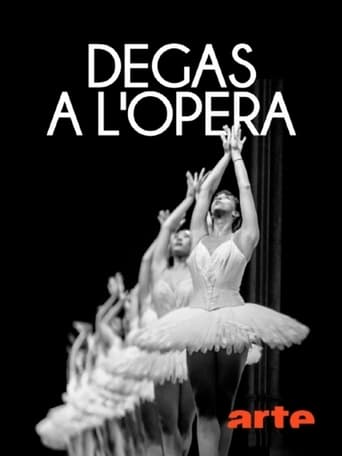
Degas à l'Opéra
2019-09-29 · 52 min · Not rated
Trailers are previews, not full movies.
No authorized playback source configured. Use the legal watch options below.
Production details
- Directors
- Vincent Trisolini, Blandine Armand
- Production companies
- Les Bons Clients, ARTE, Musée d'Orsay, Opéra National de Paris
- Countries
- France
- Status
- Released
Top Cast
Cast unavailable.
Title information and images are supplied by TMDb. Explore our discovery guide for advice on comparing metadata and legal viewing options.
Where to watch
Availability provided by JustWatch via TMDb. Offers can change. Provider links are listed on TMDb; full playback requires a separately authorized source.
Availability not listed for this country.
Seasons & episodes
Recommendations

In an intimate and joyful story of love in the face of loss, celebrated poets Andrea Gibson and Megan Falley find strength—and unexpected hilarity—in what might be their final year together.
An intimate portrait of the small shops and shopkeepers of the Rue Daguerre in Paris, a picturesque street that has been the filmmaker’s home for more than 50 years.
Before computer graphics, special effects wizardry, and out-of-this world technology, the magic of animation flowed from the pencils of two of the greatest animators The Walt Disney Company ever produced -- Frank Thomas and Ollie Johnston. Frank and Ollie, the talent behind BAMBI, PINOCCHIO, LADY AND THE TRAMP, THE JUNGLE BOOK, and others, set the standard for such modern-day hits as THE LION KING. It was their creative genius that helped make Disney synonymous with brilliant animation, magnificent music, and emotional storytelling. Take a journey with these extraordinary artists as they share secrets, insights, and the inspiration behind some of the greatest animated movies the world has ever known!

A documentary about ten very different lives connected by having appeared onscreen wearing masks or helmets in Star Wars.

Alexander McQueen's rags-to-riches story is a modern-day fairy tale, laced with the gothic. Mirroring the savage beauty, boldness and vivacity of his design, this documentary is an intimate revelation of McQueen's own world, both tortured and inspired, which celebrates a radical and mesmerizing genius of profound influence.

Director Michael Apted revisits the same group of British-born adults after a 7 year wait. The subjects are interviewed as to the changes that have occurred in their lives during the last seven years.
A new documentary by filmmaker-photographer Raymond Depardon – where justice and psychiatry meet.

Through deeply personal interviews with her siblings and an examination of the photographs, letters, and belongings left behind, Mariska assembles a new portrait of her mother Jayne Mansfield, an extraordinary and complex woman.
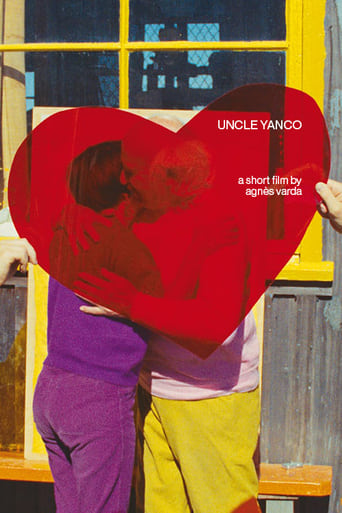
While in San Francisco for the promotion of her last film in October 1967, Agnès Varda, tipped by her friend Tom Luddy, gets to know a relative she had never heard of before, Jean Varda, nicknamed "Yanco". This hitherto unknown uncle lives on a boat in Sausalito, is a painter, has adopted a hippie lifestyle and loves life. The meeting is a very happy one.
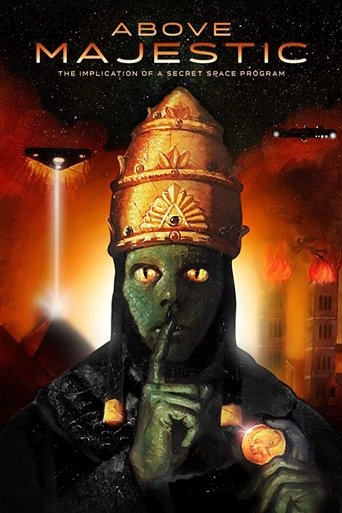
A look at the origins, history and conspiracies behind the "Majestic 12", a clandestine group of military and corporate figureheads charged with reverse-engineering extraterrestrial technology.

An inside look at one of the most anticipated movie sequels ever with James Cameron and cast.
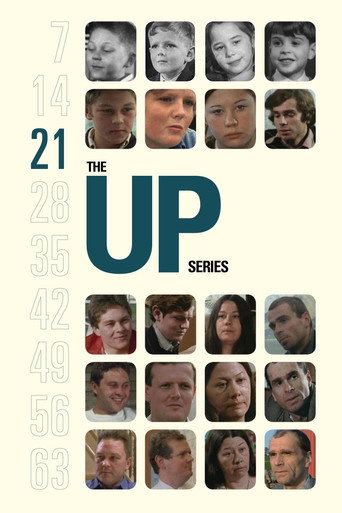
After another 7 year wait, director Michael Apted revisits the same group of British-born children from Seven Up! and 7 Plus Seven. The subjects are interviewed as to the changes that have occurred in their lives during the last seven years.

This revealing documentary honors the legendary Sidney Poitier—iconic actor, filmmaker, and civil rights activist. Featuring interviews with Denzel Washington, Spike Lee, Halle Berry, and more.

Al Pacino's deeply-felt rumination on Shakespeare's significance and relevance to the modern world through interviews and an in-depth analysis of "Richard III."

A documentary about the life and films of director John Ford.
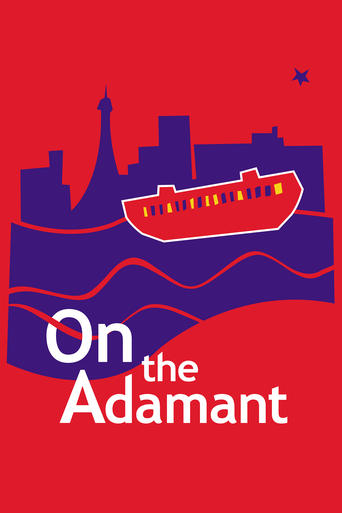
The Adamant is a unique day-care centre. A floating structure located on the Seine in the heart of Paris, it welcomes adults suffering from mental disorders, offering the kind of care that grounds them in time and space and helps them to recover or keep up their spirits. The team running it tries to resist the deterioration and dehumanisation of psychiatry as best as they can.

The life and career of an actor, artist, and icon. His own journey through his own camera.

Musician and performance artist Laurie Anderson reflects on the deaths of her husband Lou Reed, her mother and her beloved dog.
Director Jean-Luc Godard reflects in this movie about his place in film history, the interaction of film industry and film as art, as well as the act of creating art.

Artists in LA discover the work of forgotten Polish sculptor Stanislav Szukalski, a mad genius whose true story unfolds chapter by astounding chapter.
Similar titles


Olev Subbi (1930–2013) was one of the most significant painters of the second half of the 20th century. His art constantly strived for harmony and beauty, reviving lost memories. This documentary reconstructs the environments of his paintings, features interviews with artists and Subbi’s contemporaries, and incorporates archival footage, creating a multilayered perspective on the life and work of this remarkable artist.
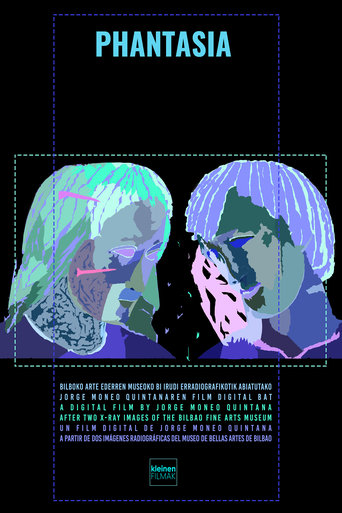
X-ray images were invented in 1895, the same year in which the Lumière brothers presented their respective invention in what today is considered to be the first cinema screening. Thus, both cinema and radiography fall within the scopic regime inaugurated by modernity. The use of X-rays on two sculptures from the Bilbao Fine Arts Museum generates images that reveal certain elements of them that would otherwise be invisible to our eyes. These images, despite being generally created for technical or scientific purposes, seem to produce a certain form of 'photogénie': they lend the radiographed objects a new appearance that lies somewhere between the material and the ethereal, endowing them with a vaporous and spectral quality. It is not by chance that physics and phantasmagoria share the term 'spectrum' in their vocabulary.

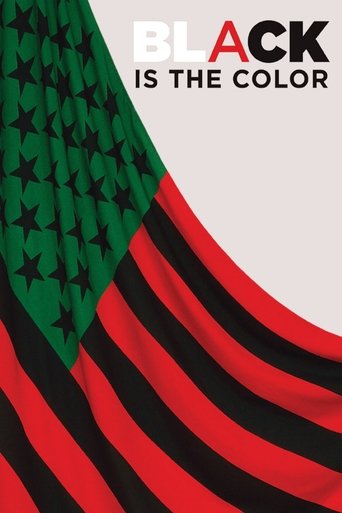
Black Is the Color highlights key moments in the history of Black visual art, from Edmonds Lewis’s 1867 sculpture Forever Free, to the work of contemporary artists such as Whitfield Lovell, Kerry James Marshall, Ellen Gallagher, and Jean-Michel Basquiat. Art historians and gallery owners place the works in context, setting them against the larger social contexts of Jim Crow, WWI, the civil rights movement and the racism of the Reagan era, while contemporary artists discuss individual works by their forerunners and their ongoing influence.

A documentary about Tintoretto.

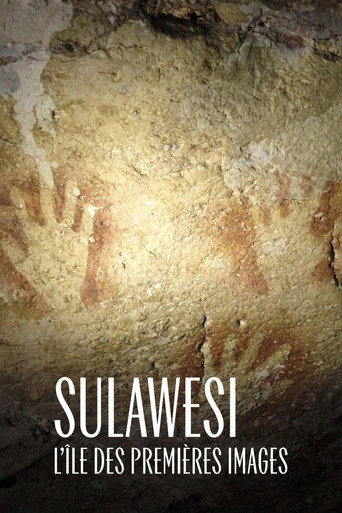
We immerse ourselves in a quest for the origins of Art, among the very first modern humans. The prehistoric works, of incredible richness and diversity, tell a story of beauty and the species. Researchers, including archaeologists, but also art historians, philosophers and contemporary artists, enrich our view of prehistoric art with their different, but also complementary, points of view on the subject.

An account of the short life and the astonishing and provocative work of the Austrian painter Egon Schiele (1890-1918), seen through the peculiar point of view and the critic voices of the women who defined the paramount milestones of his existence: Gerti, his sister; Wally, his main model and lover; and Edith, his wife. A brief story of love, hate, betrayal and misfortune.
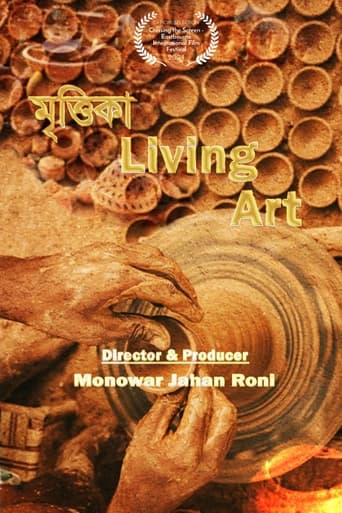
The thousand-year-old tradition of pottery in the Indian subcontinent is now under threat. With the market being flooded with plastic in the evolution of civilization, today this Pal community is becoming displaced.
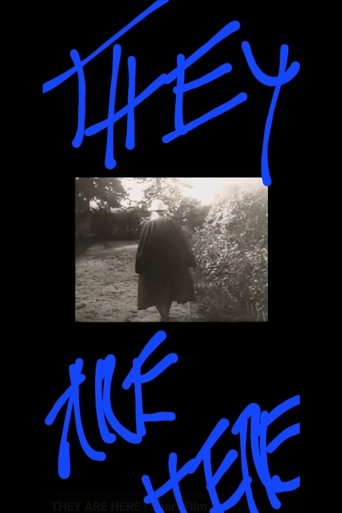
Dangling from a high window, a young non-binary person is on the cusp of life and death. Flashes of film, literature, art (paintings) and cultural history pass them by, as if to tell a message. A postmodern treatise on connection to culture and the past.
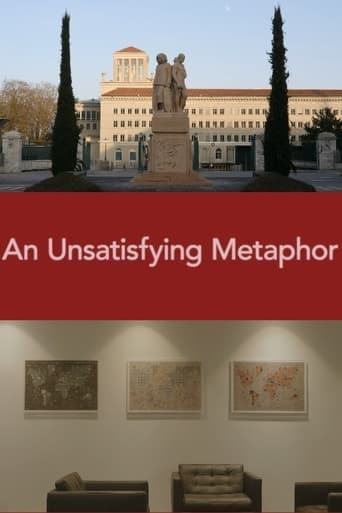
Documentary about the history of 20th century globalization through the lens of the World Trade Organization's changing art collection; from works of human subjects showcasing the potential of dignified labor, to their replacement with abstract maps and grids for the valorization of the modern trade system.
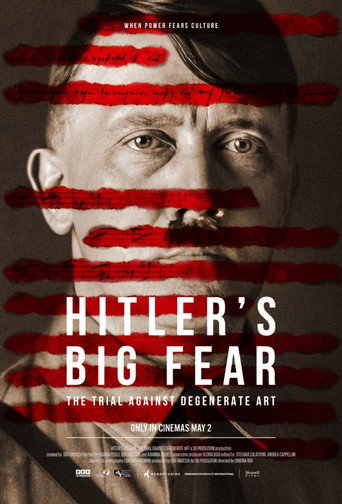
In 1937, the Nazi regime launched its war on modernity, branding artists like Picasso, Chagall, Van Gogh, and Matisse as “degenerate”. Their works were banned, destroyed, or mocked in grotesque exhibitions, while Aryan ideals were glorified in state-sponsored shows. Framed by a major new exhibition at the Musée Picasso in Paris, the documentary revisits this ideological assault through rare footage, suppressed artworks, and the voices of curators and survivors. It broadens its scope to music, literature, and architecture, exposing how the Reich targeted all forms of dissenting expression. A timely meditation on repression, resistance, and the enduring fight for creative freedom.

From 1853, Japan opens up to the West. Numerous works of art and woodcuts find their way to Europe. The Impressionists and later the European artistic avant-garde succumb to this one passion: Japonism. 150 years after the beginning of the Meiji period in 1868, the film traces the connections between Japan and the Western world.

Raphael: The Young Prodigy tells the story of the artist from Urbino, beginning with his extraordinary early portraits of women - the Mother, the Friend, the Secret Lover and the Client. Delve into Raphael’s uncanny ability to capture celestial beauty, and to focus his gaze beyond the physicality and into the psychology of his subjects (some real, some imaginary) so that their personalities explosively emerge from his canvas. With fascinating contributions from internationally renowned experts, this documentary will uncover the most significant people and places and inspirations in the life and times of Raphael – a Renaissance leader and one of the most spectacular painters in history.

Explore the life and work of the painter who formed a bridge between the Impressionist and Cubist art movements at the turn of the century.

Emil Nolde was a Nazi – and so what, asks contemporary German artist Daniel Richter. “It’s a moralistic debate. A debate, that mirrors the moralism and bigottery of a generation that seems to think, that the world is a moral playground.” Emil Nolde’s relationship to the Nazi-regime in the Third Reich has given rise to immense discussions within the last months. For decades the broader public had a picture of Nolde being one of the “entartete” artists as well as being prohibited painting by the Nazi-regime. Though this on the surface is true, it was the result of a great disappointment to Nolde. For years, he had strived to become “the” artist of the Thrid Reich, praising his own art as true, German, anti-French and anti-Jewish. Possible competitors within the German art world like Max Pechstein he actively denounced to the Nazi authorities.