
The Man Who Looked Beyond the Horizon
2019-06-30 · 28 min · Not rated
More than 40 years ago, Bas Jan Ader decided to go on an adventure. In a tiny sailing boat, the Dutchman set sail across the ocean. Nine months later the boat was found adrift at sea. There was no sign of Ader. It’s a story that has always fascinated filmmaker Martijn Blekendaal, not just because of the disappearance itself, but also because of the entire mystery that surrounds it. Blekendaal embarks on an investigation that follows his footsteps to Hollywood. It turns out that, in order to understand what drove this man to his fateful voyage, the filmmaker has to overcome his fear of looking beyond his own horizon. In a whirlwind montage of images jumping from one time, place and person to another, Blekendaal shows us that Bas Jan left behind something more special than just a mystery.
Trailers are previews, not full movies.
No authorized playback source configured. Use the legal watch options below.
Production details
- Directors
- Martijn Blekendaal
- Production companies
- Unavailable
- Countries
- Unavailable
- Status
- Released
Top Cast
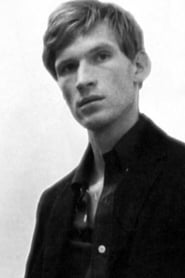 Bas Jan Ader
Title information and images are supplied by TMDb. Explore our discovery guide for advice on comparing metadata and legal viewing options.
Where to watch
Availability provided by JustWatch via TMDb. Offers can change. Provider links are listed on TMDb; full playback requires a separately authorized source.
Availability not listed for this country.
Seasons & episodes
Recommendations
A chronicle of the rise and fall of O.J. Simpson, whose high-profile murder trial exposed the extent of American racial tensions, revealing a fractured and divided nation.

Musician and performance artist Laurie Anderson reflects on the deaths of her husband Lou Reed, her mother and her beloved dog.

Al Pacino's deeply-felt rumination on Shakespeare's significance and relevance to the modern world through interviews and an in-depth analysis of "Richard III."

Through deeply personal interviews with her siblings and an examination of the photographs, letters, and belongings left behind, Mariska assembles a new portrait of her mother Jayne Mansfield, an extraordinary and complex woman.

A visual montage portrait of our contemporary world dominated by globalized technology and violence.

BBC Arena's documentary on the Dames of British Theatre and film featuring Maggie Smith, Eileen Atkins, Judi Dench and Joan Plowright on screen together for the first time as they reminisce over a long summer weekend in a house Joan once shared with Sir Laurence Olivier.
Using the book 'Fragments', which collects Marilyn Monroe's poems, notes and letters, and with participation from the Arthur Miller and Truman Capote estates who have contributed more material, each of the actresses will embody the legend at various stages in her life.

The life and career of an actor, artist, and icon. His own journey through his own camera.
Giving fans unprecedented access to the real life of the music sensation, Katy Perry: Part of Me exposes the hard work, dedication and phenomenal talent of a girl who remained true to herself and her vision in order to achieve her dreams. Featuring rare behind-the-scenes interviews, personal moments between Katy and her friends, and all-access footage of rehearsals, choreography, Katy’s signature style and more, Katy Perry: Part of Me reveals the singer’s unwavering belief that if you can be yourself, then you can be anything.
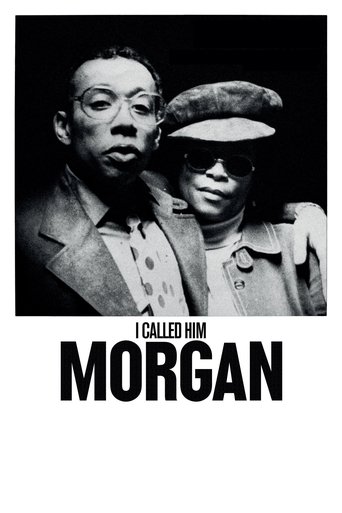
Part jazz history, part true-crime tale, Kasper Collin’s new documentary employs extensive archival footage and new interviews to tell the tragic story of the magnificently talented trumpeter Lee Morgan and his common-law wife Helen, who murdered him in a New York bar in 1972.

As a visually radical memoir, CAMERAPERSON draws on the remarkable footage that filmmaker Kirsten Johnson has shot and reframes it in ways that illuminate moments and situations that have personally affected her. What emerges is an elegant meditation on the relationship between truth and the camera frame, as Johnson transforms scenes that have been presented on Festival screens as one kind of truth into another kind of story—one about personal journey, craft, and direct human connection.
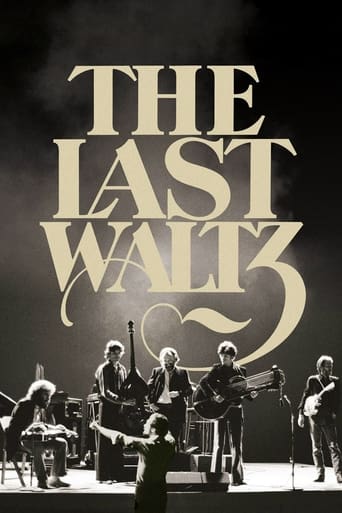
Martin Scorsese's documentary intertwines footage from The Band's incredible farewell tour with probing backstage interviews and featured performances by Bob Dylan, Joni Mitchell, Van Morrison, Eric Clapton, and other rock legends.
Live Aid was held on 13 July 1985, simultaneously in Wembley Stadium in London, England, and the John F. Kennedy Stadium in Philadelphia, United States. It was one of the largest scale satellite link-ups and television broadcasts of all time: watched live by an estimated global audience of 1.9 billion, across 150 nations. "It's twelve noon in London, seven AM in Philadelphia, and around the world it's time for Live Aid...!"

Documentary filmmaker Amy Berg investigates the life of 30-year pedophile Father Oliver O'Grady and exposes the corruption inside the Catholic Church that allowed him to abuse countless children. Victims' stories and a disturbing interview with O'Grady offer a view into the troubled mind of the spiritual leader who moved from parish to parish gaining trust ... all the while betraying so many.
The making of Matrix Revolutions, The (2003) is briefly touched on here in this documentary. Interviews with various cast and crew members inform us how they were affected by the deaths of Gloria Foster and Aaliyah, and also delve into the making of the visual effects that takes up a lot of screen time. Written by Rhyl Donnelly
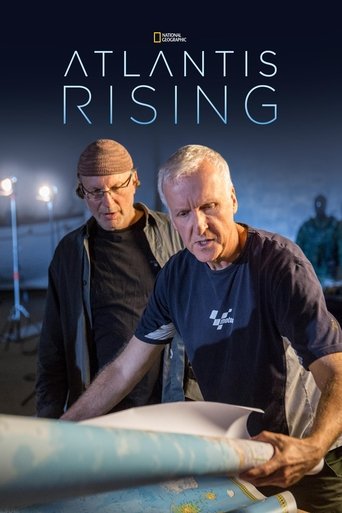
James Cameron and Simcha Jacobovici go on an adventure to find the lost city of Atlantis by using Greek philosopher Plato as a virtual treasure map.
A backstage and on-stage look at Justin Bieber during his rise to super stardom.
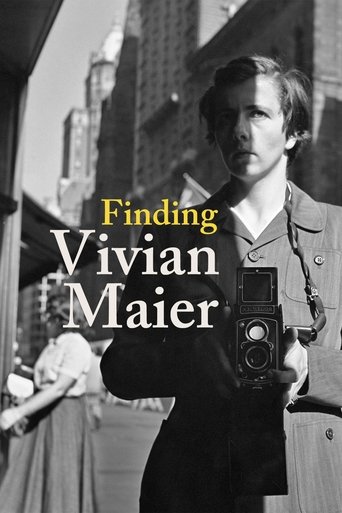
Vivian Maier's photos were seemingly destined for obscurity, lost among the clutter of the countless objects she'd collected throughout her life. Instead these images have shaken the world of street photography and irrevocably changed the life of the man who brought them to the public eye. This film brings to life the interesting turns and travails of the improbable saga of John Maloof's discovery of Vivian Maier, unravelling this mysterious tale through her documentary films, photographs, odd collections and personal accounts from the people that knew her. What started as a blog to show her work quickly became a viral sensation in the photography world. Photos destined for the trash heap now line gallery exhibitions, a forthcoming book and this documentary film.

Daniel Craig candidly reflects on his 15 year adventure as James Bond. Including never-before-seen archival footage from Casino Royale to the upcoming 25th film No Time To Die, Craig shares his personal memories in conversation with 007 producers, Michael G Wilson and Barbara Broccoli.
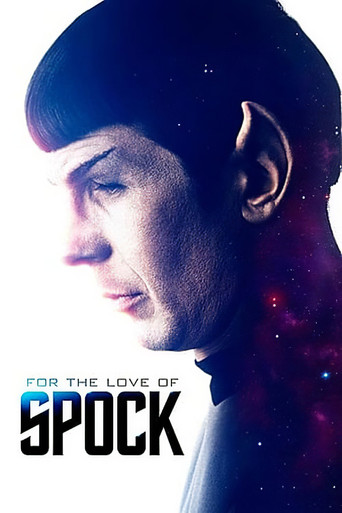
The life of Mr. Spock, as well as that of Leonard Nimoy, the actor who played him for almost fifty years, written and directed by his son: Adam.
Similar titles
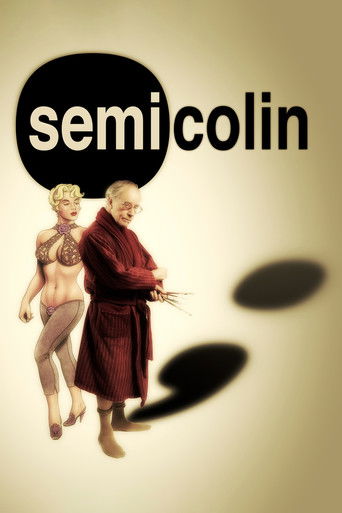
Challenging all notions of genre, Semi Colin is a living, breathing art installation. Part performance, part art, part social comment, Colin philosophizes on his life's obsessive work as an erotic artist.

This short travelogue depicts snippets of locations in Hollywood, California, most of them as seen from the streets. Considerable time is taken showing the kinds of architecture of private homes. There are images of various important buildings, and a depiction of the Hollywood Bowl. Finally, there is a sequence revolving around the premiere of the film “Dirigible” (1931) at the famed Chinese Theatre.

Facing one of humanity’s biggest questions, ‘what is left of us after our death?’, this haunting documentary covers the author’s thought process on the idea of what might remains of us after we die, supported by the vision of an artist who decided to come back in Italy after spending forty-seven years in New York and turn his little apartment into a mausoleom where his death-filled artworks will lay along with his ashes. Raising questions like ‘are the things we create in our lifetime the mark of our existance?’ and ‘can the artist escape death trough the art objects?’ the documentary touches a vast variety of themes and ideas as well as paying a visit to one of the oldest mausoleums in ancient mythology, the Acheron River.
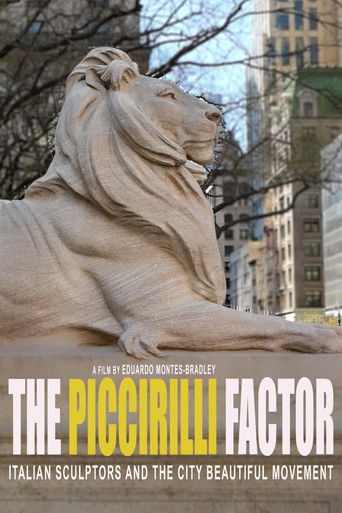
The Piccirilli family settled in New York City and started the largest and most prolific marble carving studio in America. For nearly 50 years, Piccirilli sculptors helped shape the architectural landscapes of Washington and New York through hundreds of monuments, memorials, and artworks, many of which are preserved in museums and private collections.
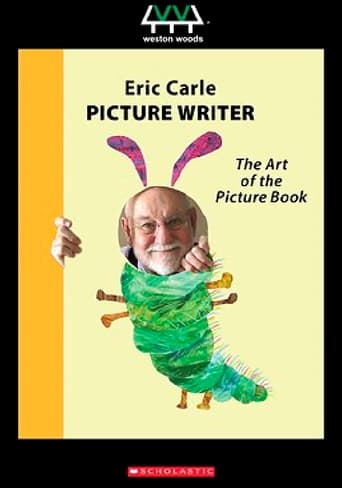
An intimate portrait of Eric Carle, creator of more than 70 books for children including the best-selling "The Very Hungry Caterpillar". At 82, Eric is still at work in his studio making books and creating art. As he methodically layers a tissue paper collage of the caterpillar, he describes the feeling he achieves working in his studio, the sense of being at peace, all alone, when everything grows quiet and it is just himself and his work. The film taps into that deep creative need in each of us, a spirit that started in Eric as a very young child and is unceasing today.

The inner world of the great painter Max Ernst is the subject of this film. One of the principal founders of Surrealism, Max Ernst explores the nature of materials and the emotional significance of shapes to combine with his collages and netherworld canvases. The director and Ernst together use the film creatively as a medium to explain the artist's own development.
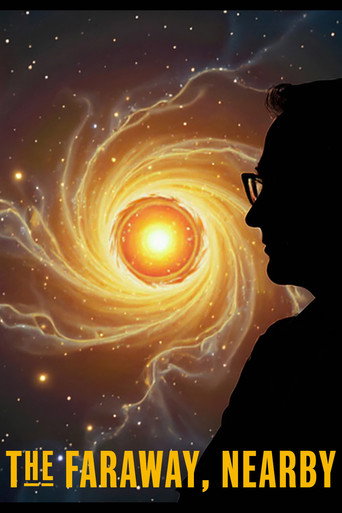
The Faraway Nearby follows the tragic life of pioneer physicist Joseph Weber, whose pursuit of gravitational waves takes him on a dizzying journey from the height of acclaim to the depths of despair and disdain when he breaks the cardinal rule of science and clings to his ideas though his results can't be duplicated. Physicists, artists, and other creatives explore the emotional side of discovery and question whether the risk is worth the journey.

Contemporary artist Koki Tanaka sets up a booth at a Los Angeles flea market to sell palm fronds. "I tried to bring something very extreme into the flea-market context. I picked the palm fronds because they are the most useless things in California – they’re what we have to sweep away after a windy day. It was an experiment in registering people’s reaction to a fundamental question about the value of objects. And I was referencing two historical pieces: David Hammons’s Bliz-aard Ball Sale [1983], where he sold snowballs during winter in New York; and a Japanese manga called Munou no Hito [A Worthless Person, 1985], in which the protagonist sells stones by the riverside – stones being sold alongside stones. So both shared quite similar ideas." - Koki Tanaka
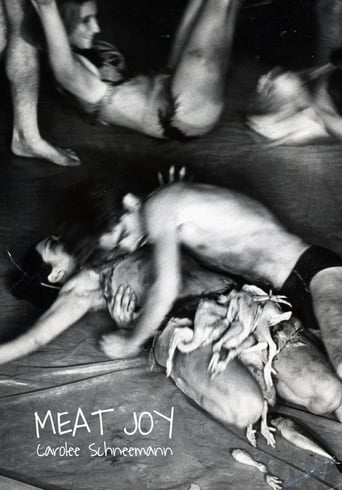
"Meat Joy is an erotic rite — excessive, indulgent, a celebration of flesh as material: raw fish, chicken, sausages, wet paint, transparent plastic, ropes, brushes, paper scrap. Its propulsion is towards the ecstatic — shifting and turning among tenderness, wildness, precision, abandon; qualities that could at any moment be sensual, comic, joyous, repellent. Physical equivalences are enacted as a psychic imagistic stream, in which the layered elements mesh and gain intensity by the energy complement of the audience. The original performances became notorious and introduced a vision of the 'sacred erotic.' This video was converted from original film footage of three 1964 performances of Meat Joy at its first staged performance at the Festival de la Libre Expression, Paris, Dennison Hall, London, and Judson Church, New York City."
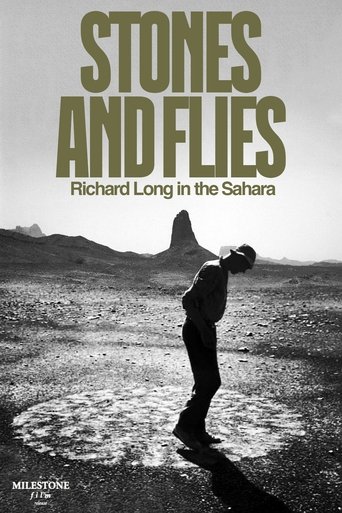
In the fall of 1987, Philippe Haas accompanied the sculptor Richard Long to the Algerian Sahara and filmed him tracing with his feet, or constructing with desert stones, simple geometric figures (straight lines, circles, spirals). In counterpoint to the images, Richard Long explains his approach. Since 1967, Richard Long (1945, Bristol), who belongs to the land art movement, has traveled the world on foot and installed, in places often inaccessible to the public, stones, sticks and driftwood found in situ. His ephemeral works are reproduced through photography. He thus made walking an art, and land art an aspiration of modern man for solitude in nature.
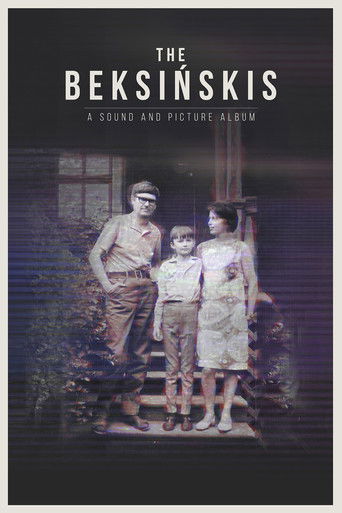
Painter Zdzisław Beksiński, his wife Zofia and their son Tomasz, a well-known radio journalist and translator, were a typical and unconventional family, both at the same time. One of the father’s obsessions was filming himself and his family members. Using archival footage only, shot primarily by Zdzisław, as well many other materials, which have not been presented anywhere so far, the film tells a tragic story of the Beksińskis that has never ceased to fascinate Polish filmmakers.
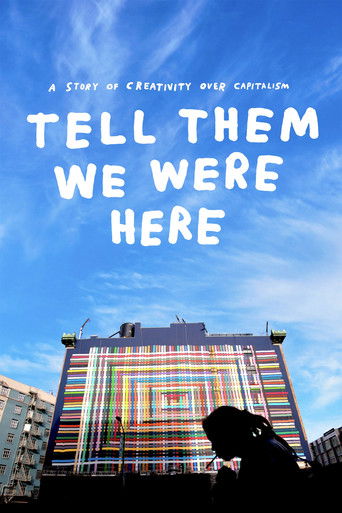
Tell Them We Were Here is an inspirational feature-length documentary about eight artists who show us why art is vital to a healthy society and reminds us that we are stronger together.
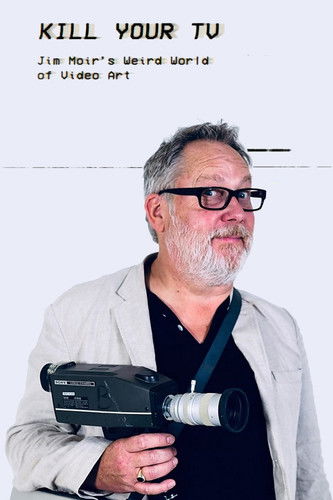
Jim Moir (aka Vic Reeves) explores Video Art, revealing how different generations ‘hacked’ the tools of television to pioneer new ways of creating art that can be beautiful, bewildering and wildly experimental.

Many consider the 1971-72 World Champion Los Angeles Lakers one of the greatest teams in the history of the NBA. But despite a remarkable run to the title that included a record 33-game winning streak, this group was the unlikeliest of champions.

Celebrating Billy Connolly's 75th birthday and 50 years in the business, three Scottish artists - John Byrne, Jack Vettriano and Rachel MacLean - each create a new portrait of the Big Yin. As he sits with each artist, Billy talks about his remarkable life and career which has taken him from musician and pioneering stand-up to Hollywood star and national treasure.
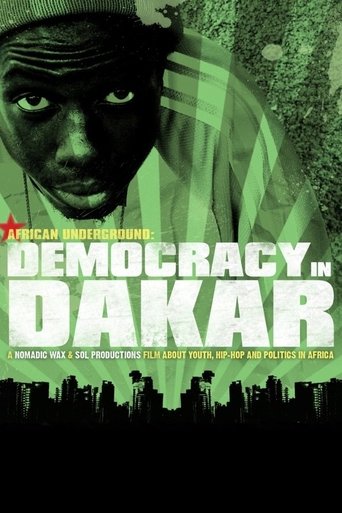
African Underground: Democracy in Dakar is a groundbreaking documentary film about hip-hop youth and politics in Dakar Senegal. The film follows rappers, DJs, journalists, professors and people on the street at the time before, during and after the controversial 2007 presidential election in Senegal and examines hip-hop’s role on the political process. Originally shot as a seven part documentary mini-series released via the internet – the documentary bridges the gap between hip-hop activism, video journalism and documentary film and explores the role of youth and musical activism on the political process.
This MGM Passing Parade series short takes a look at changing definitions of art in the United States.

Lyonel Feininger's work is as individual and unmistakable as he is himself. As a classical modernist artist, he is difficult to categorize. He lived and worked in Germany for a long time. He began his career as a caricaturist, later became known as a painter and headed the printing workshops at the Bauhaus. His work cannot be classified as cubism or expressionism. The film visits places that inspired him, such as Paris, the villages around Weimar and, above all, the Baltic coast - many of which are reflected in Feininger's work and make the development of his oeuvre comprehensible.

Giuseppina Pasqualino di Marineo, better known as Pippa Bacca, was a 34 years old Italian artist. She crossed 11 countries involved in wars, hitchhiking with another Milanese artist, Silvia Moro, both wearing a wedding dress. This was a performance for peace, trust and hoping to prove that if you rely on others, you’ll receive good things only. After travelling many roads, the two artists decided to split for a while in Istanbul, planning to meet again in Byblos. Pippa left then, alone, and nobody heard from her again.
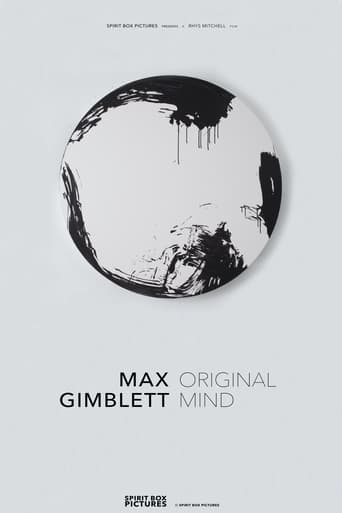
Max Gimblett: Original Mind documents the life and process of eccentric, creative genius Max Gimblett. One of New Zealand’s most successful and internationally prominent living painters, Gimblett has been working in America since 1962. The filmmakers spent a week in Gimblett’s Soho loft where he and his devoted studio assistants generously revealed the techniques and philosophy behind his beautiful art.