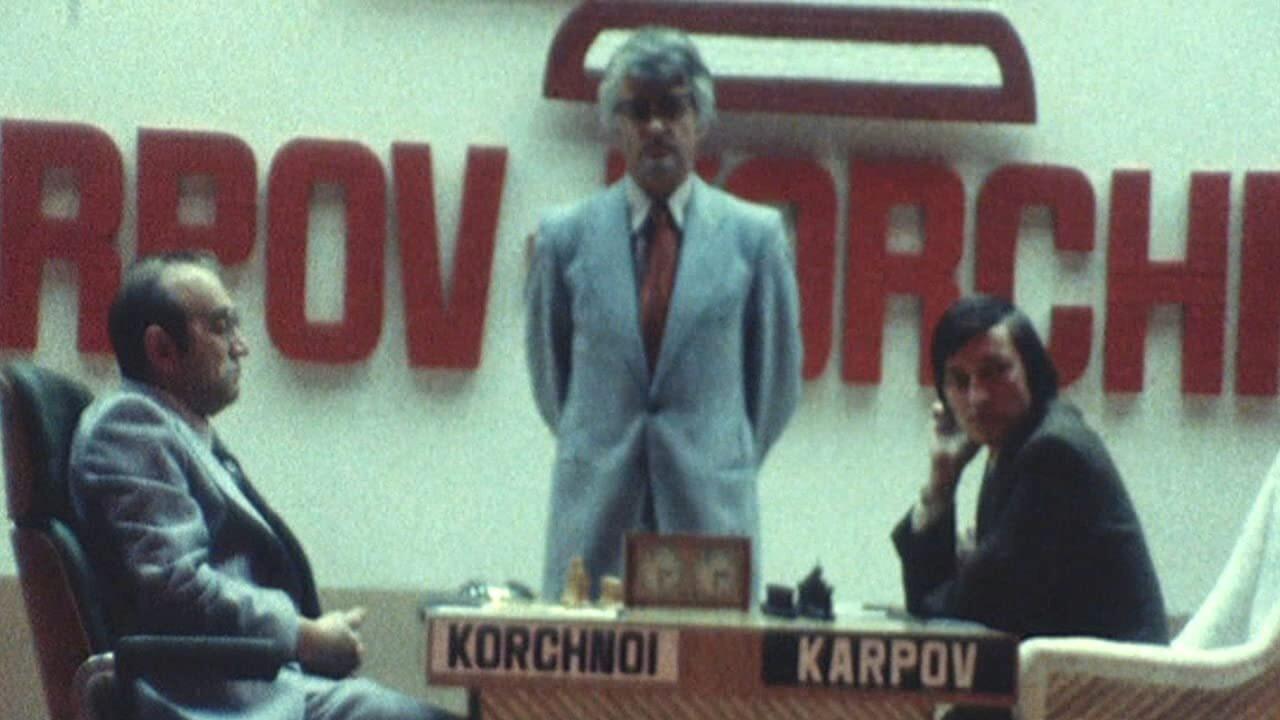

Closing Gambit: 1978 Korchnoi versus Karpov and the Kremlin
2018-10-26 · 85 min · ★ 8.5
The story of the 1978 World Chess Championship between the Soviet Communist Party's protege, Anatoly Karpov and the traitor and Soviet defector, Viktor Korchnoi. One of those instances in life where truth is stranger than fiction.
Trailers are previews, not full movies.
No authorized playback source configured. Use the legal watch options below.
Production details
- Directors
- Alan Byron
- Production companies
- Screenbound Productions
- Countries
- United Kingdom
- Status
- Released
Top Cast
 Anatoli Karpovself
 Viktor Korchnoiself
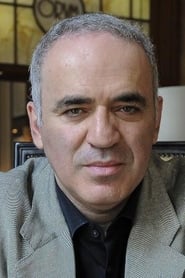 Garry Kasparovself
Title information and images are supplied by TMDb. Explore our discovery guide for advice on comparing metadata and legal viewing options.
Where to watch
Availability provided by JustWatch via TMDb. Offers can change. Provider links are listed on TMDb; full playback requires a separately authorized source.
Streaming
Amazon Prime Video, Amazon Prime Video with Ads, Dox Amazon Channel, Magnolia Selects Amazon Channel
Rental
Amazon Video, Google Play Movies, YouTube
Purchase
Amazon Video, Google Play Movies, YouTube
Free
Hoopla
With ads
YouTube Free, Amazon Prime Video Free with Ads, Tubi TV, Amazon MX Player
View authorized watch options on TMDbSeasons & episodes
Recommendations

Magnus Carlsen, widely regarded as the greatest chess player of all time, is challenged by Hans Niemann, a rising star who capitalizes on the meteoric growth of online chess. Niemann’s ascension culminated in an epic, controversy-shrouded victory over Carlsen at the 2022 Sinquefield Cup, which eventually led to allegations and revelations of cheating. Determined to clear his name, Niemann fights his way back to the top of the chess world, setting the stage for a high-stakes rematch with Carlsen in 2024.
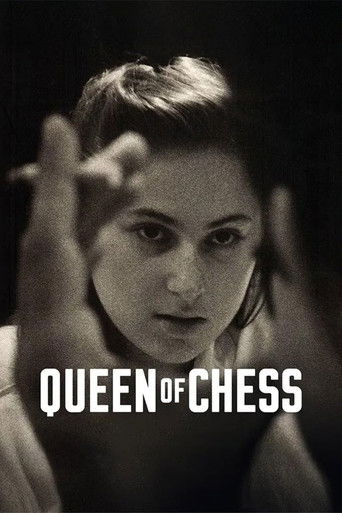
A Hungarian girl dreams of conquering international men’s chess. After a 15-year battle against world champion Garry Kasparov and her domineering father, Judit Polgár revolutionizes the sport’s patriarchal culture to become one of the greatest chess prodigies in history and the greatest woman chess player of all time.
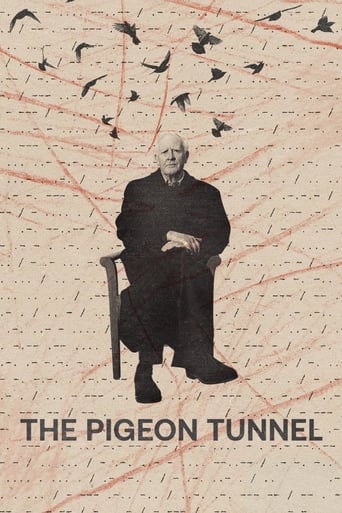
Academy Award winner Errol Morris pulls back the curtain on the storied life and career of David Cornwell, the former spy known to the literary world as John le Carré.
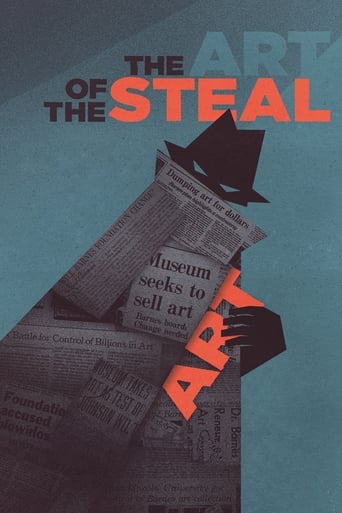
A gripping tale of intrigue and mystery in the art world, this film traces the history of a collection of Post-Impressionist paintings - worth billions - which became the subject of a power struggle after the death of its owner. Dr. Albert Barnes.

A documentary highlighting the Soviet Union's legendary and enigmatic hockey training culture and world-dominating team through the eyes of the team's Captain Slava Fetisov, following his shift from hockey star and celebrated national hero to political enemy.

A Russian-backed conspiracy film produced by Oliver Stone, framing the Euromaidan protests and the ouster of Viktor Yanukovych as a Western-engineered coup.

The life and career of an actor, artist, and icon. His own journey through his own camera.
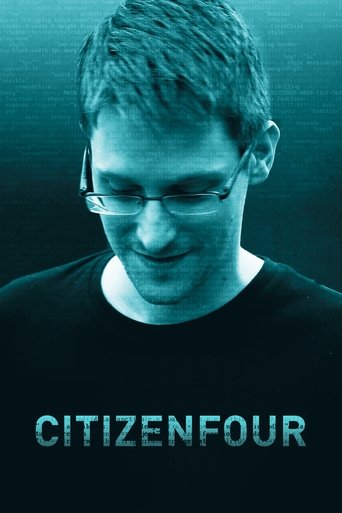
In June 2013, Laura Poitras and reporter Glenn Greenwald flew to Hong Kong for the first of many meetings with Edward Snowden. She brought her camera with her.

A subjective documentary that explores various theories about hidden meanings in Stanley Kubrick's classic film The Shining. Five very different points of view are illuminated through voice over, film clips, animation and dramatic reenactments.

Over 35 years after Bob Lazar's revelations, this documentary exposes secrets of a facility the government still denies. Featuring Lazar's testimony, recreations, and new evidence, it reopens a case that continues to spark global curiosity
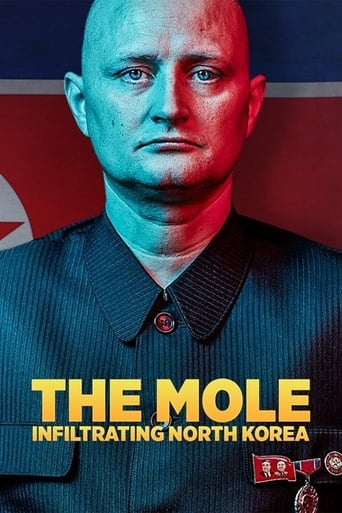
A real-life undercover thriller about two ordinary men who embark on an outrageously dangerous ten-year mission to penetrate the world's most secretive and brutal dictatorship: North Korea.

A documentary examining possible historical and modern conspiracies surrounding Christianity, the 9/11 terrorist attacks, and the Federal Reserve bank.
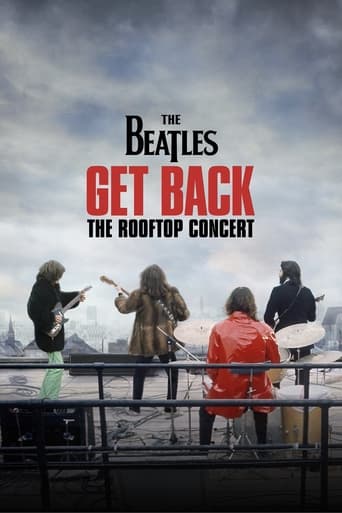
On the 30th of January, 1969, the Beatles performed an unannounced concert from the rooftop of their Apple Corps headquarters at Savile Row, within central London's office and fashion district. Experience the final and unforgettable iconic performance of The Beatles in a special 60-minute presentation, digitally remastered into the image and sound quality of IMAX DMR technology.

An inside look at one of the most anticipated movie sequels ever with James Cameron and cast.
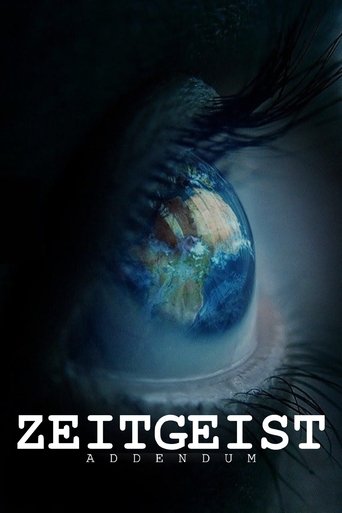
Director Peter Joseph examines examples of economic subjugation and offers solutions based on alignment with nature.

An intimately raw and magical journey through the life, mind, and heart of iconic artist Frida Kahlo. Told through her own words for the very first time — drawn from her diary, revealing letters, essays, and print interviews — and brought vividly to life by lyrical animation inspired by her unforgettable artwork.

In an intimate and joyful story of love in the face of loss, celebrated poets Andrea Gibson and Megan Falley find strength—and unexpected hilarity—in what might be their final year together.
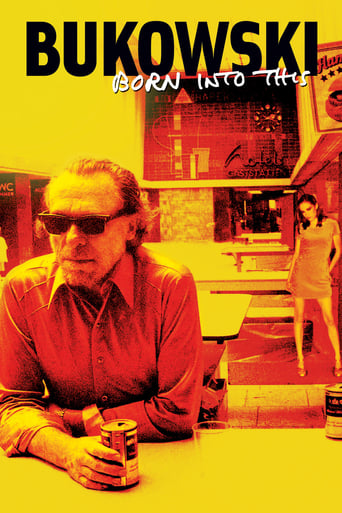
Director John Dullaghan’s biographical documentary about infamous poet Charles Bukowski, Bukowski: Born Into This, is as much a touching portrait of the author as it is an exposé of his sordid lifestyle. Interspersed between ample vintage footage of Bukowski’s poetry readings are interviews with the poet’s fans including such legendary figures such as Lawrence Ferlinghetti, Joyce Fante (wife of John), Bono, and Harry Dean Stanton. Filmed in grainy black and white by Bukowski’s friend, Taylor Hackford, due to lack of funding, the old films edited into this movie paint Bukowski’s life of boozing and brawling romantically, securing Bukowski’s legendary status.
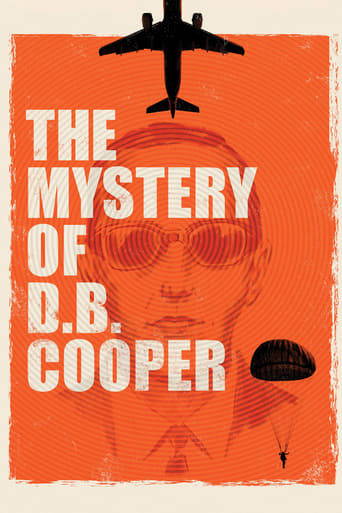
This documentary brings to life the stories of four people believed by their family and friends to be “DB Cooper,” a man who hijacked a 727 flying out of Seattle and jumped from the plane over the wilds of Washington State with a parachute and $200,000, never to be heard from again.
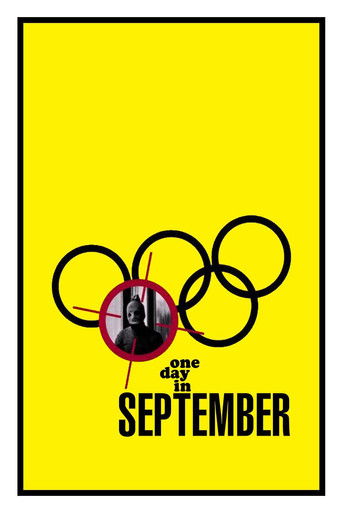
The full story of the 1972 Munich Olympics Massacre and the Israeli revenge operation 'Wrath of God.' The 1972 Munich Olympics were interrupted by Palestinian terrorists taking Israeli athletes hostage. Besides footage taken at the time, we see interviews with the surviving terrorist, Jamal Al Gashey, and various officials detailing exactly how the police, lacking an anti-terrorist squad and turning down help from the Israelis, botched the operation.
Similar titles

Angela Su’s fictional artist Rosie Leavers is the last remaining person to upload her consciousness to a video game. Contemplating during a pandemic year which also saw people’s resistance movements in many parts of the world, the work pinpoints the uncanny affinities between gaming and warfare strategies. They have mutually informed the infrastructure of both worlds since time immemorial when diplomatic conflicts played out on the battlefield of the 64 squares of a chess board to flight simulation technologies which were adapted to shape gaming experiences as we know it now. When the conflict is between the state and its people, she speculates that gaming strategies empower civilians in resistance movements to counter imperialism through its own operative logic. But once we upload our consciousness, are we able to return to the sensibilities and political motivation that inspired the revolution to begin with?
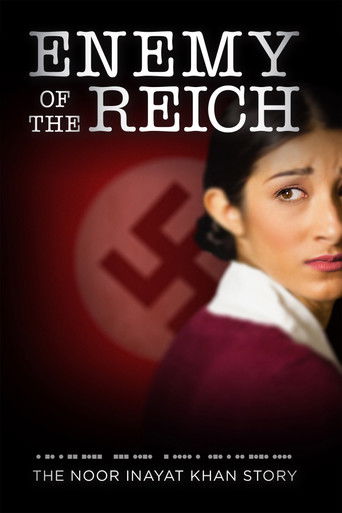
In 1943, Noor Inayat Khan was recruited as a covert operative into Winston Churchill's Special Operations Executive. With an American mother and Indian Muslim father, she was an extremely unusual British agent. After her network collapsed, Khan became the only surviving radio operator linking the British to the French Resistance in Paris, coordinating the airdrop of weapons and agents, and the rescue of downed Allied fliers.
Witnesses, survivors and front-line heroes recall the first days of the Chernobyl disaster of April 1986. Featuring rare archive footage of the world's worst ever nuclear accident.
A 3 year trade war has created corporate casualties in both US and China. In China, a dual circulation model is now underway to mitigate the effects of US protectionism. In the US, a Biden administration mulls new economic measures against China, even as industry groups lobby for tariffs to be lifted. Both countries also brace for what used to be unthinkable- the possibility of a financial war.
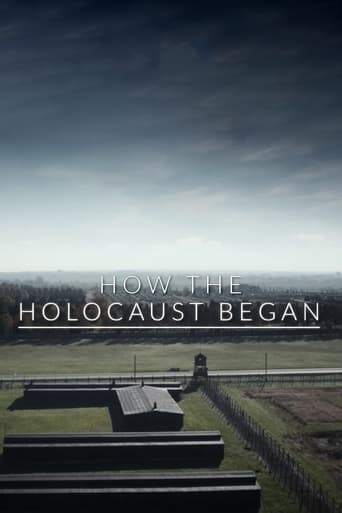
Historian James Bulgin reveals the origins of the Holocaust in the German invasion of the Soviet Union, exploring the mass murder, collaboration and experimentation that led to the Final Solution.
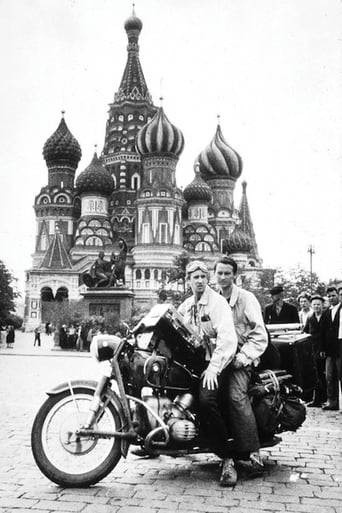
Albert Maysles' visual diary of the faces and places encountered along a cross country motorscooter ride through the Soviet Union in the late 1950s.
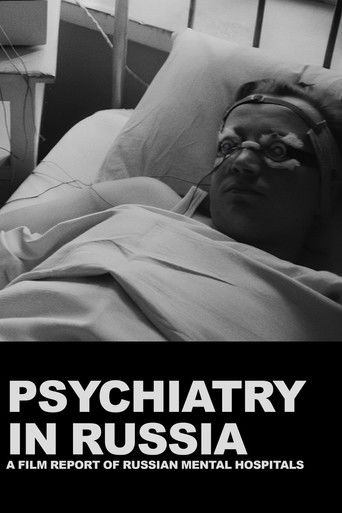
In 1955, Albert Maysles traveled by motorcycle throughout Russia. During this trip, he shot what was to become his first film, 'Psychiatry in Russia', an unprecedented view into Soviet mental healthcare. Originally televised by the David Garroway Show on NBC-TV in 1956.

This documentary is also part reality show. A dozen volunteers are set a mission to fulfil, but one by one they are captured by interrogators. They are held for a weekend, blindfolded and shackled and subjected to the same interrogation techniques talked about in the documentary. One by one they crack and tell their captors everything they know. They are made to talk!
Compilation short film about the Communist Revolution and Soviet Union.

Film sponsored by Western Electric (AT&T's equipment manufacturing division), the builder of the United States Air Force's White Alice Communications System in Alaska. Introduces the people and geography of the new state as well as the Western Electric radio-relay system, which links far-flung military sites, alert stations, and missile-warning facilities. Ralph Caplan praised the film's "intrinsically dramatic and highly photogenic" portrayal of communications equipment.
Wes Hurley's autobiographical tale of growing up gay in Soviet Union Russia, only to escape with his mother, a mail order bride, to Seattle to face a whole new oppression in his new Christian fundamentalist American dad.
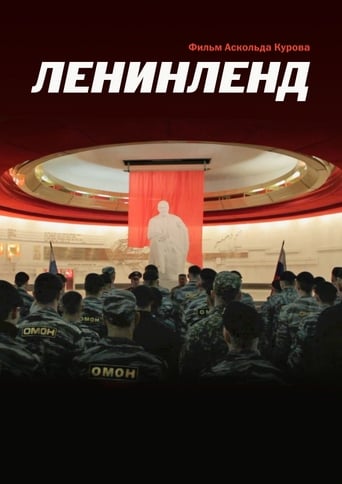
At the peak of Perestroika, in 1987, in the village of Gorki, where Lenin spent his last years, after a long construction, the last and most grandiose museum of the Leader was opened. Soon after the opening, the ideology changed, and the flow of pilgrims gradually dried up. Despite this, the museum still works and the management is looking for ways to attract visitors. Faithful to the Lenin keepers of the museum as they can resist the onset of commercialization. The film tells about the modern life of this amazing museum-reserve and its employees.

Warsaw's Central Railway Station. 'Someone has fallen asleep, someone's waiting for somebody else. Maybe they'll come, maybe they won't. The film is about people looking for something.
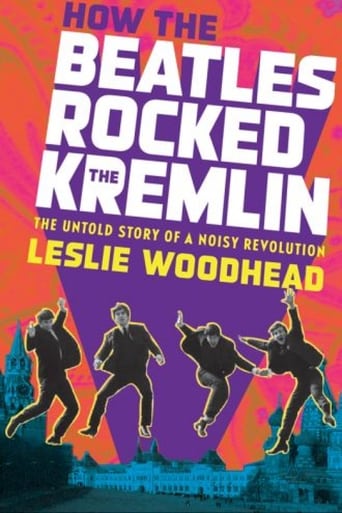
In August 1962, director Leslie Woodhead made a two-minute film in Liverpool's Cavern Club with a raw and unrecorded group of rockers called the Beatles. He arranged their first live TV appearances on a local show in Manchester and watched as the Fab Four phenomenon swept the world. Twenty-five years later while making films in Russia, Woodhead became aware of how, even though they were never able to play in the Soviet Union, the Beatles' legend had soaked into the lives of a generation of kids. This film meets the Soviet Beatles generation and hears their stories about how the Fab Four changed their lives, including Putin's deputy premier Sergei Ivanov, who explains how the Beatles helped him learn English and showed him another life. (Storyville)

With the Doomsday Clock the closest it's ever been to midnight, Jane Corbin investigates the proliferation of nuclear weapons across the globe. She visits Los Alamos, home to the United States’ nuclear weapons development facility and the historic home of Oppenheimer’s Manhattan Project. In Scotland, she reveals the strategy behind Britain’s nuclear deterrent, and speaks to campaigners in Suffolk fighting against US weapons they fear will be based on UK soil. Jane also discovers how many of the global agreements and safeguards that have constrained the spread of nuclear weapons since the 1970s are breaking down. This is a story told by the scientists, investigators and diplomats who set the clock and have fought to ensure that the ultimate deterrent has not been used in over 70 years.
Contrasting radical mobs, anarchy, and 1960s counterculture with footage of American manufacturing and innovation, this film celebrates the concept of American exceptionalism and argues that anti-Vietnam War protesters were influenced by communism, atheism, and immorality. Set mostly in a university library, this political debate between a medical student, his 1770s ancestor, and a history professor is a sequel to the 1972 National Education Program film, Brink of Disaster! Two additional characters appear in this drama: a 19th-century steamboat captain, and the student’s grandfather - an early 20th-century automobile worker. The National Education Program at Harding College in Searcy, Arkansas created a variety of widely-distributed anti-communism films from the mid-1940s to the early 1970s.
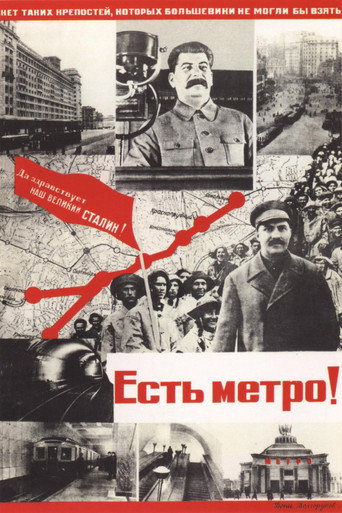
Early documentary about the Moscow metro: the early project, the development and the people working on it.
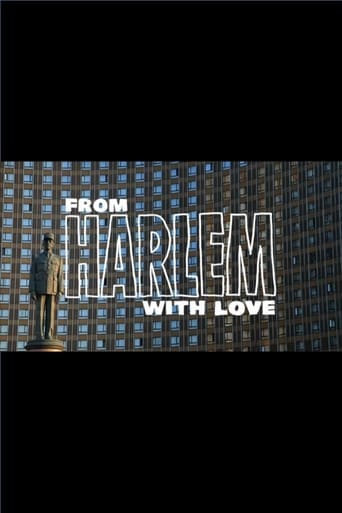
Tensions between the USSR and the United States were high in 1959, with the seemingly constant threat of nuclear war. Then some unlikely ambassadors stepped forward to clear all that away: the Harlem Globetrotters. From Harlem With Love is the story of how a group of barnstorming basketball players traveled to the heart of the Soviet Union at the height of the Cold War and bridged a cultural gap many thought would stand forever.