

Sidonie Panache
1934-10-19 · 120 min · ★ 8.5
In 1842, during the conquest of Algeria Sidonie Panache disguised as a Soave runs away with her lover who is doing his military service there.
Trailers are previews, not full movies.
No authorized playback source configured. Use the legal watch options below.
Production details
- Directors
- Henry Wulschleger
- Production companies
- Unavailable
- Countries
- Unavailable
- Status
- Released
Top Cast
 FlorelleSidonie Panache
 Antonin ArtaudL'émir Abd-el-Kader
 Jean-Louis AllibertLe duc d'Aumale
 Tahar HannacheUn Cheikh
 Madeleine Guitty
 René Dary
 Guy Favières
 Pierre Feuillère
 Alexandre MihalescoSalomon
 Bach
 Albert Broquin
 Hugues de Bagratide
 Marthe Mussine
 Germaine Sablon
Title information and images are supplied by TMDb. Explore our discovery guide for advice on comparing metadata and legal viewing options.
Where to watch
Availability provided by JustWatch via TMDb. Offers can change. Provider links are listed on TMDb; full playback requires a separately authorized source.
Availability not listed for this country.
Seasons & episodes
Recommendations

38-year-old Alice has everything to become the next editor-in-chief of Rebelle magazine except for her uptight image. But when the young and charming Balthazar, barely 20, crosses Alice's path, she realizes that he holds the key to her promotion.

Lauren, a lovely 29-year-old it-girl, tries to break into the world of fashion by skimming Parisian parties. Olivia, a 28-year-old psychologist, has two obsessions: to save the confectionery of her parents, and to find her ideal husband. At the age of 26, Salma, a fiery young history teacher, still lives with her mother in the suburbs. Their roads have no reason to cross - until the day when, on the death of their biological father that they never knew, they inherit together a splendid Parisian apartment. For these three sisters who have nothing in common, cohabitation will prove to be explosive, to say the least.

Adrien, 40 years old and totally immature, is dumped by Maude, 35 years old, eager to finally found a family. In an attempt to regain the love of his life, Adrien decides to move into the future ex-married apartment: a nursery home - The beginning, an improbable educational experience.

François Marsault, a war veteran, makes the most of his retirement alongside his wife Annie. Authoritarian and ruthless, François rules his family with an iron fist — but when he discovers that his esteemed wife cheated on him 40 years ago, he files for divorce and confronts her former lover, who lives in the French Riviera.

France, 1809. Captain Neuville is called to the front, leaving his future bride heartbroken. Her sister decides to write letters on his behalf to cheer her up.

Eddie Izzard takes her show to San Francisco to give a brief history of pagan and Christian religions, the building of Stonehenge, the birth of the Church of England and of Western empires, and the need for a European dream.

Babou seems to be able to shrug off anything. Real jobs, husbands, responsibilities, who needs them? But when she finds out that her own daughter is too ashamed of her to invite her to her wedding, she decides to make some changes.

The third part of Seventh Company adventures.

Paris, in the early 1960s. Jean-Louis Joubert is a serious but uptight stockbroker, married to Suzanne, a starchy class-conscious woman and father of two arrogant teenage boys, currently in a boarding school. The affluent man lives a steady yet boring life. At least until, due to fortuitous circumstances, Maria, the charming new maid at the service of Jean-Louis' family, makes him discover the servants' quarter on the sixth floor of the luxury building he owns and lives in. There live a crowd of lively Spanish maids who will help Jean-Louis to open to a new civilization and a new approach of life. In their company - and more precisely in the company of beautiful Maria - Jean-Louis will gradually become another man, a better man.

Michel works there manically solving people's problems over the phone. He is about to tie the knot with his girl friend Isabelle, an airline hostess. She flies all over the world, he hates to leave the office. A series of madcap mishaps involving theft or injury (as you would expect in his line of work) ensues after Michel promises Isabelle nothing will delay their marriage and she promises in turn that she's done flying. Once this unlikely promise is made, it becomes premise and both are forced into escalating white lies to maintain the appearance of keeping their word. Their predicament mounts as Isabelle is forced to do a few more flights, while Michel is compelled to travel to New York, Tunisia, and finally Hong Kong, where they are finally reunited in the throes of a contrived and hilarious drug deal involving a 747, water taxi chases, and martial arts.

Long married 50-somethings Brigitte and Xavier are prize cattle breeders in regional France. Life is good, but the departure of their children from home has thrown Brigitte’s world into flux, as she finds herself locked into routine. She keeps hoping for something else, something more. A party held by students on the adjoining property accelerates this latent crisis and Brigitte impulsively sets off for Paris under the guise of a doctor’s appointment. The city immediately invigorates her, and when she meets a charming Danish gentleman, she impulsively allows herself to be flattered by his attentions…

A modern retelling of Shakespeare's classic comedy about two pairs of lovers with different takes on romance and a way with words.

Sandra, a young woman forced to leave the south of France to flee a violent husband. Without attachment, she returned to Boulogne-sur-Mer, the city of her childhood which she left almost 15 years ago. She finds her mother there and a world she left behind. Without money, she is hired in a fish cannery where she befriends two workers. But one day, one of her colleagues tackles her insistently, she defends herself and kills him accidentally.
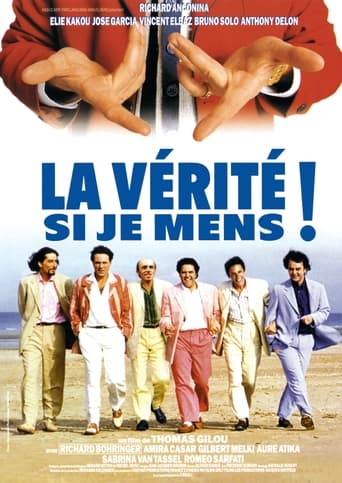
Jobless loner Eddie Vuibert gets a lucky break when a rich Jewish entrepreneur mistakes him for a Jew and gives him a sweet job in the Parisian fashion district.

A young cobra and his scorpion best friend go on a journey across the Sahara desert to save a new-found love.

Ali G travels throughout Britain, interviewing unsuspecting leaders and politicians.

The film narrates a utopian abandonment, consensual and festive of the market economy and high productivity. The population decides on a number of resolutions beginning with "We stop everything" and the second "After a total downtime will be revived-reluctantly-that the services and products including lack will prove intolerable. Probably: water to drink, electricity for reading at night, the TSF to say "This is not the end of the world, this is an 01, and now a page of Celestial Mechanics". The implementation of these resolutions is the first day of a new era, Year 01. The Year 01 is emblematic of the challenge of the 1970s and covers such diverse topics as ecology, negation of authority, free love, communal living, rejection of private property and labor.

Vladimir and Hector, two secret agents opposed in every way, are trying to recover a top secret material stolen by unknown intruders.

The story of a big party during which Jacques Tati brings together audience members, performers, clowns, children, and himself.
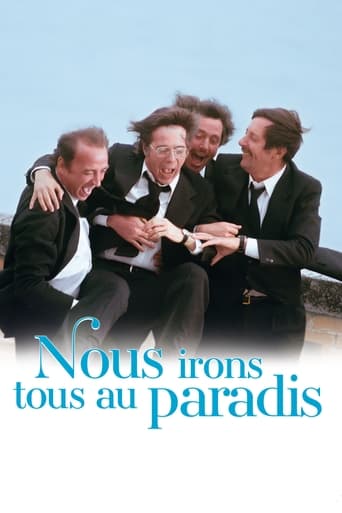
Having fortuitously discovered a photograph in which Marthe embraces someone unknown, Étienne Dorsay becomes jealous and imagines various stratagems to identify the lover. In the meantime, he and his friends acquire a weekend house for a very low price.
Similar titles
Rabie is a kid from Sétif in 1980, trying to collect money to buy a wheelchair for his paralyzid sister Sassia, so she can get out of the house.

In Kabylie, rude mountain region in the north of Algeria. Arezki finds the young Larbi exhausted, buried under the snow. He takes him in and nurses him until he's recovered. The host seduces Arezki's daughter. She is pregnant. This is an unsupportable shame to the father of the female sinner. Arezki claims vengeance. He leaves his house and takes the oath not to come back before having killed Larbi who betrayed him under his own roof.
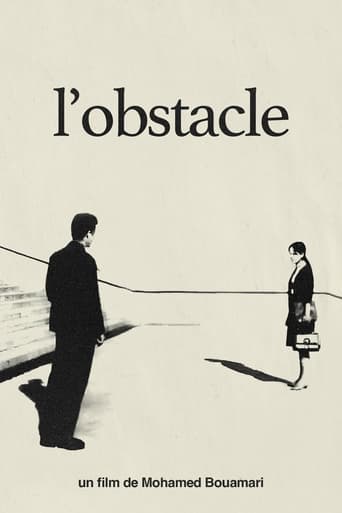
Algerian youth of the 1960s, straddling traditional South Mediterranean and Western culture and the desire for emancipation of younger generations to find true love.

In Algiers in 1993, while the civil war is starting, Mrs Osmane's tenants have to endure her bad temper. Her husband left her and the fear to lose her respectability haunt her. The former member of the Resistance during the Independence War persists in controlling the slightest moves of the households rather than struggle against her own frustrations. Learning her daughter is in love, the possibility of finding herself alone will push her to the limit: The symbolical Mrs Osmane "harem" is about to collapse.
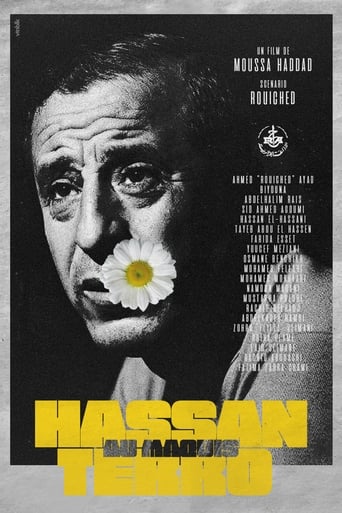
While trying by all means to stay out of the bloody turmoil caused by the Battle of Algiers, Hassan, an honest and naive family man, is wrongfully accused of terrorism by the French colonial army in "Hassan Terro." After escaping in "The Escape of Hassan Terro," Hassan is forced to join the resistance in "Hassan Terro in the Maquis."
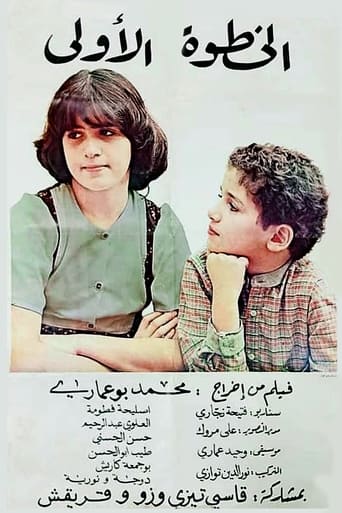
A modern couple seeks to find marital happiness in a context where Algerian society is taking the “first step” towards female emancipation. A woman becomes president of a popular municipal assembly. Will she find happiness ?
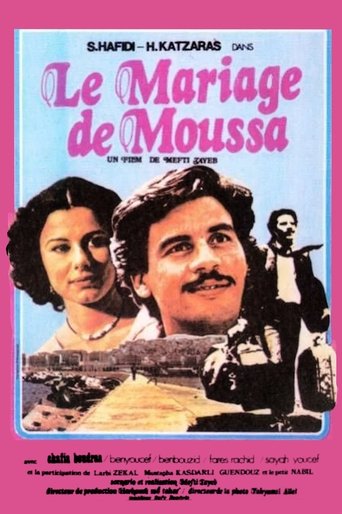
Moussa, a young Franco-Algerian, returns to Algeria, but adapting to life in his country of origin proves difficult. Just as he is about to leave for France, he is called up for military service, which suits him fine because he is secretly in love with the beautiful Nacira.
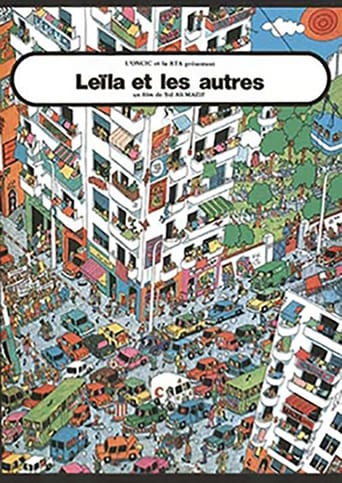
The story of Algerian women trying to live in 1970s Algeria where the society is between conservative values and progressive modern Algeria.
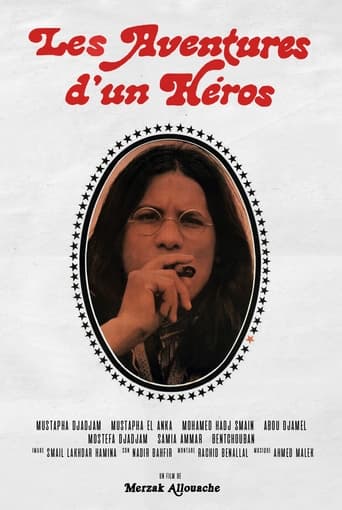
In one of the tribes of the Algerian Sahara, everyone awaits the arrival of the hero who will defend the rights of the poor. A man decides one day to put the mark of the "hero" on his newborn son and the whole tribe celebrates the arrival of this eagerly awaited messiah who came to save them. This false hero then grows up by assuming his role of savior. Filled with cynicism, he crosses the countryside and has a number of adventures.
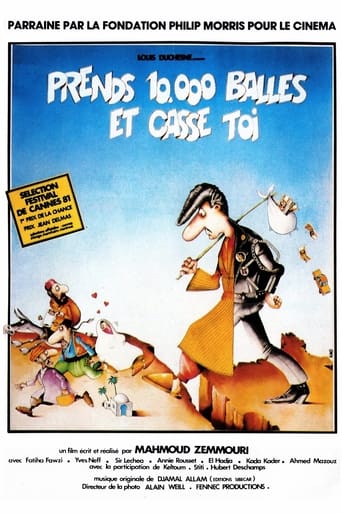
In 1980, Lionel Stoléru—France’s Secretary of State for Migrant Workers—introduced a "repatriation grant" of 10,000 francs (known as the "Stoléru million"), paid to immigrants who agreed to return permanently to their countries of origin. One Algerian family decided to leave France. Upon arriving in the small rural town of Boufarik, Algeria, in a brand-new Peugeot 404, they caused a scandal. Their liberated ways drew the villagers' ire, and the two children knew nothing about Algeria or local customs. The film was selected for the Cannes Film Festival in 1981, and in 1982, it won the Critics' Prize at the Chamrousse International Comedy Film Festival.

Like every year in Zitouna, a bear handler passes by. With his creature, he comes to challenge the small community. And like every year, it is Slimane El Mabrouk who defends the honor of the tribe. But this time, he dies, leaving two orphans, Omar and Ourida. Robbed of their inheritance, the children will grow up alone. The years pass, the French army settles in, and with it, the war. Mysteriously, one day, after the murder of a French legionnaire, Omar disappears into the bush, while his sister dies in childbirth. Omar will return to the village, much later, once independence has been acquired, as a representative of power and with this enigmatic formula: "You must know that the Revolution has not forgotten you". Personal revenge? Sincere desire to bring progress and modernity? ... The inhabitants of Zitouna, upset in their ancestral way of life, will not be long in having an answer to their questions.

Originally commissioned by the city of Algiers to promote tourism, Mohamed Zinet’s Tahia ya Didou blends documentary with fiction to create a poetic, acerbic and rapturous portrait of the director’s native city. The camera travels freely, through the port, market, streets and cafés, capturing everyday people, some of whom recur frequently enough to seem like protagonists. The nominal plotline follows a French tourist couple’s leisurely visit to the city, the man having previously served in the army during the Algerian war. As they walk around, his comments betray his mindset’s racist colonial prejudices, while his wife reiterates asinine clichés. Their unhurried wandering is interrupted when he comes across a blind man and realises that he tortured him during his army service. The film is punctuated with punchy sequences that show a poet named Momo delivering verse as an elegy for Algiers.
The film dialectically explores the phenomena of family alliances in urban and rural areas, technocracy, and the Algerian landed bourgeoisie. The film was completed but apparently never distributed by the ONCIC.
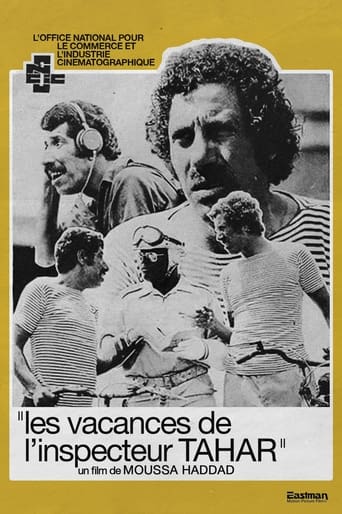
Inspector Tahar and his apprentice are invited by Mama Traki, a popular Tunisian heroine, to spend their vacation in Tunis. Before leaving Algiers, they stop at a tourist complex where a murder has just been committed. The investigation full of surprises and twists and turns will take them to Tunis where they will find Ommi Traki and his family...
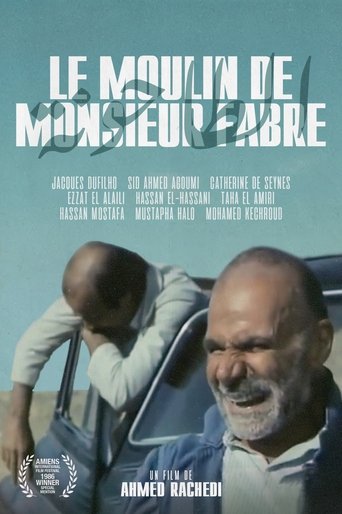
The story of the post-independence nationalization of the mill of Monsieur Fabre, an old man attached to the land of Algeria where he was born. In this small town in eastern Algeria, there was nothing else to nationalize and they were actively preparing for the arrival of high dignitaries who would elevate the mill to the rank of an industrial flour mill even though it was threatened with ruin. The comedy gets worse when the football player from the local team withdraws for love, the officials' visit is canceled and Mr. Fabre returns.
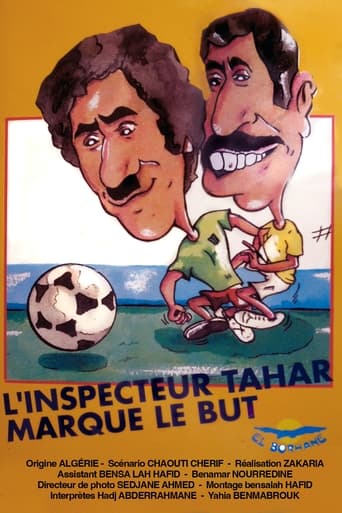
A simple case of a car accident in the city of Oran turns into a real criminal investigation led by Inspector Tahar and his sidekick the apprentice.
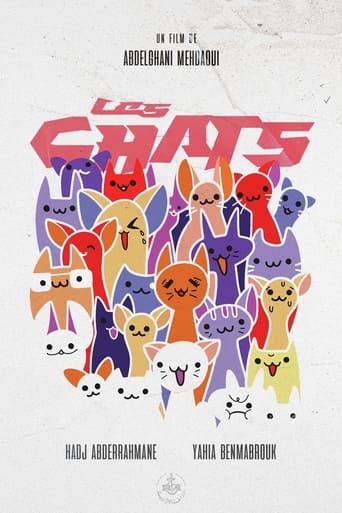
A group of angry women head to the police station, all complaining about the kidnapping of their cats. A full-scale investigation begins, led by Inspector Tahar and his sidekick, the Apprentice...
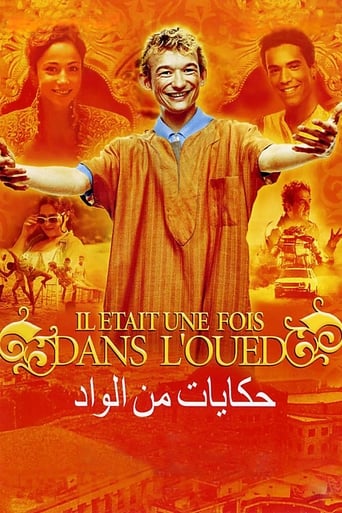
In 1988, Johnny Leclerc, the son of a Norman mother and an Alsatian father, lives in a suburban housing estate with his friends. He behaves like a Muslim, observes Ramadan and wears a djelaba. He's even convinced that his name is Abdelbachir and that he was born in a small village in the bled. When his friend Yacine gets into trouble with a local kaid and decides to return to Algeria for the vacations, he smuggles himself into the Sabri family's luggage to fulfill his dream and finally get to know his "roots". As soon as he arrived on the Algerian coast, Johnny felt right at home. But Yacine is opposed to his father, who wants to arrange his marriage.
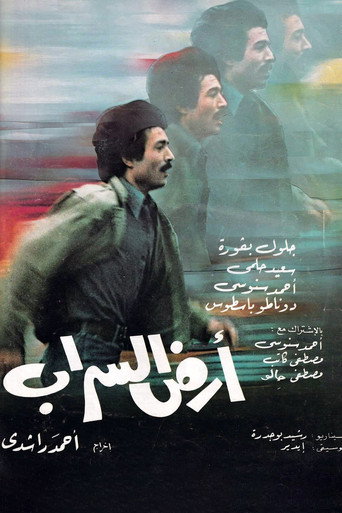
In the 1980s, barely 18 years after Algeria's independence, Algerian immigration to France massively fueled the construction industry, responding to a demand for hard, undervalued labor. Behind the idea of "selective immigration," these men were recruited primarily for their bras and their knock-kneed hands, shaped by construction sites. Invisible yet essential, they built roads, buildings, and infrastructure, often at the cost of precarious conditions. Ali, an Algerian crane operator in France, philosophically accepts the harassment faced by immigrants like himself on construction sites and in daily life. He hopes to escape his situation with the money he wins in the lottery, and from the top of his crane, he allows himself to dream, observing the world through binoculars. One day, the jackpot falls...
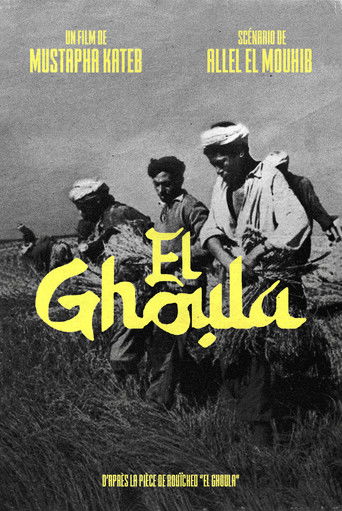
An adaptation of the satirical play of the same name by comedian Rouïched (Ahmed Ayad). "El-Ghoula" (The Vampire) tells the story of a corrupt official who lives off the peasants of an agricultural cooperative. Instead of solving problems, this official manipulates empty rhetoric and "revolutionary" slogans to galvanize them and encourage them to continue working. Opportunistic, he will transform the fellahs' work into chaotic bureaucratic procedures for his own personal gain.