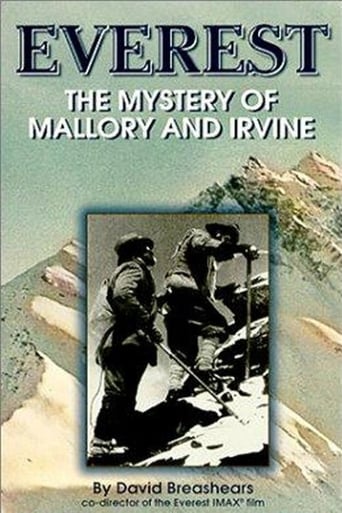
Everest: The Mystery of Mallory and Irvine
1999-10-01 · 53 min · ★ 7.0
NOVA documentary inquiring into the fate of early Everest explorers George Mallory and Sandy Irvine
Trailers are previews, not full movies.
No authorized playback source configured. Use the legal watch options below.
Production details
- Directors
- Unavailable
- Production companies
- GBH
- Countries
- Unavailable
- Status
- Released
Top Cast
 David BreashearsNarrator
 Chris BoningtonSelf - Himalayan Climber
 Edmund HillarySelf (archive footage)
 Noel OdellSelf - 1924 Team Member (archive footage)
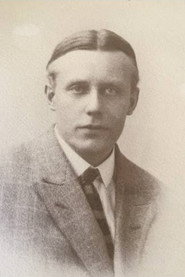 John Baptist Lucius NoelSelf - 1924 Mountaineer & Photographer (archive footage)
Title information and images are supplied by TMDb. Explore our discovery guide for advice on comparing metadata and legal viewing options.
Where to watch
Availability provided by JustWatch via TMDb. Offers can change. Provider links are listed on TMDb; full playback requires a separately authorized source.
Availability not listed for this country.
Seasons & episodes
Recommendations
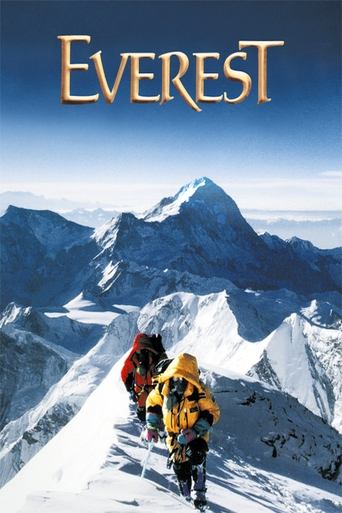
An international team of climbers ascends Mt. Everest in the spring of 1996. The film depicts their lengthy preparations for the climb, their trek to the summit, and their successful return to Base Camp. It also shows many of the challenges the group faced, including avalanches, lack of oxygen, treacherous ice walls, and a deadly blizzard.
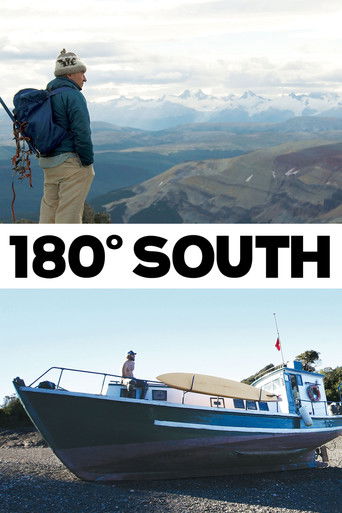
The film follows adventurer Jeff Johnson as he retraces the epic 1968 journey of his heroes Yvon Chouinard and Doug Tompkins to Patagonia.

Through deeply personal interviews with her siblings and an examination of the photographs, letters, and belongings left behind, Mariska assembles a new portrait of her mother Jayne Mansfield, an extraordinary and complex woman.

A documentary about ten very different lives connected by having appeared onscreen wearing masks or helmets in Star Wars.
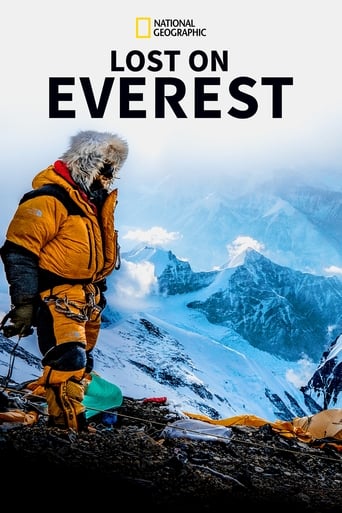
Reaching 29,029 feet, Mount Everest has long captivated mountaineers of all stripes. But a peak that draws athletes and mountaineers to new heights isn’t without danger — or a dark side. Perhaps the peak’s greatest mystery is the missing body of Andrew “Sandy” Irvine who disappeared alongside George Leigh Mallory in 1924 just 800 vertical feet from the summit. In Lost on Everest, we follow along as a team of elite climbers with new intel on the location of his missing body set out to solve what may be mountaineering’s great mystery. Along with the body, the team hopes to find Irvine’s camera and the footage that could rewrite history.
An epic cinematic and musical collaboration between SHERPA filmmaker Jennifer Peedom and the Australian Chamber Orchestra, that explores humankind's fascination with high places.
In 2013, the world's media reported on a shocking mountain-high brawl as European climbers fled a mob of angry Sherpas. Director Jennifer Peedom and her team set out to uncover the cause of this altercation, intending to film the 2014 climbing season from the Sherpa's point-of-view. Instead, they captured Everest's greatest tragedy, when a huge block of ice crashed down onto the climbing route...
Years spent recording footage of creatures from every corner of the globe is bound to produce a bit of drama. Here's a behind-the-scenes look.
Disneynature’s Elephant follows African elephant Shani and her spirited son Jomo as their herd make an epic journey hundreds of miles across the vast Kalahari Desert. Led by their great matriarch, Gaia, the family faces brutal heat, dwindling resources and persistent predators, as they follow in their ancestors’ footsteps on a quest to reach a lush, green paradise.
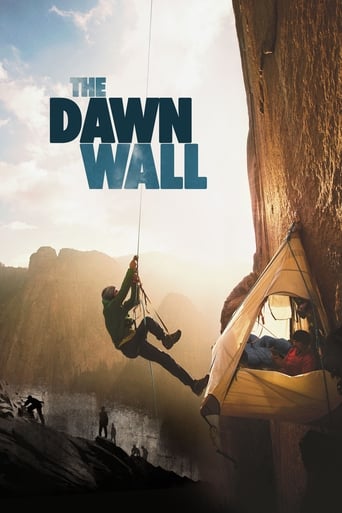
In an unbelievable story of perseverance, free climber Tommy Caldwell and climbing partner Kevin Jorgeson attempt to scale the impossible 3000ft Dawn Wall of El Capitan.

Go behind the scenes with stars, puppeteers and creators as they bring Jim Henson's magical world of Thra back to life in a sweeping fantasy series.
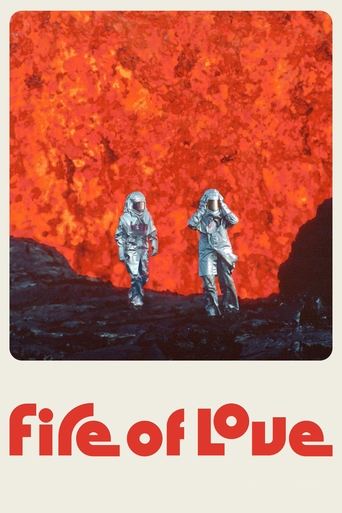
A doomed love triangle between intrepid French scientists Katia and Maurice Krafft, and their beloved volcanoes.

Filmed over 14 months with unprecedented access into the inner circle of the man and the sport, this is the first official and fully authorised film of one of the most celebrated figures in football. For the first time ever, the world gets vividly candid and un-paralleled, behind-closed-doors access to the footballer, father, family-man and friend in this moving & fascinating documentary. Through in-depth conversations, state of the art football footage and never before seen archival footage, the film gives an astonishing insight into the sporting and personal life of triple Ballon D'Or winner Cristiano Ronaldo at the peak of his career. From the makers of ‘Senna’ and ‘Amy’, Ronaldo takes audiences on an intimate and revealing journey of what it’s like to live as an iconic athlete in the eye of the storm.

Captured during Billie Eilish's sold-out world tour, a concert experience from one of the most celebrated and successful artists of her generation, presented in immersive 3D.
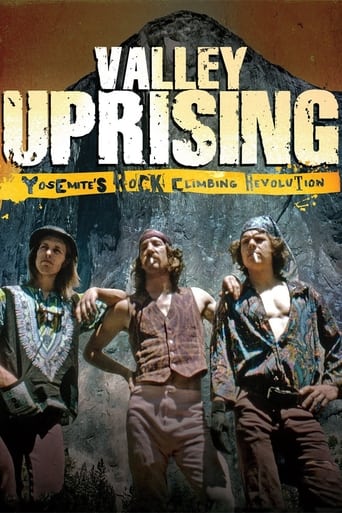
In the shady campgrounds of Yosemite valley, climbers carved out a counterculture lifestyle of dumpster-diving and wild parties that clashed with the conservative values of the National Park Service. And up on the walls, generation after generation has pushed the limits of climbing, vying amongst each other for supremacy on Yosemite's cliffs. "Valley Uprising" is the riveting, unforgettable tale of this bold rock climbing tradition in Yosemite National Park: half a century of struggle against the laws of gravity -- and the laws of the land.
An exploration of technologically developing nations and the effect the transition to Western-style modernization has had on them.
This documentary starring climber Alex Honnold and famous biologist Bruce Means document their expedition to the South American sky islands in search of new species and discoveries. Follows elite climber Alex Honnold and a world-class climbing team led by National Geographic Explorer and climber Mark Synnott on a grueling mission deep in the Amazon jungle as they attempt a first-ascent climb up a 1000 foot sheer cliff.

Daniel Craig candidly reflects on his 15 year adventure as James Bond. Including never-before-seen archival footage from Casino Royale to the upcoming 25th film No Time To Die, Craig shares his personal memories in conversation with 007 producers, Michael G Wilson and Barbara Broccoli.

As a visually radical memoir, CAMERAPERSON draws on the remarkable footage that filmmaker Kirsten Johnson has shot and reframes it in ways that illuminate moments and situations that have personally affected her. What emerges is an elegant meditation on the relationship between truth and the camera frame, as Johnson transforms scenes that have been presented on Festival screens as one kind of truth into another kind of story—one about personal journey, craft, and direct human connection.
Follow Alex Honnold as he attempts to become the first person to ever free solo climb Yosemite's 3,000 foot high El Capitan wall. With no ropes or safety gear, this would arguably be the greatest feat in rock climbing history.
Similar titles
Six blind Tibetan teenagers climb the Lhakpa-Ri peak of Mount Everest, led by seven-summit blind mountain-climber Erik Weihenmayer.
In 1924, British climber George Mallory and his partner Andrew Irvine attempted to conquer Everest for the third time. They never returned. Could they have been the first to successfully climb the mountain before meeting their deaths? In 1999, German geologist Jochen Hemmleb discovered Mallory's body just below the summit, reigniting speculation. In 2010, he organized a new expedition to follow up on this sensational discovery. His goal: to find the base camp from which Mallory and Irvine set out to conquer the summit.

André Payraud, a pioneer and specialist in torrents and raging rivers, is nicknamed "the highest swimmer in the world." In October 1999, after the great monsoon, he swam down the Khumbu-Khola, a torrent that originates at 4,807 meters at the foot of Mount Everest, over five days. Furthermore, André Payraud wanted to connect with the people and culture of Nepal.
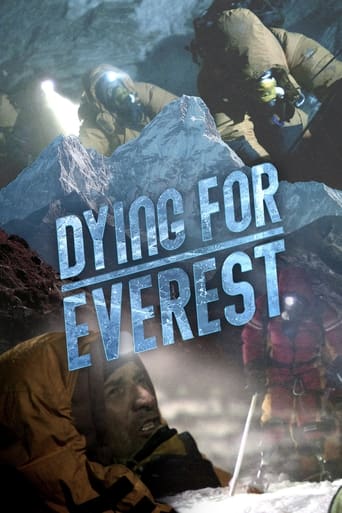
On 15 May, 2006, double amputee Mark Inglis reached the summit of Mt Everest. It was a remarkable achievement and Inglis was feted by press and public alike. But only a few days later he was plunged into a storm of controversy when it was learned that he had passed an incapacitated climber, Englishman David Sharp, leaving him to a lonely end high in the Death Zone.
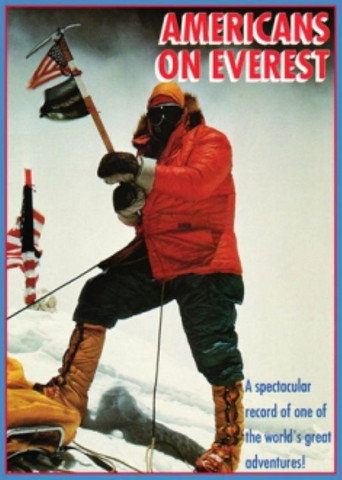
"In 1963, Swiss climber Norman Dyhrenfurth began 'a little war against a big mountain.' Leading 19 Americans, 32 Sherpas, and 909 porters carrying 27 tons of gear, Dyhrenfurth spearheaded the highly successful 1963 American Mount Everest Expedition for his adopted country. Jim Whittaker, accompanied by Nawang Gombu Sherpa made the first ascent by the Hillary-Tensing route. On May 22, Tom Hornbein and Willi Unsoeld made the first ascent by the unclimbed West Ridge. They descended by the South Col, making the first traverse of Everest. Orson Welles narrates the spectacular record, and the film includes the first ever filmed images from the summit."
An international team of climbers ascends Mt. Everest in the spring of 1996. The film depicts their lengthy preparations for the climb, their trek to the summit, and their successful return to Base Camp. It also shows many of the challenges the group faced, including avalanches, lack of oxygen, treacherous ice walls, and a deadly blizzard.
To understand the difficulties of an ascent to over eight thousand metres, it is enough to remember the almost 300 victims these peaks have claimed. The Swiss alpinist Ehrart Loretan, the third alpinist in the world to have climbed all 14 8,000, and the Austrian alpinist Kurt Diemgerger cover the whole history of the conquest of the world’s 8,000, from the fifties to the present day, together with other alpinists and film directors who have climbed them. They talk about their experienced when they ventured into the death zone.
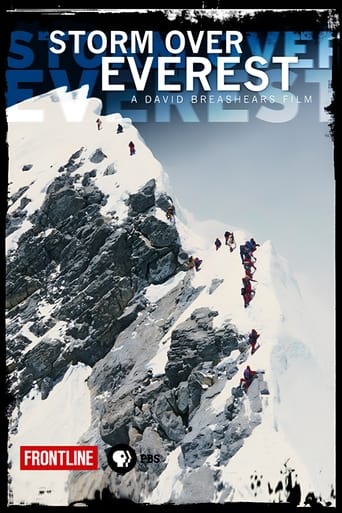
As darkness fell on May 10, 1996, a fast moving storm of unimaginable ferocity trapped three climbing teams high on the slopes of Mount Everest. The climbers, exhausted from their summit climb, were soon lost in darkness, in a fierce blizzard, far from the safety of High Camp at 26,000 feet. World-renowned climber and filmmaker David Breashears, who aided the rescue efforts back in 1996, now returns to Everest to tell the fuller story of what really happened on that legendary climb. Through remarkably intimate interviews with the climbers and Sherpas many who have never spoken before on American television Breashears sheds new light on the worst climbing tragedy in Mount Everest s history.

Ueli Steck (Switzerland), Simone Moro (Italy) and Jon Griffith (GB) are not like 95% of the climbers on Everest: they don't use oxygen, altimeters (improperly called Sherpas), or fixed ropes. In 2013, the trio aims to repeat the arduous Western Spur. The Sherpas have the mission to equip the mountain with fixed ropes on this famous day, up to Camp 3: ropes without which customers of commercial expeditions could not climb Everest. An argument ensued, insults were hurled from both sides. The confrontation at Camp 2 degenerated: a Sherpa water bottle physically attacked the trio of Europeans. Blows and stones were thrown and threats led the trio to flee the mountain. The Réel Rock film crew, which is part of the climbing team, films this chaos without complacency.

"One man’s struggle for adventure and the love of his family. What drives a man to leave the wife and kids he loves and the comforts of home to live out of a back-pack for two months of hardship and suffering in one of the most extreme environments on the planet? Paul had made an emotional promise to his nine-year-old daughter on the night he left home that he would return safely. Upon reaching the summit with his legs quivering from exhaustion and tears in his eyes, he becomes more determined than ever to keep his promise. This documentary is about one man’s struggle to balance his love for adventure with the love he has for his family. He is determined to keep his promise, but on Everest there are many things that cannot be controlled."

A team of 20 elite Nepali climbers venture into the Death Zone of Mount Everest to restore their sacred mountain and the contaminated water source of 1.3 billion people. They ascend the highest point on the planet to the 150 bodies of deceased climbers and 100,000 pounds of rubbish that remain on the high slopes of Everest. This is the self-documented story of their life-threatening journey.

At 18,000 feet above sea level and over the course of 40 days last Spring, documentary filmmaker Dianne Whelan immersed herself in the challenging and captivating world of base camp at Mt. Everest. With spectacular footage of the mountains’ landscape as a backdrop, 40 DAYS AT BASE CAMP is an intriguing and intimate portrayal of three climbing teams and their journey to the peak.

A documentary of the first successful expedition to the summit of Mount Everest. New Zealand's Edmund Hillary and Sherpa Tenzing Norgay climb Mount Everest in 1953.

Two young cameramen are asked to film a Mount Everest expedition by German mountaineer Thomas Weber; a man wishing to climb Everest, in spite of his visual handicap. For cameramen Milan Collin and Kevin Augello this is a dream come true. They accept the challenge with full excitement In the first weeks Milan and Kevin are confronted with their own physical limitations. Are they capable of climbing this mountain? Surrounded by people who are prepared to die for their dream, giving up is not an option. They are confronted with accidents and death. In the isolated environment Milan and Kevin turn the camera on each other. This film is a personal story of two men confronted with the harsh and extreme conditions high up on the mountain.


Half a century ago, Edmund Hillary and Tenzing Norgay became the first humans to stand atop the highest mountain of earth. Now, their sons and Brent Bishop, son of the first American to summit Everest, make a historic expedition to face Everest's unforgiving heights. Experience their harrowing, deeply individual quests to conquer this awesome peak - and discover the dramatic history of Everest, from tragedy and triumph to the unsung role of the remarkable Sherpa people. With gripping, on-location filming and never-before-seen archival footage, this is the thrill of Everest as only National Geographic can present it!

It was a sporting feat, a national feat, but also and above all a technical feat: on October 15, 1978, three French mountaineers, for the first time, reached the summit of Everest: Pierre Mazeaud, Nicolas Jaeger, Jean Afanassieff, accompanied by Kurt Diemberger, Austrian mountaineer and cameraman. A performance broadcast live on the radio thanks to the France inter teams and filmed for television by TF1. Christian Brincourt, a great French reporter, tells us about this expedition and questions the members of the expedition on their motivations. With Pierre Mazeaud (expedition leader), Jean-François Mazeaud (doctor), Claude Deck, Raymond Despiau, Nicolas Jaeger, Walter Cecchinel, Jean Afanassieff, Kurt Diemberger.

Filmmakers Dom Bush and Matt Sharman travel from the dusty archives of the Alpine Club to Nepal in search of the exact spot from where, in 1899, the first photographic images of Everest were taken. Part travelogue, part mystery and part tribute to mountain photographer Vittorio Sella, the film probes our obsession with Everest and mountain photography.
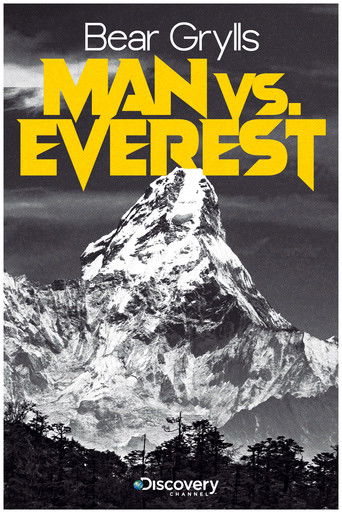
In this documentary, Bear Grylls takes us on a journey through the most extreme version of the world's highest and most legendary peak: Mount Everest. Several leading figures in mountaineering and extreme sports, for whom a standard ascent is no longer enough, transform Everest into a laboratory for extreme challenges. Told through archival footage and reenactments, this elite group seeks new forms of performance, attempting to ski the slopes, snowboard down them, hang-glide or paraglide above the summit ridge, open new routes on more technical and exposed faces, and break climbing records. The documentary also highlights the essential role of the Sherpas, the colossal logistics behind each attempt, the explosion of commercial expeditions, and the moral debate surrounding the ever-increasing risks involved in breaking records or achieving unprecedented feats.