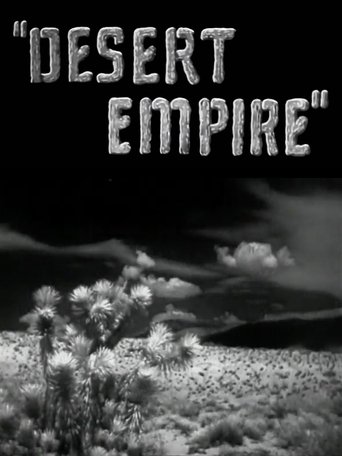
Desert Empire
1948-01-01 · 30 min · Not rated
A travelogue, this film provides a guided tour of pre-World War II Utah and of course does not pretend to cinematic greatness. Recommended viewing for those in search of introductory Utah history. Also valuable for persons seeking insight into the state as it would have looked during this time period. Especially informative for those desiring a window into the past for a view of how Utah was in the days of their pre-World War II progenitors living in the state. Those whose Utah ancestors were involved in mining, railroading, sugar beets, and other featured industries; featured towns, sights, recreational attractions, and industries may find this otherwise banal travelogue a quite valuable addition to their family history.
Trailers are previews, not full movies.
No authorized playback source configured. Use the legal watch options below.
Production details
- Directors
- Carlton T. Sills
- Production companies
- Universal Pictures
- Countries
- United States of America
- Status
- Released
Top Cast
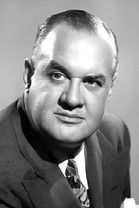 Don WilsonNarrator
Title information and images are supplied by TMDb. Explore our discovery guide for advice on comparing metadata and legal viewing options.
Where to watch
Availability provided by JustWatch via TMDb. Offers can change. Provider links are listed on TMDb; full playback requires a separately authorized source.
Availability not listed for this country.
Seasons & episodes
Recommendations

A dreamlike conversation with the past and the present, reimagining Latasha Harlins' story by excavating intimate memories shared by those who loved her.

Retrospective documentary about the making of the horror cult classic "The Return of the Living Dead."
Go behind the scenes with stars, puppeteers and creators as they bring Jim Henson's magical world of Thra back to life in a sweeping fantasy series.
The film follows adventurer Jeff Johnson as he retraces the epic 1968 journey of his heroes Yvon Chouinard and Doug Tompkins to Patagonia.

Follow the evolution of the 'Halloween' movies over the past twenty-five years. It examines why the films are so popular and revisits many of the original locations used in the films - seeing the effects on the local community. For the first time, cast, crew, critics and fans join together in the ultimate 'Halloween' retrospective.

BBC Arena's documentary on the Dames of British Theatre and film featuring Maggie Smith, Eileen Atkins, Judi Dench and Joan Plowright on screen together for the first time as they reminisce over a long summer weekend in a house Joan once shared with Sir Laurence Olivier.
The history of cinematic sound, told by legendary sound designers and visionary filmmakers.

Martin Scorsese's documentary intertwines footage from The Band's incredible farewell tour with probing backstage interviews and featured performances by Bob Dylan, Joni Mitchell, Van Morrison, Eric Clapton, and other rock legends.

Martin Scorsese spends an evening with larger-than-life raconteur Steven Prince—a former drug addict, road manager for Neil Diamond, and actor—as he recounts stories from his colorful life.
Through archival interviews and footage, George Michael and Andrew Ridgeley relive the arc of their Wham! career, from 70s best buds to 80s pop icons.
A documentary exploring the legacy of Star Trek: Deep Space Nine, the reasons it went from the black sheep of Star Trek to a beloved mainstay of the franchise, and a brainstorm with the original writers on what a theoretical eighth season of the show could look like.
Daniel Craig candidly reflects on his 15 year adventure as James Bond. Including never-before-seen archival footage from Casino Royale to the upcoming 25th film No Time To Die, Craig shares his personal memories in conversation with 007 producers, Michael G Wilson and Barbara Broccoli.

With mesmerizing footage and time lapses of animators at work, this behind-the-scenes special captures the artistry of a unique tale years in the making.

Giving fans unprecedented access to the real life of the music sensation, Katy Perry: Part of Me exposes the hard work, dedication and phenomenal talent of a girl who remained true to herself and her vision in order to achieve her dreams. Featuring rare behind-the-scenes interviews, personal moments between Katy and her friends, and all-access footage of rehearsals, choreography, Katy’s signature style and more, Katy Perry: Part of Me reveals the singer’s unwavering belief that if you can be yourself, then you can be anything.

Take a virtual vacation to some of the Star Wars films' most iconic and beloved locations like Hoth, Tatooine, and Sorgan, as this charming series whisks you off for fly-through tours of the Galaxy Far, Far Away.
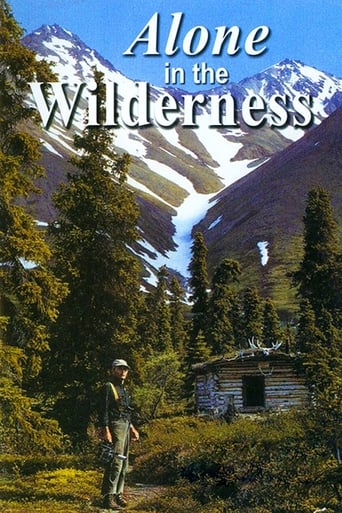
Dick Proenneke retired at age 50 in 1967 and decided to build his own cabin in the wilderness at the base of the Aleutian Peninsula, in what is now Lake Clark National Park. Using color footage he shot himself, Proenneke traces how he came to this remote area, selected a homestead site and built his log cabin completely by himself. The documentary covers his first year in-country, showing his day-to-day activities and the passing of the seasons as he sought to scratch out a living alone in the wilderness.

A backstage and on-stage look at Justin Bieber during his rise to super stardom.

The life of Mr. Spock, as well as that of Leonard Nimoy, the actor who played him for almost fifty years, written and directed by his son: Adam.

A look at the origins, history and conspiracies behind the "Majestic 12", a clandestine group of military and corporate figureheads charged with reverse-engineering extraterrestrial technology.

A behind-the-scenes documentary about the recording of Aretha Franklin's best-selling album finally sees the light of day more than four decades after the original footage was shot.
Similar titles
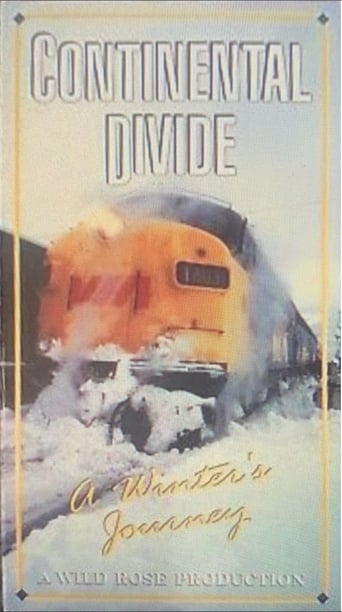
Filmed in 1987, this documentary chronicles the journey of Via Rail's The Canadian as it makes its way across Canada.

What compels a person to run 150 miles through the desert at the height of summer? Is it the need for achievement, the competitive instinct, or something deeper? A Long Way From Nowhere is a different sort of extreme sports film—one centered not around winning or extraordinary spectacle—but instead one focused upon the human spirit—on why individuals, knowingly or not, seek out some of the harshest climates on earth—in this case, southern Utah in June—and push themselves to, and sometimes beyond, the breaking point. Amongst the disparate cast of characters in this film is a veteran suffering from PTSD, a widowed single father, and a female police officer working in the field of human trafficking. Each undertakes the 150-mile Desert Rats stage race, each their darkest hour, and each, through the curious alchemy of extreme hardship and desert solitude, emerges with a new understanding of what it is to be human.
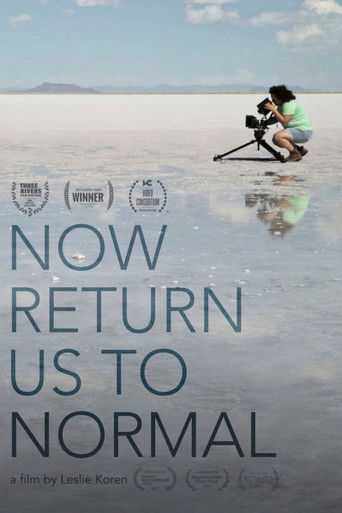
After experiencing flashbacks surrounding her years at a behavior modification school in rural Utah, a filmmaker seeks answers from those responsible for her mistreatment only to find that she already possesses the truth.
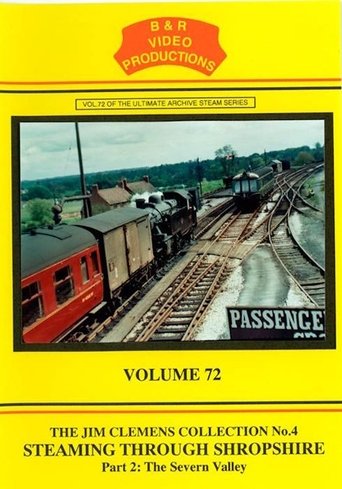
Jim Clemens Collection No.4. A nostalgic look back at the railways of South Shropshire in the early 1960′s. After a visit to GOBOWEN and IFTON colliery in the north, the scenes south and west of SHREWSBURY are covered. A journey from WELSHPOOL to SHREWSBURY, most of it in Shropshire, is taken. Very rare 1932 footage of the SHROPSHIRE & MONTGOMERY RAILWAY shows LNWR 0-6-0′s, llfracombe Goods engines and petrol railcars between SHREWSBURY ABBEY, KINNERLEY and the CRIGGION branch. A comprehensive journey the whole length of the Severn Valley now follows via BERRINGTON, CRESSAGE, BUILDWAS and IRONBRIDGE. The line to LONGVILLE and MUCH WENLOCK is recalled as is the eastern side of the River Severn at DAWLEY and COALPORT in 1959.
Beginning where Part 1 left off at Stafford, we leave the West Coast main line to visit Stoke-on-Trent and the Churnet Valley to Caldon and Congleton which was visited with a Black 5. North to Stockport for extensive coverage of the area through Edgeley and the engines that visited the shed there. The end of steam at Manchester Piccadilly, retum to Crewe via Sandbach. The last ten minutes are spent at Crewe with not only LMS power in the form of Duchesses, Scots and Jubilees but the early electrics and diesels as well. An area covered in detail not seen before on a video.
A video for electric traction fans. Not entirely, for steam was seen occasionally on the route especially west of Dinting, But this is the story of ·the 1500v dc system across the Pennines from Sheffield to Manchester. Filmed mainly in the 1960’s, you will see the EM1’s and EM2’s as they were in their green livery as much as they were in blue towards the end. Passenger services are there throughout the route. Class 506 units are seen on the Glossop service and there is coverage of the EM2 class in Holland. All told a pretty comprehensive film of this period of electrification on an ex-LNER line. One day it may reopen again although not at 1500v dc!
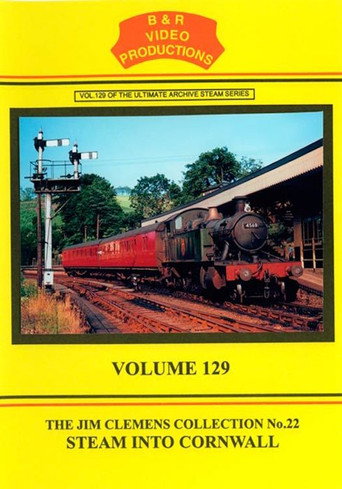
Jim Clemens Collection No.22. An archive film of mainly steam on the lines of Cornwall including Western and Southern motive power. We follow the Great Western main line from SALTASH to PENZANCE, viewing the major stations en route including LISKEARD, TRURO, PAR, CHACEWATER, GWINEAR ROAD, St. ERTH and PENZANCE. There are visits to the LOOE, HELSTON, FALMOUTH, NEWQUAY and St. IVES branches and a visit to PAR HARBOUR for industrial steam and to NEWLYN harbour with narrow gauge diesels. BODMIN to WADEBRIDGE and PADSTOW on the Southern, including T9s. A 1960s visit to the FOREST RAILROAD at DOBWALLS near Liskeard. A complete journey on the last steam to Penzance, the CORNUBIAN tour of May 1964 with a 28xx and a West Country pacific.
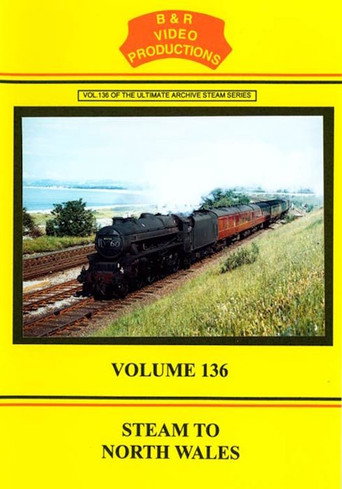
An archive programme of the CREWE to HOLYHEAD route via CHESTER and BANGOR. Filmed from 1960 to 1967 with occasional 1980’s visits from preserved steam locomotives providing a contrast. Motive power is mainly London Midland Region with Western Region at Chester. Branches from the route include BIRKENHEAD via HOOTON, the DYSERTH branch from PRESTATYN, DENBIGH from MOLD and RHYL, BLAEANAU FFESTINIOG and TRAWSFYNDD from LLANDUDNO JUNCTION and the AMLYCH branch. The PORT PENRHYN slate quarries to BETHESDA and DINORWIC system are also seen with narrow gauge locomotives. Locations visited include CREWE, CHESTER, SALTNEY JUNCTION, FLINT, TALACRE, RHYL, ABERGELE, LLANDUDNO, LLANDUDNO JUNCTION, BANGOR, MENAI BRIDGE and HOLYHEAD. Motive power includes Princess Coronations, Royal Scots, Jubilees, Britannias, Black 5s, 8Fs, Standard Classes and early diesels of Class 40 and 47, usually in green livery.
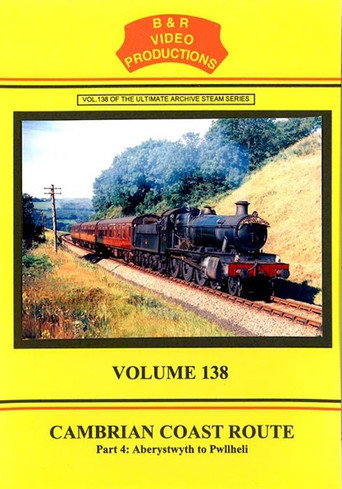
A video covering the last section of the route of the CAMBRIAN COAST EXPRESS from ABERYSTWYTH to PWLLHELI and what could be seen in the area from the 1950s to the 1980s. We cover four narrow gauge railways, the Vale of Rheidol, the Talyllyn, the Welsh Highland (1964) and the Ffestiniog, and two miniature railways, the Fairbourne and Butlins, Pwllheli. We even cover the Aberystwyth Cliff Railway! The coast route would see steam and diesel motive power but this film is mainly steam with Standard Classes 4MT, Class 2MT, Class 3 2-6-2Ts and Class 4 2-6-4Ts, GWR 43xx 2-6-0s and Manor Class 4-6-0s, Ivatt 2MTs and even Class 4. The picture is completed by the reopening of Barmouth Bridge in 1986 and Electric Electric Class 37s.
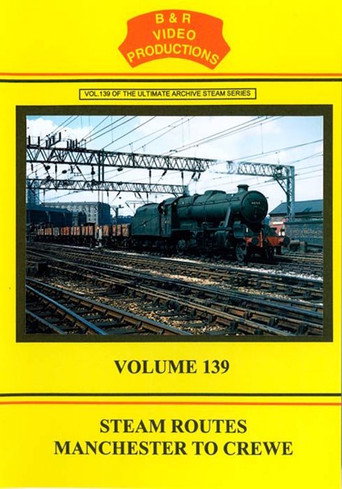
A video featuring the line between MANCHESTER and CREWE. Particular emphasis is on the two places, one a city and the other a railway town. Filmed in the 1960s, steam traction predominates. MANCHESTER VICTORIA and the nearby MANCHESTER EXCHANGE stations were busy with passenger, freight and parcels traffic. It was at the foot of MILES PLATTING incline where banking often took place. At the summit was NEWTON HEATH shed and a visit is made there. The line from MANCHESTER PICCADILLY was electrified from 1960 but steam power existed here alongside the new AC electric locomotives. At the northern end, STOCKPORT kept steam until 1968 and as well as the station, EDGELEY shed is visited. We then travel southwards through CHEADLE HULME, WILMSLOW, GOSTREY and on to CREWE where a wide range of motive power is seen from 1962 to 1968; Princess Coronations, Jubilees, Royal Scots, Crabs and Jinties along with BR Standards, Stanier Black 5s and Stanier 8Fs.

In Dear Home of Scars, we see celebrated visual artist Ibrahim Mahama return to his hometown of Tamale in Northern Ghana to visit Red Clay Studio, a lively cultural centre and art space he founded, where he works on a new art installation involving old colonial railcars and the reconstruction of a stretch of track. During British rule of Ghana (1821-1957), the colonisers used trains to transport gold and other resources to the coast. Remnants of track now lie abandoned as silent reminders of this history of exploitation. They are ‘scars in the landscape’, in the words of Mahama. The project brings new energy and self-awareness to local residents. Meanwhile, Mahama reflects on his role as a sought-after artist and builder of local communities.
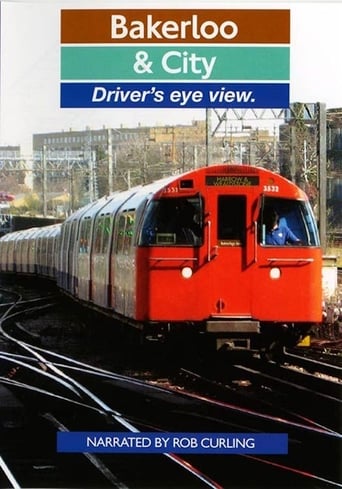
The Bakerloo Line is one of London Underground's main arteries, connecting four of the capital's main line railway stations with the heart of London's West End. The southern terminus at Elephant and Castle consists of just two platforms, requiring fast turnarounds to provide the 3 minute service interval. Just under half the 14½ mile line is in tube tunnel, The 1972 stock trains (amongst the oldest running on the network) surface at Queen's Park. Roughly one in three continues to Harrow and Wealdstone alongside the West Coast Main Line. As well as seeing the entire route in real time from the driver's cab, we also peek inside the Bakerloo Line's signalling and control centre at Baker Street. The Waterloo and City line is LUL's smallest self-contained operation, running for just over 1½ miles between Waterloo and Bank.
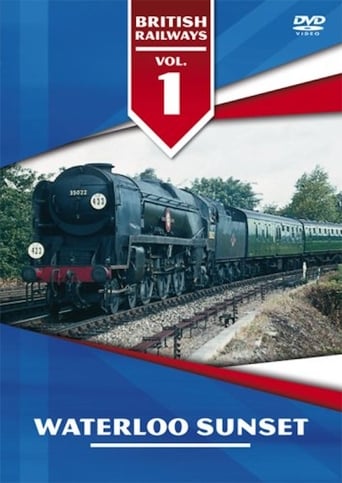
The Southern Region s last steam-worked main lines from Waterloo to Salisbury and Weymouth are recalled on this all-colour programme which features cine film made between 1958 and 1967 by John Laird, Brian Robbins and Geoff Todd. After an extended opening sequence at Waterloo and footage of Nine Elms shed, we follow the former London & South Western main line down to Basingstoke. We head west from Worthing Junction to Salisbury before resuming our journey south through Eastleigh to Southampton. There follows some delightful scenes filmed in the New Forest including steam workings on the branch to Lymington. This brings us to Bournemouth where we see the town s two stations and the splendid yellow trolley buses which used to link them. Before reaching the end of our travels at Weymouth there are some superb scenes of trains labouring up the bank out of the town and coverage of a Channel Islands Boat Train on the famous Weymouth Tramway filmed in 1958.
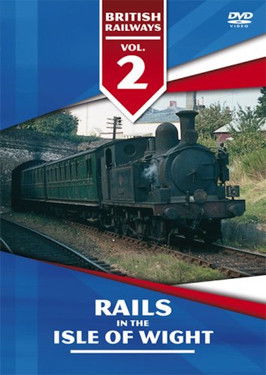
Island railways have a particular fascination, none more so than those on the Isle of Wight. In this programme, produced from films made by railway enthusiasts who visited the island from the 1950s to the present day, we present aspects of the changing face of the island s railways over the last forty years. We begin with John Laird s 1964 films of the steam railway in all its glory with the coverage of the lines to Ventnor and Cowes. This is contrasted with the scene in the 1950s as portrayed in rare colour films made in 1953 on the soon to be closed lines from Brading to Bembridge, Sandown to Merstone and Newport and from Newport to Freshwater. The final steam sequences filmed by Geoff Todd and Derek Norman show the last years of steam operation on the island and the preparations for electrification. The Isle of Wight s new tube trains are shown at first on trial on the mainland, looking quite incongruous at locations such as Clapham Junction.
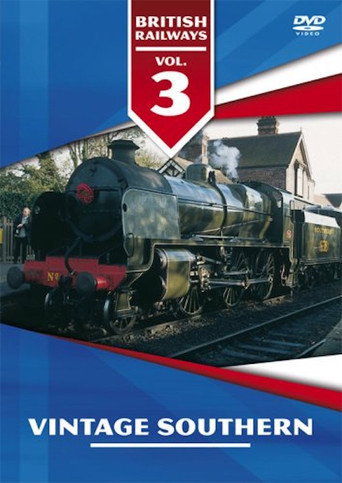
This programme offers much rare footage made on the railways of the south east of England between the 1930s and the 1960s. The films begin at London Bridge in 1931 with a Schools class 4-4-0 in original condition. Rare colour footage taken in 1938 at London Bridge and Sutton follows. A LBSCR 4-6-4 tank is then shown working a train between London Bridge and Norwood Junction. After sequences showing steam in action in 1931 at East Croydon, the scene shifts to Folkestone with both main line expresses and boat trains on the Harbour branch, in black and white from the 1930s and colour from the 1950s. Coverage of the Golden Arrow and other SR steam hauled Pullmans is followed by extracts from a 1939 cab ride on the electric Brighton Belle.
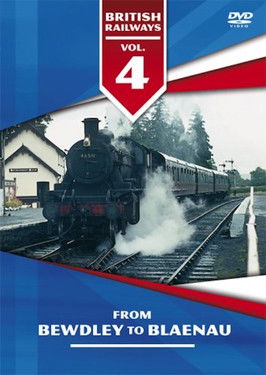
This programme begins with a trip up the now preserved Severn Valley line from Kidderminster to Bewdley. Both ex-GWR diesel railcars and steam locomotives are seen before we head across the River Severn to explore the branch to Tenbury Wells and Woofferton. Moving into Wales itself the programme then features the lines centred on Brecon which closed in 1962. Starting from Neath Riverside station, the former Neath & Brecon line is followed up to Brecon. The next section features the former Brecon & Merthyr system including the notorious 7 mile bank beyond Talybont on Usk, one of the most challenging inclines on a British railway. We then follow the line north from Talyllyn Junction near Brecon to Three Cocks Junction and on to Hay on Wye along the former Midland route to Hereford before going up the Cambrian line through mid Wales to Builth Road Low Level where this line passed under the Central Wales Line.
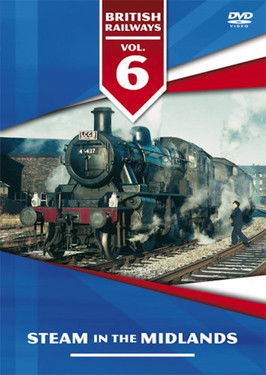
This programme sets out to offer a real feel of what it was like to observe the busy railway network of the Midlands in the last decade of steam operations. Not surprisingly, in an era renowned for its heavy industry, freight workings and the locomotives designed for heavy goods duties, play a prominent role in the proceedings. There is much coverage of the LNWR designed G2 class 0-8-0 tender engines, the last LNWR class to survive in any numbers. These engines are contrasted with their LMS built successors, the 8F 2-8-0s. Other types which feature in the films are Black 5s, Horwich Moguls, Fowler tanks, Jinties, Ivatt 2-6-0s and several of the British Railways Standard designs ranging from Britannia Pacifics to the Class 4 Moguls. These machines, often work stained and unkempt, are seen on a succession of coal and steel trains and long mixed freights, traffic flows which have either been shut down or nowadays go by road. Passenger traffic is not forgotten.
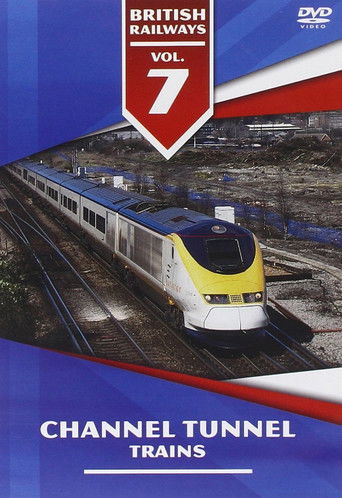
Few projects have stirred the imagination as much as the building of the Channel Tunnel. The sheer scale of the enterprise and the immense effort involved in creating the Tunnel, can only be admired. Aware of the historic significance of the project, Eurotunnel employed camera crews to film every stage of the work as it progressed. It is from this vast and hitherto largely unseen Eurotunnel archive that much of this programme has been made. Beginning with a brief historical survey of previous efforts to construct a fixed link across the Channel, the programme concentrates on the railway aspects of the project. The story of the construction of the Tunnel is interwoven with the vital role that railways played in its execution. The large narrow gauge railway network built to service the construction work is explored as is the building and testing of the locomotives and rolling stock which were to be used on Eurotunnel s Le Shuttle service.

In the very core of Salt Lake City, two special downtown blocks serve as a mirror. Just a handful of acres of land hold more than 150 years of the Utah story. On planners' maps, they're known as Salt Lake City Blocks 75 and 76. But to generations who have worked, lived, and played along their streets, Blocks 75 and 76 are a world unto themselves.
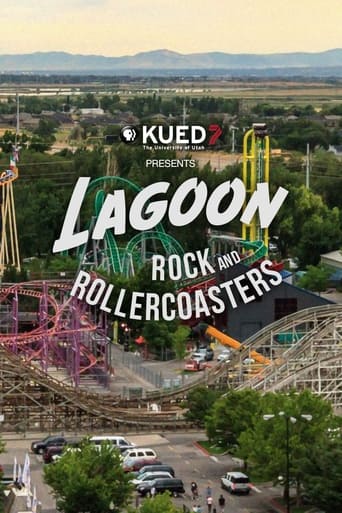
A fun, nostalgic look at the rich history of Lagoon Amusement Park, which has enchanted visitors for generations with its rides, rock concerts, and family fun for more than a century.