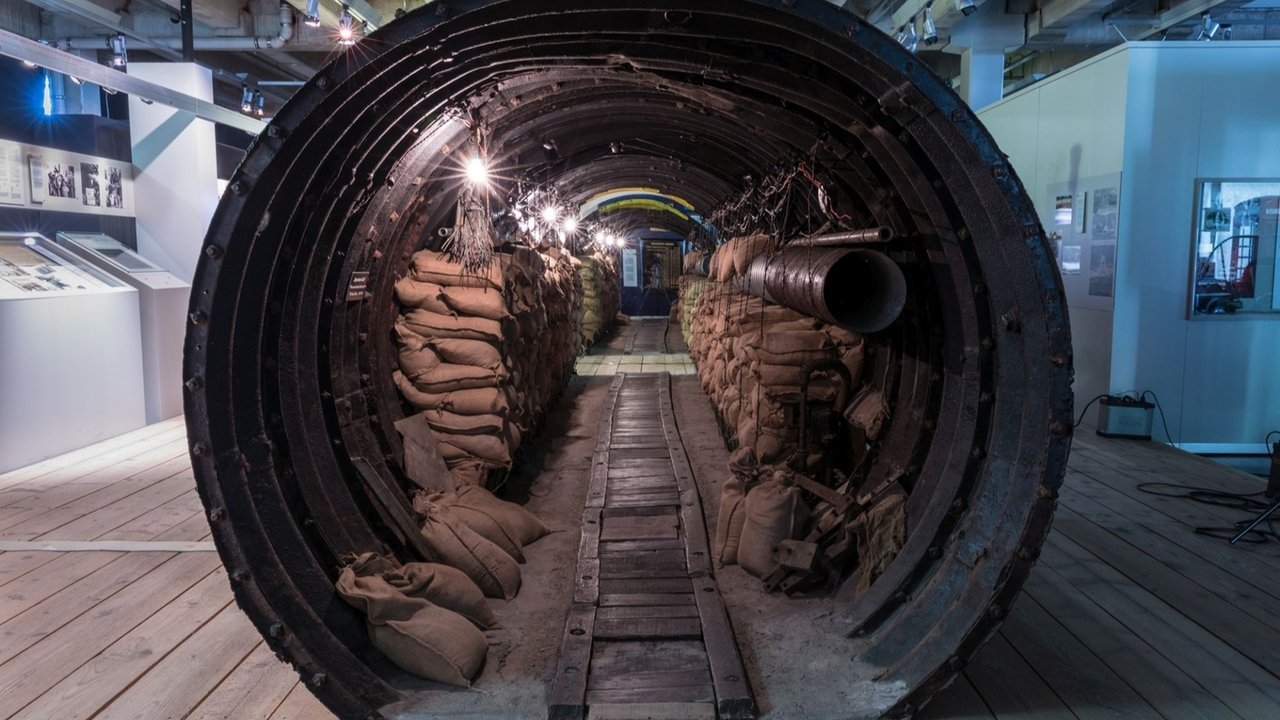
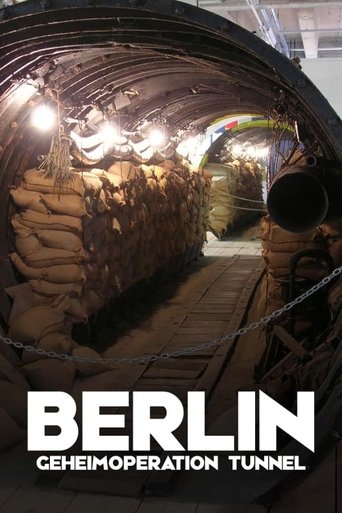
Berlin Geheimoperation Tunnel
2011-01-01 · Runtime unavailable · ★ 8.0
Trailers are previews, not full movies.
No authorized playback source configured. Use the legal watch options below.
Production details
- Directors
- Sam Bernstead, Jonathan Hacker
- Production companies
- ARTE
- Countries
- Germany
- Status
- Released
Top Cast
Cast unavailable.
Title information and images are supplied by TMDb. Explore our discovery guide for advice on comparing metadata and legal viewing options.
Where to watch
Availability provided by JustWatch via TMDb. Offers can change. Provider links are listed on TMDb; full playback requires a separately authorized source.
Availability not listed for this country.
Seasons & episodes
Recommendations
A keen chronicle of the unlikely rise to power of Adolf Hitler (1889-1945) and a dissection of the Third Reich (1933-1945), but also an analysis of mass psychology and how the desperate crowd can be deceived and shepherded to the slaughterhouse.

Oliver Stone charts the history of the United States from the Second World War to the present.

A day in the city of Berlin, which experienced an industrial boom in the 1920s, and still provides an insight into the living and working conditions at that time. Germany had just recovered a little from the worst consequences of the First World War, the great economic crisis was still a few years away and Hitler was not yet an issue at the time.

The history of cinematic sound, told by legendary sound designers and visionary filmmakers.
This documentary brings to life the stories of four people believed by their family and friends to be “DB Cooper,” a man who hijacked a 727 flying out of Seattle and jumped from the plane over the wilds of Washington State with a parachute and $200,000, never to be heard from again.

“The Soviet Story” is a story of an Allied power, which helped the Nazis to fight Jews and which slaughtered its own people on an industrial scale. Assisted by the West, this power triumphed on May 9th, 1945. Its crimes were made taboo, and the complete story of Europe’s most murderous regime has never been told. Until now...

Diaries, audiotapes, videotapes and testimonials from friends and colleagues offer insight into the life and career of Gilda Radner -- the beloved comic and actress who became an icon on Saturday Night Live.

Experience the events of September 11, 2001 through the eyes of President Bush and his closest advisors as they personally detail the crucial hours and key decisions from that historic day.

Through deeply personal interviews with her siblings and an examination of the photographs, letters, and belongings left behind, Mariska assembles a new portrait of her mother Jayne Mansfield, an extraordinary and complex woman.

He's devoted his career to uncovering stories the powerful want buried. From My Lai to Abu Ghraib, dig into the life's work of journalist Seymour Hersh.

In an intimate and joyful story of love in the face of loss, celebrated poets Andrea Gibson and Megan Falley find strength—and unexpected hilarity—in what might be their final year together.

A documentary highlighting the Soviet Union's legendary and enigmatic hockey training culture and world-dominating team through the eyes of the team's Captain Slava Fetisov, following his shift from hockey star and celebrated national hero to political enemy.

Prelude to War was the first film of Frank Capra's Why We Fight propaganda film series, commissioned by the Pentagon and George C. Marshall. It was made to convince American troops of the necessity of combating the Axis Powers during World War II. This film examines the differences between democratic and fascist states.

A documentary on the expletive's origin, why it offends some people so deeply, and what can be gained from its use.

When Allied forces liberated the Nazi concentration camps in 1944-45, their terrible discoveries were recorded by army and newsreel cameramen, revealing for the first time the full horror of what had happened. Making use of British, Soviet and American footage, the Ministry of Information’s Sidney Bernstein (later founder of Granada Television) aimed to create a documentary that would provide lasting, undeniable evidence of the Nazis’ unspeakable crimes. He commissioned a wealth of British talent, including editor Stewart McAllister, writer and future cabinet minister Richard Crossman – and, as treatment advisor, his friend Alfred Hitchcock. Yet, despite initial support from the British and US Governments, the film was shelved, and only now, 70 years on, has it been restored and completed by Imperial War Museums under its original title "German Concentration Camps Factual Survey".
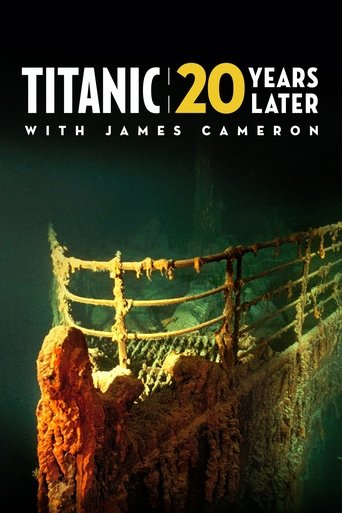
For the 20th anniversary of "Titanic," James Cameron reopens the file on the disaster.

A visual montage portrait of our contemporary world dominated by globalized technology and violence.
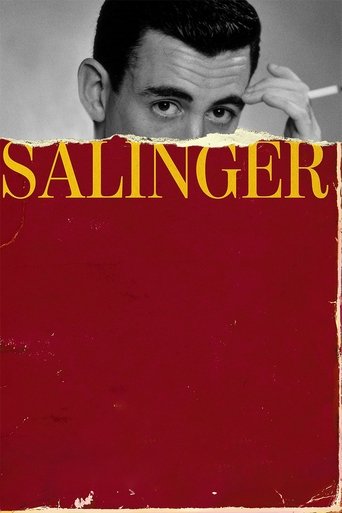
An in-depth investigation into the private world of the American writer J. D. Salinger (1919-2010), who lived most of his life behind the impenetrable wall of a self-imposed seclusion: how his dramatic experiences during World War II influenced his life and work, his relationships with very young women, his obsessive writing methods, his many literary secrets.
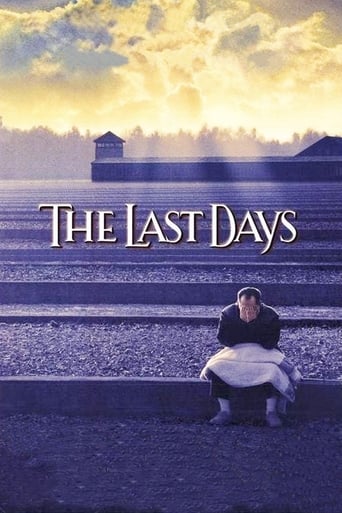
This Oscar-winning documentary recounts the harrowing stories of five Hungarian Jews who endured the horrors of the Holocaust and Hitler's reign.
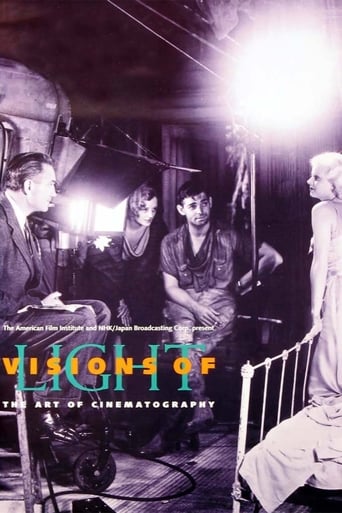
Cameramen and women discuss the craft and art of cinematography and of the "DP" (the director of photography), illustrating their points with clips from 100 films, from Birth of a Nation to Do the Right Thing. Themes: the DP tells people where to look; changes in movies (the arrival of sound, color, and wide screens) required creative responses from DPs; and, these artisans constantly invent new equipment and try new things, with wonderful results. The narration takes us through the identifiable studio styles of the 30s, the emergence of noir, the New York look, and the impact of Europeans. Citizen Kane, The Conformist, and Gordon Willis get special attention.
Similar titles
The film features a meeting led by Dave Taylor, the shelter manager, discussing the protocols and responsibilities for staff members involved in managing a public shelter. Key participants, including operations deputy Harvey Johnson and health leader Mrs. Carter, outline their roles in ensuring a smooth entry for occupants during an emergency. The meeting emphasizes the importance of organization, communication, and the distribution of supplies. Staff members are encouraged to familiarize themselves with each other's duties and prepare for potential scenarios, including managing newcomers and ensuring safety and sanitation within the shelter.
A man named Walt who has recently completed building a fallout shelter in his home, a project initiated due to the threat of nuclear war during the Cold War era. Walt demonstrates to his friends the multi-functionality of the shelter, which can also serve as a darkroom, an extra bedroom, or a safe space during tornadoes. He explains the construction process in detail, emphasizing the need for precise measurements, proper leveling, and the use of concrete blocks for radiation protection. The shelter includes a stock of essentials like a radio, batteries, and a fire extinguisher. Walt’s narrative is interspersed with advice on obtaining official bulletins for guidance and the importance of building shelters correctly. The film concludes with a message from the Director of the Office of Civil and Defense Mobilization, advocating for the construction of family fallout shelters across America as a means of personal safety and national security in the nuclear age.
This Cold War film "Information Within Public Shelters" (1953) takes place in a fallout shelter, showing how a well-trained staff that provides information to shelter occupants, can keep them busy and calm during nuclear armageddon. This film was produced as the U.S. Government began to shift from promoting privately-owned "family" fallout shelters to the concept of large, public shelters.

Documentary short about the rebuilding of Berlin in 1946 from a Soviet perspective, showcasing the social changes that have taken place since the fall of Hitler and of Jews working side-by-side with non-Jewish counterparts.
Created in 1963 at the height of the Cold War, this Civil Defense training film uses a dramatic premise to show how emergency staff should manage and organize a large public fallout shelter during a crisis. A Shelter Manager is shown immediately taking control of the situation in the shelter, speaking calmly to those who have made it into the facility, closing the door promptly once the shelter is full, and sticking to the "shelter plan" as the situation unfolds. Some of the areas discussed in this nuclear war drama are the safety plan, regular inspections, supervised public entry into shelters, ventilation, first aid, sanitation, fire prevention, decontamination of personnel, and more. "Shelter living is different," the Manager states, "But we have a trained staff that will make your stay in this shelter livable for us all."
A heavily dramatized Civil Defense film that demonstrates how a public fallout shelter is supposed to function after a nuclear attack. This scenario takes place in a fictional any town called "Middlebury". The film describes the situation in a public shelter in Middlebury following an attack on the United States.
Training film for shelter managers. Food, water, sanitation, medical, and radiation detection systems are explained.
A training film for public shelter managers explaining when people should be allowed to leave the shelter after a disaster.

Journey with the musicians of the Berlin Philharmonic and their conductor Sir Simon Rattle on a breakneck concert tour of six metropolises across Asia: Beijing, Seoul, Shanghai, Hong Kong, Taipei and Tokyo. Their artistic triumph onstage belies a dynamic and dramatic life backstage. The orchestra is a closed society that observes its own laws and traditions, and in the words of one of its musicians is, “an island, a democratic microcosm – almost without precedent in the music world - whose social structure and cohesion is not only founded on a common love for music but also informed by competition, compulsion and the pressure to perform to a high pitch of excellence... .” Never before has the Berlin Philharmonic allowed such intimate and exclusive access into its private world.
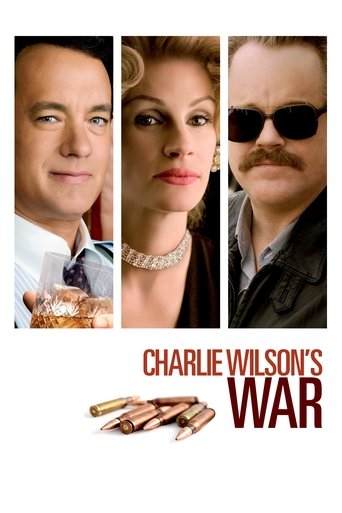
A Texas congressman sets a series of events in motion when he conspires with a CIA operative to aid Afghan mujahideen rebels fighting the Soviets.

At the dawn of the Space Race, seven test pilots set out to become the first American astronauts to enter space. However, the road to making history brings momentous challenges.

A powerful drama of soaring ambition and shattered dreams that takes a provocative insider's look at the way the USA goes to war—as seen from inside the LBJ White House leading up to and during the Vietnam War.

Artists, urban planners and the city of Berlin trying to transform a former GDR ruin into a place for new visions and concepts of city - a place where everything is different than before?

Deep in the frozen winters of Siberia, the world's greatest weapon is discovered -- a golden Sharpie which grants its country ultimate power. The only question: which country?
The film shows courtyards in the old Berlin city center that were designed by the residents themselves before the reconstruction. The painter Reinhard Zabka, himself the initiator and protagonist of such actions, talks about his relationship to art and his understanding of its function in the big city. Residents talk about their experiences.

In the documentary Last To Know political prisoners, sent to jail for openly opposing the East German regime that existed until the German reunification in 1990, talk about their times of trial and their lives today. Neither they, nor their families have come to terms with what happened.

How the Soviet Union was able to copy the Boeing B-29 Superfortress bomber, and the influence of the resulting Tupolev TU-4 on the Cold War.

The true story of Charlotte Salomon, a young German-Jewish painter who comes of age in Berlin on the eve of the Second World War. Fiercely imaginative and deeply gifted, she dreams of becoming an artist. Her first love applauds her talent, which emboldens her resolve. When anti-Semitic policies inspire violent mobs, she escapes to the safety of the South of France. There she begins to paint again, and finds new love. But her work is interrupted, this time by a family tragedy that reveals an even darker secret. Believing that only an extraordinary act will save her, she embarks on the monumental adventure of painting her life story.
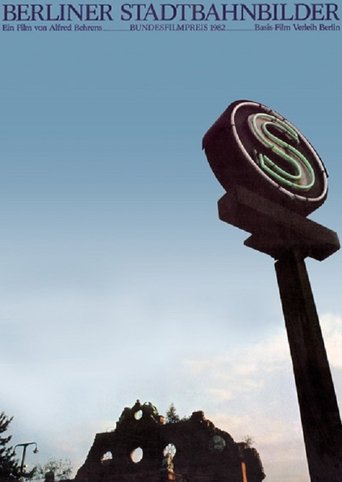
Documentation on the Berlin S-Bahn, which threatened to fall into oblivion as a result of the division of the city.

The film chronicles the story of how the Nazis and the IOC turned, to their mutual benefit, a small sports event into the modern Olympics. The grand themes and controversial issues from the 1936 Games have continued to this day: Monumentality, budget overruns, collusion with authoritarian regimes, corruption and sometimes even bribery.